
Kirjailija
William Stringfellow
Kirjat ja teokset yhdessä paikassa: 22 kirjaa, julkaisuja vuosilta 1994–2021, suosituimpiin kuuluu William Stringfellow. Vertaile teosten hintoja ja tarkista saatavuus suomalaisista kirjakaupoista.
22 kirjaa
Kirjojen julkaisuvuodet: 1994–2021.
This work has been selected by scholars as being culturally important and is part of the knowledge base of civilization as we know it. This work is in the public domain in the United States of America, and possibly other nations. Within the United States, you may freely copy and distribute this work, as no entity (individual or corporate) has a copyright on the body of the work. Scholars believe, and we concur, that this work is important enough to be preserved, reproduced, and made generally available to the public. To ensure a quality reading experience, this work has been proofread and republished using a format that seamlessly blends the original graphical elements with text in an easy-to-read typeface. We appreciate your support of the preservation process, and thank you for being an important part of keeping this knowledge alive and relevant.
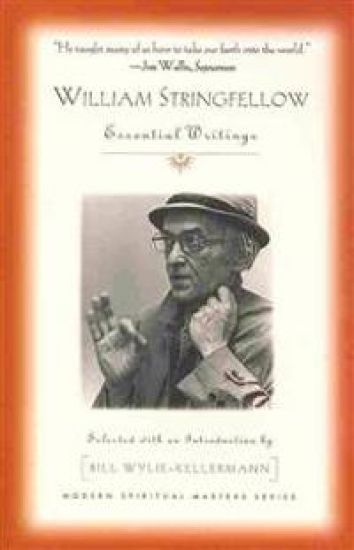
A radical lay theologian William Stringfellow (1928-1985) leveled a prophetic critique against a range of American institutions: the church and seminaries, economic structures and the idolatries of the modern war-making state. "My concern," he wrote, "is to understand America biblically," - in contrast to the more common tendency, to understand the Bible "Americanly."
""Instead of Death"" is a book written by William Stringfellow that explores the concept of death and the Christian interpretation of it. The book is divided into three parts, each of which focuses on a different aspect of death. The first part discusses the cultural and social implications of death, while the second part delves into the theological and philosophical implications of death. The third and final part of the book discusses the Christian interpretation of death, including topics such as resurrection and eternal life. Throughout the book, Stringfellow argues that death is not something to be feared, but rather embraced as a natural part of life. He also argues that the Christian interpretation of death offers a unique perspective on the meaning of life and the afterlife. ""Instead of Death"" is a thought-provoking and insightful book that challenges readers to think deeply about the nature of death and its place in the human experience. This scarce antiquarian book is a facsimile reprint of the old original and may contain some imperfections such as library marks and notations. Because we believe this work is culturally important, we have made it available as part of our commitment for protecting, preserving, and promoting the world's literature in affordable, high quality, modern editions, that are true to their original work.

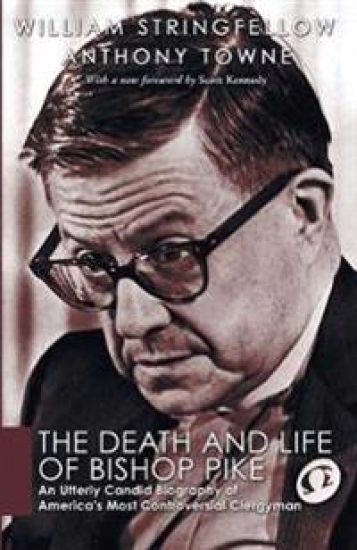
The Death and Life of Bishop Pike
William Stringfellow; Anthony Towne; Diane Kennedy Pike
Wipf Stock Publishers
2007
pokkari
Introducing two Stringfellow/Towne reprints about Bishop Pike: The Bishop Pike Affair The Death and Life of Bishop Pike The Death and Life of Bishop Pike is an in-depth, documented portrait of James A. Pike--the most controversial American clergyman of modern times. Based on prodigious research into private letters and unpublished documents, as well as exhaustive interviews, it is a biography so candid that the book itself is bound to be controversial. The authors are utterly frank about the bishop's turbulent personal life--his three marriages, his sexuality, his alcoholism, the suicides of his oldest son and of an intimate associate, the temptation of his celebrity, his complex relationship with his mother, and his terrible death in the wilderness. They have thoroughly investigated his notorious experiences with "psychic phenomena"--arriving at their own startling and provocative conclusions. Nevertheless, this book is neither an expose nor an apologia. It is an honest, dramatic, and compelling testament to an extraordinary and vital personality--to the colorful and courageous Christian witness of Bishop James A. Pike, whose advocacy of social justice and whose search for faith--restless and unorthodox as it was--had an astonishing impact on the contemporary church.
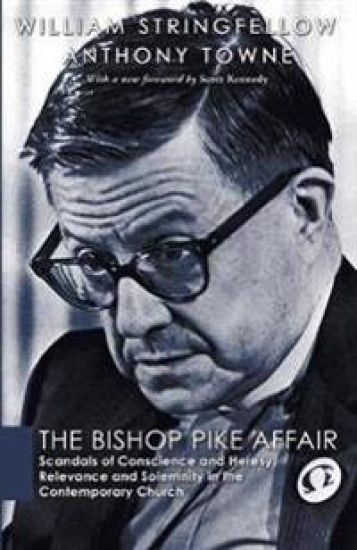
Introducing two Stringfellow/Towne reprints about Bishop Pike: The Bishop Pike Affair The Death and Life of Bishop Pike The Bishop Pike Affair presents the climactic showdown between James A. Pike and his peers at the Wheeling meeting of the Episcopal House of Bishops, in October 1966. It dramatized for millions the struggles for reform and relevance within the church in the mid-twentieth century. This book reveals the whole chronicle of the historic controversy. Thousands of documents were researched. The authors disentangle the web of political, racial, theological, traditional, and personal interests that account for the accusations that Bishop Pike is a heretic and that culminated in his censure at Wheeling. The authors relate The Bishop Pike Affair to celebrated heresy trials of the past, probe the issues of fairness and due process of law, explore the ethics of the fraternity of bishops, examine the dynamics of the Episcopal Church as an institution, and expose the design of the ""ultra-right whites"" to stage a coup d'eglise in America. ""This book will concern and dismay every thoughtful person who reads it, especially those of the Christian faith. It is dismaying to discover, although perhaps one should not have been surprised, that the ranks of Episcopal bishops contain as high a percentage of clowns and petty, vindictive men as to the organizations of secular professions."" --Ralph McGill, The Atlanta Constitution ""A shaking and sensitive book of extraordinary power. As a work of prophetic insight and conviction, it will hold a place in history."" --Malcolm Boyd, author of Are You Running With Me, Jesus? William Stringfellow was a practicing attorney and a prominent Episcopalian, who frequently contributed to legal and theological journals. After his graduation from Harvard Law School in 1956, he practiced some years in the East Harlem neighborhood in New York City, subsequently moving to Block Island, RI. When Daniel Berrigan was apprehended by the FBI at Stringfellow and Towne's home in 1969, the hosts were charged with ""harboring a fugative."" Anthony Towne was a poet whose work appeared in such publications as The New Yorker. Best known for Excerpts from the Diaries of the Late God, he was a book review editor for Motive Magazine, founder of the Block Island Writers Guild, and collaborator with Stringfellow on a number of book projects.
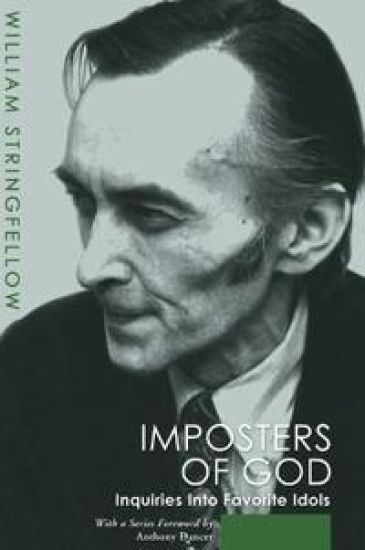
An astute, outspoken lay theologian talks to Christians about how they can today find freedom in obedience to Christ's gospel and about the urgent necessity of trying to live this kind of freedom now. He insists that his readers look realistically and relentlessly at their own condition, at the condition of the church -- and that they see how these relate and compare to Christ's gospel. His book, based on certain passages from Hebrews, thus becomes a call to freedom and a call to revolutionary Christianity. William Stringfellow begins by spelling out, in impressive and telling detail, how the church has become mired in secular idolatries and ideologies, both economic and political. Then, in constrast to this situation, he examines Christ's resistance to the temptations of worldly power. Stringfellow ends his book by emphasizing the meaning of the resurrection as the exercise of the freedom of God and sets forth the victory over death and bondage given in Christ. Only in that gift is the Christian free to offer his own life to the world. Only thus is he free in obedience.
Suspect Tenderness opens with a narrative concerning the capture of Daniel Berrigan, related in his continuing friendship and pastoral relationship with Stringfellow and co-author Anthony Towne. It continues with an examination of the ethical and theological implications of the Berrigan witness, in which middle-class American piety is asked to face the fact that Jesus was a criminal. Stringfellow insists that every state feels threatened by Christ's claim to a moral authority over death, and sees the community of resistance as a community of resurrection.
The Politics of Spirituality
William Stringfellow; Bill Wylie-Kellermann
Wipf Stock Publishers
2006
pokkari
Spirituality, according to William Stringfellow, represents the ordinary experience of partaking in politics - the activity of the Word of God in judgment over all that belongs to human history. He criticizes religiosity, advocating instead for a biblical holiness that implies wholeness for all creation. He takes a prophetic and somber view of the present dark ages, characterized as they are by hypocrisy, profligate consumption, disregard for human life, and dependence on nuclear force. Speaking from a lifetime of experience and reflection, Stringfellow issues a call to conscience and sanity, a reaffirmation of the incarnation, and belief in the grace of the Word of God who transcends the injustice of the present age and agitates the resilience of those who struggle to expose and rebuke injustice.
In 1980, lawyer/theologian William Stringfellow experienced the loss of his close friend and companion, poet Anthony Towne. Totally unexpected, Towne's death brought Stringfellow face-to-face with his most personal encounter with grief. These pages eloquently record his year of mourning, thus becoming both a tribute to Towne and a way of celebrating life--past and future. Five of Towne's poems appear here, brilliantly capturing the mood and tone of Stringfellow's text. Through the course of Stringfellow's dialogue with grief, he teaches us that bereavement can be a special source of inner peace. We discover that to know life in its fullest is to know and face death. 'A Simplicity of Faith' is a spiritual odyssey of rare intensity. It is a convincing argument that biography, reflected upon, becomes theology. Though in many aspects focused on death, it is a powerful statement of what it means to be totally alive. In this stirring chronicle of death within community, grief becomes the somber flippancy of the clown and the account of mourning Promethean entertainment. Through it all we learn of the Word."" --Will D. Campbell, author of 'Up to Our Steeples in Politics' It is, I believe, the best book that he has ever written . . . he penetrates so deeply into his personal experience of mourning that he is able to make universal judgments. I'm reminded . . . of the writings of Solzhenitsyn. . . . He obviously knows how to write what he thinks--and to write it in such a way that anyone can understand both his experience and his theology."" --Rt. Rev. John B. Coburn, DD, the Episcopal Diocese of Massachusetts William Stringfellow was a practicing attorney and a prominent Episcopalian layman who frequently contributed to legal and theological journals. After his graduation from Harvard Law School, he practiced some years in the East Harlem neighborhood in New York City. He was a visiting lecturer at several law schools and lectured at theological seminaries across the country. Stringfellow authored more than a dozen books, including 'A Private and Public Faith, ' 'My People is the Enemy, ' 'Count It All Joy, ' and 'Instead of Death.'
It was to Harlem that I came from the Harvard Law School. I came to Harlem to live, to work there as a lawyer, to take some part in the politics of the neighborhood, to be a layman in the Church there. It is now seven years later. In what I now relate about Harlem, I do not wish to indulge in horror stories, though that would be easy enough to do."" In this extraordinary and passionate book, William Stringfellow relates his deep concern with the ugly reality of being black and being poor. As a white Anglo-Saxon, Mr. Stringfellow does not try to speak for African Americans and Puerto Ricans in the Harlem ghetto, but, as a lawyer, he graphically underlines the failure of the American legal system to provide equal justice for the poor. And, as a Christian who lived for seven years on what the New York Times called the worst block in New York City, he challenges the reluctance of the churches to be involved in the racial crisis beyond the point of pontification."" Few white men have shared such experiences; certainly none has expressed them so eloquently, or ominously. . . . The most disturbing document since James Baldwin's 'The Fire Next Time'. . . . It is neither shouting nor scare journalism. It is a map of hell that might explode tragically at any moment."" --William Hogan, San Francisco Chronicle A worthwhile contribution to the American conscience at a time when it has at last decided to admit its shame. . . . Recommended to the policy makers who are charged with the practical expiation of this guilt."" --Michael Harrington, the New York Times Stringfellow has written a layman's sermon that cries out against both the churches and the people, in the manner of biblical days."" --Associated Press William Stringfellow was a practicing attorney and a prominent Episcopalian layman who frequently contributed to legal and theological journals. After his graduation from Harvard Law School, he practiced some years in the East Harlem neighborhood in New York City. He was a visiting lecturer at several law schools and lectured at theological seminaries across the country. Stringfellow authored more than a dozen books, including 'A Private and Public Faith', 'An Ethic for Christians and Other Aliens in a Strange Land', 'Conscience and Obedience', 'Count it All Joy', and 'Instead of Death'.
An Ethic for Christians and Other Aliens in a Strange Land
William Stringfellow; Bill Wylie-Kellermann
Wipf Stock Publishers
2004
pokkari
From 'An Ethic for Christians and Other Aliens in a Strange Land' "America is a fallen nation. Americans exist in time, in the era biblically called the Fall. America is a demonic principality, or conglomeration of principalities and powers in which death furnishes the meaning, in which death is the reigning idol. Enshrined in multifarious forms and guises, it enslaves human beings, exacts human sacrifices, captures and captivates Presidents as well as intimidating and dehumanizing ordinary citizens." Strong statements, yes, but timely in the biblical context which forms William Stringfellow's perspective of our contemporary situation. Identifying America as a fallen nation with the parable of Babylon in the Book of Revelation - not with Jerusalem the holy nation, as Americans are naively and vainly wont to do - Dr. Stringfellow issues as trenchant an indictment of our society as has been made since Philip Wylie's 'Generation of Vipers'. Shockingly prophetic, dismaying, and sobering, William Stringfellow's rigorous biblical theology will surely offend the self-righteous. But the citizen of Jerusalem, alien in Babylon, will welcome the bluntness and insight with which he speaks.
The first edition of 'Instead of Death', a critique of both the institutions of the Church and the more secular but no less destructive institutions of the state, became a small classic. After its publication, Stringfellow's life was deeply affected by a serious illness, his work in East Harlen, and his efforts on behalf of the cause of women's ordination to the priesthood. Thus, although a substantial portion of the original text was unchanged, his experiences had given him added insights that were expressed in two new chapters: one on money and the struggle for security, the other on the politics of death and life. A long preface dealing with Stringfellow's motivations for writing this expanded version of 'Instead of Death' is also included.
Conscience and Obedience
William Stringfellow; Bill Wylie-Kellermann
Wipf Stock Publishers
2004
pokkari
Is the Church truly above politics? Or is it all too often a gullible victim of the political arena? The theme of this prophetic work is that Christians must comprehend politics if they are to transcend politics. In 'Conscience and Obedience', William Stringfellow reviews the long history of the church's interpretations and misinterpretations of Scriptural texts relating to politics. The most notorious abuses have come, he says, in interpretations of Romans 13 and Revelation 13. Stringfellow declares that what is missing most is an understanding of eschatology that can stand against any political ideology, whether of the status quo or revolution. 'Conscience and Obedience' challenges the reader to examine the sources of our faith and our freedom.
Based upon lectures given at the 1962 Ecumenical Study Conference of the United Christian Youth Movement, 'Count It All Joy' offers meditations on major themes from the book of James, such as the juxtaposition of faith and good works in the Christian life.