

Kirjailija
William Sweet
Kirjat ja teokset yhdessä paikassa: 11 kirjaa, julkaisuja vuosilta 2003–2026, suosituimpiin kuuluu Our American Churches. Vertaile teosten hintoja ja tarkista saatavuus suomalaisista kirjakaupoista.
11 kirjaa
Kirjojen julkaisuvuodet: 2003–2026.

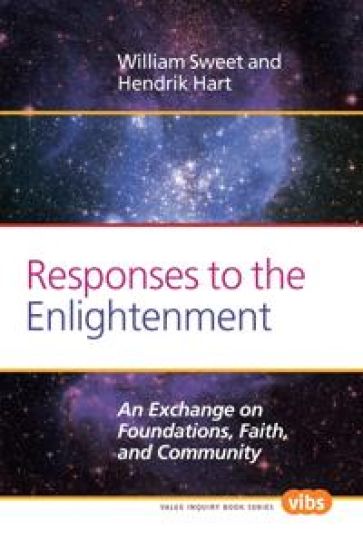
Since the time of the Enlightenment in Western Europe, discussions of faith and reason have often pitted the believer against the skeptic, the theist against the atheist, and the person of one faith against the person of no professed faith. But the relation of reason to faith has been a matter of debate among believers as well. There are those who hold that religious faith can be proven or supported by rational argument. Others say that to try to give reasons and arguments does violence to religious faith, or opens it to misunderstanding and doubt, or trivializes it. Responses to the Enlightenment: An Exchange on Foundations, Faith, and Community is a dialogue between Hendrik Hart and William Sweet, two philosophers who identify themselves as Christians, and who seek to respond to the challenges of the Enlightenment and its legacy. The authors approach the relation of faith to reason, however, in very different ways: Hart from the perspective of the Calvinian tradition and postmodern philosophy, Sweet from the Catholic tradition and analytic philosophy. Among the topics discussed are the nature of religious faith and of reason, liberalism and orthodoxy in religion, the relation of religious experience and rationality, and building community in a religiously and culturally pluralistic world. This exchange presents two distinctive perspectives to some of the major challenges of the reason to religious belief, but seeks to find common ground between them.
Bill Sweet has never shot anyone or anything. He has never walked from one state to another. He has never seen an Angel or demon in real life let alone fought any. He has a family, friends and a home. More than half of his life has been spent in school. All of that changes the night Bill and his fianc e Danelle (duh-nell) finally move into their brand new house. See the end of the world from one man's point of view. Follow along with him in this epic tale of trials and tribulation as Bill struggles to hold on to family, friends and his sanity. From state to state, he and others like him strive to survive and find hope in a seemingly hopeless situation. From finding out that he is targeted by groups on both sides puts him and his family in constant grave danger.
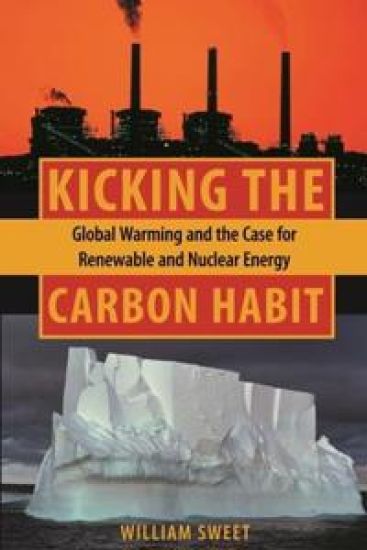
With glaciers melting, oceans growing more acidic, species dying out, and catastrophic events like Hurricane Katrina ever more probable, strong steps must be taken now to slow global warming. Further warming threatens entire regional economies and the well being of whole populations, and in this century alone, it could create a global cataclysm. Synthesizing information from leading scientists and the most up-to-date research, science journalist William Sweet examines what the United States can do to help prevent climate devastation. Rather than focusing on cutting oil consumption, which Sweet argues is expensive and unrealistic, the United States should concentrate on drastically reducing its use of coal. Coal-fired plants, which currently produce more than half of the electricity in the United States, account for two fifths of the country's greenhouse gas emissions of carbon dioxide into the atmosphere. Sweet believes a mixture of more environmentally sound technologies-wind turbines, natural gas, and nuclear reactors-can effectively replace coal plants, especially since dramatic improvements in technology have made nuclear power cleaner, safer, and more efficient. Sweet cuts through all the confusion and controversies. He explores dramatic advances made by climate scientists over the past twenty years and addresses the various political and economic issues associated with global warming, including the practicality of reducing emissions from automobiles, the efficacy of taxing energy consumption, and the responsibility of the United States to its citizens and the international community to reduce greenhouse gases. Timely and provocative, Kicking the Carbon Habit is essential reading for anyone interested in environmental science, economics, and the future of the planet.
With glaciers melting, oceans growing more acidic, species dying out, and catastrophic events like Hurricane Katrina ever more probable, strong steps must be taken now to slow global warming. Further warming threatens entire regional economies and the well being of whole populations, and in this century alone, it could create a global cataclysm. Synthesizing information from leading scientists and the most up-to-date research, science journalist William Sweet examines what the United States can do to help prevent climate devastation. Rather than focusing on cutting oil consumption, which Sweet argues is expensive and unrealistic, the United States should concentrate on drastically reducing its use of coal. Coal-fired plants, which currently produce more than half of the electricity in the United States, account for two fifths of the country's greenhouse gas emissions of carbon dioxide into the atmosphere. Sweet believes a mixture of more environmentally sound technologies-wind turbines, natural gas, and nuclear reactors-can effectively replace coal plants, especially since dramatic improvements in technology have made nuclear power cleaner, safer, and more efficient. Sweet cuts through all the confusion and controversies. He explores dramatic advances made by climate scientists over the past twenty years and addresses the various political and economic issues associated with global warming, including the practicality of reducing emissions from automobiles, the efficacy of taxing energy consumption, and the responsibility of the United States to its citizens and the international community to reduce greenhouse gases. Timely and provocative, Kicking the Carbon Habit is essential reading for anyone interested in environmental science, economics, and the future of the planet.
A complete bibliography of British philosophy in a single source, this reference covers the period of 1870 to the present day. It contains entries on over 600 names, listing not only each author's books, but also his/her shorter writing and relevant secondary sources.

Animal Language, Animal Passions and Animal Morals
William Sweet
The Thoemmes Libraries
2003
sidottu