Kirjojen hintavertailu – 12 903 725 kirjaa ja 27 kauppaa

Kirjailija

William Twining

Kirjat ja teokset yhdessä paikassa: 19 kirjaa, julkaisuja vuosilta 1992–2019, suosituimpiin kuuluu A Practical Treatise On the Diseases of the Liver and Biliary Passages. Vertaile teosten hintoja ja tarkista saatavuus suomalaisista kirjakaupoista.

19 kirjaa

Kirjojen julkaisuvuodet: 1992–2019.

Jurist in Context

Jurist in Context

William Twining

Cambridge University Press
2019
pokkari
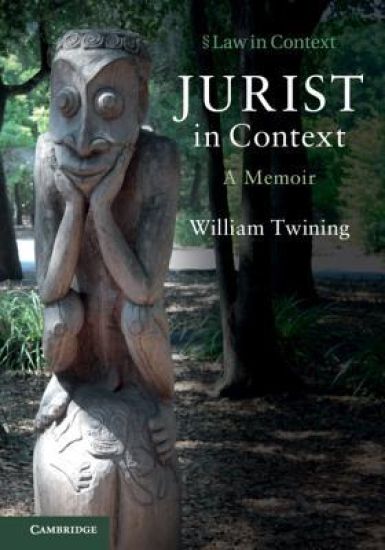
This is the engaging and accessible intellectual memoir of a leading jurist. It tells the story of the development of his thoughts and writings over sixty years in the context of three continents and addresses the complexities of decolonisation, the troubles in Belfast, the contextual turn in legal studies, rethinking evidence and the implications of globalisation which have been central to his life and research. In propounding his original views as an enthusiastic self-styled 'legal nationalist', Twining maps his ideas of law as a unique discipline, which pervades all spheres of social and political life while combining theory and practice, concepts and values, facts and rules in uniquely fascinating ways. Addressed to academic lawyers generally and to other non-specialists, this story brings out the importance and fascinations of a discipline that has changed, expanded and diversified in the post-War years, with an eye to its future development and potential.
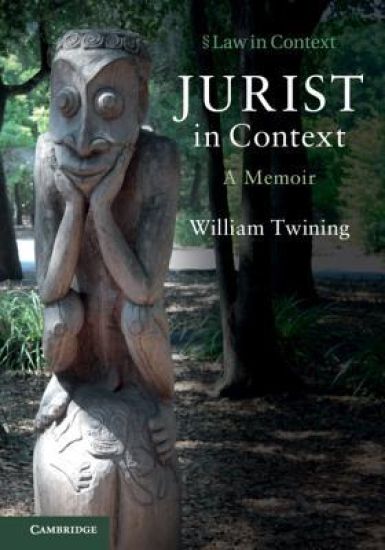
Jurist in Context

Jurist in Context

William Twining

Cambridge University Press
2019
sidottu
This is the engaging and accessible intellectual memoir of a leading jurist. It tells the story of the development of his thoughts and writings over sixty years in the context of three continents and addresses the complexities of decolonisation, the troubles in Belfast, the contextual turn in legal studies, rethinking evidence and the implications of globalisation which have been central to his life and research. In propounding his original views as an enthusiastic self-styled 'legal nationalist', Twining maps his ideas of law as a unique discipline, which pervades all spheres of social and political life while combining theory and practice, concepts and values, facts and rules in uniquely fascinating ways. Addressed to academic lawyers generally and to other non-specialists, this story brings out the importance and fascinations of a discipline that has changed, expanded and diversified in the post-War years, with an eye to its future development and potential.

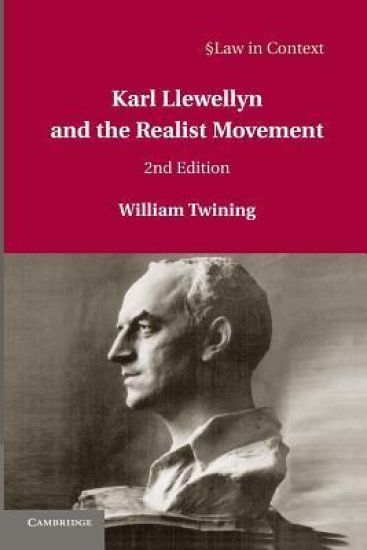
Karl Llewellyn and the Realist Movement

Karl Llewellyn and the Realist Movement

William Twining

Cambridge University Press
2014
pokkari
First published in 1973, Karl Llewellyn and the Realist Movement is a classic account of American Legal Realism and its leading figure. Karl Llewellyn is the best known and most substantial jurist of the group of lawyers known as the American Realists. He made important contributions to legal theory, legal sociology, commercial law, contract law, civil liberties and legal education. This intellectual biography sets Llewellyn in the broad context of the rise of the American Realist Movement and contains an overview of his life before focusing on his most important works, including The Cheyenne Way, The Bramble Bush, The Common Law Tradition and the Uniform Commercial Code. In this second edition the original text is supplemented with a preface by Frederick Schauer and an afterword in which William Twining gives a fascinating account of the making of the book and comments on developments in relevant legal scholarship over the past forty years.
Karl Llewellyn and the Realist Movement

Karl Llewellyn and the Realist Movement

William Twining

Cambridge University Press
2012
sidottu
First published in 1973, Karl Llewellyn and the Realist Movement is a classic account of American Legal Realism and its leading figure. Karl Llewellyn is the best known and most substantial jurist of the group of lawyers known as the American Realists. He made important contributions to legal theory, legal sociology, commercial law, contract law, civil liberties and legal education. This intellectual biography sets Llewellyn in the broad context of the rise of the American Realist Movement and contains an overview of his life before focusing on his most important works, including The Cheyenne Way, The Bramble Bush, The Common Law Tradition and the Uniform Commercial Code. In this second edition the original text is supplemented with a preface by Frederick Schauer and an afterword in which William Twining gives a fascinating account of the making of the book and comments on developments in relevant legal scholarship over the past forty years.
Legal Theory and the Legal Academy

Legal Theory and the Legal Academy

Maksymilian Del Mar; William Twining

Ashgate Publishing Limited
2010
sidottu
The third in a series of three volumes on Contemporary Legal Theory, this volume deals with four topics: 1) the role of legal theory in the legal curriculum; 2) the teaching of legal theory; 3) the relationship of legal theory to legal scholarship; and 4) the relationship of legal theory to comparative law. The focus of the first two topics is on the common law world, where the debates over the aims and proper place of legal theory in the study of law have traversed a good deal of ground since John Austin's 1828 lecture, 'The Uses and the Study of Jurisprudence.' These first two parts offer a selection of the most important papers, including surveys, as well as pedagogical viewpoints and particular course descriptions from analytical, critical, feminist, law-and-literature and global perspectives. The last three decades have seen just as many changes for legal scholarship and comparative law. These changes (such as the rise of empirical legal scholarship) have often attracted the attention of legal theorists. Within comparative law, the last thirty years have witnessed intense methodological reflection within the discipline; the results of these reflections are themselves properly recognised as legal theoretical contributions. The volume collects the key papers, including those by Neil MacCormick, Mark Van Hoecke, Andrew Halpin, William Ewald and Geoffrey Samuel.
How to Do Things with Rules

How to Do Things with Rules

William Twining; David Miers

Cambridge University Press
2010
pokkari
New to English law? Need to know how rules are made, interpreted and applied? This popular and well-established textbook will show you how. It simplifies legal method by combining examples with an account of rules in general: the who, what, why and how of interpretation. Starting with standpoint and context, it identifies factors that give rise to doubts about the interpretation of a rule and recommends a systematic approach to analysing those factors. Questions and exercises integrated in the text and on the accompanying website will help you to develop skills in reading, interpreting and arguing about legal and other rules. The text is fully updated on developments in the legislative process and the judicial interpretation of statutes and precedent. It includes a new chapter on 'The European Dimension' reflecting the changes brought about by the Human Rights Act 1998.
How to Do Things with Rules

How to Do Things with Rules

William Twining; David Miers

Cambridge University Press
2010
sidottu
New to English law? Need to know how rules are made, interpreted and applied? This popular and well-established textbook will show you how. It simplifies legal method by combining examples with an account of rules in general: the who, what, why and how of interpretation. Starting with standpoint and context, it identifies factors that give rise to doubts about the interpretation of a rule and recommends a systematic approach to analysing those factors. Questions and exercises integrated in the text and on the accompanying website will help you to develop skills in reading, interpreting and arguing about legal and other rules. The text is fully updated on developments in the legislative process and the judicial interpretation of statutes and precedent. It includes a new chapter on 'The European Dimension' reflecting the changes brought about by the Human Rights Act 1998.
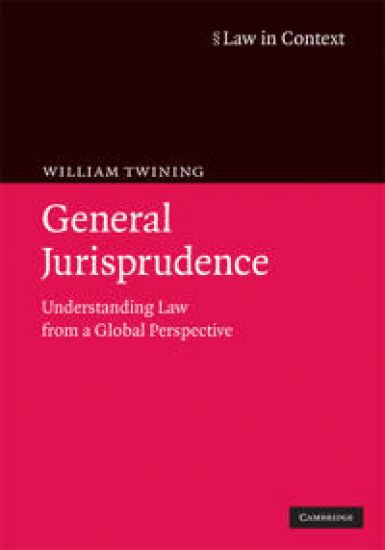
General Jurisprudence

General Jurisprudence

William Twining

Cambridge University Press
2009
pokkari

Halvin toimitettuna 74,10 €

This book explores how globalisation influences the understanding of law. Adopting a broad concept of law and a global perspective, it critically reviews mainstream Western traditions of academic law and legal theory. Its central thesis is that most processes of so-called 'globalisation' take place at sub-global levels and that a healthy cosmopolitan discipline of law should encompass all levels of social relations and the legal ordering of these relations. It illustrates how the mainstream Western canon of jurisprudence needs to be critically reviewed and extended to take account of other legal traditions and cultures. Written by the one of the foremost scholars in the field, this important work presents an exciting alternative vision of jurisprudence. It challenges the traditional canon of legal theorists and guides the reader through a field undergoing seismic changes in the era of globalisation. This is essential reading for all students of jurisprudence and legal theory.
General Jurisprudence

General Jurisprudence

William Twining

Cambridge University Press
2009
sidottu
This book explores how globalisation influences the understanding of law. Adopting a broad concept of law and a global perspective, it critically reviews mainstream Western traditions of academic law and legal theory. Its central thesis is that most processes of so-called 'globalisation' take place at sub-global levels and that a healthy cosmopolitan discipline of law should encompass all levels of social relations and the legal ordering of these relations. It illustrates how the mainstream Western canon of jurisprudence needs to be critically reviewed and extended to take account of other legal traditions and cultures. Written by the one of the foremost scholars in the field, this important work presents an exciting alternative vision of jurisprudence. It challenges the traditional canon of legal theorists and guides the reader through a field undergoing seismic changes in the era of globalisation. This is essential reading for all students of jurisprudence and legal theory.
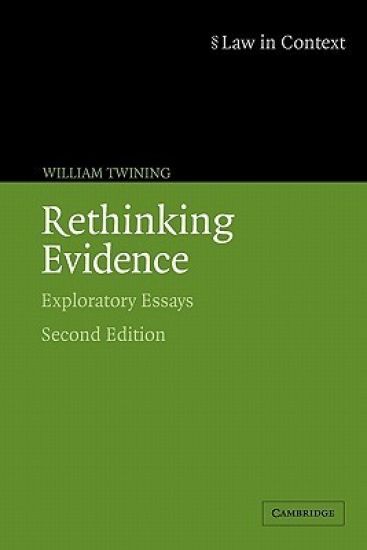
Rethinking Evidence

Rethinking Evidence

William Twining

Cambridge University Press
2006
pokkari
The Law of Evidence has traditionally been perceived as a dry, highly technical, and mysterious subject. This book argues that problems of evidence in law are closely related to the handling of evidence in other kinds of practical decision-making and other academic disciplines, that it is closely related to common sense and that it is an interesting, lively and accessible subject. These essays develop a readable, coherent historical and theoretical perspective about problems of proof, evidence, and inferential reasoning in law. Although each essay is self-standing, they are woven together to present a sustained argument for a broad inter-disciplinary approach to evidence in litigation, in which the rules of evidence play a subordinate, though significant, role. This revised and enlarged edition includes a revised introduction, the best-known essays in the first edition, and chapters on narrative and argumentation, teaching evidence, and evidence as a multi-disciplinary subject.
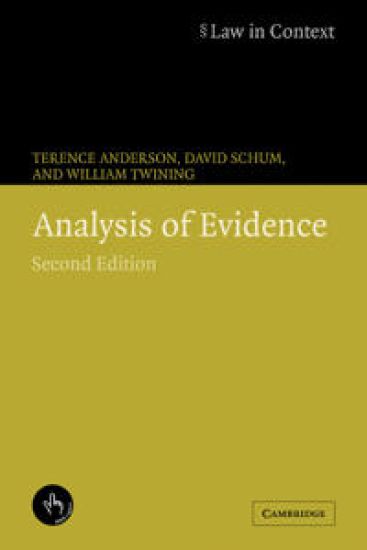
Analysis of Evidence

Analysis of Evidence

Anderson Terence; David Schum; William Twining

Cambridge University Press
2005
pokkari

Halvin toimitettuna 66,10 €

This extensively revised second edition is a rigorous introduction to the construction and criticism of arguments about questions of fact, and to the marshalling and evaluation of evidence at all stages of litigation. It covers the principles underlying the logic of proof; the uses and dangers of story-telling; standards for decision and the relationship between probabilities and proof; the chart method and other methods of analyzing and ordering evidence in fact-investigation, in preparing for trial, and in connection with other important decisions in legal processes and in criminal investigation and intelligence analysis. Most of the chapters in this new edition have been rewritten; the treatment of fact investigation, probabilities and narrative has been extended; and new examples and exercises have been added. Designed as a flexible tool for undergraduate and postgraduate courses on evidence and proof, students, practitioners and teachers alike will find this book challenging but rewarding.
The Great Juristic Bazaar

The Great Juristic Bazaar

William Twining

Ashgate Publishing Limited
2002
sidottu
Some law students find jurisprudence daunting, impersonal, dry and seemingly detached from practical affairs. William Twining believes that many jurists have been fascinating people struggling with questions that are both historically significant and relevant to contemporary issues. This book brings together previously published essays that centre on three related themes: reading Juristic texts, the role of narrative in law, and relations between theory and practice. Building on a pragmatic view of jurisprudence, the author explores different ways of reading and using Juristic texts, to set them in context, to bring them to life and to engage with the reader’s own concerns. He applies this approach to throw fresh light on four familiar figures - Holmes, Bentham, Hart and Llewellyn. Challenging limited agendas and parochial points of view, Twining outlines a programme for a broad approach to legal theory in the context of globalization. He satirizes some bad habits in jurisprudence and explores in depth how stories can be seductive vehicles for cheating in legal contexts, yet are essential for making sense of disputes about fact or law.
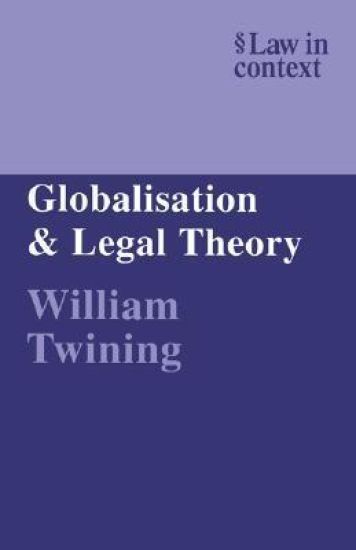
Globalisation and Legal Theory

Globalisation and Legal Theory

William Twining

Cambridge University Press
2000
pokkari
This work brings together eight linked essays which make the case for a revival of general jurisprudence in response to the challenges of globalisation, explores how far the heritage of Anglo-American jurisprudence and comparative law is adequate to meeting the challenges, and puts forward an agenda for general jurisprudence and comparative law, especially in the English-speaking world in the first ten or twenty years of the millennium. The book is traditional in focussing on the mainstream of Anglo-American intellectual heritage and moderately radical in identifying the need for rethinking basic issues and putting forward a series of provocative propositions as a basis for discussion.
Globalisation and Legal Theory

Globalisation and Legal Theory

William Twining

Cambridge University Press
2000
pokkari
This work brings together eight linked essays which make the case for a revival of general jurisprudence in response to the challenges of globalisation, explores how far the heritage of Anglo-American jurisprudence and comparative law is adequate to meeting the challenges, and puts forward an agenda for general jurisprudence and comparative law, especially in the English-speaking world in the first ten or twenty years of the millennium. The book is traditional in focussing on the mainstream of Anglo-American intellectual heritage and moderately radical in identifying the need for rethinking basic issues and putting forward a series of provocative propositions as a basis for discussion.
Law in Context

Law in Context

William Twining

Oxford University Press
1997
sidottu
The central theme of Twining's book is that law is a marvellous subject of study, but to do justice to its potential requires an enlargement of vision, multiple perspectives, and a radical reappraisal of the role, culture, and practices of law schools. Treating theory, education, scholarship, publishing, and professional practice as complementary activities, the author explores the history, philosophy, and practical problems of attempts to broaden the study of law in a disciplined way. He draws upon his personal experience of law schools throughout the common law world and his special knowledge of jurisprudence, evidence,torts and legal method to examine a wide range of topics in depth. These include, for example, the nature and tasks of legal theory, different kinds of legal literature, and access to legal education and the profession. This provocative and readable book will appeal to all those with an interest in the roles of legal theory, law schools, and lawyers in a changing world.