Kirjailija
William Walker Atkinson
Kirjat ja teokset yhdessä paikassa: 869 kirjaa, julkaisuja vuosilta 1908–2026, suosituimpiin kuuluu Thought Vibration. Vertaile teosten hintoja ja tarkista saatavuus suomalaisista kirjakaupoista.
869 kirjaa
Kirjojen julkaisuvuodet: 1908–2026.
In this new thought classic, Atkinson looks at the law of attraction in the thought world. He points out the similarities between the law of Gravitation and the mental law of attraction. He explains that thought vibrations are as real as those manifesting as light, heat, Magnetism and electricity. The difference is in the vibratory rate which also explains the fact that thought vibrations cannot usually be perceived by our 5 senses. This is a really inspiring book. It gets you focused on your dreams and goals with very simple to understand directions. Everyone who reads and applies the information with a spirit of enthusiasm can feel the transformation in his life.
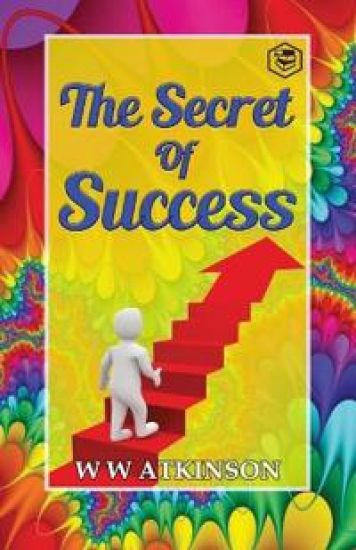
Much has been said about ""Success"", you can find thousands of pages that try to show you the way to follow to achieve ""success"", but why do only a few achieve it? Are there any straight-line steps to achieve it? In the pages of this book, William Walker Atkinson will unravel myths, reveal secrets, and help you find your own way to ""Success"". Within the pages of this book, You will find out how to awaken the sleeping forces of attraction, your personal magnetism, the powers of desire and more to create the life you have always wanted. The Secret of Success is a course of 9 lessons on the subject of the application of the latent powers of the individual toward attainment of success in life.
How to Read Human Nature is the original guide to human body language, personality, character, and qualities. It takes reading body language and voice inflection for meaning to the next level, analyzing such elements as mental qualities, emotive qualities, relative qualities, and perceptive qualities in the human brain, reminding one of the study of phrenology: I. Inner State and Outer Form II. The Inner Phase: Character III. The Outer Form: Personality IV. The Temperaments V. The Mental Qualities VI. The Egoistic Qualities VII. The Motive Qualities VIII. The Vitative Qualities IX. The Emotive Qualities X. The Applicative Qualities XI. The Modificative Qualities XII. The Relative Qualities XIII. The Perceptive Qualities XIV. The Reflective Qualities XV. The Religio-Moral Qualities XVI. Faces XVII. Chins and Mouths XVIII. Eyes, Ears, and Noses XIX. Miscellaneous Signs
Until the last few years the mere mention of the word "psychology" in connection with business was apt to be greeted with a shrug of the shoulders, a significant raising of the eyebrows-and a change of the subject. Psychology was a subject that savored of the class room, or else was thought to be somehow concerned with the soul, or possibly related to the abnormal phenomena generally classified as "psychic." The average business man was apt to impatiently resent the introduction into business of class room topics, or speculation regarding the soul, or of theories and tales regarding clairvoyance, telepathy, or general "spookiness"-for these were the things included in his concept of "psychology."
Atkinson's book is a smart historical and philosophical reference through the ages of these two beliefs. Reincarnation as a belief makes the fear of death obsolete. According to its followers; death is nothing more than a state change and our spirit is an everlasting, immortal light, containing our birth right a slice of the divine. Karma and Reincarnation goes hand in hand. Most religions have a trace of acknowledgement of these ancient laws, except Christianity. The original Christian Gnosis, that predated organized Christianity still believed in Karma and Reincarnation, the early Church fathers made sure that such notions were eliminated and wiped out. Hence strengthening their positions and the political ties the church and the state had forged.
Dynamic Thought; Or, The Law of Vibrant Energy
William Walker Atkinson
True Sign Publishing House
2021
pokkari
Dynamic Thought; or, the Law of Vibrant Energy, written in 1906 by W. W. Atkinson, takes relatively modern science alongside ancient occult teachings to discuss subjects often presented in Atkinson's magazine New Thought, and in many of the other books Atkinson authored. This book is a marriage of the Ancient Occult Teachings to the latest and most advanced conception of Modern Science. Partial Contents: Things as They Are; The Universality of Life and Mind; Life and Mind Among the Atoms; The Paradox of Science; Forces of Nature; Law of Attraction; Theory of Dynamic Thought; Law of Vibrant Energy; Riddle of the Sphinx; Mystery of Mind; Finer Forces of the Mind; Thought in Action.
William Walker Atkinson was an American pioneer of the New Thought movement. The main objective of his teachings was to increase the level of consciousness of people and to aware people of their true selves. This book contains 27 chapters on positive thinking, life priorities, the law of attraction, healing, life force, creative visualization, and personal power. It's a real practical guide to the psychology of the mind that you can apply to your everyday life. Step-by-step the reader is taken from theory to practical exercises offering helpful strategies. If you want to discover how to unlock your mental abilities, then begin reading.
Thought-Culture; Or, Practical Mental Training
William Walker Atkinson
True Sign Publishing House
2021
pokkari
What is thought? The answer is not an easy one, although we use the term familiarly almost every hour of our waking existence. The dictionaries define the term "Thought" as follows: "The act of thinking; the exercise of the mind in any way except sense and perception; serious consideration; deliberation; reflection; the power or faculty of thinking; the mental faculty of the mind; etc." This drives us back upon the term, "to think" which is defined as follows: "To occupy the mind on some subject; to have ideas; to revolve ideas in the mind; to cogitate; to reason; to exercise the power of thought; to have a succession of ideas or mental states; to perform any mental operation, whether of apprehension, judgment, or illation; to judge; to form a conclusion, to determine; etc."
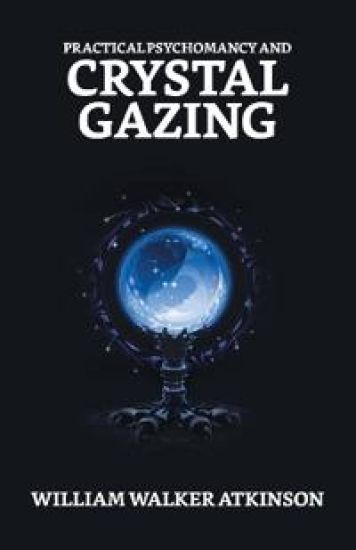
Practical Psychomancy And Crystal Gazing
William Walker Atkinson
True Sign Publishing House
2021
pokkari
Atkinson presents lessons on how to use and refine divination tools that are present in every human. He explains clairvoyance, psychomancy, psychometry and astral projections and how to use our "other" senses to gather information and impact outcomes in physical reality. New Thought" adherents at the turn of the 20th century vehemently believed they could tap into latent and mysterious mental powers, and one of the most influential thinkers of this early "New Age" philosophy offers here, in this delightfully weird 1908 work, a crash course in this benign and useful magic. He authored dozens of New Thought books under numerous pseudonyms, some of which are likely still unknown today, including "Yogi Ramacharaka" and "Theron Q. Dumont.
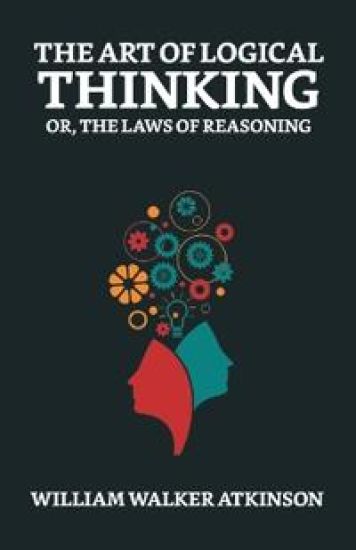
The Art of Logical Thinking; Or, The Laws of Reasoning
William Walker Atkinson
True Sign Publishing House
2021
pokkari
This work has been selected by scholars as being culturally important, and is part of the knowledge base of civilization as we know it. This work was reproduced from the original artifact, and remains as true to the original work as possible. Therefore, you will see the original copyright references, library stamps (as most of these works have been housed in our most important libraries around the world), and other notations in the work. This work is in the public domain in the United States of America, and possibly other nations. Within the United States, you may freely copy and distribute this work, as no entity (individual or corporate) has a copyright on the body of the work.
This book is a treasure chest full of occult wisdom. It includes twenty lessons on that will let the reader dive deep into his own powers, strange phenomena and spiritual wisdom. There is in every human being a sense which is not generally recognized as such, although nearly every person has had more or less experience regarding its workings. I refer to the sense of the presence of other living things, separate and apart from the operation of any of the five ordinary physical senses. I ask you to understand that I am not claiming that this is a higher sense than the other physical senses, or that it has come to man in a high state of evolution.
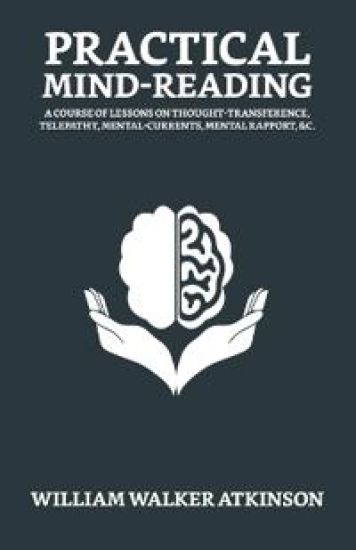
Practical Mind Reading was written by William Walker Atkinson. Followers of the New Thought movement of a century ago vehemently believed in the concept of "mind over matter," and one of the most influential thinkers of this early "New Age" philosophy here offers the latest (as of the turn of the 20th century) scientific investigations and proofs for the elusive marvel of mind reading, full instruction for tapping into the "Nerve Currents" that course through your brain and into the brains of others, and complete directions for parlor demonstrations and sensational feats that will astound your friends.
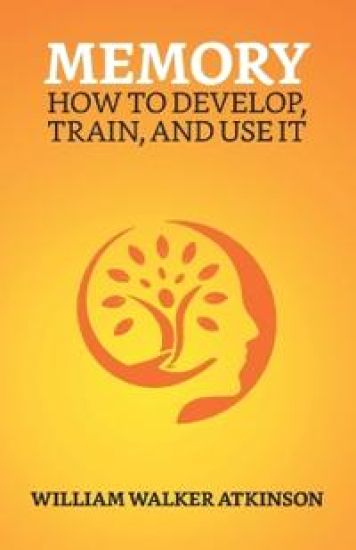
An in-depth series of chapters devoted to the use of our memory system; as the title suggests, how to develop our memory system, how to train it to improve it, and how to make the best use of it in our everyday lives, and to improve our positions in life. This book tells us about functions of brain. the key to super memory is nothing but through repetition, practice, review or recall. You will more likely to remember the topic which is interesting even without more repetitions compared to any other topic or subject. Interest creates attention.
Mind is defined as "the faculty or power whereby thinking creatures, feel, think, and will." This definition is inadequate and circular in nature, but this is unavoidable, for mind can be defined only in its own terms and only by reference to its own processes. Mind, except in reference to its own activities, cannot be defined or conceived. It is known to itself only through its activities. Mind without mental states is a mere abstraction-a word without a corresponding mental image or concept.