Kirjojen hintavertailu – 12 859 818 kirjaa ja 27 kauppaa

Kirjailija

William Winston

Kirjat ja teokset yhdessä paikassa: 55 kirjaa, julkaisuja vuosilta 1983–2021, suosituimpiin kuuluu Market Analysis. Vertaile teosten hintoja ja tarkista saatavuus suomalaisista kirjakaupoista.

55 kirjaa

Kirjojen julkaisuvuodet: 1983–2021.

4x4 Leadership and the Purpose of the Firm

4x4 Leadership and the Purpose of the Firm

William Winston; H H Bradshaw

Routledge Member of the Taylor and Francis Group
1998
nidottu
Most executive leaders will tell you they’re constantly striving to move their organizations toward some envisioned future, a future that includes increased trade, company and employee self-confidence, and customer satisfaction. And yet, this goal is often elusive because few executives possess the required know-how. But now, in 4X4 Leadership and the Purpose of the Firm, you’ll find how you can successfully move the levers of change that will make this threefold dream a reality for you and your company. In 4X4 Leadership and the Purpose of the Firm, 25 years of hands-on experience from some of the country’s most senior vice presidents and CEOs is at your fingertips. You’ll find out what top executives really worry about and how they use their influence in order to orchestrate positive change. In this book’s integrated, systematic model, you’ll tap into the synergy in the enduring architectural components that sustain any company--assets, people, organization, and systems--and discover in yourself the honorable and persistent executive leader who’s waiting to take charge. Specifically, you’ll read about:the ultimate destination--trade how to successfully manipulate the four levers of change to increase trade the management of self-esteem customers--their needs, wants, hopes, and worriesWhile most books on management and leadership training focus only on one or two methodologies, 4X4 Leadership and the Purpose of the Firm is an overall, systemic model that is both professional and practical. Its “big picture” overview will give sharp focus to the often blurry and indistinct nature of organizational goals. You’ll uncover revolutionary insights on financial and behavioral change and see that the organization-wide improvements you’re dreaming about are only a memo or phone call away.

Contemporary Sales Force Management

Contemporary Sales Force Management

William Winston; Tony Carter

Routledge Member of the Taylor and Francis Group
1997
sidottu
By analyzing and monitoring current trends in the marketplace, Contemporary Sales Force Management helps sales managers align resources and strategic efforts to gain an edge over competitors. You will develop an understanding of where current and prospective sales opportunities exist in order to fully utilize automation, how to update crisis management policies to reflect changing industry dynamics, and how to raise your level of sales efficiency through the use of customer advisory groups and sales technological tools, such as video conferencing, database management, and up-to-date industry software. Through the book’s important discussions on lowering mutual costs, building long-term customer relationships, improving sales skills, and developing core process skills, you will also learn to think and act with a strategic perspective that successfully steers the sales process. Grounded in practical applications, Contemporary Sales Force Management unites theoretical principles with applied examples and case studies gathered from research with major firms in dynamic markets such as Beijing and Shanghai in China, the European Union, and the United States. From these case studies demonstrating how top players achieve success, you gain critical information on:the role of the sales force manager in organizations strategic issues for an international sales effort gaining functional expertise in sales and marketing along with industry knowledge globalization and its impact on sales management strategies for applying Total Quality Management to sales electronic commerce and cultivating customers on the Web the consequences of having a poorly motivated sales force with low morale developing an environment that fosters and rewards the management of crisis understanding your biases and stereotypical assumptions about others and how these affect decisionmaking dealing with the legal and regulatory environment and ethical issues that arise in the course of managing the sales forceContemporary Sales Force Management is the book managers, entrepreneurs, business people, and faculty and students of executive business education programs have long awaited. Its sample sales plan, specific strategies, and hands-on advice will prove indispensable as you maneuver away from the coattails of your competitors into a leading position in the marketplace.
Contemporary Sales Force Management

Contemporary Sales Force Management

William Winston; Tony Carter

Routledge Member of the Taylor and Francis Group
1997
nidottu
By analyzing and monitoring current trends in the marketplace, Contemporary Sales Force Management helps sales managers align resources and strategic efforts to gain an edge over competitors. You will develop an understanding of where current and prospective sales opportunities exist in order to fully utilize automation, how to update crisis management policies to reflect changing industry dynamics, and how to raise your level of sales efficiency through the use of customer advisory groups and sales technological tools, such as video conferencing, database management, and up-to-date industry software. Through the book’s important discussions on lowering mutual costs, building long-term customer relationships, improving sales skills, and developing core process skills, you will also learn to think and act with a strategic perspective that successfully steers the sales process. Grounded in practical applications, Contemporary Sales Force Management unites theoretical principles with applied examples and case studies gathered from research with major firms in dynamic markets such as Beijing and Shanghai in China, the European Union, and the United States. From these case studies demonstrating how top players achieve success, you gain critical information on:the role of the sales force manager in organizations strategic issues for an international sales effort gaining functional expertise in sales and marketing along with industry knowledge globalization and its impact on sales management strategies for applying Total Quality Management to sales electronic commerce and cultivating customers on the Web the consequences of having a poorly motivated sales force with low morale developing an environment that fosters and rewards the management of crisis understanding your biases and stereotypical assumptions about others and how these affect decisionmaking dealing with the legal and regulatory environment and ethical issues that arise in the course of managing the sales forceContemporary Sales Force Management is the book managers, entrepreneurs, business people, and faculty and students of executive business education programs have long awaited. Its sample sales plan, specific strategies, and hands-on advice will prove indispensable as you maneuver away from the coattails of your competitors into a leading position in the marketplace.
Persuasive Advertising for Entrepreneurs and Small Business Owners

Persuasive Advertising for Entrepreneurs and Small Business Owners

William Winston; Jay P Granat

Routledge Member of the Taylor and Francis Group
1997
nidottu
Here is the perfect book for entrepreneurs and small business owners who want to know how to create effective advertising on an affordable budget. Persuasive Advertising for Entrepreneurs and Small Business Owners shows you how to plan and execute money-making advertisements and commercials--on a workable budget. Jay Granat, an experienced marketing professional and ad man, provides readers with a practical understanding of advertising principles, media selection, copywriting, consumer behavior, and persuasive advertising methods in promotional efforts. These principles have important implications, and Jay Granat shows you how to utilize them and stay within your means. Successful cases from across the media--television, print, direct mail, radio, transit, and public relations, representing construction, law, medicine, publishing, retail businesses, restaurants, and others--highlight various prosperous approaches to persuasive advertising. Written specifically for entrepreneurs and small business owners, Granat’s book is the first to explain how to use persuasive tactics and strategies. Ideal for established small business owners and those starting such a venture, this manual makes affordable advertising an easier step on the path to success. In addition to analyzing many aspects of advertising, this manual outlines appropriate networking and public relations strategies for entrepreneurs and small business owners. Granat teaches you how to construct money-making advertising and to recognize when your sales messages are effective and when the messages need to become more persuasive. To help illustrate the power of effective sales messages, he includes examples of his own advertising successes and failures. You will be better equipped to foresee when your own advertising campaigns are more likely to succeed or more likely to fail and how to reverse a failing campaign. Descriptions of the advantages and disadvantages of each advertising medium assist with the question of how to construct effective and persuasive selling messages for specific media. Whether you are looking for advice on how to plan a marketing/advertising campaign, ways to familiarize yourself with each medium available and select a medium to carry your messages, or how to use mind-set advertising, you will find it in Persuasive Advertising for Entrepreneurs and Small Business Owners. This abundance of useful information is ideal for copywriters, brand managers, entrepreneurial institutes, business professors, communications professionals, readers of Inc., Success, and Entrepreneur, advertising and marketing students, and of course, entrepreneurs and small business owners.
How Consumers Pick a Hotel

How Consumers Pick a Hotel

William Winston; Dennis J Cahill

Routledge Member of the Taylor and Francis Group
1997
sidottu
Venture through the pages of How Consumers Pick a Hotel to learn the steps of selecting a target and using consumer behavior applications to segment the market to reach your target. Much as a consumer goes through the process of selecting a satisfying hotel, you can choose to use the information provided to make your hospitality career relaxing and satisfying. When you finish this fantastic reading journey, you’ll be prepared to offer services that meet the public’s demands, and you’ll possess the prerequisite knowledge and skills for developing your own strategic approach to a target market. As the many methods of segmentation are discussed in detail, you will also learn effective strategies for communicating with multiple segments. Ideal as a supplementary text for marketing and hospitality marketing courses, How Consumers Pick a Hotel provides a concise overview of consumer behavior and intertwines marketing theory with sound ways in which to implement the theory. This will both orient you and give you a solid base for understanding the principles in question. You will quickly grasp the various methods of segmentation, and the book’s “real-life” segmentation schemes will teach you how to apply them in day-to-day business. As the many methods of segmentation are discussed in detail, you will learn effective strategies for communicating with multiple segments. In the end, you will have acquired the prerequisite knowledge and skills for developing your own strategic approach to a target market. How Consumers Pick a Hotel is suitable both as a reference guide for practicing marketing managers and hospitality professionals who specialize in marketing and as a companion text for graduates and undergraduates who need to know the ABCs of target marketing. You’ll turn to it again and again for guidance and practical, easy suggestions!
How Consumers Pick a Hotel

How Consumers Pick a Hotel

William Winston; Dennis J Cahill

Routledge Member of the Taylor and Francis Group
1997
nidottu
Venture through the pages of How Consumers Pick a Hotel to learn the steps of selecting a target and using consumer behavior applications to segment the market to reach your target. Much as a consumer goes through the process of selecting a satisfying hotel, you can choose to use the information provided to make your hospitality career relaxing and satisfying. When you finish this fantastic reading journey, you’ll be prepared to offer services that meet the public’s demands, and you’ll possess the prerequisite knowledge and skills for developing your own strategic approach to a target market. As the many methods of segmentation are discussed in detail, you will also learn effective strategies for communicating with multiple segments. Ideal as a supplementary text for marketing and hospitality marketing courses, How Consumers Pick a Hotel provides a concise overview of consumer behavior and intertwines marketing theory with sound ways in which to implement the theory. This will both orient you and give you a solid base for understanding the principles in question. You will quickly grasp the various methods of segmentation, and the book’s “real-life” segmentation schemes will teach you how to apply them in day-to-day business. As the many methods of segmentation are discussed in detail, you will learn effective strategies for communicating with multiple segments. In the end, you will have acquired the prerequisite knowledge and skills for developing your own strategic approach to a target market. How Consumers Pick a Hotel is suitable both as a reference guide for practicing marketing managers and hospitality professionals who specialize in marketing and as a companion text for graduates and undergraduates who need to know the ABCs of target marketing. You’ll turn to it again and again for guidance and practical, easy suggestions!
Marketing Research That Pays Off

Marketing Research That Pays Off

William Winston; Larry Percy

Routledge Member of the Taylor and Francis Group
1997
sidottu
From Oreos, Jell-O, raisins, and milk to amusement parks, retail centers, ATMs, and mutual funds, the case studies presented in Marketing Research That Pays Off offer you insight into how actual companies have used market research to successfully solve marketing problems. Editor Larry Percy has collected a series of cases from consumer, service, and industrial marketing executives that provides a problem/solution look at how to address major marketing issues with marketing research. The studies presented cover such topics as communications issues, new product introduction, brand equity, brand positioning, and sales analysis. Because they represent successful applications of marketing research to challenging questions, these cases offer a number of specific lessons. Throughout, Marketing Research That Pays Off shows you how to:use the right sample for reliable data reduce the time needed for traditionally multi-phased research avoid the pitfalls of short-term effects in tracking data deal with multinational research use attitude measures to help interpret sales data involve marketing management to ensure acceptance of results make effective use of small budgetsThe format of each chapter allows the authors to pose a question or present a particular marketing problem and then take you step-by-step through the solution. Actual problems solved include how to improve upon a successful campaign, revitalize a failing retail center, avoid misunderstanding in conducting multinational research, use scanner data to help understand the package goods market, avoid being mislead by short-term effects in tracking data, learn what aspects of a package attract attention and what they communicate, and how to effectively reach both children and their parents with one message--all on a small budget. It is the unique problem/solution approach to marketing research that makes Marketing Research That Pays Off especially valuable to all marketing research professionals and beginner- to mid-level marketing managers. In addition, the book's easy-to-read presentation of case studies makes it approachable and useful as a companion text for classes in marketing and marketing research.
Marketing Research That Pays Off

Marketing Research That Pays Off

William Winston; Larry Percy

Routledge Member of the Taylor and Francis Group
1997
nidottu
From Oreos, Jell-O, raisins, and milk to amusement parks, retail centers, ATMs, and mutual funds, the case studies presented in Marketing Research That Pays Off offer you insight into how actual companies have used market research to successfully solve marketing problems. Editor Larry Percy has collected a series of cases from consumer, service, and industrial marketing executives that provides a problem/solution look at how to address major marketing issues with marketing research. The studies presented cover such topics as communications issues, new product introduction, brand equity, brand positioning, and sales analysis. Because they represent successful applications of marketing research to challenging questions, these cases offer a number of specific lessons. Throughout, Marketing Research That Pays Off shows you how to:use the right sample for reliable data reduce the time needed for traditionally multi-phased research avoid the pitfalls of short-term effects in tracking data deal with multinational research use attitude measures to help interpret sales data involve marketing management to ensure acceptance of results make effective use of small budgetsThe format of each chapter allows the authors to pose a question or present a particular marketing problem and then take you step-by-step through the solution. Actual problems solved include how to improve upon a successful campaign, revitalize a failing retail center, avoid misunderstanding in conducting multinational research, use scanner data to help understand the package goods market, avoid being mislead by short-term effects in tracking data, learn what aspects of a package attract attention and what they communicate, and how to effectively reach both children and their parents with one message--all on a small budget. It is the unique problem/solution approach to marketing research that makes Marketing Research That Pays Off especially valuable to all marketing research professionals and beginner- to mid-level marketing managers. In addition, the book's easy-to-read presentation of case studies makes it approachable and useful as a companion text for classes in marketing and marketing research.
Predicting Successful Hospital Mergers and Acquisitions

Predicting Successful Hospital Mergers and Acquisitions

William Winston; David P Angrisani; Robert L Goldman

Routledge Member of the Taylor and Francis Group
1997
sidottu
As managed care continues to increase in the United States, hospital and system executives consider mergers and acquisitions more frequently for both aggressive and defensive reasons. Predicting Successful Hospital Mergers and Acquisitions can help you learn to analyze data to determine which hospitals are potential candidates for merger and which are risky business ventures. You will learn to take into account not only the marketing and financial elements of mergers and acquisitions, but also the operational factors crucial for success. You will also acquire a set of guidelines and financial analytical approaches that prepare you for forecasting the results of proposed mergers or acquisitions between acute units. Because few new markets are available for hospitals and competition is increasing, performing mergers and acquisitions may be the only route available for organizations wishing to grow. Predicting Successful Hospital Mergers and Acquisitions teaches hospital, system, and other health service industry executives how to keep abreast of their market positions to remain competitive and efficient in the current, intense managed care environment. As you read Predicting Successful Hospital Mergers and Acquisitions, you learn to identify significant financial variables in the market that will differentiate between merger candidates and non-targeted hospitals. The book’s coverage of the following topics is important to your understanding of the health care market and the options available:market penetration product development market development diversification significant variables one year prior to merger use of accounting numbers to predict takeovers managed care staffing issuesPredicting Successful Hospital Mergers and Acquisitions gives you a practical, proven model for predicting the outcome of merger and acquisition maneuvers. This model is developed from accurate, consistent, and complete data from California, a trendsetting market in health care delivery, during the years 1984 to 1992. It can be applied not only to hospital mergers and acquisitions, but also to skilled nursing facilities, psychiatric care centers, and rehabilitation facilities seeking growth. Educators and program directors in health care administration programs and executives and boards of imaging centers, surgi-centers, and home health agencies can also employ this model to stimulate growth and expansion.
Predicting Successful Hospital Mergers and Acquisitions

Predicting Successful Hospital Mergers and Acquisitions

William Winston; David P Angrisani; Robert L Goldman

Routledge Member of the Taylor and Francis Group
1997
nidottu
As managed care continues to increase in the United States, hospital and system executives consider mergers and acquisitions more frequently for both aggressive and defensive reasons. Predicting Successful Hospital Mergers and Acquisitions can help you learn to analyze data to determine which hospitals are potential candidates for merger and which are risky business ventures. You will learn to take into account not only the marketing and financial elements of mergers and acquisitions, but also the operational factors crucial for success. You will also acquire a set of guidelines and financial analytical approaches that prepare you for forecasting the results of proposed mergers or acquisitions between acute units. Because few new markets are available for hospitals and competition is increasing, performing mergers and acquisitions may be the only route available for organizations wishing to grow. Predicting Successful Hospital Mergers and Acquisitions teaches hospital, system, and other health service industry executives how to keep abreast of their market positions to remain competitive and efficient in the current, intense managed care environment. As you read Predicting Successful Hospital Mergers and Acquisitions, you learn to identify significant financial variables in the market that will differentiate between merger candidates and non-targeted hospitals. The book’s coverage of the following topics is important to your understanding of the health care market and the options available:market penetration product development market development diversification significant variables one year prior to merger use of accounting numbers to predict takeovers managed care staffing issuesPredicting Successful Hospital Mergers and Acquisitions gives you a practical, proven model for predicting the outcome of merger and acquisition maneuvers. This model is developed from accurate, consistent, and complete data from California, a trendsetting market in health care delivery, during the years 1984 to 1992. It can be applied not only to hospital mergers and acquisitions, but also to skilled nursing facilities, psychiatric care centers, and rehabilitation facilities seeking growth. Educators and program directors in health care administration programs and executives and boards of imaging centers, surgi-centers, and home health agencies can also employ this model to stimulate growth and expansion.
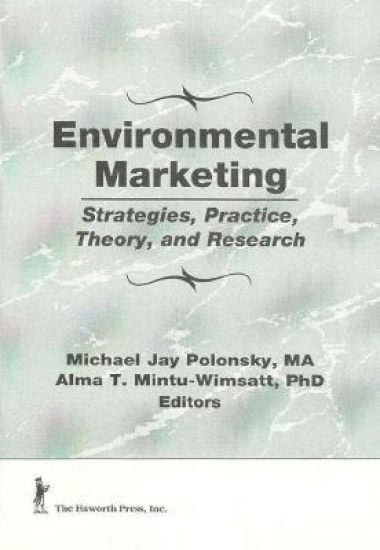
Environmental Marketing

Environmental Marketing

William Winston; Alma T Mintu-Wimsatt

Routledge Member of the Taylor and Francis Group
1997
nidottu
Environmental Marketing: Strategies, Practice, Theory, and Research is a timely resource for the 1990s. It examines a broad range of issues that affect environmental behavior while providing materials and guidance to marketing decisionmakers. It will guide your organization toward a decidedly “green” marketing movement, toward marketing concepts and tools that not only serve your organization's objectives but preserve and protect the environment as well. Environmental Marketing clearly defines the potential roles of organizations, consumers, and governments and examines how these groups impact environmental factors through the marketing process. The book helps you understand alternative perspectives to green marketing issues and, in turn, enables you to make clearer, more conscious decisions toward improving your environmental marketing performance. This resourceful text begins by defining the concept of environmental or “green” marketing and how the idea of a healthy planet and successful marketing strategies can co-exist. It discusses the consumer's behavior toward environmental products and how marketers can effectively educate them, the guidelines involved in doing so, and the consequences of failing to do so. The marketer's position on environmental changes in industry is examined along with alternatives for striking a balance between marketing objectives and environmental concerns. Finally, the book discusses the global response to environmental marketing and where multi-national organizations belong within this balance. Environmental Marketing is a book for all managers involved in decisions impacting the environment. It is also of great interest to public policymakers and academics who wish for quick insight into environmental marketing issues.
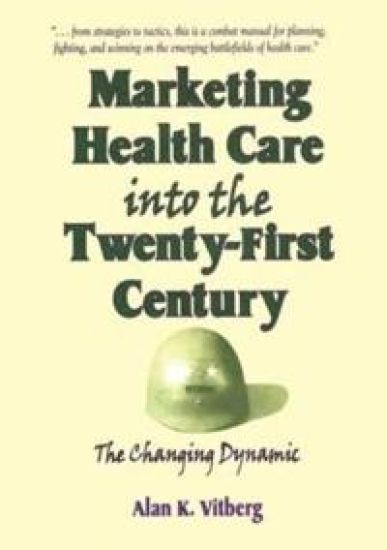
Marketing Health Care Into the Twenty-First Century

Marketing Health Care Into the Twenty-First Century

William Winston; Alan K Vitberg

Routledge Member of the Taylor and Francis Group
1996
sidottu
Marketing Health Care Into the Twenty-First Century explores recent and anticipated changes and trends--legislative, economic, organizational, clinical, and operational--from a strategic marketing perspective. Author Alan K. Vitberg, a respected consultant in health care marketing, takes an unabashedly strong, direct, and aggressive perspective on these trends, maintaining that a state of war exists in the health care industry--a war that will only increase in fervor and intensity as organizations fight for survival and their share of hundreds of billions of dollars spent in America on health care. According to Marketing Health Care Into the Twenty-First Century, those payers and providers who understand that they’re fighting a war and act accordingly stand the best chance of short term survival and long term prosperity. Those who bury their heads in the sand, awaiting the storm of war to blow over, will find themselves prisoners of their inactivity. Marketing Health Care Into the Twenty-First Century succinctly captures and explores issues and trends affecting participants in the battle for consumers’health care dollars, including: the growth of managed care; emerging health care systems; formation of provider networks and other organizational structures; the relationship between risk and product, target market, and organizational options; the emerging clout of primary care; mergers and acquisitions; and shifts in health care dollar flow. Marketing Health Care Into the Twenty-First Century is also one of the first books in the market examining changes being made to Medicare and Medicaid programs and their strategic and tactical implications for health care industry participants. In order to take advantage of these changes and trends, Vitberg moves from the conceptual to the practical by defining and delivering insights into the concept of competitive innovation and its relationship to competitive advantage--hearing, listening, and responding to the voice of the market through meaning brand identification, product differentiation, and intrusive marketing communications that motivate customers to a preferential purchase decision. Anyone in the health care industry--marketing, planning, and development professionals with hospitals, HMOs, PPOs, networks/alliances, insurance companies, and medical groups--is among those who will find Marketing Health Care Into the Twenty-First Century a valuable resource for embracing strategic marketing now and in the near future. The book also serves as informative, stimulating reading for professors and students in graduate level health care administration courses.
Marketing for Churches and Ministries

Marketing for Churches and Ministries

William Winston; Robert E Stevens; David L Loudon

Routledge Member of the Taylor and Francis Group
1996
nidottu
This comprehensive new book is the first guide to applications in marketing concepts in church and ministry services. Demonstrations of marketing concepts and techniques for effectively meeting the needs of constituents dispel any negative connotations about marketing religious organizations. Straightforward presentations of basic marketing principles emphasize their use in churches or ministries. This invaluable book features two complete marketing plans--one for churches, one for ministries--as examples to use in developing your own marketing plan. Marketing for Churches and Ministries addresses:what marketing is and is not. It describes how marketing can be successfully used as a tool by a church ministry. constituent analysis, showing how analyzing needs is the starting point in planning. the steps involved in marketing planning. program decisions needed to develop an effective program. communications programs and tools and how to use them effectively. how to obtain contributions and services of contributors. An excellent introduction to the marketing of churches and ministries, this volume blends sound theory with practically oriented instruction to facilitate the application of these principles to individual organizations. The definition of marketing in this helpful book is based on a system of voluntary exchanges and will assist you in analyzing the needs of constituents, developing programs to meet these needs, providing programs at the right time and place, communicating effectively with constituents, and attracting the resources needed to underwrite the activities of the organization. Church administrators and pastors will find Marketing for Churches and Ministries a practical tool for applying marketing strategies to their ministries while undergraduate students majoring in church administration will find it useful as an introduction to the marketing of churches and ministries.
The Clinician's Guide to Managed Behavioral Care

The Clinician's Guide to Managed Behavioral Care

William Winston; Norman Winegar

Routledge Member of the Taylor and Francis Group
1996
sidottu
Managed care is a revolution impacting the practice of clinicians throughout America. The Clinician’s Guide to Managed Behavioral Care, called “a survival kit” and “must reading,” helps clinicians develop and market professional services attuned to the needs of managed care systems, manage the utilization process, and reshape an office practice or hospital-based program to become more “managed care friendly.” It is newly referenced and updated for clinicians to continue to advocate for their patients and clients. The Clinician’s Guide to Managed Behavioral Care addresses how clinicians can develop and market professional services attuned to the needs of managed care systems, how to best manage the utilization review process, how to re-shape an office practice or hospital-based program to become more “managed care friendly,” and how to best advocate for patients and clients. Readers will understand the history and evolution of attempts to manage mental health care costs and services as well as the emerging clinical, economic, and social trends that will continue to fuel changes in the mental health field in coming years. Importantly, this guide sensitizes readers to the perspectives about mental health care benefits and the treatment field held by the payor community--insurance carriers, HMO’s, and self-insured employers. It allows readers to consider a payor’s view of how professionals can play a crucial role in providing quality services while helping control spiraling mental health care costs--costs that have escalated much faster than other segments of health care. Who can benefit from this book? Practicing psychologists, social workers, psychiatrists, substance abuse counselors, marriage and family therapists, Employee Assistance Professionals, psychiatric nurses, professional counselors, program managers, hospital administrators, and health care marketing professionals will find The Clinician’s Guide to Managed Behavioral Care and invaluable resource. It is often said that in the future, all in the treatment community will be involved in “managing care” and that the most successful clinicians and practices will be those most adept at working with managed care systems on behalf of their patients and clients. This book helps you understand how! Important topics in The Clinician’s Guide to Managed Behavioral Care:the changing marketplace for mental health/substance abuse treatment services assessing market opportunities in light of managed care influences clinical service needs of managed care systems clinical innovations: examples, case studies, vignettes strategies for managing utilization review marketing strategies for office-based practitioners hospital-managed care partnerships contemporary office management strategies to control costs consumers and managed care directory of America’s HMOs directory of America’s Managed Mental Health Care Companies glossary of key terms
The Clinician's Guide to Managed Behavioral Care

The Clinician's Guide to Managed Behavioral Care

William Winston; Norman Winegar

Routledge Member of the Taylor and Francis Group
1996
nidottu
Managed care is a revolution impacting the practice of clinicians throughout America. The Clinician’s Guide to Managed Behavioral Care, called “a survival kit” and “must reading,” helps clinicians develop and market professional services attuned to the needs of managed care systems, manage the utilization process, and reshape an office practice or hospital-based program to become more “managed care friendly.” It is newly referenced and updated for clinicians to continue to advocate for their patients and clients. The Clinician’s Guide to Managed Behavioral Care addresses how clinicians can develop and market professional services attuned to the needs of managed care systems, how to best manage the utilization review process, how to re-shape an office practice or hospital-based program to become more “managed care friendly,” and how to best advocate for patients and clients. Readers will understand the history and evolution of attempts to manage mental health care costs and services as well as the emerging clinical, economic, and social trends that will continue to fuel changes in the mental health field in coming years. Importantly, this guide sensitizes readers to the perspectives about mental health care benefits and the treatment field held by the payor community--insurance carriers, HMO’s, and self-insured employers. It allows readers to consider a payor’s view of how professionals can play a crucial role in providing quality services while helping control spiraling mental health care costs--costs that have escalated much faster than other segments of health care. Who can benefit from this book? Practicing psychologists, social workers, psychiatrists, substance abuse counselors, marriage and family therapists, Employee Assistance Professionals, psychiatric nurses, professional counselors, program managers, hospital administrators, and health care marketing professionals will find The Clinician’s Guide to Managed Behavioral Care and invaluable resource. It is often said that in the future, all in the treatment community will be involved in “managing care” and that the most successful clinicians and practices will be those most adept at working with managed care systems on behalf of their patients and clients. This book helps you understand how! Important topics in The Clinician’s Guide to Managed Behavioral Care:the changing marketplace for mental health/substance abuse treatment services assessing market opportunities in light of managed care influences clinical service needs of managed care systems clinical innovations: examples, case studies, vignettes strategies for managing utilization review marketing strategies for office-based practitioners hospital-managed care partnerships contemporary office management strategies to control costs consumers and managed care directory of America’s HMOs directory of America’s Managed Mental Health Care Companies glossary of key terms
Internal Marketing

Internal Marketing

William Winston; Dennis J Cahill

Routledge Member of the Taylor and Francis Group
1996
sidottu
In today's business world, competence is no longer enough in an employee;competent employees are merely a starting point. Internal Marketing: Your Company's Next Stage of Growth details how you can improve employee effectiveness and therefore business?by marketing your firm to employees so they can more effectively serve outside customers and consumers. Employees need to be knowledgeable about their firm and confident in it and its products and services in order to perform their duties in an optimal manner. From this book, you will gain a thorough knowledge and understanding of the concept of internal marketing, how it can be implemented, and the benefits that will result.
Marketing Planning in a Total Quality Environment

Marketing Planning in a Total Quality Environment

William Winston; John L Stanton; Robert E Linneman

Routledge Member of the Taylor and Francis Group
1995
sidottu
Marketing Planning in a Total Quality Environment is a how-to book designed for the marketing practitioner. It provides detailed information on how to prepare and implement a marketing plan based in a total quality environment. For the last twenty years, the authors, as marketing practitioners and educators, have been deeply involved in the planning processes of many corporations. This book, Marketing Planning in a Total Quality Environment, is the product of what they've learned over the years from working with these diverse corporations and their executives. The authors provide readers with each step in the total quality planning process, complete with check sheets and plan formats. After readers finish the book, they can prepare a quality-driven marketing plan that will be used and followed throughout the year--instead of becoming a shelf item. This book is for you and the many other marketing professionals who are faced with one or more of these situations:You're doing a good job, but you'd like to do even better. You're spending valuable time putting out fires. You lack time to do the things that need to be done. You're always having a hard time coordinating major marketing programs. You're faced with a major discrepancy between where you are and where you'd like to be; you've got a planning gap. You realize that you've got to offer your customers more quality if you're going to be competitive in the new market environment. You'd like to have a professional annual marketing plan--one that will be well received by management and will also keep you and your staff focused throughout the year. Because each step on how to develop a marketing plan is covered, Marketing Planning in a Total Quality Environment is ideal for presidents of smaller firms, marketing directors and planners, product managers, and planning specialists. The authors include a sample fact book which can be used to store and analyze data, planning forms which help convert data into information, and marketing plan formats which ensure that the plan will get used.
Managing Sales Professionals

Managing Sales Professionals

William Winston; Joseph P Vaccaro

Routledge Member of the Taylor and Francis Group
1995
sidottu
This book is designed for sales managers as they make decisions and solve problems on a day-to-day basis. Managing Sales Professionals provides readers with specific details and illustrates how to plan, organize, staff, operate, and evaluate a sales force and its activities. This book offers an approach that is practical and realistic--one that is needed by sales managers who want to oversee a successful sales staff. The author, Joseph Vaccaro, uses an “integrated model” approach. He integrates the marketing mix as it relates to selling, and then he delves into the daily situations and problems readers encounter as practicing sales managers. With cases at the end of each chapter that make the chapter material come to life, Managing Sales Professionals is a practical tool for those in the world of marketing and sales management. It is a realistic, pragmatic, practical, how-to approach that explains complex concepts in a clear and concise manner. Vaccaro avoids generalities, and he cuts right to the critical specifics for sales managers in the real world. Terms and concepts are clearly defined, and each chapter concludes with penetrating questions to further develop your sales management skills. Along with a highly pertinent chapter on legal and ethical aspects in selling, Managing Sales Professionals covers:how to recruit salespeople motivation procedures gender and racial diversity of the sales force how to plan and conduct a training program effective selling techniques how to develop brand awareness new sales technology how to determine pricing and discount policies compensation policies how to determine transportation policies control and evaluation procedures how to effectively interact with marketingAnyone looking to increase sales, such as business owners, consultants, marketing professionals, and practicing salespeople and sales managers, can use this book to examine their sales staffs and look for areas in which to improve. Managing Sales Professionals is also ideal for upper level undergraduate students as they learn the basics of how to sell, organize, and run a sales force.
Environmental Marketing

Environmental Marketing

William Winston; Alma T Mintu-Wimsatt

Routledge Member of the Taylor and Francis Group
1995
sidottu
Environmental Marketing: Strategies, Practice, Theory, and Research is a timely resource for the 1990s. It examines a broad range of issues that affect environmental behavior while providing materials and guidance to marketing decisionmakers. It will guide your organization toward a decidedly “green” marketing movement, toward marketing concepts and tools that not only serve your organization's objectives but preserve and protect the environment as well. Environmental Marketing clearly defines the potential roles of organizations, consumers, and governments and examines how these groups impact environmental factors through the marketing process. The book helps you understand alternative perspectives to green marketing issues and, in turn, enables you to make clearer, more conscious decisions toward improving your environmental marketing performance. This resourceful text begins by defining the concept of environmental or “green” marketing and how the idea of a healthy planet and successful marketing strategies can co-exist. It discusses the consumer's behavior toward environmental products and how marketers can effectively educate them, the guidelines involved in doing so, and the consequences of failing to do so. The marketer's position on environmental changes in industry is examined along with alternatives for striking a balance between marketing objectives and environmental concerns. Finally, the book discusses the global response to environmental marketing and where multi-national organizations belong within this balance. Environmental Marketing is a book for all managers involved in decisions impacting the environment. It is also of great interest to public policymakers and academics who wish for quick insight into environmental marketing issues.
Managed Service Restructuring in Health Care

Managed Service Restructuring in Health Care

William Winston; Robert L Goldman; Sanjib K Mukherjee

Routledge Member of the Taylor and Francis Group
1995
sidottu
Survival in the growing managed care environment requires the integration of financial analysis, market appraisal, and administrative management. The authors of Managed Service Restructuring in Health Care provide a unique tool for readers to enable them to make these successful management decisions in restructuring services. The unique approach in this book assists health care managers and prospective managers as they seek to solve the problem of how to deal with health care services that appear to be no longer productive. In Managed Service Restructuring in Health Care, the authors provide a solid theoretical base for what they have developed in MSR (Managed Service Restructuring)--a conscious--not crisis--management tool. They prepare readers for implementing MSR techniques by describing them in detail for their application to readers’situations. MSR approaches to planned health care management, as introduced in this book, help administrators channel scarce resources to the services the community wants and needs most. Facts and cases are offered as examples of when and how MSR techniques have been applied successfully. The authors also include failure cases where, if MSR techniques had been followed, health care providers would have survived in several communities. Incorporate the information in this book to enhance long-range planning and prevent closure of health care services needed by the community. Along with financial and marketing tools necessary for long-range planning, Goldman and Mukherjee list warning signals that alert professionals to the need to review the services and products offered. They also fully explore these areas:Product Life Cycle Boston Consulting Group’s Portfolio of Business (Growth Share Matrix) Product Development Product Planning Public Service of Health Care Providers Centers of Excellence Service Diversification/Consolidation Investment/Disinvestment Criteria Marketing in Competitive Environment for Health ServicesHealth care managers, hospital administrators, and students in health services management programs can benefit from the focus on conscious planning in Managed Service Restructuring in Health Care. While many of the examples take place within acute care hospitals, the MSR approach and this book are designed to assist any health care administrator or manager. With knowledge of when and how services can be prolonged, professionals can more effectively lead their health care provider into a more competitive environment. The analyses used in the book should enhance many readers’knowledge of basic marketing and financial principles and theories important to restructuring and providing health services today.