Kirjojen hintavertailu – 12 859 818 kirjaa ja 27 kauppaa
Kirjailija
William Wordsworth
Kirjat ja teokset yhdessä paikassa: 465 kirjaa, julkaisuja vuosilta 1959–2026, suosituimpiin kuuluu Peter Bell. Vertaile teosten hintoja ja tarkista saatavuus suomalaisista kirjakaupoista.
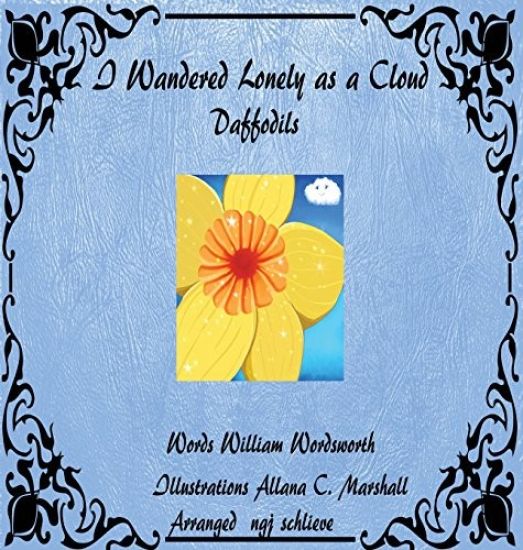
British Poet, William Wordsworth's classic poem I Wandered Lonely as a Cloud describes a walk the poet took with his sister. During the walk they came upon a field of daffodils. He found the field of flowers very beautiful. Later, he discoved he could bring up the image of the field in his mind and experience the same feelings he had when he first saw the field.
Poetical works is an unchanged, high-quality reprint of the original edition of 1896. Hansebooks is editor of the literature on different topic areas such as research and science, travel and expeditions, cooking and nutrition, medicine, and other genres. As a publisher we focus on the preservation of historical literature. Many works of historical writers and scientists are available today as antiques only. Hansebooks newly publishes these books and contributes to the preservation of literature which has become rare and historical knowledge for the future.
Poetical Works - With a memoir. Vol. 6 is an unchanged, high-quality reprint of the original edition of 1871. Hansebooks is editor of the literature on different topic areas such as research and science, travel and expeditions, cooking and nutrition, medicine, and other genres. As a publisher we focus on the preservation of historical literature. Many works of historical writers and scientists are available today as antiques only. Hansebooks newly publishes these books and contributes to the preservation of literature which has become rare and historical knowledge for the future.
Poetical Works - With a memoir. Vol. 4 is an unchanged, high-quality reprint of the original edition of 1871. Hansebooks is editor of the literature on different topic areas such as research and science, travel and expeditions, cooking and nutrition, medicine, and other genres. As a publisher we focus on the preservation of historical literature. Many works of historical writers and scientists are available today as antiques only. Hansebooks newly publishes these books and contributes to the preservation of literature which has become rare and historical knowledge for the future.
Poetical Works - With a memoir. Vol. 7 is an unchanged, high-quality reprint of the original edition of 1871. Hansebooks is editor of the literature on different topic areas such as research and science, travel and expeditions, cooking and nutrition, medicine, and other genres. As a publisher we focus on the preservation of historical literature. Many works of historical writers and scientists are available today as antiques only. Hansebooks newly publishes these books and contributes to the preservation of literature which has become rare and historical knowledge for the future.
Poetical Works - With a memoir. Vol. 3 is an unchanged, high-quality reprint of the original edition of 1871. Hansebooks is editor of the literature on different topic areas such as research and science, travel and expeditions, cooking and nutrition, medicine, and other genres. As a publisher we focus on the preservation of historical literature. Many works of historical writers and scientists are available today as antiques only. Hansebooks newly publishes these books and contributes to the preservation of literature which has become rare and historical knowledge for the future.
Lyrical Ballads, with a Few Other Poems is a collection of poems by William Wordsworth and Samuel Taylor Coleridge, first published in 1798 and generally considered to have marked the beginning of the English Romantic movement in literature. The immediate effect on critics was modest, but it became and remains a landmark, changing the course of English literature and poetry. Most of the poems in the 1798 edition were written by Wordsworth, with Coleridge contributing only four poems to the collection, including one of his most famous works, "The Rime of the Ancient Mariner". A second edition was published in 1800, in which Wordsworth included additional poems and a preface detailing the pair's avowed poetical principles. For another edition, published in 1802, Wordsworth added an appendix titled Poetic Diction in which he expanded the ideas set forth in the preface. Wordsworth and Coleridge set out to overturn what they considered the priggish, learned and highly sculpted forms of 18th century English poetry and bring poetry within the reach of the average person by writing the verses using normal, everyday language. They place an emphasis on the vitality of the living voice that the poor use to express their reality. Using this language also helps assert the universality of human emotions. Even the title of the collection recalls rustic forms of art - the word "lyrical" links the poems with the ancient rustic bards and lends an air of spontaneity, while "ballads" are an oral mode of storytelling used by the common people. In the 'Advertisement' included in the 1798 edition, Wordsworth explained his poetical concept: The majority of the following poems are to be considered as experiments. They were written chiefly with a view to ascertain how far the language of conversation in the middle and lower classes of society is adapted to the purpose of poetic pleasure. 4] If the experiment with vernacular language was not enough of a departure from the norm, the focus on simple, uneducated country people as the subject of poetry was a signal shift to modern literature. One of the main themes of "Lyrical Ballads" is the return to the original state of nature, in which people led a purer and more innocent existence. Wordsworth subscribed to Rousseau's belief that humanity was essentially good but was corrupted by the influence of society. This may be linked with the sentiments spreading through Europe just prior to the French Revolution.... Samuel Taylor Coleridge ( 21 October 1772 - 25 July 1834) was an English poet, literary critic, philosopher and theologian who, with his friend William Wordsworth, was a founder of the Romantic Movement in England and a member of the Lake Poets.... Thomas Hutchinson (9 September 1711 - 3 June 1780) was a businessman, historian, and a prominent Loyalist politician of the Province of Massachusetts Bay in the years before the American Revolution. He has been referred to as "the most important figure on the loyalist side in pre-Revolutionary Massachusetts.".... William Wordsworth (7 April 1770 - 23 April 1850) was a major English Romantic poet who, with Samuel Taylor Coleridge, helped to launch the Romantic Age in English literature with their joint publication Lyrical Ballads (1798). Wordsworth's magnum opus is generally considered to be The Prelude, a semiautobiographical poem of his early years that he revised and expanded a number of times. It was posthumously titled and published, before which it was generally known as "the poem to Coleridge". Wordsworth was Britain's Poet Laureate from 1843 until his death from pleurisy on 23 April 1850....
The White Doe of Rylstone; or, The Fate of the Nortons is a long narrative poem by William Wordsworth, written initially in 1807-08, but not finally revised and published until 1815. It is set during the Rising of the North in 1569, and combines historical and legendary subject-matter. It has attracted praise from some critics, but has never been one of Wordsworth's more popular poems. Synopsis: The White Doe of Rylstone opens outside Bolton Abbey in Wharfedale, where the poet sees the white doe enter the churchyard and lie down by one particular grave, where it is recognized as a regular visitor by the parishioners. The poem then moves back in time to Emily Norton at Rylstone Hall; at her father's command she embroiders a banner for his followers, who are to rise in rebellion. Emily's brother Richard tries unsuccessfully to dissuade their father from this course, then resolves to follow them unarmed, in the hope that he can still dissuade his father. Norton's band of soldiers, including other brothers of Emily, joins forces with those of the Earl of Northumberland and other Catholic rebels, and they march to Wetherby. On the approach of Queen Elizabeth's army the rebels fall back in retreat. The poem then returns to Rylstone Hall, where Emily encounters the white doe by moonlight. She sends an old friend of her father to get news of his fate; he returns to say that her father is taken prisoner, and that he has told Richard to regain the banner and take it to Bolton Abbey, where it can serve as an emblem of the purity of his motives. Richard almost accomplishes this task, but he is surprised by a party of the royal army and is killed. When Rylstone Hall suffers devastation Emily flees, and only returns years later, there to find the same white doe, which henceforth becomes her faithful friend, going wherever she goes. Emily at last dies and is buried at Bolton Abbey. The mystery of why the white doe visits the grave is thus explained..... William Wordsworth (7 April 1770 - 23 April 1850) was a major English Romantic poet who, with Samuel Taylor Coleridge, helped to launch the Romantic Age in English literature with their joint publication Lyrical Ballads (1798). Wordsworth's magnum opus is generally considered to be The Prelude, a semiautobiographical poem of his early years that he revised and expanded a number of times. It was posthumously titled and published, before which it was generally known as "the poem to Coleridge". Wordsworth was Britain's Poet Laureate from 1843 until his death from pleurisy on 23 April 1850.
The Excursion: Being a portion of The Recluse, a poem is a long poem by Romantic poet William Wordsworth and was first published in 1814. It was intended to be the second part of The Recluse, an unfinished larger work that was also meant to include The Prelude, Wordsworth's other long poem, which was eventually published posthumously. The exact dates of its composition are unknown, but the first manuscript is generally dated as either September 1806 or December 1809. Major characters: The Poet - the narrator of the poem The Wanderer - first introduced in Book 1, "The Wanderer." Contrary to what his title might suggest, he dwells in a fixed abode but "still he loved to pace the public roads/ And the wild paths; and, when the summer's warmth/ Invited him, would often leave his home/ And journey far, revisiting those scenes" (1.416-420) The Solitary - plagued by the death of his wife and children, as well as by his disenchantment with the French Revolution, the Solitary has chosen to live alone, wanting no more connection with the social world that has brought him so much pain. The Pastor - A country pastor who is encountered by the Poet, the Wanderer, and the Solitary during their excursion...... William Wordsworth (7 April 1770 - 23 April 1850) was a major English Romantic poet who, with Samuel Taylor Coleridge, helped to launch the Romantic Age in English literature with their joint publication Lyrical Ballads (1798). Wordsworth's magnum opus is generally considered to be The Prelude, a semiautobiographical poem of his early years that he revised and expanded a number of times. It was posthumously titled and published, before which it was generally known as "the poem to Coleridge". Wordsworth was Britain's Poet Laureate from 1843 until his death from pleurisy on 23 April 1850. Early life: Main article: Early life of William Wordsworth The second of five children born to John Wordsworth and Ann Cookson, William Wordsworth was born on 7 April 1770 in Wordsworth House in Cockermouth, Cumberland, part of the scenic region in northwestern England known as the Lake District. His sister, the poet and diarist Dorothy Wordsworth, to whom he was close all his life, was born the following year, and the two were baptised together. They had three other siblings: Richard, the eldest, who became a lawyer; John, born after Dorothy, who went to sea and died in 1805 when the ship of which he was captain, the Earl of Abergavenny, was wrecked off the south coast of England; and Christopher, the youngest, who entered the Church and rose to be Master of Trinity College, Cambridge.........
The Prelude or, Growth of a Poet's Mind; An Autobiographical Poem is an autobiographical poem in blank verse by the English poet William Wordsworth. Intended as the introduction to the more philosophical Recluse, which Wordsworth never finished, The Prelude is an extremely personal and revealing work on the details of Wordsworth's life. Wordsworth began The Prelude in 1798 at the age of 28 and continued to work on it throughout his life. He never gave it a title; he called it the "Poem (title not yet fixed upon) to Coleridge" and in his letters to Dorothy Wordsworth referred to it as "the poem on the growth of my own mind". The poem was unknown to the general public until published three months after Wordsworth's death in 1850, its final name given to it by his widow Mary.