Kirjailija
William Wordsworth
Kirjat ja teokset yhdessä paikassa: 465 kirjaa, julkaisuja vuosilta 1959–2026, suosituimpiin kuuluu Peter Bell. Vertaile teosten hintoja ja tarkista saatavuus suomalaisista kirjakaupoista.
465 kirjaa
Kirjojen julkaisuvuodet: 1959–2026.
A revolutionary voice in English verse, and a much loved and celebrated lyric poet.
This volume is made up of work from the beginning of Wordsworth's career, when he was a Hawkshead schoolboy, until the end of his time at Racedown in mid-1797. Like other volumes in The Cornell Wordsworth series, this book is based on detailed study of the relevant manuscripts. Each poem or fragment is accompanied by a headnote that explains that item's provenance among the manuscripts and examines its literary or biographical background. Most of the work in this volume was never published in Wordsworth's lifetime. (Early works that appear in other volumes of The Cornell Wordsworth have been omitted, but all other work from Wordsworth's early manuscripts, whether a finished piece or a mere jotting, has been included.)The editors draw heavily on seventeen notebooks or other manuscripts. Fifteen of them are presented in photographic copies; all are described fully in bibliographical terms. Although some writing from the notebooks has appeared in print since the poet's death in 1850, the Landon and Curtis edition supersedes earlier versions in thoroughness and overall reliability. The editors present a plausible new organization of the Vale of Esthwaite materials, an improved sequential versions of the two dirges written at Cambridge, and a substantially enlarged text of the Wordsworth-Wrangham "Imitation of Juvenal." The incomplete "Greyhound Ballad" is one of several fragments appearing in print for the first time. For more information, please visit the Cornell Wordsworth series website at http://CornellWordsworth. BookPub.net
Edited now for the first time by Duncan Wu, it provides students and general readers alike with an approachable introduction to Wordsworth's greatest work.
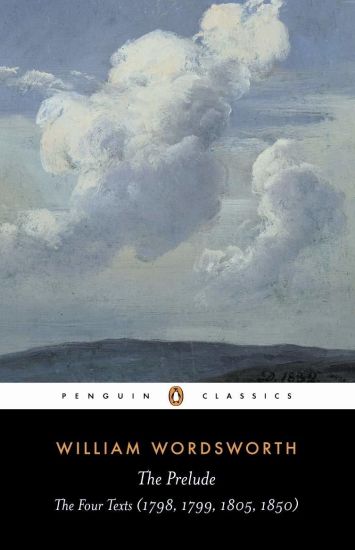
First published in July 1850, shortly after Wordsworth's death, The Prelude was the culmination of over fifty years of creative work. The great Romantic poem of human consciousness, it takes as its theme 'the growth of a poet's mind': leading the reader back to Wordsworth's formative moments of childhood and youth, and detailing his experiences as a radical undergraduate in France at the time of the Revolution. Initially inspired by Coleridge's exhortation that Wordsworth write a work upon the French Revolution, The Prelude has ultimately become one of the finest examples of poetic autobiography ever written; a fascinating examination of the self that also presents a comprehensive view of the poet's own creative vision.
Of all the lasting innovations that William Wordsworth (1770-1850) brought to our literature, it is his discovery of nature and his fresh vision of human lives in the context of nature that have most influenced our cultural climate. Here, collected in this volume, are Wordsworth's finest works, some of the most beautiful poems ever written: from the famous lyrical ballads, including "The Tables Turned" and "Lines Composed a Few Miles Above Tintern Abbey," to the sonnets and narrative poems, to excerpts from his magnum opus, The Preludes. By turning away from mythological subjects and artificial diction toward the life and language around him, Wordsworth acquired for poetry the strength and new sources of inspiration that have allowed it to survive and flourish in the modern world.
In the long history of English literature William Wordsworth (1770-1850) is the writer who achieved the most dramatic transformations of the poetic scene almost singlehanded. A leading figure among the Romantic generation which included Coleridge and Scott, he created out of his personal communion with nature a new poetic which had a profound moral and spiritual influence on the entire nineteenth century. The present selection includes all his famous lyrics and substantial extracts from narrative poems including The Prelude.
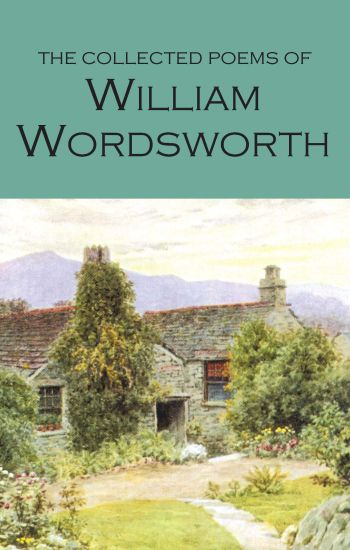
The Collected Poems of William Wordsworth
William Wordsworth
Wordsworth Editions Ltd
1994
nidottu
Halvin toimitettuna 11,90 €
With an Introduction by Antonia Till. William Wordsworth (1771-1850) is the foremost of the English Romantic poets. He was much influenced by the events of the French Revolution in his youth, and he deliberately broke away from the artificial diction of the Augustan and neo-classical tradition of the eighteenth century. He sought to write in the language of ordinary men and women, of ordinary thoughts, sights and sounds, and his early poetry represents this fresh approach to his art. Wordsworth spent most of his adult life in the Lake District with his sister Dorothy and his wife Mary, by whom he had four children. His remarkable autobiographical poem 'The Prelude' was completed in 1805, but was not published until after his death, and it is included in this full edition of Wordsworth's poetry.
The White Doe of Rylstone; or the Fate of the Nortons
William Wordsworth
Cornell University Press
1988
sidottu
This historic book may have numerous typos and missing text. Purchasers can download a free scanned copy of the original book (without typos) from the publisher. Not indexed. Not illustrated. 1867 edition. Excerpt: ... lingered in the rear: Thought followed thought--and ere the last Of that unhappy train was past, Before him Francis did appear. " Now when 'tis not your aim to oppose," Said he, " in open field your foes; Now that from this decisive day Your multitude must melt away, An unarmed man may come unblamed; To ask a grace, that was not claimed Long as your hopes were high, he now May hither bring a fearless brow; When his discountenance can do No injury, --may come to you. Though in your cause no part I bear, Your indignation I can share; Am grieved this backward march to see, How careless and disorderly! I scorn your Chieftains, men who lead, And yet want courage at their need; Then look at them with open eyes! Deserve they further sacrifice? My Father! I would help to find A place of shelter, till the rage Of cruel men do like the wind Exhaust itself and sink to rest; Be brother now to brother joined! Admit me in the equipage Of your misfortunes, that at least, Whatever fate remains behind, I may bear witness in my breast To your nobility of mind! " " Thou enemy, my bane and blight! Oh! bold to fight the coward's fight Against all good "--but why declare, At length, the issue of this prayer? Or how, from his depression raised, The father on his son had gazed; Suffice it that the son gave way, Nor strove that passion to allay, Nor did he turn aside to prove His brothers' wisdom or their love--But calmly from the spot withdrew; The like endeavours to renew, Should e'er a kindlier time ensue. r-rv. "jROM cloudless ether looking down, The moon, this tranquil evening, sees A camp, and a beleaguered town, And castle like a stately crown On the steep rocks of winding Tees;--And, southward far, with moors between, Hill-tops, and floods, and forests green, The...

William Wordsworth: The Pedlar, Tintern Abbey, the Two-Part Prelude
William Wordsworth
Cambridge University Press
1985
pokkari
This volume is an excellent introduction to Wordsworth's poetry. His great autobiographical poem The Prelude runs to thirteen books in the text of 1805. But by 1799 the poet had already written a version covering his childhood and adolescence in under a thousand lines. This complete, self-contained work includes most of the beautiful poetry that has made the longer Prelude famous. The text of this two-part Prelude has been in print since 1973 but has not until now been readily available. It is prefaced by two poems that form a natural introduction: The Pedlar, the poet's first autobiographical work, and Tintern Abbey, Wordsworth's much more widely known meditation upon the continuing influence of nature in his life. This volume constitutes the first unified approach, at student level, to Wordsworth's mystic response to nature and the processes of growing up. Jonathan Wordsworth, the poet's great-great-great nephew, has written a full critical introduction to the selection. Notes at the foot of each page include glosses of difficult words, background material and useful comparisons with Wordsworth's own poetry, and that of S. T. Coleridge.
This book is intended for students of English literature and history; general readers; visitors to the Lake District.
There are no fewer than seventeen manuscripts of The Prelude in the Wordsworth library at Grasmere. Working with these materials, the editors have prepared an accurate reading version of 1799 and have newly edited from manuscripts the texts of 1805 and 1850—thus freeing the latter poem from the unwarranted alterations made by Wordsworth's literary executors. The editors also provide a text of MS. JJ (Wordsworth's earliest drafts for parts of The Prelude) as well as transcriptions of other important passages in manuscript which Wordsworth failed to include in any fair copy of his poem. The texts are fully annotated, and the notes for all three versions of The Prelude are arranged so that each version may be read independently. The editors provide a concise history of the texts and describe the principles by which each has been transcribed from the manuscripts. There are many other aids for a thorough study of The Prelude and its background. A chronological table enables the reader to contextualize the biographical and historical allusions in the texts and footnotes. "References to The Prelude in Process" presents the relevant allusions to the poem, by Wordsworth and by members of his circle, from 1799 to 1850. Another section, "Early Reception," reprints significant comments on the published version of 1850 by readers and reviewers. Finally, there are seven critical essays by Jonathan Wordsworth, M. H. Abrams, Geoffrey H. Hartman, Richard J. Onorato, William Empson, Herbert Lindenberger, and W. B. Gallie.
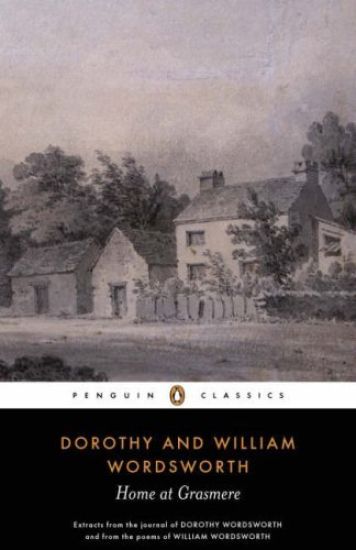
A continuous text made up of extracts from Dorothy Wordsworth's Journal and a selection of her brother's poems. Dorothy Wordsworth kept her Journal 'because I shall give William pleasure by it'. In doing so, she never dreamt that she was giving future readers not only the chance to enjoy her fresh and sensitive delight in the beauties that surrounded her at Grasmere but also a rare opportunity to observe 'the progress of a poet's mind'. Colette Clark's skilful and perceptive arrangement of Dorothy's entries alongside William's poems throws a unique light on his creative process, and shows how the interdependence of brother and sister was a vital part in the writing of many of his great poems. By reading these poems in relation to the Journal it is possible to trace the processes by which they were committed to paper and so achieve a fuller understanding of them. A writer in her own right, Dorothy kept her Journal sparse in personal and emotional detail. Yet there is, nevertheless, a deep emotional undercurrent running beneath the surface which only falters when William marries Mary Hutchinson. Never again was Dorothy to achieve the freedom, spontaneity and the limpidly beautiful prose with which she infused and irradiated the Grasmere Journals.
The Salisbury Plain Poems of William Wordsworth
William Wordsworth
Cornell University Press
1976
sidottu
'
Wordsworth's great autobiographical poem, is crucial to our understanding of his life and poetry. Written between 1798 and 1805, it was first published posthumously in 1850 after intensive revision in Wordsworth's later years. This volume contains the original 1805 text edited from manuscripts with a comprehensive introduction and notes.