Kirjojen hintavertailu – 12 903 725 kirjaa ja 27 kauppaa

Kirjailija

William Y. Chalfant

Kirjat ja teokset yhdessä paikassa: 4 kirjaa, julkaisuja vuosilta 1991–2014, suosituimpiin kuuluu Without Quarter. Vertaile teosten hintoja ja tarkista saatavuus suomalaisista kirjakaupoista.

4 kirjaa

Kirjojen julkaisuvuodet: 1991–2014.

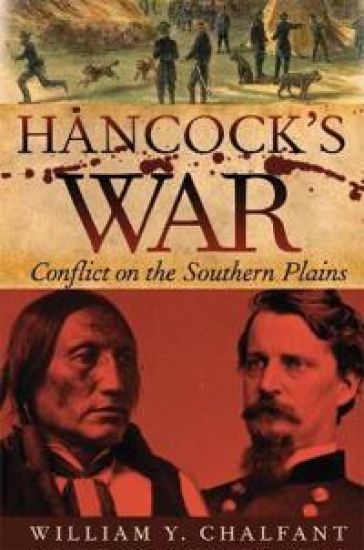
Hancock's War

Hancock's War

William Y. Chalfant

University of Oklahoma Press
2014
nidottu
When General Winfield Scott Hancock led a military expedition across Kansas, Colorado, and Nebraska in 1867, his purpose was a show of force that would curtail Indian raiding sparked by the Sand Creek massacre of 1864. But the havoc he and his troops wrought on the plains served only to further incite the tribes and inflame passions on both sides, disrupting U. S.-Indian relations for more than a decade. William Y. Chalfant has devoted years of research to produce a detailed narrative covering the entire scope of Hancock's ""Expedition for the Plains."" This first thorough scholarly history of the ill-conceived expedition offers an unequivocal evaluation of military strategies and a culturally sensitive interpretation of Indian motivations and reactions. Chalfant explores the vastly different ways of life that separated the Cheyennes and U. S. policymakers, and argues that neither side was willing or able to understand the needs of the other. He shows how Hancock's efforts were counterproductive, brought untold misery to Indians and whites alike, and led to the wars of 1868. One of the most significant Indian campaigns in American history, Hancock's War is in many ways a microcosm of all the wars between Indians and whites on the high plains. Chalfant's sweeping narrative forms the definitive history of a questionable enterprise.
Cheyennes and Horse Soldiers

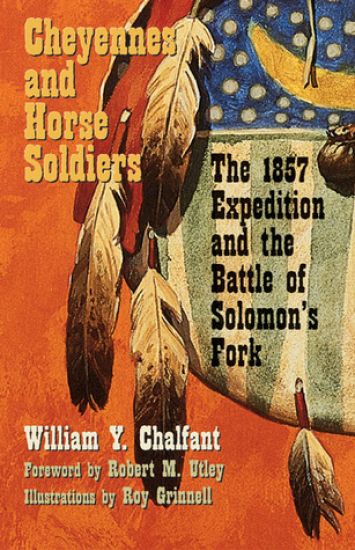
Cheyennes and Horse Soldiers

William Y. Chalfant; Robert M. Utley

University of Oklahoma Press
2002
nidottu
The first major battle between the U. S. Army and the Cheyenne Indians took place on the south fork of the Solomon River in present-day northwest Kansas. In this stirring account, William Y. Chalfant recreates the human dimensions of what was probably the only large-unit sabre charge against the Plains tribes, in a battle that was as much a clash of cultures as of cavalry and Cheyenne warriors. In May 1857 the U. S. First Cavalry, under Col. E. V. Summer, had marched out of Fort Leavenworth to find and ""severely punish"" the Cheyennes for their attacks on immigrants and other travelers during the previous year-attacks precipitated largely by the army's earlier assaults on the Cheyennes. Two columns of soldiers moved westward, penetrating the territory of the southern bands of Cheyennes between the Santa Fe and Oregon-California trails, where few whites had been before. When the cavalry columns were reunited, early in July, the combined forces left their supply train behind and marched southeast across the plains. They were braving the extreme heat of summer with limited rations and little water when they finally met their quarry on the south fork of the Solomon. Resplendent in war finery, the Cheyennes had formed a grand line of battle such as was never again seen in the Plains Indian wars. William Chalfant recaptures the drama of the confrontation in his narrative: ""As one the troopers reached down, and then 300 sabres arced above them, the bright afternoon sunshine flashing across the burnished steel as if the air were torn by a shower of flame. For an instant the blades were held aloft, then came down to the tierce point. At the same time the troopers gave out a mighty yell. And so they thundered across the valley of the Solomon, directly at the oncoming Cheyennes.""In terms of history, the First Cavalry's campaign against the Cheyennes was a microcosm of relations between white civilization and Plains Indian. This exciting narrative penetrates the Indian and white cultures to show the battle marked the end of one era in Indian-white relations and the beginning of another.
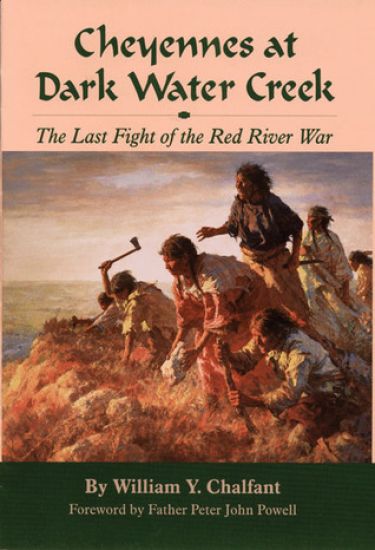
Cheyennes at Dark Water Creek

Cheyennes at Dark Water Creek

William Y. Chalfant

University of Oklahoma Press
1997
sidottu
Cheyennes at Dark Water Creek tells the tragic story of the southern bands of Cheyennes from the period following the Treaty of Medicine Lodge through the battles and skirmishes known as the Red River War. The Battle of Sappa Creek, the last encounter of that conflict, was a fight between a band of Cheyennes and a company of the Sixth Cavalry that took place in Kansas in April 1875. More Cheyennes were killed in that single engagement than in all the previous fighting of the war combined, and later there were controversial charges of massacre-and worse. William Y. Chalfant has used all known contemporaneous sources to recound the tragedy that occurred at the place known to the Cheyennes as Dark Water Creek. In Cheyenne memories, its name remains second only to Sand Creek in the terrible images and the sorrow it evokes. Chalfant tells the story in a sweeping style that recreates Cheyenne life on the southern plains. Beyond examining firsthand and secoundary accounts in detail, the author personally retraced the route of the army detachment from Fort Wallace, Kansas, to the battle site at Sappa Creek, and the route of the Cheyennes from Punished Women's Fork to the Sappa. His recounting of the lives of the Indian and military participants, both leading up to and following the battle, is sure to appeal both to scholars of the Indian wars and to the general reader.
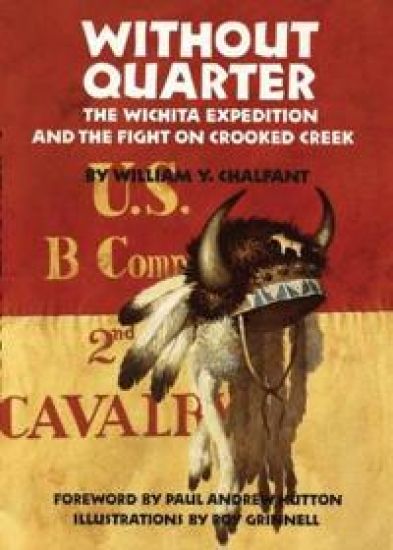
Without Quarter

Without Quarter

William Y. Chalfant

University of Oklahoma Press
1991
sidottu
Without Quarter is the story of the first major U. S. army expedition against the Comanches between the Mexican and Civil wars. Late in 1858, under the leadership of Captain (Brevet Major) Earl Van Dorn, units of the Second Cavalry marched north form Fort Belknap, Texas, and established a temporary post, Camp Radziminski, at the southwest edge of the Wichita Mountains. Scouring the country north, east, and west in search of Comanches, the Wichita Expedition precipitated two major engagements, known as the Battle at the Wichita Village and the Battle of Crooked Creek. During the latter fight, the soldiers killed or captured all the inhabitants of a Comanche village. William Y. Chalfant gives a detailed account of the expedition, first setting the historical context, then tracing events to the climax at Crooked Creek on May 13, 1859.