Kirjojen hintavertailu – 12 859 819 kirjaa ja 27 kauppaa
Kirjailija
Williams Michelle
Kirjat ja teokset yhdessä paikassa: 5 kirjaa, julkaisuja vuosilta 2010–2018, suosituimpiin kuuluu New South African Review 2. Vertaile teosten hintoja ja tarkista saatavuus suomalaisista kirjakaupoista.
William Attwell; Leslie Bank; Naidoo Prishani; Patrick Bond; Imraan Buccus; John Daniel; Jane Duncan; Fig David; Hamill James; Janine Hicks; John Hoffman; Paul Hoffman; Malose Langa; Lindsay Don; Clifford Mabhena; Rajohane Matshedisho; Pillay Devan; Saloojee Haroon; Satgar Vishwas; Christopher Saunders; Sharife Khadija; Skinner Kate; Southall Roger; Neil Southern; Karl von Holdt; Edward Webster; Williams Michelle
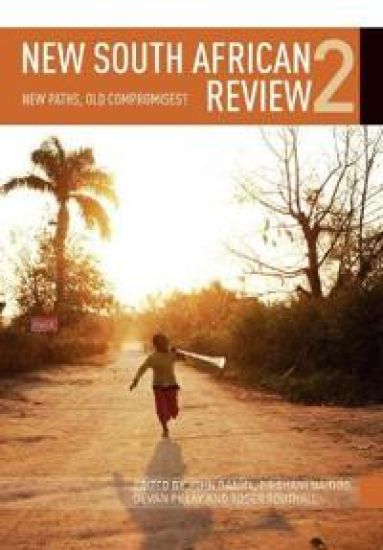
The second volume of the New South African Review (NSAR) continues a tradition of debate and critical, analytical scholarship about contemporary South Africa. Drawing on authors from academia and beyond, it aims to be informative, discursive and provocative. In this volume, the New Growth Path (NGP) adopted by the South African government in 2010 provides the basis for a debate about whether 'decent work' is the best possible solution to South Africa's problems of low economic growth and high unemployment. Rising inequality is explored against the backdrop of the failings of Black Economic Empowerment (BEE) and Broad-Based Black Economic Empowerment (BBBEE). The NGP's proposals for 'greening the economy' are discussed, with emphasis on the creation of 'green jobs' and biofuels. The volume also includes investigations into the crisis of acid mine drainage on the Witwatersrand, and other persistent environmental challenges. Possibilities for participatory forms of government are surveyed, and civil society activism is explored in relation to the South African Broadcasting Corporation (SABC) and environmental campaigns. The crisis in child care in public hospitals, the difficulties that characterise attempts at building relationships between the police and a township community, and the problems related to the absence of legislation to govern the powers of traditional authorities over land allocation (through the experience of the Eastern Cape) are also featured. Asking whether the NGP reflects a set of new policies or an attempt to re-dress old (com)promises in new clothes, this volume brings together different voices in debate about possibilities for alternatives to neo-liberal and capitalist development in South Africa.
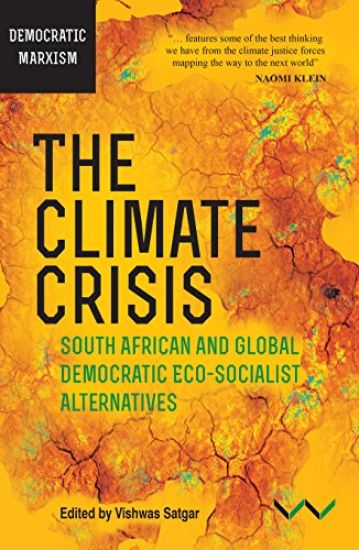
Capitalism’s addiction to fossil fuels is heating our planet at a pace and scale never before experienced. Extreme weather patterns, rising sea levels and accelerating feedback loops are a commonplace feature of our lives. The number of environmental refugees is increasing and several island states and low-lying countries are becoming vulnerable. Corporate-induced climate change has set us on an ecocidal path of species extinction. Governments and their international platforms such as the Paris Climate Agreement deliver too little, too late. Most states, including South Africa, continue on their carbon-intensive energy paths, with devastating results. Political leaders across the world are failing to provide systemic solutions to the climate crisis. This is the context in which we must ask ourselves: how can people and class agency change this destructive course of history? Volume three in the Democratic Marxism series, The Climate Crisis investigates ecosocialist alternatives that are emerging. It presents the thinking of leading climate justice activists, campaigners and social movements advancing systemic alternatives and developing bottom-up, just transitions to sustain life. Through a combination of theoretical and empirical work, the authors collectively examine the challenges and opportunities inherent in the current moment. This volume builds on the class-struggle focus of Volume 2 by placing ecological issues at the center of democratic Marxism. Most importantly, it explores ways to renew historical socialism with democratic, ecosocialist alternatives to meet current challenges in South Africa and the world.
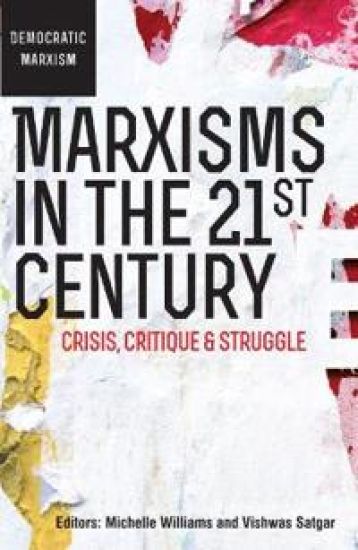
This is the first publication in the Democratic Marxism Series, which seeks to elaborate the social theorising and politics of Democratic Marxism. Marx’s writings on and ideas about social transformation have figured prominently in the global Left imagination for more than 150 years. At the end of the twentieth century a number of factors seemed to converge to mark the end of Marxism’s influence on the world and, as a result, by the late twentieth century the relevance of Marxism was under question by both the Left (including Marxists) and Right. The decline was relatively short-lived, however, as the 2008 economic crisis brought into sharp relief the catastrophic effects of financialised capitalism and the need to (re)find alternatives. In the second decade of the twenty-first century, the revival of Marxism is finding new sources of inspiration that revolve around four primary factors: the importance of democracy for an emancipatory project; the ecological limits of capitalism; the crisis of global capitalism; and learning lessons from the failures of Marxist-inspired experiments. This is not simply a return to nineteenth and twentieth century understandings of Marxism. Rather, the twenty-first century has seen enormous creativity from movements that seek to overcome the weaknesses of the past by forging fundamentally new approaches to politics that draw inspiration from Marxism along with many other anti-capitalist traditions such as feminism, ecology, anarchism and indigenous traditions. The Marxism of many of these movements is not dogmatic or prescriptive, but rather open, searching, dialectical, humanist, utopian and inspirational. This edited volume introduces some contemporary approaches to Marxism and explores some of the ways in which Marxism has been used in Africa.
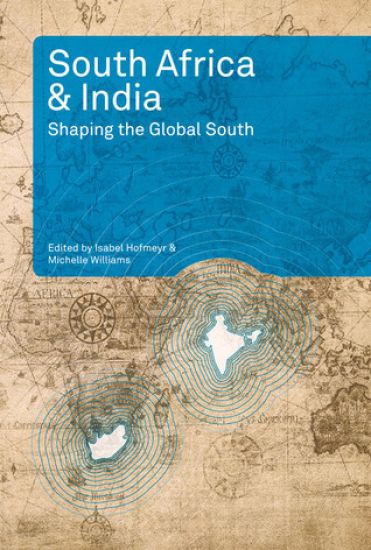
South Africa’s future is increasingly tied up with that of India. While trade and investment between the two countries is intensifying, they share long-standing historical ties and have much in common: both countries are important players in the global South. As India emerges as a major economic power, the need to understand these links becomes ever more pressing. Can the two countries enter balanced forms of exchange or will India inevitably dominate? What forms of transnational political community between these two regions have yet to be researched and understood? South Africa and India addresses these questions and offers new approaches for researching transnational histories.
Michelle Williams is young and attractive, with close family ties, a busy social life . . . and an unusual occupation. When she impulsively applies to be a mortuary technician and is offered the position, she has no idea that her decision to accept will be one of the most momentous of her life. "What I didn't realize then," she writes, "was that I was about to start one of the most amazing jobs you can do." To Williams, life in the mortuary is neither grim nor frightening. She introduces readers to a host of unique characters: pathologists (many eccentric, some utterly crazy), undertakers, and the man from the coroner's office who sings to her every morning. No two days are alike, and while Williams's sensitivity to the dead never wavers, her tales from the crypt range from mischievous to downright shocking. Readers won't forget the fitness fanatic run over while doing nighttime push-ups on the road, the man so large he had to be carted in via refrigerated truck, or the guide dog who led his owner onto railway tracks--and left him there. The indomitable Williams never bats an eye, even as she is confronted--daily--with situations that would leave the rest of us speechless.