Kirjailija
Willis Barnstone
Kirjat ja teokset yhdessä paikassa: 14 kirjaa, julkaisuja vuosilta 1993–2019, suosituimpiin kuuluu Mexico in my Heart. Vertaile teosten hintoja ja tarkista saatavuus suomalaisista kirjakaupoista.
14 kirjaa
Kirjojen julkaisuvuodet: 1993–2019.

Willis Barnstone is a literature in himself: poet, translator, interpreter, in one year he can range from Jesus to Sappho and Borges with calm authority and good humour. He re-translates the New Testament in a version Harold Bloom describes as ‘a superb act of restoration’. Borges himself declared, ‘Four of the best things in America are Whitman’s Leaves, Melville’s Whale, the sonnets of Barnstone’s The Secret Reader, and my daily Corn Flakes…’ Mexico in My Heart is the essential Barnstone, drawing on fifteen collections, poetry from six decades of writing and from several continents. He went to Mexico at the age of fifteen and, gathering languages and literatures, has never stopped learning.

Poetry. Willis Barnstone's new volume of poetry offers two sequences paired, pivoting on lunar and solar consciousness and comprised mostly of multiplying sonnets, two per page and mirrored typographically across the page-spreads. Elegant in erudition but always fluently conversational, this book is an homage to the poet's father and moving proof of an astonishingly productive life in letters.
A poetic meditation and collection of aphorisms on the art of literary translation by one of the most respected translators in the US. Translating literatures East and West, ancient and modern, Barnstone has proven insights to share, and does so in a light and humorous way though verse.

Comic, tragic, colorful, and adventurous, Stickball on 88th Street is a sequence of thirty-four narrative poems that follows its speaker from boyhood to college. ItÆs a memory book, bound with vignettes of school, family life, and the streets of New York City, as well as Maine and Mexico, culminating with a swan dive in Colorado. It reads like a novel or memoir, with characters, setting, and plot. Stickball employs an original form, neither free verse nor traditionally formal, but rather lexical. Instead of meter and syllable counts, the book uses individual words as its units of measure. Each quatrain has twenty words: six each in the first two lines, four each in the last two lines. This form imposes no ponderous regularity, allowing for a swift narrative flow. It was written over the course of thirteen days in August, 1977, and has remained unchanged since then.
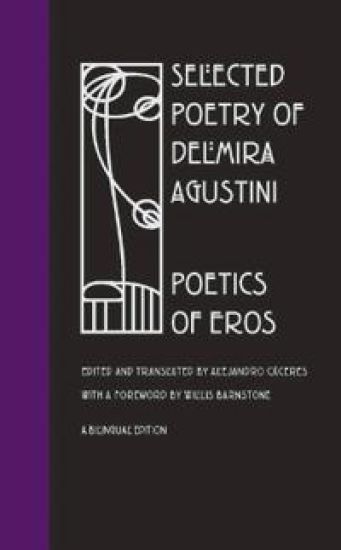
This title presents the first English-language translation of the ill-fated Uruguyan erotic poet Delmira Agustini. This graceful translation and bilingual edition, now in paperback, is the first to bring English readers a representative sampling of the poetry Delmira Agustini published before her untimely death on July 6, 1914 at the age of twenty-seven. Translated by native Uruguayan Alejandro Caceres and including work from each of Agustini's four published books, ""Selected Poetry of Delmira Agustini: Poetics of Eros"" is a response to a resurgent interest not just in the poems but in the passionate and daring woman behind them and the social and political world she inhabited. Delmira Agustini was born in Montevideo, Uruguay, on October 24, 1886 to wealthy parents of German and Italian descent. She published her first volume of poetry when she was twenty-one and followed with two more in the next six years: the fourth volume was a posthumous publication. Her life was cut short in 1914, when Enrique Job Reyes, her ex-husband, shot her to death and then turned the gun on himself. Carefully selected for this bilingual, en face edition, the poems collected here track and highlight Agustini's development and strengths as an artist - including her methods of experimentation, first relying on modernista forms and later abandoning them - and her focus on the figure of the male, which she portrays as the crux of devotion and attention but deems ultimately unreachable. Caceres' introduction presents biographical information and situates Agustini's work and life in a larger political, historical, and literary context, particularly the modernismo movement, whose followers broke linguistic and political ties with the pathos and excesses of romanticism.
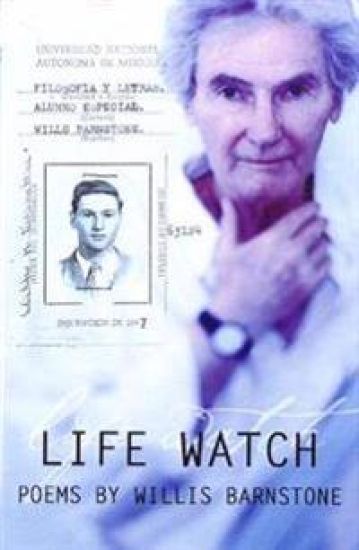
Life Watch: A Circle of Ninety-One Nights is an ambitious sequence of -poems that begins in childhood, moves through Barnstone's adult years, and returns to youth. The poems engage and reflect on the civil wars that the author found himself in the midst of, Mexican orphanages, the cafes and arts salons in Paris, and walking with Borges. As the circles of these poems widen, they gather many perspectives on a life watched. Willis Barnstone has taught at universities in Greece and Argentina and authored more than 40 books-poetry collections, poetry translations, philosophical and religious texts. The New Covenant, his literary translation of the New Testament, was published in 2001 (Riverhead Books).
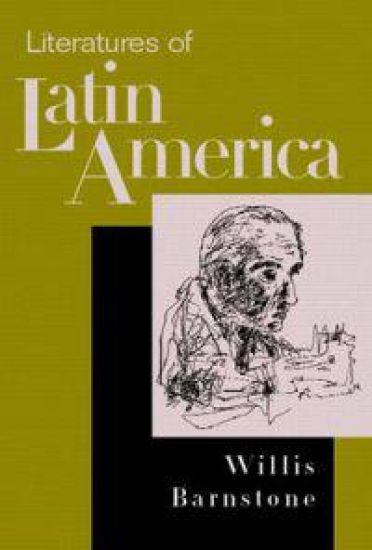
This text, a derivative of LITERATURES OF ASIA, AFRICA, AND LATIN AMERICA, gathers together a broad selection of representative, authoritative writing—spanning antiquity to the present. It combines extensive introductions, headnotes, and bibliographies with excellent literary translations of the best contemporary and classic writers. This is an anthology that students will want to take home with them and to read long after the course is completed.
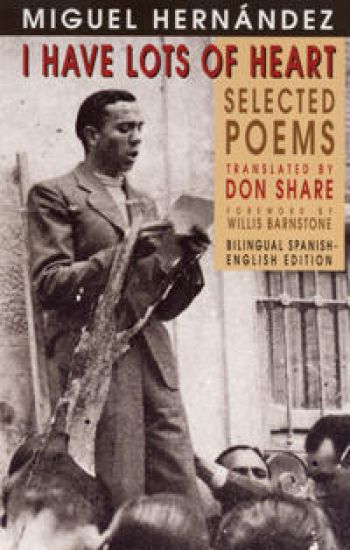
Deeply admired by poets far more familiar to us, from Lorca to William Carlos Williams, the poems of Miguel Hernandez (1910-42), written in the midst of the savage 20th century, beam with a gentleness of heart. Hernandez was a self-educated goatherd from the tiny Spanish town of Orihuela who tried hard to be accepted among his older contemporaries. Lorca wrote to the young poet in 1933, telling him to stop struggling to get along in a 'circle of literary pigs'. After fighting on the Republican side in the Spanish Civil War, Hernandez was imprisoned in several of Franco's jails, where he continued to write until his death from untreated tuberculosis on 28 March 1942: he was only 31. Miguel Hernandez is now one of the most revered poets in the Spanish-speaking world. From his early formalism, paying homage to Gongora and Quevedo, to the final poems, which are passionate and bittersweet, Hernandez' work is a dazzling reminder that force can never defeat spirit, and that courage is its own reward. Pablo Neruda called him 'a great master of language - a wonderful poet'.
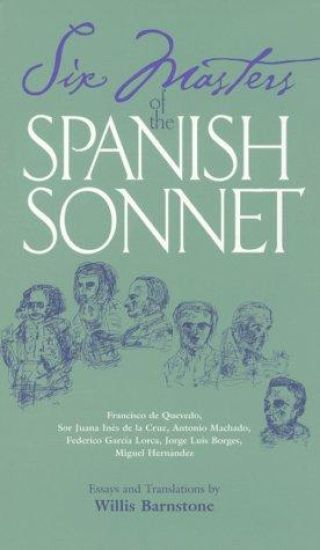
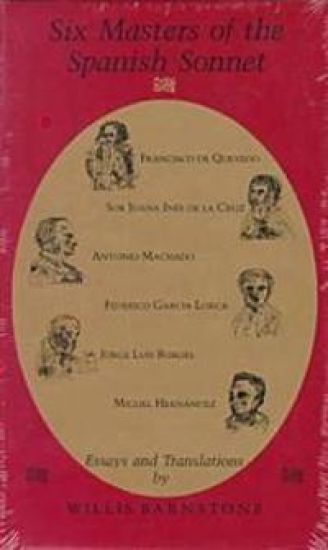
With poems selected and translated by one of the preeminent translators of our day, this bilingual collection of 112 sonnets by six Spanish-language masters of the form ranges in time from the seventeenth to the twentieth centuries and includes the works of poets from Spanish America as well as poets native to Spain. Willis Barnstone’ s selection of sonnets and the extensive historical and biographical background he supplies serve as a compelling survey of Spanish-language poetry that should be of interest both to lovers of poetry in general and to scholars of Spanish-language literature in particular. Following an introductory examination of the arrival of the sonnet in Spain and of that nation’ s poetry up to Francisco de Quevedo, Barnstone takes up his six masters in chronological turn, preceding each with an essay that not only presents the sonneteer under discussion but also continues the carefully delineated history of Spanish-language poetry. Consistently engaging and informative and never dull or pedantic, these essays stand alone as appreciations— in the finest sense of that word— of some of the greatest poets ever to write. It is, however, Barnstone’ s subtle, musical, clear, and concise translations that form the heart of this collection. As Barnstone himself says, "In many ways all my life has been some kind of preparation for this volume.
In a lucid, pioneering volume, Willis Barnstone explores the history and theory of literary translation as an art form. Arguing that literary translation goes beyond the transfer of linguistic information, he emphasizes that imaginative originality resides as much in the translation as in the source text—a view that skews conventional ideas of artistic primacy. Barnstone begins by dealing with general issues of literalness, fidelity, and originality: with translation as metaphor, aesthetic transformation, and re-creation. He looks as well at translation as a traditionally stigmatized genre. Then he discusses the history of translation, using as his paradigm the most translated book in the world, the Bible, tracing it from its original Hebrew and Greek to Jerome's Latin and the English of Tyndale and the King James Version. Citing the way authors intentionally mistranslate for religious and political purposes, Barnstone provides fascinating insights into how, by altering names in the Gospels, the Virgin Mary and Jesus cease to be Jews, the Jews are turned into villains, and Christianity becomes an original rather than a mere translation. In the next section Barnstone analyzes translation theory, ranging from the second century B. C. Letter of Aristeas to Roman Jakobson's linguistic categories and Walter Benjamin's "Task of the Translator." The book ends with an aphoristic ABC of translating.