Kirjojen hintavertailu – 12 903 724 kirjaa ja 27 kauppaa

Kirjailija

Wilson J. Moses

Kirjat ja teokset yhdessä paikassa: 3 kirjaa, julkaisuja vuosilta 1990–2014, suosituimpiin kuuluu Black Folk Then and Now (The Oxford W.E.B. Du Bois). Vertaile teosten hintoja ja tarkista saatavuus suomalaisista kirjakaupoista.

Nimi esiintyy myös muodoissa: Wilson J. Moses

3 kirjaa

Kirjojen julkaisuvuodet: 1990–2014.

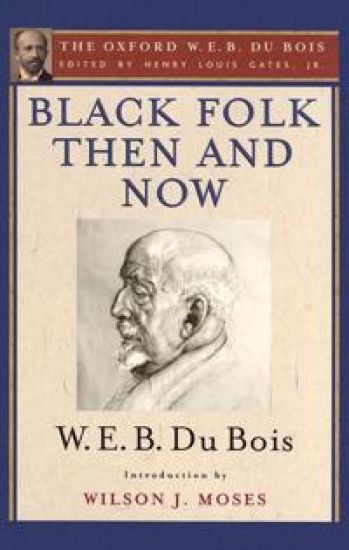
Black Folk Then and Now (The Oxford W.E.B. Du Bois)

Black Folk Then and Now (The Oxford W.E.B. Du Bois)

W. E. B. Du Bois; Wilson J. Moses

Oxford University Press Inc
2014
nidottu
W. E. B. Du Bois was a public intellectual, sociologist, and activist on behalf of the African American community. He profoundly shaped black political culture in the United States through his founding role in the NAACP, as well as internationally through the Pan-African movement. Du Bois's sociological and historical research on African-American communities and culture broke ground in many areas, including the history of the post-Civil War Reconstruction period. Du Bois was also a prolific author of novels, autobiographical accounts, innumerable editorials and journalistic pieces, and several works of history. In Black Folk Then and Now, W. E. B. Du Bois embarks on a mission to correct the omissions, misinterpretations, and deliberate lies he detected in previous depictions of black history. An exemplary revisionist exploration of history and sociology, this essay reflects Du Bois's lifelong mission to bring to light the truths of Black history and expose the African peoples' noble heritage. W. E. B. Du Bois writes extensively about the color line, which he believed at the time of publication to be the defining problem of the twentieth century. In 1946, following the Holocaust, Du Bois revised his arguments, reshaping them into the narrative we find in The World and Africa. With a series introduction by editor Henry Louis Gates, Jr., and an introduction by Wilson Moses, this edition is essential for anyone interested in African American history.
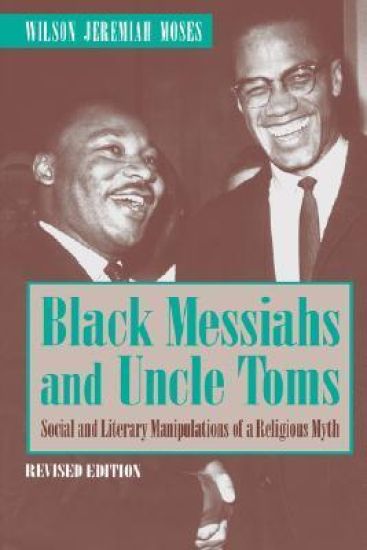
Black Messiahs and Uncle Toms

Black Messiahs and Uncle Toms

Wilson J. Moses

Pennsylvania State University Press
1993
pokkari
“Martin Luther King is dead and the millenarian integrationalism that he symbolized sleeps with him,” but messianic Christian rhetoric still characterizes black oratory both from the pulpit and on the hustings. Dead, too, are the chief American prophets of Pan-Islam, but the Ethiopian Hebrews and Moorish Science Temple are still active. “As black messianic myths die out,” this book argues, “new ones spring up to take their places.” Dr. Moses views black messianism as “a powerful and, in many respects, a beautiful myth, permeating the thinking of both white and black Americans since the late 18th century.” But, he points out, black messianism was evident as early as 1788 in the writings of “Othello,” or 1791, when Benjamin Banneker wrote to Thomas Jefferson of the Negro’s divine right to share the new nation’s “peculiar blessing of the heaven.” The author carefully defines the concept of messianism, and considers “redemptive mission” as a key attribute of the conception—one with which Harriet Beecher Stowe endowed Uncle Tom (despite activists’ mistaken notion of him as servile). The mythic black hero as messiah is a pervasive theme in literary and social expressions as disparate as the writings of Booker T. Washington, Marcus Garvey, W. E. B. Dubois, and Ralph Ellison, and the cults that developed around Joe Louis, Malcolm X, and others. Following the methodology used by Henry Nash Smith in Virgin Land: The American West as Symbol and Myth, Dr. Moses presents a “new angle of vision on many of the issues of black messianism and on the leading figures in the movement.” The author concludes that—despite the frequent excesses and even absurdities of black messianism—the American traditions of “evangelical reform, perfectionism, and the social gospel” offer more promise than today’s widespread “narcissistic anarchism.” Reviewers commented that “[Dr. Moses’] analysis is as probing as anything “ and that the book “will stir controversy as well as praise by other scholars in the field.”
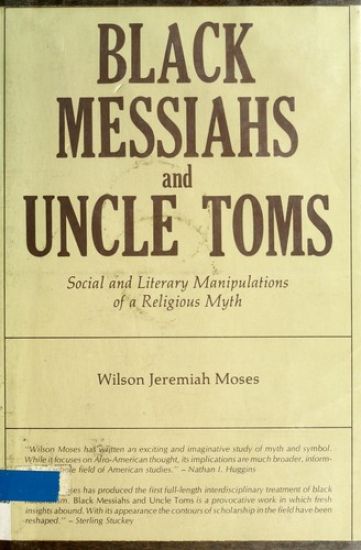
Black Messiahs and Uncle Toms

Black Messiahs and Uncle Toms

Wilson J. Moses

Pennsylvania State University Press
1990
sidottu
“Martin Luther King is dead and the millenarian integrationalism that he symbolized sleeps with him,” but messianic Christian rhetoric still characterizes black oratory both from the pulpit and on the hustings. Dead, too, are the chief American prophets of Pan-Islam, but the Ethiopian Hebrews and Moorish Science Temple are still active. “As black messianic myths die out,” this book argues, “new ones spring up to take their places.” Dr. Moses views black messianism as “a powerful and, in many respects, a beautiful myth, permeating the thinking of both white and black Americans since the late 18th century.” But, he points out, black messianism was evident as early as 1788 in the writings of “Othello,” or 1791, when Benjamin Banneker wrote to Thomas Jefferson of the Negro’s divine right to share the new nation’s “peculiar blessing of the heaven.” The author carefully defines the concept of messianism, and considers “redemptive mission” as a key attribute of the conception—one with which Harriet Beecher Stowe endowed Uncle Tom (despite activists’ mistaken notion of him as servile). The mythic black hero as messiah is a pervasive theme in literary and social expressions as disparate as the writings of Booker T. Washington, Marcus Garvey, W. E. B. Dubois, and Ralph Ellison, and the cults that developed around Joe Louis, Malcolm X, and others. Following the methodology used by Henry Nash Smith in Virgin Land: The American West as Symbol and Myth, Dr. Moses presents a “new angle of vision on many of the issues of black messianism and on the leading figures in the movement.” The author concludes that—despite the frequent excesses and even absurdities of black messianism—the American traditions of “evangelical reform, perfectionism, and the social gospel” offer more promise than today’s widespread “narcissistic anarchism.” Reviewers commented that “[Dr. Moses’] analysis is as probing as anything “ and that the book “will stir controversy as well as praise by other scholars in the field.”