Kirjojen hintavertailu – 12 903 724 kirjaa ja 27 kauppaa

Kirjailija

Winfried Corduan

Kirjat ja teokset yhdessä paikassa: 11 kirjaa, julkaisuja vuosilta 2003–2024, suosituimpiin kuuluu Neighboring Faiths. Vertaile teosten hintoja ja tarkista saatavuus suomalaisista kirjakaupoista.

11 kirjaa

Kirjojen julkaisuvuodet: 2003–2024.

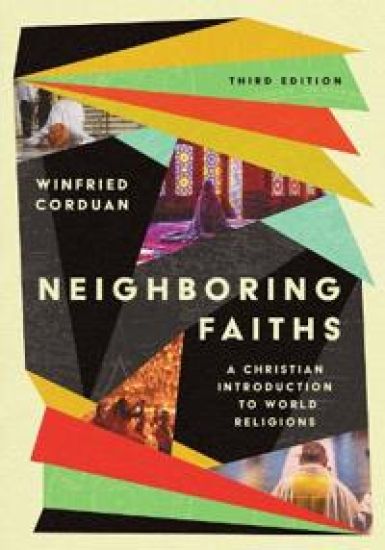
Neighboring Faiths

Neighboring Faiths

Winfried Corduan

IVP Academic
2024
sidottu
World religions are not merely abstract sets of doctrinal beliefs. They are embodied worldviews and practices lived out by real people around us. Encounters with these neighboring faiths often challenge our own beliefs and traditions, making us think more deeply about our faith commitments. For all who want to understand the religious faiths of their neighbors, Winfried Corduan offers an introduction to the religions of the world. This classic text covers major as well as lesser known religions, including Judaism, Islam, Zoroastrianism, African traditional religions, Native American religion, Hinduism, Buddhism, Jainism, Sikhism, Baha'i, Chinese popular religion, and Shinto and Japanese religions. Neighboring Faiths emphasizes not just formal religious teachings but also how each religion is practiced in daily life. Dozens of photographs, charts, and maps help illustrate how the faiths have developed and how they're lived out today. Corduan offers specific insights into what to expect from encounters with adherents of each religion and suggestions for how Christians can engage them in constructive dialogue. Each chapter offers lists of key points, ideas for term papers, and recommended resources to help students, instructors, and small groups go deeper. This third edition has been updated and revised throughout. The chapter on militant Islam is significantly revised to address more recent events and issues, and questions for reflection and discussion have been added to each chapter. Neighboring Faiths is an indispensable guide for Christians seeking an informed, empathetic perspective on different religions and the people who practice them.

In the Beginning God

In the Beginning God

Winfried Corduan

Broadman Holman Publishers
2013
nidottu

Halvin toimitettuna 22,90 €

Christians believe that religion began when God created human beings and revealed himself to them. But is there scholarly evidence for this belief? In the nineteenth century academic world a stormy debate took shape over the origin of religion. Scholars explored the ancient languages of mythology and then considered evolutionary anthropology. A dominant view emerged that religion began with animism -- the reverent honoring of spirits -- and from there evolved into higher forms, from polytheism on to monotheism. However, scholars Andrew Lang and Wilhem Schmidt contended there were cultures throughout the world -- pygmy people in Africa and Asia, certain Australian Aboriginal groups and Native American tribes -- that originated as monotheistic, acknowledging the existence of one supreme God who created the world and holds people accountable for living morally upright lives. The debate wore on, and Schmidt, a member of the Catholic order and a priest, was accused (without evidence) of letting his faith interpret the facts. By the mid-twentieth century a silent consensus formed among scholars not to discuss the origin and evolution of religion any further. The discoveries of Lang and Schmidt have since been largely ignored. However, the evidence on which these scholars based their conclusion of monotheism is still out there. "In the Beginning God" attempts to educate Christians about the debate on this topic, the facts that were accepted and those that were ignored, and the use to which Christians can put all of this material in making a case for the truth of Christianity.
Pocket Guide to World Religions (16pt Large Print Format)
Have you ever wondered . . . what the red dot on an Indian woman's forehead means? whether all Buddhist monks practice martial arts? if the Emperor of Japan is still considered a god? Here is a concise, informative guide for anyone looking for answers to basic questions about the world's varied religions. In short, incisive chapters, Winfried Corduan introduces readers to twelve of the world's major religions, including Baha'i, Buddhism, Christianity, Confucianism, Daoism, Hinduism, Islam, Jainism, Judaism, Parsi, Shinto and Sikhism. For each, he offers brief descriptions of its name, numbers and distribution, key symbols, history, Scriptures, major beliefs, subgroups, worship practices, home practices, clothing, diet and calendar. Also included are even briefer descriptions of sixteen new religious movements and traditional or tribal religions. This book is for students, pastors and other busy people who want the quick, bare - facts scoop on current religions.
Neighboring Faiths – A Christian Introduction to World Religions
For all who want to understand the religious faiths of their neighbors and coworkers, Winfried Corduan offers an introduction to the religions of the world. His survey covers major and minor religions including Judaism, Islam, Zoroastrianism, African traditional religions, Native American religion, Hinduism, Buddhism, Jainism, Sikhism, Baha'i, Chinese popular religion, and Shinto and Japanese religions. Neighboring Faiths emphasizes not just formal religious teachings but also how each religion is practiced in daily life. Dozens of photographs, charts and maps help illustrate how the faiths are lived out in contemporary culture. Moving beyond mere description, Corduan offers specific suggestions for how Christians can avoid giving unnecessary offense to followers of these faiths while engaging them in constructive dialogue. This edition has been thoroughly revised and expanded, with a new chapter on Islam after 9/11 and additional material throughout.
A Tapestry of Faiths

A Tapestry of Faiths

Winfried Corduan

Wipf Stock Publishers
2009
pokkari
Christians find themselves in an increasingly diverse world. The new place of worship in our neighborhood might just as likely be a Hindu temple or a Muslim mosque as a church or a synagogue. How should we view other world religions, and more important, how should we engage our religiously oriented neighbors in conversation? Do all religions teach the same thing? Or are there significant differences? Do we try to minimize differences and just get along? Or do we hold out the Christian faith as the one true hope for all the world? Drawing on his wide experience and knowledge of other religions and how they are actually lived, Winfried Corduan helps us sort through the complex tapestry of faiths around the globe. He contends that there are common threads of understanding that can serve to link us in meaningful discussion. From these common threads we can go on to explore genuine differences. Through the course of the book, Corduan leads readers to explore the important issues of revelation and truth, morality and guilt, grace and redemption, eschatology and hope. Ultimately, Jesus Christ, he argues, stands unique among religious figures and Christianity unique among the world's religions. This is a book that strengthens Christians in their convictions while encouraging them to engage their neighbors with humility, loved, and discernment.
Pocket Guide to World Religions

Pocket Guide to World Religions

Winfried Corduan

Inter-Varsity Press,US
2006
pokkari
Have you ever wondered . . . what the red dot on an Indian woman's forehead means?whether all Buddhist monks practice martial arts?if the Emperor of Japan is still considered a god? Here is a concise, informative guide for anyone looking for answers to basic questions about the world's varied religions. In short, incisive chapters, Winfried Corduan introduces readers to twelve of the world's major religions, including Baha'i, Buddhism, Christianity, Confucianism, Daoism, Hinduism, Islam, Jainism, Judaism, Parsi, Shinto and Sikhism. For each, he offers brief descriptions of its name, numbers and distribution, key symbols, history, Scriptures, major beliefs, subgroups, worship practices, home practices, clothing, diet and calendar. Also included are even briefer descriptions of sixteen new religious movements and traditional or tribal religions. This book is for students, pastors and other busy people who want the quick, bare-facts scoop on current religions.
Philosophy of Religion

Philosophy of Religion

Norman L Geisler; Winfried Corduan

Wipf Stock Publishers
2003
pokkari
Is there any basis in reality for a religious experience? Is there any basis in reason for belief in God? Is it even possible to speak meaningfully of a transcendent being? And how does one account for evil? The authors answer these questions, representing the four most important issues in the philosophy of religion, in a comprehensive way and form the perspective of classical theism. They support this position with in-depth argumentation, taking into account both classical and contemporary writers. With its well-outlined text, 'Philosophy of Religion' is user friendly. An introduction, chapter summaries, a glossary, indexes, and bibliography contribute to this end. In this second edition, the authors have not only updated the text and bibliography, but also refined some of the arguments, scaled down and evened out the vocabulary, and added several pedagogical aids. The first edition, written by Norman L. Geisler alone, appeared in 1974.