Kirjojen hintavertailu – 12 903 725 kirjaa ja 27 kauppaa

Kirjailija

Winfried Heinemann

Kirjat ja teokset yhdessä paikassa: 7 kirjaa, julkaisuja vuosilta 2008–2021, suosituimpiin kuuluu Operation "Valkyrie". Vertaile teosten hintoja ja tarkista saatavuus suomalaisista kirjakaupoista.

7 kirjaa

Kirjojen julkaisuvuodet: 2008–2021.

Operation "Valkyrie"

Operation "Valkyrie"

Winfried Heinemann

De Gruyter Oldenbourg
2021
sidottu
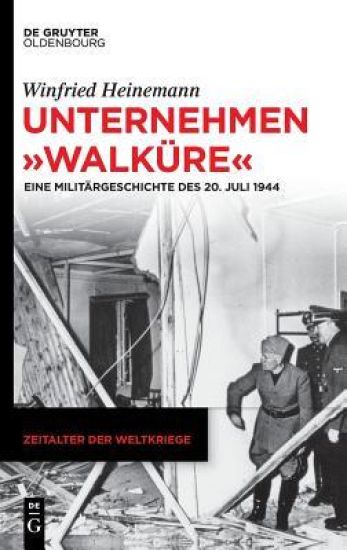
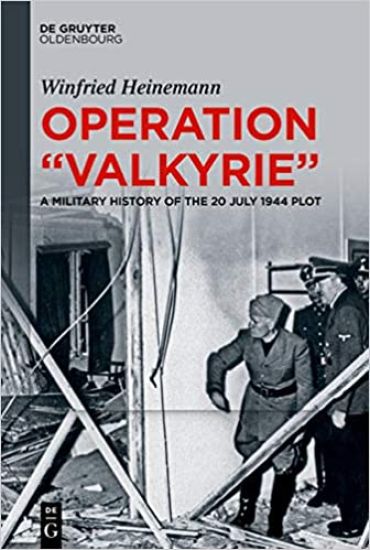
20 July 1944 is usually associated with the bomb plot to murder Hitler. However, what distinguishes Colonel Stauffenberg’s plan from all others is that the attempt on the Führer’s life was only to be the initial stage of a full military coup d’état. The aim was to overthrow the murderous regime, and to end the war as soon as possible. The conspiracy has long been analyzed from political, social, religious, or moral points of view. This book asks what the military dimension of the plan was. What traditions in the German army were at work, how was planning and preparation done, and why did the plot fail eventually? What is more: how did the conspiracy affect the German armies created in East and West after World War II, and also the Austrian Army? As the politicians among the conspirators thought in categories of Imperial Germany or at least the Weimar Republic, the officers among them were conditioned by the Reichswehr. Yet, Stauffenberg and some others were also bright intellectuals who were willing to incorporate their war experience into their plans, rendering them surprisingly modern at times. The coup d’état had been planned as meticulously as circumstances in war-torn Berlin allowed. However, as most officers had foreseen, once it became public knowledge that Hitler had survived Stauffenberg’s bomb, army units refused to act. The myth surrounding the "Führer" effectively prevented any military action against him. Still, the failed uprising had its effects: the regime took the opportunity to tilt the balance of power further in favor of Himmler and his fiefdom (SS, Gestapo, Police), to the detriment of the army which Hitler felt was too reactionary anyway. The leadership of the West German Bundeswehr always saw the failed uprising as part of its tradition, but it took time for this attitude to percolate down to the rank and file. For decades, some of the former Wehrmacht soldiers viewed Stauffenberg and his friends as "traitors". The book is the first to approach this important event in German history from a specifically military point of view, and that results in some surprising new results.
Unternehmen "Walküre"

Unternehmen "Walküre"

Winfried Heinemann

Walter de Gruyter
2020
pokkari
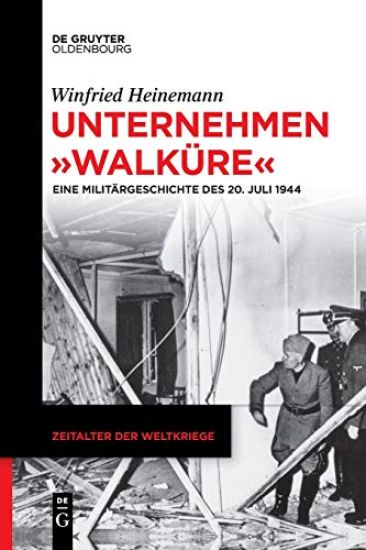
Am 20. Juli 1944 ver bte ein Offizier ein Attentat auf Hitler. Stauffenberg und andere Heeresoffiziere versuchten, das NS-Regime zu st rzen und den ausweglosen Krieg zu beenden. War es nur ein "Aufstand des Gewissens"? In welcher milit rischen Tradition standen die Verschw rer? Und welche milit rischen berlegungen lagen ihrem Handeln zugrunde? Der Band analysiert die Ereignisse aus einer spezifisch milit rgeschichtlichen Perspektive und nimmt im Schwerpunkt die milit rischen Umsturzplanungen in den Blick. Er fragt aber auch nach den Auswirkungen von Attentat und Staatsstreichversuch auf das Milit r der Nachkriegszeit in West- und Ostdeutschland sowie in sterreich. Dass Stauffenberg und seine Mitverschw rer einer anderen Vorstellung von der Rolle des Milit rs im Staat anhingen, machte es f r die Nachkriegsarmeen nicht einfach, sich in die Tradition des Aufstandes gegen den Krieg und das verbrecherische Regime zu stellen.
Unternehmen "Walküre"

Unternehmen "Walküre"

Winfried Heinemann

de Gruyter Oldenbourg
2019
sidottu
Am 20. Juli 1944 ver bte ein Offizier ein Attentat auf Hitler. Stauffenberg und andere Heeresoffiziere versuchten, das NS-Regime zu st rzen und den ausweglosen Krieg zu beenden. War es nur ein "Aufstand des Gewissens"? In welcher milit rischen Tradition standen die Verschw rer? Und welche milit rischen berlegungen lagen ihrem Handeln zugrunde? Der Band analysiert die Ereignisse aus einer spezifisch milit rgeschichtlichen Perspektive und nimmt im Schwerpunkt die milit rischen Umsturzplanungen in den Blick. Er fragt aber auch nach den Auswirkungen von Attentat und Staatsstreichversuch auf das Milit r der Nachkriegszeit in West- und Ostdeutschland sowie in sterreich. Dass Stauffenberg und seine Mitverschw rer einer anderen Vorstellung von der Rolle des Milit rs im Staat anhingen, machte es f r die Nachkriegsarmeen nicht einfach, sich in die Tradition des Aufstandes gegen den Krieg und das verbrecherische Regime zu stellen.
Vom Zusammenwachsen des Bundnisses

Vom Zusammenwachsen des Bundnisses

Winfried Heinemann

Walter de Gruyter
2015
sidottu
Das Nordatlantische Bundnis entstand als ein politischer Zusammenschluss souveraner Staaten. Noch vor den militarischen hat es sich zivile Strukturen geschaffen, um die politische Zusammenarbeit zu koordinieren. Heinemann schildert die Entwicklung dieser Kooperation bis in das Jahr 1956. An funf ausgewahlten Beispielen zeigt er, wie das Bundnis lernt, mit den hochst unterschiedlichen Interessen seiner Mitgliedstaaten umzugehen. Der Bogen spannt sich vom Umgang mit Tito-Jugoslawien uber die entstehende Zypernkrise, den Kolonialismus und die Frage einer spanischen NATO-Mitgliedschaft bis hin zu den ersten kommunistischen Ministern in einem NATO-Staat (Island 1956). Der Ausschuss der "Drei Weisen" 1956 ist die Reaktion der Allianz auf solche Spannungen, kann aber auch gelungene politische Konsultationsmechanismen konstatieren. Dieser Band geht uber eine Diplomatiegeschichte klassischen Zuschnitts hinaus, indem er die NATO als etwas Neuartiges auf der diplomatischen Buhne der Nachkriegszeit vorstellt."
Germany and the Second World War

Germany and the Second World War

Ralf Blank; Jörg Echternkamp; Karola Fings; Jürgen Förster; Winfried Heinemann; Tobias Jersak; Armin Nolzen; Christoph Rass

Oxford University Press
2015
nidottu
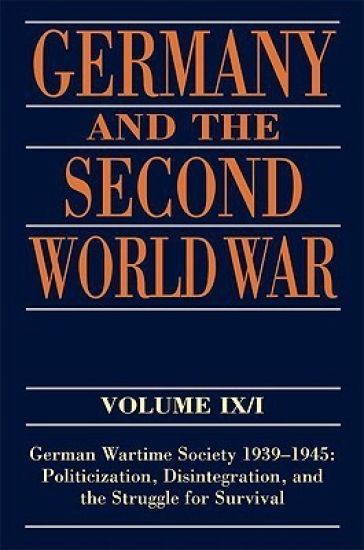
The Second World War affected the lives and shaped the experience of millions of individuals in Germany - soldiers at the front, women, children and the elderly sheltering in cellars, slave labourers toiling in factories, and concentration-camp prisoners and POWs clearing rubble in the Reich's devastated cities. Taking a 'history from below' approach, the volume examines how the minds and behaviour of individuals were moulded by the Party as the Reich took the road to Total War. The ever-increasing numbers of German workers conscripted into the Wehrmacht were replaced with forced foreign workers and slave labourers and concentration camp prisoners. The interaction in everyday life between German civilian society and these coerced groups is explored, as is that society's relationship to the Holocaust. From early 1943, the war on the home front was increasingly dominated by attack from the air. The role of the Party, administration, police, and courts in providing for the vast numbers of those rendered homeless, in bolstering civilian morale with 'miracle revenge weapons' propaganda, and in maintaining order in a society in disintegration is reviewed in detail. For society in uniform, the war in the east was one of ideology and annihilation, with intensified indoctrination of the troops after Stalingrad. The social profile of this army is analysed through study of a typical infantry division. The volume concludes with an account of the various forms of resistance to Hitler's regime, in society and the military, culminating in the failed attempt on his life in July 1944.
Die DDR Und Ihr Militär

Die DDR Und Ihr Militär

Winfried Heinemann

Walter de Gruyter
2011
pokkari
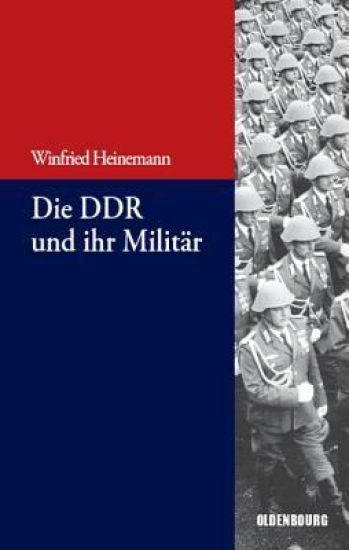
Souver n oder abh ngig? Neben einem knappen chronologischen berblick, der die wesentlichen Stadien der DDR-Milit rgeschichte in den Kontext einer Gesamtgeschichte der Epoche stellt, steht die systematische Betrachtung ausgew hlter Themen, etwa wie sich die Hochmilitarisierung auf Wirtschaft und Gesellschaft des SED-Staates auswirkte. Leitmotiv ist die Frage, in wie weit die DDR als - so die Selbstdarstellung - souver ner Staat selbst f r ihre Sicherheit sorgte oder ob sie von der sowjetischen Sicherheitsgarantie abh ngig war.
Germany and the Second World War

Germany and the Second World War

Ralf Blank; Jörg Echternkamp; Karola Fings; Jürgen Förster; Winfried Heinemann; Tobias Jersak; Armin Nolzen; Christoph Rass

Clarendon Press
2008
sidottu
The Second World War affected the lives and shaped the experience of millions of individuals in Germany - soldiers at the front, women, children and the elderly sheltering in cellars, slave labourers toiling in factories, and concentration-camp prisoners and POWs clearing rubble in the Reich's devastated cities. Taking a 'history from below' approach, the volume examines how the minds and behaviour of individuals were moulded by the Party as the Reich took the road to Total War. The ever-increasing numbers of German workers conscripted into the Wehrmacht were replaced with forced foreign workers and slave labourers and concentration camp prisoners. The interaction in everyday life between German civilian society and these coerced groups is explored, as is that society's relationship to the Holocaust. From early 1943, the war on the home front was increasingly dominated by attack from the air. The role of the Party, administration, police, and courts in providing for the vast numbers of those rendered homeless, in bolstering civilian morale with 'miracle revenge weapons' propaganda, and in maintaining order in a society in disintegration is reviewed in detail. For society in uniform, the war in the east was one of ideology and annihilation, with intensified indoctrination of the troops after Stalingrad. The social profile of this army is analysed through study of a typical infantry division. The volume concludes with an account of the various forms of resistance to Hitler's regime, in society and the military, culminating in the failed attempt on his life in July 1944.