Kirjojen hintavertailu – 12 903 725 kirjaa ja 27 kauppaa
Kirjailija
Witold Rybczynski
Kirjat ja teokset yhdessä paikassa: 20 kirjaa, julkaisuja vuosilta 1987–2026, suosituimpiin kuuluu Home: A Short History of an Idea. Vertaile teosten hintoja ja tarkista saatavuus suomalaisista kirjakaupoista.
In this lively and entertaining work, Witold Rybczynski--hailed as "one of the best writers on design working today" by Publishers Weekly--tells the story of the most distinctive cars in history and the artists, engineers, dreamers, and gearheads who created them. Delving into more than 170 years of ingenuity in design, technology, and engineering, he takes us from Carl Benz's three-wheel motorcar in 1855 to the present-day shift to electric cars. Along the way, he looks at the emergence of mass production with Henry Ford's Model T; the Golden Age of American car design and the rise of car culture; postwar European subcompacts typified by the Mini Cooper; and the long tradition of the streamlined and elegant sports car. Rybczynski explores how cars have been reflections of national character (the charming Italian Fiat Cinquecento), icons of a subculture (the VW bus for American hippies), and even emblems of an era (the practical Chrysler minivan). He explains key developments in automotive technology, including the electric starter, rack-and-pinion steering, and disc brakes, bringing to light how the modern automobile is the result of more than a century of trial and error. And he weaves in charming accounts of the many cars he's owned and driven, starting with his first--the iconic Volkswagen Beetle. The Driving Machine is a breezy and fascinating history of design, illustrated with the author's delightful drawings.
In this lively and entertaining work, Witold Rybczynski—hailed as “one of the best writers on design working today” by Publishers Weekly—tells the story of the most distinctive cars in history and the artists, engineers, dreamers and gearheads who created them. Delving into more than 170 years of ingenuity in design, technology and engineering, he takes us from Carl Benz’s three-wheel motorcar in 1855 to the present-day shift to electric cars. Along the way, he looks at the emergence of mass production with Henry Ford’s Model T; the Golden Age of American car design and the rise of car culture; postwar European subcompacts typified by the Mini Cooper; and the long tradition of the streamlined and elegant sports car. Rybczynski explores how cars have been reflections of national character (the charming Italian Fiat Cinquecento), icons of a subculture (the VW bus for American hippies) and even emblems of an era (the practical Chrysler minivan). He explains key developments in automotive technology, including the electric starter, rack-and-pinion steering, and disc brakes, bringing to light how the modern automobile is the result of more than a century of trial and error. And he weaves in charming accounts of the many cars he’s owned and driven, starting with his first—the iconic Volkswagen Beetle. The Driving Machine is a breezy and fascinating history of design, illustrated with the author’s delightful drawings.

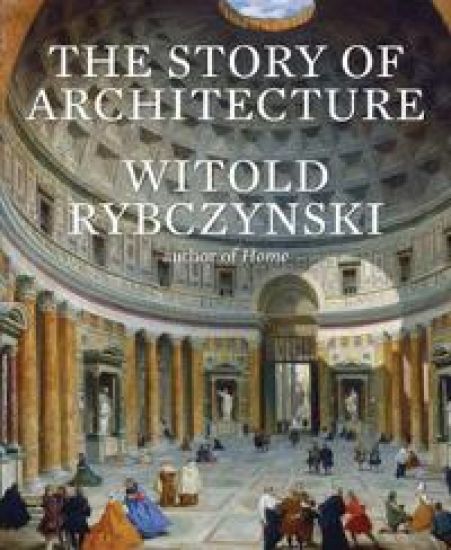
An inviting exploration of architecture across cultures and centuries by one of the field’s eminent authors “Rybczynski’s expansive account traces the influence of social, technological, and economic shifts on architecture across centuries.”—New York Times Book Review “The finest architectural writer in our language.”—Mark Alan Hewitt, New Criterion In this sweeping history, from the Stone Age to the present day, Witold Rybczynski shows how architectural ideals have been affected by technological, economic, and social changes—and by changes in taste. The host of examples ranges from places of worship such as Hagia Sophia and Brunelleschi’s Duomo to living spaces such as the Katsura Imperial Villa and the Alhambra, national icons such as the Lincoln Memorial and the Sydney Opera House, and skyscrapers such as the Seagram Building and Beijing’s CCTV headquarters. Rybczynski’s narrative emphasizes the ways that buildings across time and space are united by the human desire for order, meaning, and beauty. This is the story of architecture’s physical manifestation of the universal aspiration to celebrate, honor, and commemorate, and an exploration of the ways that each building is a unique product of patrons, architects, and builders. Firm in opinion, even-handed, and rooted in scholarship, this book will delight anyone interested in understanding the buildings they use, visit, and pass by each day.
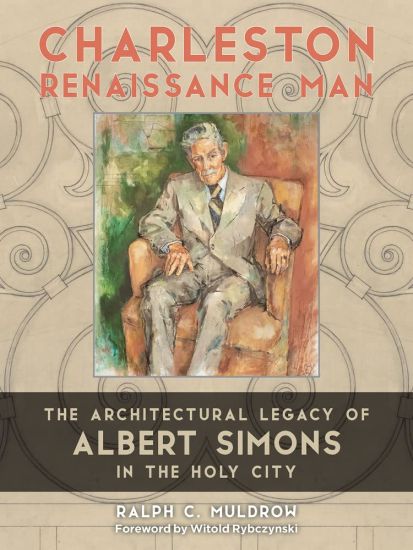
In the years between World Wars I and II, Charleston, South Carolina, experienced a cultural renaissance led largely by artists, writers, architects, and preservationists that has been credited with making this port city the popular tourist destination it is today. Architect Albert Simons was foremost among this group and contributed mightily to the cultural milieu of the Charleston Renaissance through his architectural design and passion for preservation. His work helped to mold the cityscape and set a course that would both preserve the historic South Carolina city and carry it forward into the twentieth century. This beautifully illustrated volume reveals the deep connection between Simons and the city that he loved. Although he preferred the more traditional Beaux-Arts and Classical styles, his unique ability to balance them with modernism was deeply embedded in the ethos of Charleston and the renaissance that spurred the city's rebirth as an international destination defined by its architectural heritage. A foreword is provided by Witold Rybczynski, an award-winning author of numerous books including Charleston Fancy: Little Houses and Big Ideas in the Holy City.
This delightful chronicle of contemporary building and planning in the city of Charleston, South Carolina, makes a compelling case for the importance of architecture on a local scale.
A captivating chronicle of building in modern-day Charleston, making a case for architecture based on historical precedent, local context, and the ability to delight Charleston, South Carolina, which boasts America’s first historic district, is known for its palmetto-lined streets and picturesque houses. The Holy City, named for its profusion of churches, exudes an irresistible charm. Award-winning author and cultural critic Witold Rybczynski unfolds a series of stories about a group of youthful architects, builders, and developers based in Charleston: a self-taught home builder, an Air Force pilot, a fledgling architect, and a bluegrass mandolin player. Beginning in the 1980s, this cast of characters, exercising a kind of amateur mastery, produced an eclectic array of buildings inspired by the past—including a domed Byzantine drawing room, a fanciful medieval castle, a restored freedman’s cottage, a miniature Palladian villa, and a contemporary Mediterranean street. In his careful profiles of these protagonists and the challenges they have overcome in realizing their dreams, Rybczynski compellingly emphasizes the importance of architecture and urban design on a local level, how an old city can remake itself by invention as well as replication, and the role that individuals still play in transforming the urban landscapes around them.
A deep exploration of modern life that examines our cities, public places, and homesIn Mysteries of the Mall, Witold Rybczynski, the author of How Architecture Works, casts a seasoned critical eye on the modern scene. His subject is nothing less than the broad setting of our metropolitan world. In thirty-four discerning essays, Rybczynski ranges over topics as varied as shopping malls, Central Park, the Op ra Bastille, and America's shrinking cities. Along the way, he examines our post-9/11 obsession with security, the revival of the big-city library, the rise of college towns, our fascination with vacation homes, and Disney's planned community of Celebration. By looking at contemporary architects as diverse as Frank Gehry, Moshe Safdie, and Bing Thom, revisiting old masters such as Palladio, Le Corbusier, and Frank Lloyd Wright, and considering such unsung innovators as Stanley H. Durwood, the inventor of the cineplex, Rybczynski ponders the role of global metropolises in an age of tourism and reflects on what kinds of places attract us in the modern city. Mysteries of the Mall is required reading for anyone curious about the contemporary world and how it came to be the way it is.
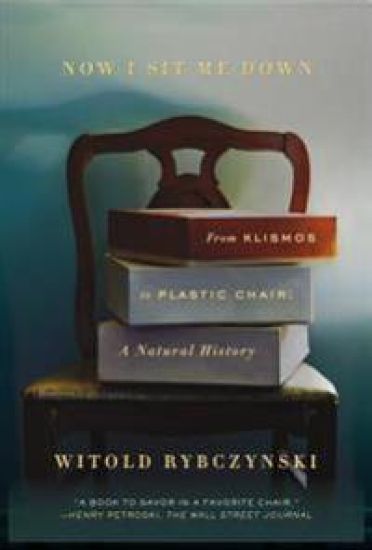
A grand tour of the chair through the ages by our foremost writer on design Have you ever wondered where rocking chairs came from, or why cheap plastic chairs are suddenly everywhere? In Now I Sit Me Down, the distinguished architect and writer Witold Rybczynski chronicles the history of the chair from the folding stools of pharaonic Egypt to the ubiquitous stackable monobloc chairs of today. He tells the stories of the inventor of the bentwood chair, Michael Thonet, and of the creators of the first molded-plywood chair, Charles and Ray Eames. He reveals the history of chairs to be a social history--of different ways of sitting, of changing manners and attitudes, and of varying tastes. The history of chairs is the history of who we are. We learn how the ancient Chinese switched from sitting on the floor to sitting in a chair, and how the iconic chair of Middle America--the BarcaLounger--traces its roots back to the Bauhaus. Rybczynski weaves a rich tapestry that draws on art and design history, personal experience, and historical accounts. And he pairs these stories with his own delightful hand-drawn illustrations: colonial rockers and English cabrioles, languorous chaise longues and no-nonsense ergonomic task chairs--they're all here. The famous Danish furniture designer Hans Wegner once remarked, "A chair is only finished when someone sits in it." As Rybczynski tells it, the way we choose to sit and what we choose to sit on speak volumes about our values, our tastes, and the things we hold dear.
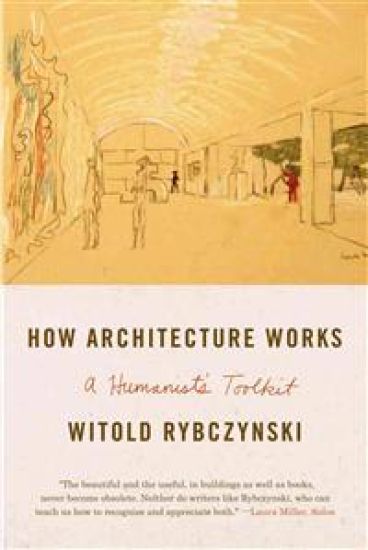
An essential toolkit for understanding architecture as both art form and the setting for our everyday lives We spend most of our days and nights in buildings, living and working and sometimes playing. Architecture is both the setting for our everyday lives and a public art form--but it remains mysterious to most of us. In How Architecture Works, Witold Rybczynski, one of our best, most stylish critics and the winner of the Vincent Scully Prize for his writing on architecture, answers our most fundamental questions about how good--and not so good--buildings are designed and constructed. Introducing the reader to the rich and varied world of modern architecture, he reveals how architects as diverse as Frank Gehry, Renzo Piano, and Robert A. M. Stern envision and create their designs. He teaches us how to "read" plans, how buildings respond to their settings, and how the smallest detail--of a stair balustrade, for instance--can convey an architect's vision. How Architecture Works explains the central elements that make up good building design, ranging from a war memorial in London to an opera house in Saint Petersburg, from the National Museum of African American History and Culture in Washington, D. C., to a famous architect's private retreat in Princeton, New Jersey. It is an enlightening humanist's toolkit for thinking about the built environment and seeing it afresh. "Architecture, if it is any good, speaks to all of us," Rybczynski writes. This revelatory book is his grand tour of architecture today.
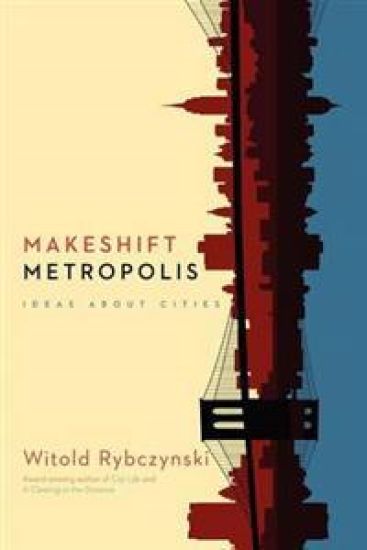
In this new work, prizewinning author, professor, and "Slate "architecture critic Witold Rybczynski returns to the territory he knows best: writing about the way people live, just as he did in the acclaimed bestsellers "Home "and "A Clearing in the Distance." In "Makeshift Metropolis," Rybczynski has drawn upon a lifetime of observing cities to craft a concise and insightful book that is at once an intellectual history and a masterful critique. "Makeshift Metropolis "describes how current ideas about urban planning evolved from the movements that defined the twentieth century, such as City Beautiful, the Garden City, and the seminal ideas of Frank Lloyd Wright and Jane Jacobs. If the twentieth century was the age of planning, we now find ourselves in the age of the market, Rybczynski argues, where entrepreneurial developers are shaping the twenty-first-century city with mixed-use developments, downtown living, heterogeneity, density, and liveliness. He introduces readers to projects like Brooklyn Bridge Park, the Yards in Washington, D. C., and, further afield, to the new city of Modi'in, Israel--sites that, in this age of resource scarcity, economic turmoil, and changing human demands, challenge our notion of the city. Erudite and immensely engaging, "Makeshift Metropolis "is an affirmation of Rybczynski's role as one of our most original thinkers on the way we live today.
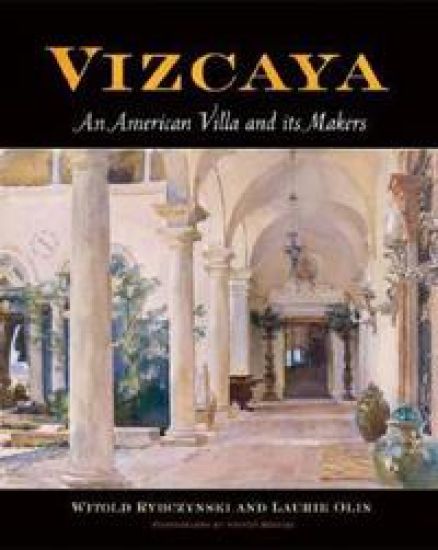
The Miami estate of Vizcaya, like its palatial contemporaries Biltmore and San Simeon, represents an achievement of the Gilded Age, when country houses and their gardens were a conspicuous measure of personal wealth and power. In Vizcaya: An American Villa and Its Makers, a celebrated architecture critic and writer and an award-winning landscape architect explore the little-known story of Vizcaya, an extraordinary national treasure. Witold Rybczynski and Laurie Olin use a rich collection of illustrations, historic photographs, and narrative to document the creation of this stunning house and landscape. Vizcaya was completed in 1916 as the winter retreat of Chicago industrialist James Deering. The cosmopolitan bachelor, who chose Miami for its warm climate, enlisted the guidance of artist Paul Chalfin, with whom he traveled throughout Italy to survey houses and gardens. With the assistance of architect F. Burrall Hoffman, Jr., and garden designer Diego Suarez, the 180-acre site on Biscayne Bay was transformed into a grand estate, complete with lagoons, canals, citrus groves, a farm village, a yacht harbor, and a 40-room Baroque mansion. The lure of this architectural and landscape masterpiece, named for a Spanish Basque province, is undeniable. John Singer Sargent planned a short visit in 1917 but stayed for several months, producing an inspired series of watercolors, many of which are reproduced here for the first time. The book is further enriched by archival material and by the color images of noted photographer Steven Brooke, paying homage to Vizcaya as a lens through which readers learn about architecture, landscape and garden design, interior decoration, and art.
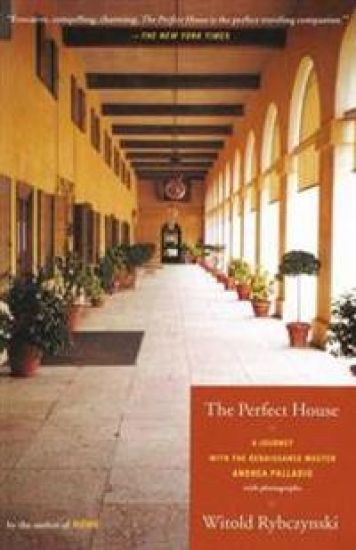
The award-winning author of A Clearing in the Distance focuses on the designs, constructions, and writings of the Italian Renaissance architect, noting the influence of his works on such structures as the White House. Reprint. 25,000 first printing.
One of the nation's foremost experts on architecture discusses the role of style in the "language" of the discipline, and shows how Frank Gehry, Mies van der Rohe, Allan Greenberg, and others are influenced by it.
The Best Tool of the Millennium The seeds of Rybczynski's elegant and illuminating new book were sown by The New York Times, whose editors asked him to write an essay identifying the best tool of the millennium. The award-winning author
In a brilliant collaboration between writer and subject, Witold Rybczynski, the bestselling author of "Home" and "City Life, " illuminates Frederick Law Olmsted's role as a major cultural figure at the epicenter of nineteenth-century American history. We know Olmsted through the physical legacy of his stunning landscapes -- among them, New York's Central Park, California's Stanford University campus, and Boston's Back Bay Fens. But Olmsted's contemporaries knew a man of even more extraordinarily diverse talents. Born in 1822, he traveled to China on a merchant ship at the age of twenty-one. He cofounded "The Nation" magazine and was an early voice against slavery. He managed California's largest gold mine and, during the Civil War, served as the executive secretary to the United States Sanitary Commission, the precursor of the Red Cross. Rybczynski's passion for his subject and his understanding of Olmsted's immense complexity and accomplishments make his book a triumphant work. In "A Clearing in the Distance, " the story of a great nineteenth-century American becomes an intellectual adventure.
From the opening sentences of his first book on architecture, Home, Witold Rybczynski seduced readers into a new appreciation of the spaces they live in. He also introduced us to "an unerringly lucid writer who knows how to translate architectural ideas into layman's terms" (The Dallas Morning News). Rybczynski's vast knowledge, his sense of wonder, and his elegantly uncluttered prose shine on every page of his latest meditation on the art of building. Looking Around is about architecture as an art of compromise--between beauty and function, aspiration and engineering, builders and clients. It is the story of the Seagram Building in New York and the Wexner Center for the Visual Arts in Columbus, Ohio--a museum that opened without a single painting on view, so that critics could better appreciate its design. But what of the visitors who want a building that displays art well? What of those who work in the building? Looking Around explores the notion of the architect as superstar and assesses giants from Palladio to Michael Graves, styles from classicism to high tech. It demonstrates how architecture actually works--or doesn't--in corporate headquarters, airports, private homes, and the special buildings designed to represent our civilization. For all its erudition, Looking Around is also bracingly straightforward. Rybczynski looks closely and critically at structures that may once have dazzled us with their ostentation and expense, and sees them as triumphs or failures--of aesthetic ideals and of lasting function. This is a fascinating and illuminating book about an art form integral to our lives.
Told in ten parts by prominent Montreal writers and distinguished graduates, the story of McGill unfolds with anecdotal charm and insightful overview. The lively text recaptures the spirit of campus life from the time of the university's beginnings and recounts the exploits and accomplishments of its grand personages and colourful figures. In addition, it explores McGill's significance and influence in the context of the community and country of which it is a part. More than one hundred specially commissioned, full-colour photographs illustrate this handsome, large-format volume, while rare archival shots provide a fascinating glimpse of early life at the university. The stunning photography includes images of campus life throughout the seasons by noted Montreal photographer George Zimbel, powerful architectural shots by David Duchow, exquisite, revealing interiors by Mark Ruwedel, and skilful photographs of memorable McGill treasures by Pierre Charrier. Anyone who was ever a part of the McGill experience will find McGill: A Celebration informative, charming, and captivating -- some very special memories will be rekindled. For others not so fortunate, it will go a long way toward making up what was missed.
"A winning book, a pleasure to read...a revelation about what architects actually do and how they go about doing it." -Los Angeles Times Witold Rybezynski takes us on an extraordinary odyssey as he tells the story of designing and building of his own house. Rybezynski's project began as a workshed; through a series of "happy accidents," however, the structure gradually evolved into a full-fledge house. In tracing this evolution, he touches on matters both theoretical and practical, writing on such diverse topics as the distinguished structural descendants of the humble barn, the ritualistic origins of the elements of classical architecture, and the connections between dress and habitation, and between architecture and gastronomy. Rybezynski discusses feng shui, the Chinese art of placing a home in the landscape, and also considers the theories and work of such architects as Palladio, Le Corbusier, and Frank Lloyd Wright. An eloquent examination of the links between being and building, The Most Beautiful House in the World offers insights into the joys of "installing ourselves in a place, of establishing a spot where it be safe to dream."
Walk through five centuries of homes both great and small--from the smoke-filled manor halls of the Middle Ages to today's Ralph Lauren-designed environments--on a house tour like no other, one that delightfully explicates the very idea of "home." You'll see how social and cultural changes influenced styles of decoration and furnishing, learn the connection between wall-hung religious tapestries and wall-to-wall carpeting, discover how some of our most welcome luxuries were born of architectural necessity, and much more. Most of all, Home opens a rare window into our private lives--and how we really want to live.