Kirjojen hintavertailu – 12 903 725 kirjaa ja 27 kauppaa

Kirjailija

Wojciech Cwalina

Kirjat ja teokset yhdessä paikassa: 6 kirjaa, julkaisuja vuosilta 2007–2026, suosituimpiin kuuluu Key Topics in Attitudes and Persuasion. Vertaile teosten hintoja ja tarkista saatavuus suomalaisista kirjakaupoista.

6 kirjaa

Kirjojen julkaisuvuodet: 2007–2026.

Key Topics in Attitudes and Persuasion

Key Topics in Attitudes and Persuasion

Wojciech Cwalina; Pawel Koniak

TAYLOR FRANCIS LTD
2026
sidottu
This book offers an accessible introduction to psychological theories of attitudes, attitude change, and persuasion. It explores questions of what attitudes are, how people form different attitudes, and how these attitudes can be changed. The book guides readers through five core sections that examine the essential properties and components of attitudes, key theoretical frameworks explaining attitude formation and change, methodologies for measuring and assessing attitudes, real-world applications across diverse domains, and cutting-edge research and emerging trends. It looks at how attitude theory can be applied to health behaviours, political decision-making, marketing strategies, and environmental sustainability initiatives. The book also presents valuable insights into recognizing and defending against manipulative persuasion techniques, from propaganda to deception in the marketplace. By highlighting the profound influence attitudes exert on human behaviour, this book serves as essential reading for students of social psychology, applied psychology, sociology, political science, communication, marketing, and management. It will also be of interest to anyone interested in knowing more about the psychology behind persuasion and attitudes.

Key Topics in Attitudes and Persuasion

Key Topics in Attitudes and Persuasion

Wojciech Cwalina; Pawel Koniak

TAYLOR FRANCIS LTD
2026
nidottu
This book offers an accessible introduction to psychological theories of attitudes, attitude change, and persuasion. It explores questions of what attitudes are, how people form different attitudes, and how these attitudes can be changed. The book guides readers through five core sections that examine the essential properties and components of attitudes, key theoretical frameworks explaining attitude formation and change, methodologies for measuring and assessing attitudes, real-world applications across diverse domains, and cutting-edge research and emerging trends. It looks at how attitude theory can be applied to health behaviours, political decision-making, marketing strategies, and environmental sustainability initiatives. The book also presents valuable insights into recognizing and defending against manipulative persuasion techniques, from propaganda to deception in the marketplace. By highlighting the profound influence attitudes exert on human behaviour, this book serves as essential reading for students of social psychology, applied psychology, sociology, political science, communication, marketing, and management. It will also be of interest to anyone interested in knowing more about the psychology behind persuasion and attitudes.

Political Marketing:

Political Marketing:

Wojciech Cwalina; Andrzej Falkowski; Bruce I. Newman

Routledge
2011
nidottu
Comprehensive and clearly organized, this is the first integrated theory-to-practice text on marketing's role in the political process. It incorporates insights and concepts drawn from the disciplines of Marketing, Psychology, and Political Science, and covers every aspect of marketing's infiltration into politics, including campaign strategy, market segmentation, and media strategy. Using examples and models drawn from countries around the globe, the authors elucidate the importance of political marketing techniques for the stability of democratic institutions. They also note the potential threats to democracy, especially the use of marketing techniques to manipulate voters at the subconscious level. They conclude with a set of normative do's and dont's for political marketing practice that strengthens civic education and democratic governance.
Political Marketing:

Political Marketing:

Wojciech Cwalina; Andrzej Falkowski; Bruce I. Newman

Routledge
2011
sidottu
Comprehensive and clearly organized, this is the first integrated theory-to-practice text on marketing's role in the political process. It incorporates insights and concepts drawn from the disciplines of Marketing, Psychology, and Political Science, and covers every aspect of marketing's infiltration into politics, including campaign strategy, market segmentation, and media strategy. Using examples and models drawn from countries around the globe, the authors elucidate the importance of political marketing techniques for the stability of democratic institutions. They also note the potential threats to democracy, especially the use of marketing techniques to manipulate voters at the subconscious level. They conclude with a set of normative do's and dont's for political marketing practice that strengthens civic education and democratic governance.
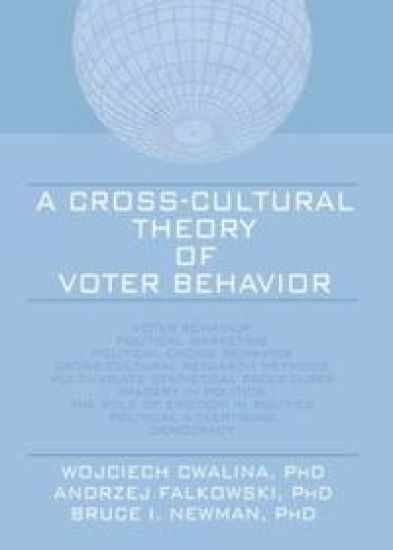
A Cross-Cultural Theory of Voter Behavior

A Cross-Cultural Theory of Voter Behavior

Wojciech Cwalina; Andrzej Falkowski; Bruce I Newman

Routledge Member of the Taylor and Francis Group
2008
sidottu
The rapid development of democracy and political freedoms has created new and sophisticated psychology-based methods of influencing the way voters choose, as well as political systems based on free market principles. A Cross-Cultural Theory of Voter Behavior uses advanced empirical testing to determine whether the behavior of voters in established and emerging democracies around the world is predictable. The results of the testing suggest the theory is a ground-breaking cross-cultural model with theoretical and strategic global implications. This unique book examines the many facets of political marketing and its direct relationship with the voter. A comprehensive theory meticulously tested in the dynamic political waters of the U. S. and Europe, this text bridges the latest theoretical developments in the emerging and advanced democracies. A Cross-Cultural Theory of Voter Behavior offers an innovative and seldom seen international perspective that integrates up-to-date literature in political science with advanced political marketing to provide readers with useable, unified information. In addition, the text is replete with detailed references and illustrated with a wealth of informative tables and graphics to made pertinent data accessible and easily understood. Some of the topics discussed in A Cross-Cultural Theory of Voter Behavior include politics in an age of manufactured images, partisanship and party identification, candidate-centered politics, political cognition, social categorization of politicians, the role of advertising and emotion, among others. An ideal text for students, academics, and researchers, the information presented in A Cross-Cultural Theory of Voter Behavior is also a vital resource for political practitioners such as consultants, candidates, lobbyists, political action committees, fund-raisers, pollsters, government officials, ad specialists, journalists, public relations executives, and congressional aides.
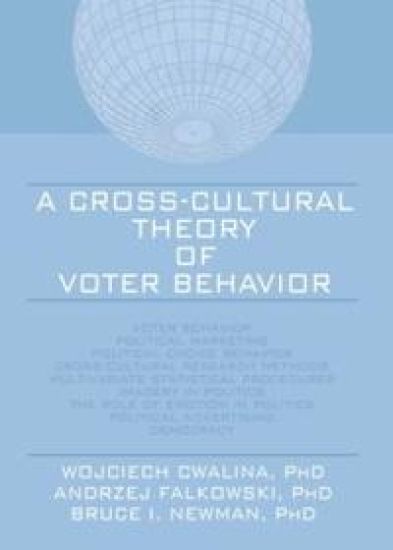
A Cross-Cultural Theory of Voter Behavior

A Cross-Cultural Theory of Voter Behavior

Wojciech Cwalina; Andrzej Falkowski; Bruce I Newman

Routledge Member of the Taylor and Francis Group
2007
nidottu
The rapid development of democracy and political freedoms has created new and sophisticated psychology-based methods of influencing the way voters choose, as well as political systems based on free market principles. A Cross-Cultural Theory of Voter Behavior uses advanced empirical testing to determine whether the behavior of voters in established and emerging democracies around the world is predictable. The results of the testing suggest the theory is a ground-breaking cross-cultural model with theoretical and strategic global implications. This unique book examines the many facets of political marketing and its direct relationship with the voter. A comprehensive theory meticulously tested in the dynamic political waters of the U. S. and Europe, this text bridges the latest theoretical developments in the emerging and advanced democracies. A Cross-Cultural Theory of Voter Behavior offers an innovative and seldom seen international perspective that integrates up-to-date literature in political science with advanced political marketing to provide readers with useable, unified information. In addition, the text is replete with detailed references and illustrated with a wealth of informative tables and graphics to made pertinent data accessible and easily understood. Some of the topics discussed in A Cross-Cultural Theory of Voter Behavior include politics in an age of manufactured images, partisanship and party identification, candidate-centered politics, political cognition, social categorization of politicians, the role of advertising and emotion, among others. An ideal text for students, academics, and researchers, the information presented in A Cross-Cultural Theory of Voter Behavior is also a vital resource for political practitioners such as consultants, candidates, lobbyists, political action committees, fund-raisers, pollsters, government officials, ad specialists, journalists, public relations executives, and congressional aides.