Kirjojen hintavertailu – 12 859 826 kirjaa ja 27 kauppaa

Kirjailija

Wojciech Malecki

Kirjat ja teokset yhdessä paikassa: 4 kirjaa, julkaisuja vuosilta 2010–2022, suosituimpiin kuuluu Ekokritiska metoder. Vertaile teosten hintoja ja tarkista saatavuus suomalaisista kirjakaupoista.

4 kirjaa

Kirjojen julkaisuvuodet: 2010–2022.

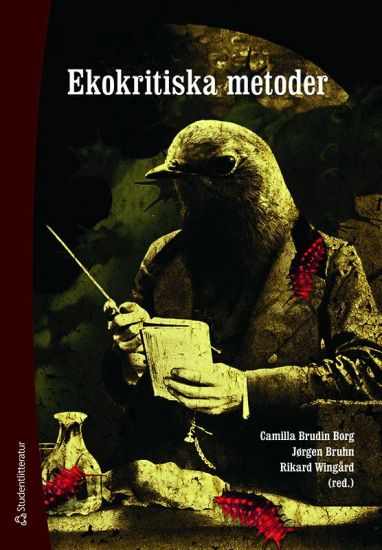
Ekokritiska metoder

Ekokritiska metoder

Camilla Brudin Borg; Jørgen Bruhn; Rikard Wingård; Björn Billing; Amelie Björck; Martin Hellström; Johanna Lindbo; Ann-Sofie Lönngren; Wojciech Malecki; Erik van Ooijen; Niklas Salmose; Matthew Schneider-Mayerson; Cecilia Åsberg

Studentlitteratur AB
2022
nidottu
Under de senaste åren har ekokritiken vuxit mycket snabbt och många teoretiska positioner har omprövats. Utifrån olika ­perspektiv både anammar och kritiserar ekokritiken traditionella vetenskapliga modeller vilket har lett till en nyskapande ­metodologisk mångfald. I vissa fall utforskar ekokritiken mer natur­vetenskapligt betonade metoder, i andra fall tänjs gränserna för vad som inom humaniora brukar betraktas som vetenskap. Ekokritiska metoder introducerar denna metodologiska flora och är en praktisk ingång till ekokritiken. Den har skrivits av forskare från olika forskningsmiljöer och innehåller en rik uppsättning av olika perspektiv och analysverktyg. Boken lämpar sig väl som grundbok på kurser i litteraturstudier, ekokritik eller kurser där metodologi står i fokus. Boken kan också vara av intresse för dem som vill fördjupa sig i metodfrågor, skaffa sig ­underlag för diskussion eller hitta inspiration till egen forskning.
Human Minds and Animal Stories

Human Minds and Animal Stories

Wojciech Malecki; Piotr Sorokowski; Boguslaw Pawlowski; Marcin Cienski

Routledge
2020
nidottu
The power of stories to raise our concern for animals has been postulated throughout history by countless scholars, activists, and writers, including such greats as Thomas Hardy and Leo Tolstoy. This is the first book to investigate that power and explain the psychological and cultural mechanisms behind it. It does so by presenting the results of an experimental project that involved thousands of participants, texts representing various genres and national literatures, and the cooperation of an internationally-acclaimed bestselling author. Combining psychological research with insights from animal studies, ecocriticism and other fields in the environmental humanities, the book not only provides evidence that animal stories can make us care for other species, but also shows that their effects are more complex and fascinating than we have ever thought. In this way, the book makes a groundbreaking contribution to the study of relations between literature and the nonhuman world as well as to the study of how literature changes our minds and society. "As witnessed by novels like Black Beauty and Uncle Tom’s Cabin, a good story can move public opinion on contentious social issues. In Human Minds and Animal Stories a team of specialists in psychology, biology, and literature tells how they discovered the power of narratives to shift our views about the treatment of other species. Beautifully written and based on dozens of experiments with thousands of subjects, this book will appeal to animal advocates, researchers, and general readers looking for a compelling real-life detective story." - Hal Herzog, author of Some We Love, Some We Hate, Some We Eat : Why It’s So Hard To Think Straight About Animals
Human Minds and Animal Stories

Human Minds and Animal Stories

Wojciech Malecki; Piotr Sorokowski; Boguslaw Pawlowski; Marcin Cienski

Routledge
2019
sidottu
The power of stories to raise our concern for animals has been postulated throughout history by countless scholars, activists, and writers, including such greats as Thomas Hardy and Leo Tolstoy. This is the first book to investigate that power and explain the psychological and cultural mechanisms behind it. It does so by presenting the results of an experimental project that involved thousands of participants, texts representing various genres and national literatures, and the cooperation of an internationally-acclaimed bestselling author. Combining psychological research with insights from animal studies, ecocriticism and other fields in the environmental humanities, the book not only provides evidence that animal stories can make us care for other species, but also shows that their effects are more complex and fascinating than we have ever thought. In this way, the book makes a groundbreaking contribution to the study of relations between literature and the nonhuman world as well as to the study of how literature changes our minds and society. "As witnessed by novels like Black Beauty and Uncle Tom’s Cabin, a good story can move public opinion on contentious social issues. In Human Minds and Animal Stories a team of specialists in psychology, biology, and literature tells how they discovered the power of narratives to shift our views about the treatment of other species. Beautifully written and based on dozens of experiments with thousands of subjects, this book will appeal to animal advocates, researchers, and general readers looking for a compelling real-life detective story." - Hal Herzog, author of Some We Love, Some We Hate, Some We Eat : Why It’s So Hard To Think Straight About Animals
Embodying Pragmatism

Embodying Pragmatism

Wojciech Malecki

Peter Lang AG
2010
sidottu
Embodying Pragmatism is the first monograph in English devoted to Richard Shusterman, an internationally renowned philosopher and one of today’s most innovative thinkers in pragmatism and aesthetics. The book presents a comprehensive account of Shusterman’s principal philosophical ideas concerning pragmatism, aesthetics, and literary theory (including such themes as interpretation, aesthetic experience, popular art, and human embodiment – culminating in his proposal of a new discipline called «somaesthetics»). As Shusterman’s philosophical writings involve a dialogue with both analytic and continental traditions, this monograph not only offers a critical vision of contemporary pragmatist thought but also situates Shusterman and pragmatism within the current state of theory.