Kirjojen hintavertailu – 12 903 725 kirjaa ja 27 kauppaa

Kirjailija

Wojciech Tworek

Kirjat ja teokset yhdessä paikassa: 4 kirjaa, julkaisuja vuosilta 2020–2026, suosituimpiin kuuluu Hasidism: The Basics. Vertaile teosten hintoja ja tarkista saatavuus suomalaisista kirjakaupoista.

4 kirjaa

Kirjojen julkaisuvuodet: 2020–2026.

Hasidism: The Basics

Hasidism: The Basics

Marcin Wodziński; Wojciech Tworek

Taylor & Francis
2026
Sidottu
Hasidism: The Basics offers a clear and accessible introduction to one of the most influential socioreligious movements shaping Jewish religious, social, and cultural life from the eighteenth century to the present. The book outlines Hasidism as a dynamic movement that profoundly transformed spirituality, leadership, identity, and communal organisation of the world’s Jewry, and continues to be one of the most recognisable forms of contemporary Judaism. It covers topics including: Inception and development in eighteenth-century Eastern Europe Expansion, institutional consolidation, and crises Diverse developments in Europe, North America, and Israel Central religious ideas and practices Key religious ideas such as spiritual devotion, charismatic leadership, and the sanctification of everyday life Interactions with other religious formations Modern revival and contemporary expressions of Hasidism Drawing on the latest scholarship while remaining free of technical jargon, Hasidism: The Basics provides the first concise, academically grounded overview of the history, ideas, and culture of Hasidism for a broad readership. This important book will be relevant to students of history, philosophy, literary studies, ethnography, sociology, and religion.

Hasidism: The Basics

Hasidism: The Basics

Marcin Wodziński; Wojciech Tworek

Taylor & Francis
2026
Nidottu
Hasidism: The Basics offers a clear and accessible introduction to one of the most influential socioreligious movements shaping Jewish religious, social, and cultural life from the eighteenth century to the present. The book outlines Hasidism as a dynamic movement that profoundly transformed spirituality, leadership, identity, and communal organisation of the world’s Jewry, and continues to be one of the most recognisable forms of contemporary Judaism. It covers topics including: Inception and development in eighteenth-century Eastern Europe Expansion, institutional consolidation, and crises Diverse developments in Europe, North America, and Israel Central religious ideas and practices Key religious ideas such as spiritual devotion, charismatic leadership, and the sanctification of everyday life Interactions with other religious formations Modern revival and contemporary expressions of Hasidism Drawing on the latest scholarship while remaining free of technical jargon, Hasidism: The Basics provides the first concise, academically grounded overview of the history, ideas, and culture of Hasidism for a broad readership. This important book will be relevant to students of history, philosophy, literary studies, ethnography, sociology, and religion.

The Polish Exile

The Polish Exile

Wojciech Tworek

MCGILL-QUEEN'S UNIVERSITY PRESS
2026
nidottu
Hasidism, a vibrant Jewish mystical movement, emerged in Eastern Europe in the eighteenth century. Among its branches, Chabad took root and flourished in tsarist Russia, radiating its distinct intellectual and spiritual approach from the Russian town of Lubavitch. But World War I, the October Revolution, and the rise of the Soviet regime shattered the Chabad community and forced its leader, Rebbe Yosef Yitshak Schneersohn, into exile – first to Latvia and later to Poland, home to Europe’s largest Jewish population at the time. While Poland appeared to offer a stable refuge and fertile grounds for rebuilding Chabad’s institutional and religious foundations, the movement soon confronted a series of profound challenges: shifting internal political conditions, fierce competition within the Jewish communal sphere, and rapidly evolving social realities. Drawing on an exceptional range of Hebrew, Yiddish, Polish, and Russian archival sources, Wojciech Tworek explores how these pressures forced Chabad to adapt and redefine itself within the context of modernity. He traces Chabad’s mystical teachings, literary production, institutional expansion, and evolving ritual life during the interwar years, demonstrating how amid a turbulent era of displacement and reinvention its leadership strategically reinterpreted – and at times recast – the movement’s past. In doing so, it laid the groundwork for Chabad’s postwar messianic orientation, its global outreach, and the emergence of an increasingly influential form of Orthodox fundamentalism. The first full account of Chabad’s interwar transformation, The Polish Exile fills a vital gap in the study of Jewish history and religion.
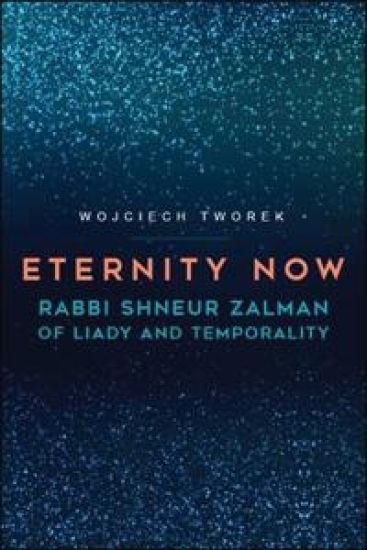
Eternity Now

Eternity Now

Wojciech Tworek

State University of New York Press
2020
pokkari
Demonstrates that Rabbi Shneur Zalman's teachings regarding time and history enabled Habad's growth into a mass Jewish movement. The Habad movement, formed in eighteenth-century Belarus, has developed into one of the most influential streams of Hasidic Judaism. Drawing on both mystical sermons and legal writings of its founder, Rabbi Shneur Zalman of Liady (1745–1812), Eternity Now provides the first account of the historiosophical dimensions of early Habad doctrine. Challenging the commonly held view that Shneur Zalman was primarily concerned with supratemporal transcendence, Wojciech Tworek reveals the importance of time and history in his teachings. Tworek argues that the worldly dimensions of Shneur Zalman's thought were largely responsible for the rapid growth of Habad at the turn of the nineteenth century and fostered its transformation from an elitist circle into a mass movement. Tworek's readings of Hebrew and Yiddish sources demonstrate the implications of these ideas not only for male scholars but also for non-scholars, Jewish women, and even non-Jews. Philosophical and kabbalistic thought joined together to form a model of religious experience attractive to a broad audience, laying an ideological foundation for the missionary messianism that was to become a hallmark of Habad in the twentieth century.