

Kirjailija
Wolf-Dieter Storl
Kirjat ja teokset yhdessä paikassa: 46 kirjaa, julkaisuja vuosilta 2000–2026, suosituimpiin kuuluu Mein Gartenkalender 2027. Vertaile teosten hintoja ja tarkista saatavuus suomalaisista kirjakaupoista.
46 kirjaa
Kirjojen julkaisuvuodet: 2000–2026.

Überall, wo der Bär lebt, also auf der ganzen nördlichen Erdkugel, galt er als Krafttier. Er war kein gewöhnliches Tier, sondern eine Art ? Waldmensch?, unter dessen zotteligem Fell sich eine Menschen- oder gar Götterseele verbarg. Er konnte die Gedanken der Menschen verstehen und hatte Heilkräfte. Wer vom Bär träumt oder eine starke Bärenbegegnung hat, der wird kräuterheilkundig und ist zum Heilen mit Pflanzen berufen. Und der Bärenträumer ist der mächtigste unter den Medizinleuten, so die nordamerikanischen Indianer. Die Germanen nannten ihre wirksamsten und besten Heilpflanzen ? Bärenkräuter? und schickten ihre Jugendlichen in den Wald, damit sie als ? Bärenhäuter? ihr wahres Wesen erfahren. Wolf-Dieter Storl, Kulturanthropologe und Ethnobotaniker, lebte selbst viele Jahre in Bärenbiotopen in den Rocky Mountains und hatte häufige gelegentlich dramatische Begegnungen mit Meister Petz. In diesem Buch zeichnet er die Beziehung zwischen Mensch und Bär auf. Die Reise führt von den Bärenhöhlen der Neandertaler zu den Bärenkulten sibirischer Stämme der Gegenwart, vom Höhlenbär bis zum Teddybär und nicht zuletzt auch in die Bärenstadt Bern, wo der Autor selbst einige Jahre lebte. Wir erfahren von der Bärengöttin Artemis und dem Medizinbären der indianischen Schamanen und finden zahlreiche Bärenmärchen und -geschichten aus aller Welt. Das Jahr 2005 wurde vom deutschen Naturschutzbund zum ? Jahr des Bären? erklärt.
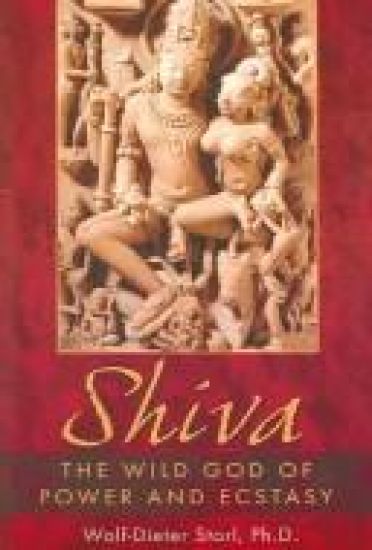
To his devotees Shiva is the entire universe and the core of all beings. Hindu myth shows him appearing at the beginning of creation as a giant pillar of fire from which this world sprang forth. Yet he is also the most approachable of gods, for he is the lover of lovers and the devotee of his devotees. Of the 1,008 names of Shiva, Pashupati, Lord of Animals, is one of the most common. His special relation to animals along with his trickster nature reveal the deep connection of Shiva to shamanism and other gods such as the Norse Odin and the Celtic Cernunnos that came out of the Paleolithic traditions. Ethnologist Wolf-Dieter Storl was first captivated by Shiva when he was in India as a visiting scholar at Benares Hindu University. In this book he invites readers to join in the lively and mythical world of Shiva, or Mahadev, God of All Gods. Shiva is a study in contrasts: As the lord of dance he looses himself in ecstatic abandon; with his consort Parvati he can make love for 10,000 years. Both men and women worship him for his ability to unite and balance masculine and feminine energies. But as the ascetic Shankar he sits in deep meditation, shunning women, and none dare disturb him lest he open his third eye and immolate the entire universe. Lord of intoxicants and poisons, he is the keeper of secret occult knowledge and powers, for which he is worshipped by yogis and demons alike. Shiva dances both the joy of being and the dance of doom--but in every aspect he breaks through the false ego to reveal the true self lying within. This is his true power.
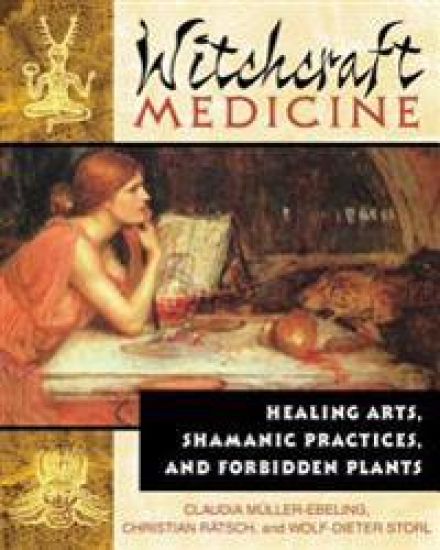
Witchcraft Medicine
Claudia Müller-Ebeling; Christian Rätsch; Wolf-Dieter Storl
Inner Traditions Bear and Company
2003
pokkari
Halvin toimitettuna 24,30 €
An in-depth investigation of traditional European folk medicine and the healing arts of witches • Explores the outlawed “alternative” medicine of witches suppressed by the state and the Church and how these plants can be used today • Reveals that female shamanic medicine can be found in cultures all over the world • Illustrated with color and black-and-white art reproductions dating back to the 16th century Witch medicine is wild medicine. It does more than make one healthy, it creates lust and knowledge, ecstasy and mythological insight. In Witchcraft Medicine the authors take the reader on a journey that examines the women who mix the potions and become the healers; the legacy of Hecate; the demonization of nature’s healing powers and sensuousness; the sorceress as shaman; and the plants associated with witches and devils. They explore important seasonal festivals and the plants associated with them, such as wolf’s claw and calendula as herbs of the solstice and alder as an herb of the time of the dead--Samhain or Halloween. They also look at the history of forbidden medicine from the Inquisition to current drug laws, with an eye toward how the sacred plants of our forebears can be used once again.


Wolf-Dieter Storl, Ethnologe und Kulturanthropologe, führt uns an die Wurzeln unserer Kultur und vermittelt uns über das Urwissen der Kelten einen erstaunlichen Zugang zur Natur und Heilkunde. Die Kelten waren fast tausend Jahre lang die führende Kultur in weiten Teilen Europas. Zwar wurde das Druidentum zerstört, aber das einfache Volk hielt am altüberlieferten Wissen fest und gab es mündlich und praktisch weiter in Form vonBauernregeln, Märchen, Sagen, Jahreszeitenritualen und vor allem Kräuterwissen und Volksheilkunde. Der Autor führt uns zu einer Heilkunde, in der es nicht um Wirkstoffe geht, sondern um die Zauberkraft und Magie der Pflanzen. Er stellt die wichtigsten Heil- und Zauberpflanzen und die Bäume der Kelten in ihrem jahreszeitlichen und kulturellen Kontext, in der Heilkunde und in der Magie vor und beschreibt die Bedeutung des keltischen Jahreskreises und Baumkalenders. Über die acht keltischen Jahresfeste und ihre Rituale führt er uns durch den Jahreskreis und zeigt, wie wir uns auch heute wieder in die grossen Rhythmen der Natur einstimmen können. Mit zahlreichen praktischen Rezepten für altüberlieferte Heilmittel und Heilanwendungen. Aus dem Inhalt - Waldbauern und Steppenkrieger - Keltische Heilkunde - Der keltische Jahreskreis und Baum- kalender - Die Häuptlingsbäume: Weissdorn, Haselnuss, Holunder, Weide, Eiche - Jeder Baum eine Gottheit: Apfel, Buche, Eberesche, Eibe, Erle, Esche, Kiefer, Linde, Pappel, Schwarzdorn, Stechpalme - Die Blütenfrau: Schlüsselblume, Besenginster, Mädesüss, Kornrade, Brennnessel, Klee, Sauerklee, Efeu, Nieswurz, Bärlapp, Bachbunge, Bilsen- kraut, Eisenkraut