Kirjojen hintavertailu – 12 903 724 kirjaa ja 27 kauppaa
Kirjailija
Wolff Heintschel Von Heinegg
Kirjat ja teokset yhdessä paikassa: 12 kirjaa, julkaisuja vuosilta 1989–2022, suosituimpiin kuuluu Energierecht, I, Recht der Energieanlagen. Vertaile teosten hintoja ja tarkista saatavuus suomalaisista kirjakaupoista.
This book examines the law relating to the possession, threat or use of nuclear weapons. By addressing in logical sequence the law regarding sovereignty, the threat or use of force, the conduct of nuclear hostilities, neutrality, weapons law and war crimes, the book illustrates the topics that an effective national command, control and communications system for nuclear weapons must address. Guidance is given on intractable issues, such as the responsibilities of remote submarine commanders. The continuing relevance of the ICJ's Nuclear Advisory Opinion is assessed, and the prospects for the Treaty on the Prohibition of Nuclear Weapons are discussed. The book has been written in an accessible style so that it will be equally useful to lawyers and practitioners, including relevant commanders, politicians, policy staffs and academics. The objective is to state the law accurately and to explain its implications and provide practical guidance in this most sensitive area. This book is also available as open access.
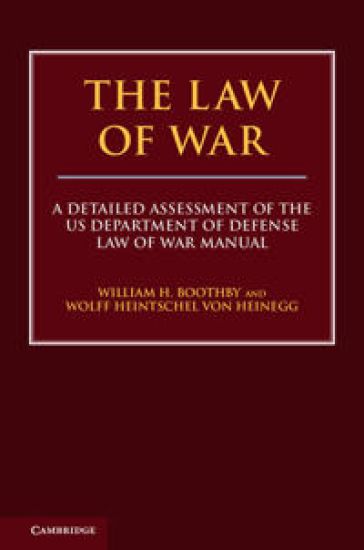
In 2015, the United States Department of Defense published its long-awaited Law of War Manual making a significant statement on the position of the US government on important military matters. Whilst readers recognise the Manual's legal and strategic importance, they may question whether particular statements of law are legally accurate or complete. This book offers a unique in-depth review of the complete Manual, including revisions, on a paragraph-by-paragraph, line-by-line and word-by-word basis. The authors offer their personal assessment of the DoD's declared view as to the law that regulates the conduct of warfare, a subject of unparalleled current importance. William H. Boothby and Wolff Heintschel von Heinegg offer a balanced, articulate and authoritative critique for readers perusing the Manual in whatever capacity.
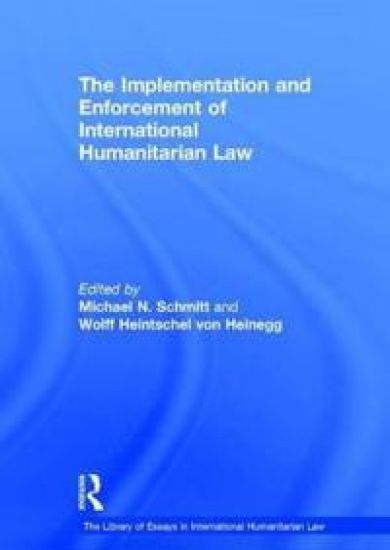
The essays selected for this volume explore the entire range of issues related to the question of how to implement and enforce international humanitarian law. Measures of self-help that used to play a key role in past international armed conflicts, especially reprisals, have increasingly been outlawed, and thus the enforcement of international humanitarian law has now to be achieved by other means, including criminal proceedings against those who have seriously (or gravely) committed war crimes. Accordingly, the concept of grave breaches, the universality principle and international criminal law are dealt with extensively in this collection. Finally, the volume includes an examination of the practice of 'lawfare' (an abuse of international humanitarian law for military or political purposes) which has proven increasingly effective in contemporary armed conflict.
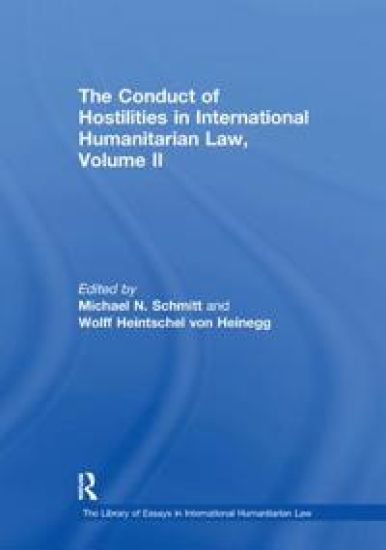
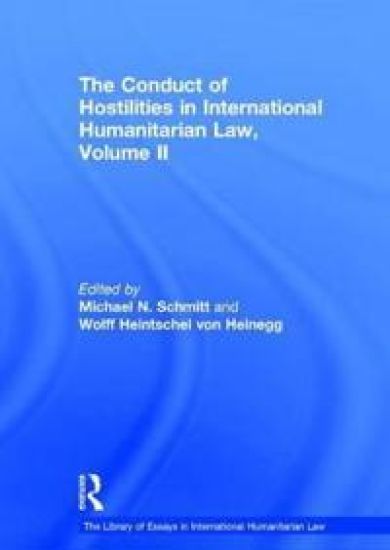
The essays selected for this second volume on the conduct of hostilities examine discrete topics of international humanitarian law that are particularly relevant to 21st century warfare. It commences with an examination of the adequacy of traditional weapons law in the face of modern weaponry that could not have been conceived of at the time the norms were originally fashioned. Humanitarian law's protection of certain persons and objects is also addressed, especially with regard to loss of protection for civilians who participate in hostilities and to the special protections enjoyed by vulnerable groups and individuals. The essays not only set forth competing contemporary perspectives, but also illustrate how earlier generations of humanitarian lawyers struggled with many of the same issues. The essays equally illustrate humanitarian law's adaptability to changing sensitivities, as in the case of protection of the environment during armed conflict. The final essay analyzes perfidy, a violation of the law that weaker parties in asymmetrical conflicts are increasingly adopting as an operational tactic.
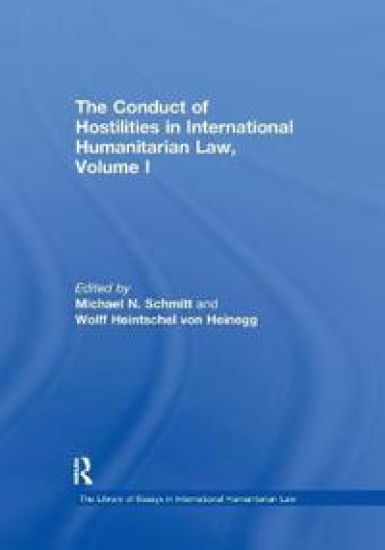
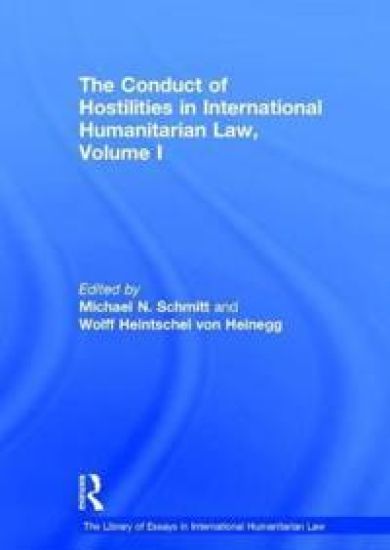
This volume is the first of two addressing the legal regime governing the use of force during armed conflicts. Traditionally labeled 'Hague Law', today the norms it examines are commonly referred to as 'conduct of hostilities rules'. At the heart of this body of law is the principle of distinction, which requires that civilians and civilian objects be distinguished from combatants and military objectives during military operations. It is the purest expression of the foundational balance between humanitarian considerations and military necessity that has underpinned international humanitarian law since its inception. The essays selected consider the theoretical and practical difficulties of maintaining the balance in the face of evolving means and methods of warfare and competing perspectives as to how it is best achieved. Also addressed is the law governing warfare at sea and in the air. Essays focusing on the former examine early norms and analyze their continuing relevance to today's maritime operations whilst those exploring the latter inject much needed clarity into the subject, an essential task in light of the centrality of aerial warfare in modern combat operations.
In 2015, the United States Department of Defense published its long-awaited Law of War Manual making a significant statement on the position of the US government on important military matters. Whilst readers recognise the Manual's legal and strategic importance, they may question whether particular statements of law are legally accurate or complete. This book offers a unique in-depth review of the complete Manual, including revisions, on a paragraph-by-paragraph, line-by-line and word-by-word basis. The authors offer their personal assessment of the DoD's declared view as to the law that regulates the conduct of warfare, a subject of unparalleled current importance. William H. Boothby and Wolff Heintschel von Heinegg offer a balanced, articulate and authoritative critique for readers perusing the Manual in whatever capacity.
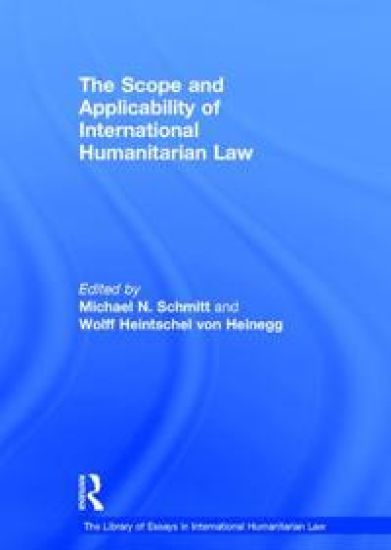
The applicability of international humanitarian law requires the existence of an armed conflict that is either international or non-international in character. Accordingly, the concept of armed conflict (as well as the related notion of war) and its temporal and material limits are the focus of the reprinted essays which open this volume. Subsequent articles address highly contentious issues regarding the relationship between the jus in bello and international humanitarian law on the one hand, and the jus ad bellum and international human rights law on the other, as well as the closely related principle of the equal application of international humanitarian law. In the light of contemporary conflicts, essays consider the legal position of States that have chosen not to become a party to an ongoing international armed conflict (law of neutrality) as well as the question of whether and to what extent international humanitarian law provides rules governing counter-terrorism operations, that is, the 'global war on terror'. Taken together, these essays provide a comprehensive analytical survey of the scope and applicability of international humanitarian law.
The essays selected for this second volume on the conduct of hostilities examine discrete topics of international humanitarian law that are particularly relevant to 21st century warfare. It commences with an examination of the adequacy of traditional weapons law in the face of modern weaponry that could not have been conceived of at the time the norms were originally fashioned. Humanitarian law's protection of certain persons and objects is also addressed, especially with regard to loss of protection for civilians who participate in hostilities and to the special protections enjoyed by vulnerable groups and individuals. The essays not only set forth competing contemporary perspectives, but also illustrate how earlier generations of humanitarian lawyers struggled with many of the same issues. The essays equally illustrate humanitarian law's adaptability to changing sensitivities, as in the case of protection of the environment during armed conflict. The final essay analyzes perfidy, a violation of the law that weaker parties in asymmetrical conflicts are increasingly adopting as an operational tactic.
This volume is the first of two addressing the legal regime governing the use of force during armed conflicts. Traditionally labeled 'Hague Law', today the norms it examines are commonly referred to as 'conduct of hostilities rules'. At the heart of this body of law is the principle of distinction, which requires that civilians and civilian objects be distinguished from combatants and military objectives during military operations. It is the purest expression of the foundational balance between humanitarian considerations and military necessity that has underpinned international humanitarian law since its inception. The essays selected consider the theoretical and practical difficulties of maintaining the balance in the face of evolving means and methods of warfare and competing perspectives as to how it is best achieved. Also addressed is the law governing warfare at sea and in the air. Essays focusing on the former examine early norms and analyze their continuing relevance to today's maritime operations whilst those exploring the latter inject much needed clarity into the subject, an essential task in light of the centrality of aerial warfare in modern combat operations.
The essays selected for this volume explore the entire range of issues related to the question of how to implement and enforce international humanitarian law. Measures of self-help that used to play a key role in past international armed conflicts, especially reprisals, have increasingly been outlawed, and thus the enforcement of international humanitarian law has now to be achieved by other means, including criminal proceedings against those who have seriously (or gravely) committed war crimes. Accordingly, the concept of grave breaches, the universality principle and international criminal law are dealt with extensively in this collection. Finally, the volume includes an examination of the practice of 'lawfare' (an abuse of international humanitarian law for military or political purposes) which has proven increasingly effective in contemporary armed conflict.