Kirjojen hintavertailu – 12 859 818 kirjaa ja 27 kauppaa

Kirjailija

Wolfgang Amann

Kirjat ja teokset yhdessä paikassa: 16 kirjaa, julkaisuja vuosilta 1994–2024, suosituimpiin kuuluu Staedte- Und Siedlungsbau in Wien 1945-1958. Vertaile teosten hintoja ja tarkista saatavuus suomalaisista kirjakaupoista.

16 kirjaa

Kirjojen julkaisuvuodet: 1994–2024.

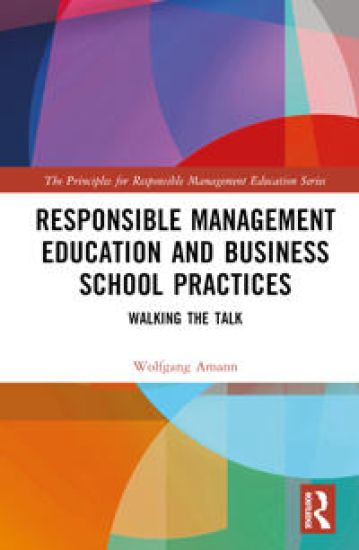
Responsible Management Education and Business School Practices
Beyond researching and teaching responsible management, business schools should aspire to walk the talk. They ought to become role models and responsible organisations themselves. Focussing on the original UK and Ireland institutions who committed to this initiative formally by becoming signatories, this book considers how this role-modelling behaviour has been applied. Based on a number of personal interviews with PRME initiative leads, this book provides a two-dimensional framework based on structure and motivation as critical levers for progress in responsible management organisational practice. It offers unique recommendations on how to better frame and improve organisational practices in PRME member schools. Specifically, this book: 1. sheds light on how to bring PRME to life beyond teaching and research practices; 2. provides recommendations on how dean and PRME initiative leads in signatory institutions can better understand their current organisational practices and prepare improvements over time; and 3. energises and catalyses research on best organisational practices based on a clear research agenda. This book is relevant to all stakeholders of modern management education, in particular, business school deans, university presidents, programme directors, PRME leads and non-academic leaders in business schools, such as COOs or managing directors.
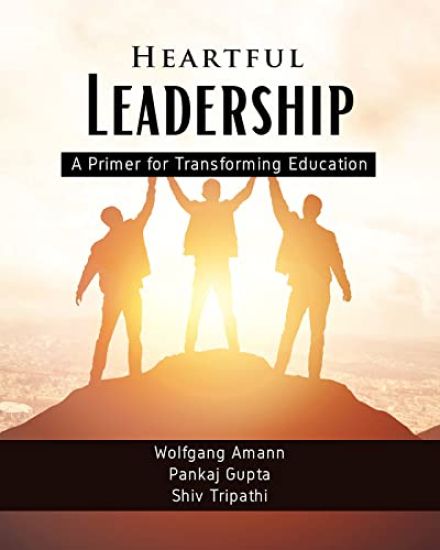
Heartful Leadership - A Primer for Transforming Education

Heartful Leadership - A Primer for Transforming Education

Pankaj Gupta; Shiv Tripathi; Wolfgang Amann

Walnut Publication
2022
pokkari
Mindfulness has become a very popular concept in recent years. This book positions heartfulness as an additional requirement for holistic leadership in the education sector and beyond. Mindfulness alone will not account for all the progress needed to cope with key challenges of our times, such as the system shock COVID-19 imposed, and artificial intelligence is triggering at the moment. Heartful leaders will spot more opportunities and will create better educational solutions. They will enable truly unique learning journeys and foster more human development.
Building a Leadership Pipeline for Deans in Business Schools
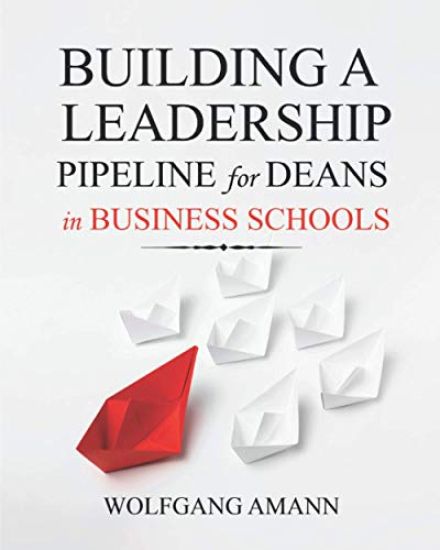
The management education industry is in flux. Industry trends, such as commercialisation, internationalisation, consolidation and intensifying competition, increase the level of adversity and the challenges that business school leaders face. Recurring crises aggravate the situation and challenge established solutions. A key question is therefore: How do we ensure that adequately qualified and highly motivated individuals rise to the upper echelons? In business schools, dynamics do not naturally encourage leadership development. Younger scholars must master research or teaching skills, none of which represent the core skill set needed to lead a business school. Leadership pipelines with clearly defined stages have been in use in the non-academic corporate sector for a while. This book presents research on the potential for business schools to rely on such pipelines. The proposed substantive grounded theory suggests a better depiction of the phenomenon analogy-wise as well as semantics-wise by proposing a leadership canal. Several fundamental assumptions diverge, such as leadership development for deans being less linear, less cumulative, less sequential, less one-directional, to name but a few features.
Fostering Learning Versatility in Business Schools
Business schools operate in a highly dynamic environment and regularly need to reassess the value they add. This book presents a new concept based on three studies. Learning style versatility (LSV) enables learners and graduates to perform better in a VUCA world. It helps institutions innovate, address relevance issues and ensure a better return on education.
Corporate Yoga - A Primer for Sustainable and Humanistic Leadership

Corporate Yoga - A Primer for Sustainable and Humanistic Leadership

Shiv Tripathi; Wolfgang Amann

Information Age Publishing
2017
sidottu
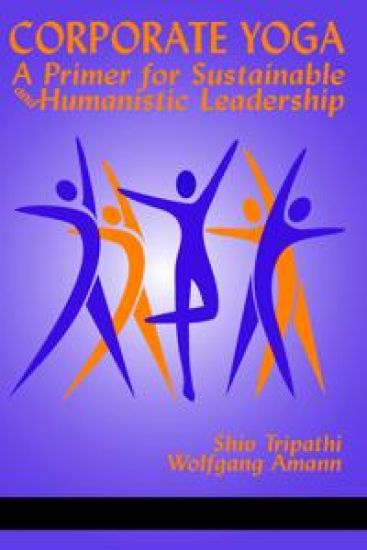
Products, services, technologies, and markets are often rather global now - and so are many of our contemporary leadership and sustainability challenges. This book adds to the leadership debate by inspiring leaders, managers, and fellow leadership experts in academia as well as consulting with a new concept. Its authors propose corporate yoga as an effective and innovative idea to fundamentally reframe leadership, anticipate and avoid crises, and handle them differently. Transferring ideas from yogic thinking into the corporate world can generate next-level vision and mission statements. It can alter corporate strategies and governance. Corporate yoga redefines relationships among stakeholder groups, re-energizes organizations, and fosters change towards more sustainable and more humanistic companies and economies.
Corporate Yoga - A Primer for Sustainable and Humanistic Leadership

Corporate Yoga - A Primer for Sustainable and Humanistic Leadership

Shiv Tripathi; Wolfgang Amann

Information Age Publishing
2017
nidottu
Products, services, technologies, and markets are often rather global now - and so are many of our contemporary leadership and sustainability challenges. This book adds to the leadership debate by inspiring leaders, managers, and fellow leadership experts in academia as well as consulting with a new concept. Its authors propose corporate yoga as an effective and innovative idea to fundamentally reframe leadership, anticipate and avoid crises, and handle them differently. Transferring ideas from yogic thinking into the corporate world can generate next-level vision and mission statements. It can alter corporate strategies and governance. Corporate yoga redefines relationships among stakeholder groups, re-energizes organizations, and fosters change towards more sustainable and more humanistic companies and economies.
Anti-Corruption

Anti-Corruption

Wolfgang Amann; Ronald Berenbeim; Tay Keong Tan; Matthias Kleinhempel; Alfred Lewis; Ruth Nieffer; Agata Stachowicz-Stanusch; Shiv Tripathi

Greenleaf Publishing
2015
nidottu
Successful businesses are built on trust. Employees and colleagues need to trust one another and they need to deserve and receive trust from customers and suppliers. Anti-Corruption provides resources for building trust through the implementation of comprehensive guidelines on how to professionalize ethics and anti-corruption education worldwide in a variety of classroom settings. It is written and tested by highly experienced program directors, deans and professors, in how to adopt, adapt and develop best teaching practice. It highlights successful patterns, details illustrative case studies and offers clear, hands-on recommendations. Anti-Corruption enables business schools, management-related academic institutions, and Executive Training Programs to embed curriculum change quickly to achieve positive outcomes. It enables degree programs and executive education programs to achieve global standards that will be widely followed.
Anti-Corruption

Anti-Corruption

Wolfgang Amann; Ronald Berenbeim; Tay Keong Tan; Matthias Kleinhempel; Alfred Lewis; Ruth Nieffer; Agata Stachowicz-Stanusch; Shiv Tripathi

Greenleaf Publishing
2015
sidottu
Successful businesses are built on trust. Employees and colleagues need to trust one another and they need to deserve and receive trust from customers and suppliers. Anti-Corruption provides resources for building trust through the implementation of comprehensive guidelines on how to professionalize ethics and anti-corruption education worldwide in a variety of classroom settings. It is written and tested by highly experienced program directors, deans and professors, in how to adopt, adapt and develop best teaching practice. It highlights successful patterns, details illustrative case studies and offers clear, hands-on recommendations. Anti-Corruption enables business schools, management-related academic institutions, and Executive Training Programs to embed curriculum change quickly to achieve positive outcomes. It enables degree programs and executive education programs to achieve global standards that will be widely followed.
Business Integrity in Practice: Insights from International Case Studies
The quest for integrity in business is not only a reaction against malfeasance in business and associated calls for reform, but also a result of changes and new demands in the global business environment as well as the latest economic crisis. Among the sources of these new demands are the expectations of stakeholders that corporations and their leaders will take more active roles as citizens within society and in the fight against some of the most pressing problems in the world, such as poverty, environmental degradation, defending human rights, corruption, and pandemic diseases. This topical and much needed book constitutes an important part of the debate on the best practices for ensuring integrity in an organizational context. It offers essential insights not only to business leaders but also to management educators and administrators who understand the urgency and importance of developing further responsible global leaders. This volume offers and discusses case studies and examples from organizations from all over the world. And it distils practical advice and guidance, explaining in detail how leaders may build organizations with strong integrity foundations. It provides valuable research results as well as teaching tools, enabling course leaders at undergraduate, masters and MBA level in all business schools around the world.
Case Writing for Executive Education

Case Writing for Executive Education

Gordon Adler; Wolfgang Amann

Information Age Publishing
2011
sidottu
Time and again, the authors have observed how a great program faculty creates unique learning experiences to everybody’s satisfaction. They have experienced the pleasure that all involved feel when great learning has taken place, when the program participants leave the sessions with an enhanced skill set and co-created answers to pending and future challenges. They are also aware that creating such moments of truth, involving the value proposition of business schools, corporate universities or other training institutions, has not been mastered everywhere. They have written this book to contribute to the ongoing professionalization of business education and aim to share some of the key lessons learned when creating unique learning experiences entailing learning that sticks. A great means to this end is using cases in executive education. While the variety of what can still be called a case is extremely wide, the authors by no means preach that cases are the only way forward. Like every tool, cases must be applied wisely and with a minimum amount of skill. There is also a bigger toolset vailable and there are also additional contextual factors to consider. They include teaching and learning traditions in different local settings. They comprise individual’s learning preferences. As the authors outline in this book, the case-based method nonetheless offers tremendous potential. The art and science of case writing are still known to too few of those involved in delivering executive education seminars.
Case Writing for Executive Education

Case Writing for Executive Education

Gordon Adler; Wolfgang Amann

Information Age Publishing
2011
nidottu
Time and again, the authors have observed how a great program faculty creates unique learning experiences to everybody’s satisfaction. They have experienced the pleasure that all involved feel when great learning has taken place, when the program participants leave the sessions with an enhanced skill set and co-created answers to pending and future challenges. They are also aware that creating such moments of truth, involving the value proposition of business schools, corporate universities or other training institutions, has not been mastered everywhere. They have written this book to contribute to the ongoing professionalization of business education and aim to share some of the key lessons learned when creating unique learning experiences entailing learning that sticks. A great means to this end is using cases in executive education. While the variety of what can still be called a case is extremely wide, the authors by no means preach that cases are the only way forward. Like every tool, cases must be applied wisely and with a minimum amount of skill. There is also a bigger toolset vailable and there are also additional contextual factors to consider. They include teaching and learning traditions in different local settings. They comprise individual’s learning preferences. As the authors outline in this book, the case-based method nonetheless offers tremendous potential. The art and science of case writing are still known to too few of those involved in delivering executive education seminars.
Managing Complexity in Organizations

Managing Complexity in Organizations

Christoph Nedopil; U. Steger; Wolfgang Amann

Red Globe Press
2010
nidottu
Combining rigorous academic research with the latest practical tools and techniques, this book explores the growing area of complextity management in business. Through a range of high quality international cases leading authors help students to understand how to manage organizations in unpredictable and complex business environments.
Managing Complexity in Global Organizations

Managing Complexity in Global Organizations

Ulrich Steger; Wolfgang Amann; Martha L. Maznevski

John Wiley Sons Inc
2007
nidottu
This book delivers new IMD insights on an emerging challenge - how to deal with overwhelming complexity. Global organizations face a complex decision-making environment. On one side, diversity of cultures, customers, competitors and regulations creates complexity; on the other, competitive pressures cause expanding countries to extract more synergies across products and regions. In such a climate, a new way of thinking, acting and organizing is needed beyond the familiar ‘control’ mindset. Drawing together insights from across the expert faculty, Managing Complexity in the Global Organization presents IMD’s framework on how to understand complexity and its four key drivers (diversity; interdependence; ambiguity and flux), along with solutions on specific issues in a variety of functions, industries and markets. The focus is on providing practical solutions based on real-life examples.
Staedte- Und Siedlungsbau in Wien 1945-1958
Die Arbeit unternimmt den Versuch, den Wiener Stadte- und Siedlungsbau der Nachkriegszeit neu zu bewerten. Der bearbeitete Zeitraum wird in drei Phasen gegliedert. Unmittelbar nach Kriegsende setzten rege Bemuhung um eine Neuorientierung der Wiener Stadtplanung ein, gekennzeichnet durch eine starke Orientierung an internationalen Stromungen. Ab den spaten vierziger Jahren trugen diese Bemuhungen Fruchte, indem zahlreiche urbanistische und Siedlungsprojekte verwirklicht wurden, die dem Vergleich mit zeitgenossischen Projekten im Europaischen Ausland durchaus standhalten. Ab Mitte der funfziger Jahre nahmen allerdings regionalistische Stromungen uberhand. Der Ruf nach einem Hochschrauben der Wohnungsproduktion ubertonte die Qualitatsdiskussion. Es baute sich ein kunstlerisches Vakuum auf, das den Boden fur jene Generation von Architekten bereitete, die von den sechziger bis in die neunziger Jahre die Entwicklung pragen sollten."
Eine Simulationsumgebung für Planung und Betrieb von Produktionssystemen

Eine Simulationsumgebung für Planung und Betrieb von Produktionssystemen

Wolfgang Amann

Springer-Verlag Berlin and Heidelberg GmbH Co. K
1994
nidottu
Die vorliegende Dissertation entstand wahrend meiner Tatigkeit als wissenschaft- licher Mitarbeiter am Institut fur Werkzeugmaschinen und Betriebswissenschaf- ten (iwb) der Technischen Universitat Munchen. Mein besonderer Dank gilt Herrn Professor Dr. -Ing. J. Milberg, dem Leiter des Instituts, fur seine wohlwollende Foerderung und die grosszugige Unterstutzung sowie fur die wertvollen Hinweise zu dieser Arbeit. Herrn Professor Dr. -Ing. K. Feldmann, dem Leiter des Lehrstuhls fur Fertigungs- automatisierung und Produktionssystematik der Universitat Erlangen-Nurnberg, danke ich fur die UEbernahme des Koreferats und die kritische Durchsicht der Arbeit. Daruber hinaus moechte ich allen Mitarbeitern des Instituts sowie allen Studenten, die mich bei der Erstellung der Arbeit unterstutzt haben, meinen herzlichen Dank aussprechen. Munchen, im Marz 1993 Wolfgang Amann Inhaltsverzeichnis Inhaltsverzeichnis 1 Einleitung und Zielsetzung 1 1. 1 Aktuelle Ausgangssituation 1. 2 Ziel der Arbeit . . . . . . . 3 2 Modellierung und Simulation von Systemen 5 2. 1 Grundlagen der Systemtechnik 5 2. 2 ModelIierung von Systemen . 7 2. 3 Grundbegriffe der Simulation 9 2. 4 Durchfuhrung einer Simulationsuntersuchung 11 3 Einsatz der Simulation fur Planung und Betrieb von Produktions- systemen 13 13 3. 1 Planung von Produktionssysteme 3. 2 Simulationseinsatz bei der Planung von Produktionssysteme 16 3. 2. 1 Simulation auf Fabrikebene 18 3. 2. 2 Simulation auf Anlagenebene 18 3. 2. 3 Simulation auf Zellenebene 19 3. 2. 4 Simulation auf Komponentenebene 19 3. 3 Konventionelle Einsatzgebiete der Ablaufsimulation 20 3. 3. 1 Einsatzgebiete und Zielsetzung 20 3. 3.