

Kirjailija
Wolfgang Münchau
Kirjat ja teokset yhdessä paikassa: 6 kirjaa, julkaisuja vuosilta 2009–2025, suosituimpiin kuuluu Kaputt. Vertaile teosten hintoja ja tarkista saatavuus suomalaisista kirjakaupoista.
Nimi esiintyy myös muodoissa: Wolfgang Munchau
6 kirjaa
Kirjojen julkaisuvuodet: 2009–2025.
'Compelling' Guardian 'Eloquent and comprehensive' Financial Times 'Excellent' The Telegraph 'Astonishing' The Times 'An eye-opener' Gavin Esler Until recently, Germany appeared to be a paragon of economic and political success. But recent events – from Germany’s dependence on Russian gas to its car industry’s delays in the race to electric – have undermined this view. In Kaput, Wolfgang Münchau argues that the weaknesses of Germany’s economy have, in fact, been brewing for decades. The close connections between the country’s industrial and political elite have left Germany technologically behind, over-reliant on authoritarian Russia and China, and with little sign of being able to adapt to the digital realities of the twenty-first century. It is an essential read for anyone interested in the future of Europe’s most important economy.
'Compelling' Guardian 'Eloquent and comprehensive' Financial Times 'Excellent' The Telegraph 'Astonishing' The Times 'An eye-opener' Gavin Esler Until recently, Germany appeared to be a paragon of economic and political success. But recent events – from Germany’s dependence on Russian gas to its car industry’s delays in the race to electric – have undermined this view. In Kaput, Wolfgang Münchau argues that the weaknesses of Germany’s economy have, in fact, been brewing for decades. The close connections between the country’s industrial and political elite have left Germany technologically behind, over-reliant on authoritarian Russia and China, and with little sign of being able to adapt to the digital realities of the twenty-first century. It is an essential read for anyone interested in the future of Europe’s most important economy.
'Compelling' Guardian'Eloquent and comprehensive' Financial Times'Excellent' The Telegraph'Astonishing' The Times'An eye-opener' Gavin EslerUntil recently, Germany appeared to be a paragon of economic and political success. Angela Merkel was widely seen as the true 'leader of the free world', and Germany's export-driven economic model seemed to deliver prosperity. But recent events - from Germany's dependence on Russian gas to its car industry's delays in the race to electric - have undermined this view. In Kaput, Wolfgang M nchau argues that the weaknesses of Germany's economy have, in fact, been brewing for decades. The neo-mercantilist policies of the German state, driven by close connections between the country's industrial and political elite, have left Germany technologically behind over-reliant on authoritarian Russia and China - and with little sign of being able to adapt to the digital realities of the 21st century. It is an essential read for anyone interested in the future of Europe's biggest economy.
Om kapitalismen : perspektiv från Engelsbergsseminariet 2010
Gerard Baker; Erik Berglöf; Edward Chancellor; Rolf Ekéus; Kevin Hassett; Oliver Kamm; John Kay; Deidre McCloskey; Philip Mirowski; Joel Mokyr; Geoff Mulgan; Wolfgang Münchau; Johan Norberg; Avner Offer; Minxin Pei; Carlota Perez; Emma Rotschild; Donald Sassoon; Nathan Shachar; Robert Skidelsky; David Ståhl; Donald Winch
Bokförlaget Atlantis
2011
sidottu
Hur ser kapitalismens framtid ut? Kommer den framgångsrika variant av kapitalism från de senaste decennierna som vi kallar globalisering att fortsätta, eller kommer regionala och kanske till och med starka nationella krafter att vinna mark i ekonomiska frågor? Medverkande: Gerard Baker, Erik Berglöf, Edward Chancellor, Rolf Ekéus, Kevin Hassett, Oliver Kamm, John Kay, Deirdre McCloskey, Philip Mirowski, Joel Mokyr, Geoff Mulgan, Wolfgang Münchau, Johan Norberg, Avner Offer, Minxin Pei, Carlota Perez, Emma Rotschild, Donald Sassoon, Nathan Shachar, Robert Skidelsky, David Ståhl, Donald Winch.
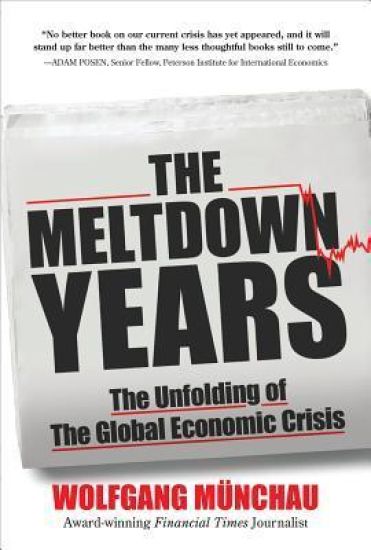
The Meltdown Years: The Unfolding of the Global Economic Crisis
Wolfgang Munchau
McGraw-Hill Professional
2009
sidottu
The Meltdown Yearsoffers the most lucid and useful explanation todate about why home values, life savings, jobsecurity, and investments around the worldare in peril. Rather than focus on who is to blame,though, author Wolfgang Münchau takes themore practical approach of focusing on what isto blame. The fact that individuals were stupid,greedy, and corrupt should come as no surprise. What’s remarkable is that our world’sfinancial systems—put in place to help staveoff such a crisis—failed so miserably. What is inherently wrong with the globalmonetary system? What happened to theregulatory process? What role did the creditmarket, hedge funds, and investment banksplay? These are the types of questions onemust answer in order to truly comprehendwhat caused the meltdown and, more importantly,to understand what must be done torepair it. Münchau dissects the global financial system,exposing its flaws and weaknesses in thecontext of the crisis. A decidedly global perspectiveof the greatest financial crisis of ourtime, The Meltdown Years examinesThe structure of the worldbanking systemGlobal events that led tofinancial collapseThe growth of speculative bubblesThe descent from financial crisisinto full-out recessionPointing to an unstable global economicsystem as the root of the problem, theauthor predicts how long the recession willand illustrates long-term consequences ofthe meltdown.“Apportioning [individual] blame for thiscrisis may be fun,” Münchau writes, “butit is a dead-end road for anyone who seeksan understanding of what happened.” AIG,Alan Greenspan, Fannie Mae, Bear Stearns…Each is portrayed as a villain responsible forthe state of the economy. In truth, the blame ismuch broader and lies much deeper. The Meltdown Years is required readingfor anyone who wants to follow the ongoingdebate about economic recovery and understandwhat the collapse means for the future offinancial capitalism.