Kirjojen hintavertailu – 12 859 828 kirjaa ja 27 kauppaa
Kirjailija
Wolfgang Palaver
Kirjat ja teokset yhdessä paikassa: 4 kirjaa, julkaisuja vuosilta 2013–2024, suosituimpiin kuuluu Religion : i historia, samtid och framtid. Vertaile teosten hintoja ja tarkista saatavuus suomalaisista kirjakaupoista.
Janne Haaland Matlary; Daniel T. Potts; Julius J. Lipner; Robin Osborne; John Scheid; Martin Goodman; Diarmaid Macculloch; Elaine Pagels; Reza Aslan; Wouter J. Hanegraaff; Gary Lachman; Malise Ruthven; Marco Pasi; William O’Reilly; Ariel Glucklich; Wolfgang Palaver; Mona Siddiqui; Candida R. Moss; Esther Benbassa; Richard Miles; A.N. Wilson; Jessica Frazier; Simon May; Armin W. Geertz; Harvey Whitehouse; Pär Stenbäck; Benedetta Berti; Göran Rosenberg; Jayne Svenungsson; Adrian Wooldridge; Chakravarthi Ram-Prasad
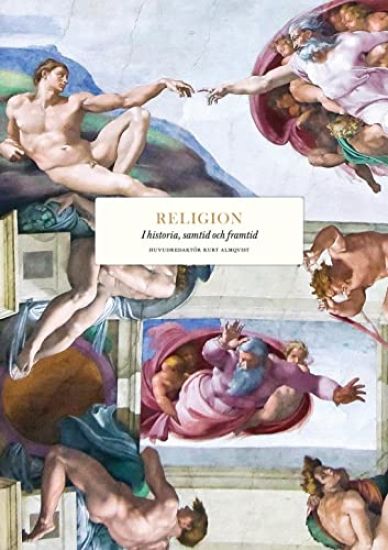
Tron på en styrande, övergripande, himmelsk princip har följt människan genom historien. Mer än 80 procent av världens befolkning har idag en religiös tillhörighet och även i sekulära stater fortsätter religionen att spela en viktig roll. Det går inte att förstå politik och internationella relationer idag utan att inkludera religionen som en aspekt av det kulturella sammanhanget. Essäerna i denna antologi, som härrör från Engelsbergsseminariet 2014, spänner över en mångfald ämnen i dagens såväl som gårdagens samhällen. De utforskar religionen i relation till människans villkor och skildrar hur den manifesterar sig i individens egna upplevelser. För att förstå oss själva behöver vi också förstå religionen.

Studies into religion and violence often put religion first. René Girard started with violence in his book Violence and the Sacred and used the Durkheimian term 'sacred' as its correlate in his study of early religions. During the unfolding of his theory, he more and more distinguished the sacred from saintliness to address the break that the biblical revelation represented in comparison to early religions. This distinction between the sacred and saintliness resembles Henri Bergson's complementing Emile Durkheim's identification of the sacred and society with a dynamic religion that relies on individual mystics. Girard's distinction also relates to the insights of thinkers like Jacques Maritain, Simone Weil, and Emmanuel Levinas. This element explores some of Girard's main features of saintliness. Girard pleaded for the transformation of the sacred into holy, not their separation.
A systematic introduction into the mimetic theory of the French-American literary theorist and philosophical anthropologist Rene Girard, this essential text explains its three main pillars (mimetic desire, the scapegoat mechanism, and the Biblical "difference") with the help of examples from literature and philosophy. This book also offers an overview of Rene Girard's life and work, showing how much mimetic theory results from existential and spiritual insights into one's own mimetic entanglements. Furthermore it examines the broader implications of Girard's theories, from the mimetic aspect of sovereignty and wars to the relationship between the scapegoat mechanism and the question of capital punishment. Mimetic theory is placed within the context of current cultural and political debates like the relationship between religion and modernity, terrorism, the death penalty, and gender issues. Drawing textual examples from European literature (Cervantes, Shakespeare, Goethe, Kleist, Stendhal, Storm, Flaubert, Dostoevsky, Proust) and philosophy (Plato, Camus, Sartre, Levi-Strauss, Derrida, Vattimo), Palaver uses mimetic theory to explore the themes they present. A highly accessible book, this text is complemented by bibliographical references to Girard's widespread work and secondary literature on mimetic theory and its applications, comprising a valuable bibliographical archive that provides the reader with an overview of the development and discussion of mimetic theory until the present day.