Kirjailija
Wolfgang Streeck
Kirjat ja teokset yhdessä paikassa: 17 kirjaa, julkaisuja vuosilta 1982–2026, suosituimpiin kuuluu Taking Back Control?. Vertaile teosten hintoja ja tarkista saatavuus suomalaisista kirjakaupoista.
17 kirjaa
Kirjojen julkaisuvuodet: 1982–2026.
The era of hyperglobalization once hailed as the 'end of history' was characterised by boundless capitalist expansion. The neoliberal revolution gave rise to a politics of scale aimed at the centralization and unification of states and state systems: the replacement of national with global governance or, in Europe, of the nation-state with a supranational superstate, the European Union. The 'New World Order' proclaimed by the United States in the wake of the Soviet collapse proved to be ungovernable by democratic means. Instead, it was ruled through a combination of technocracy and mercatocracy, failing spectacularly to provide for political stability, social legitimacy and international peace. Marked by a series of economic and institutional crises, hyperglobalization gave rise to various kinds of political countermovements that rebelled against and ultimately stopped the upward transfer of state authority in its tracks. This book analyses the ongoing tug-of-war between the forces of globalism and democracy, of centralization and decentralization, and unification and differentiation of states and state systems, and how they are tied to the advance of global capitalism and the prospects for its social and democratic regulation. Exploring the possibility for states and the societies they govern to take back control over their collective fate, the book is an attempt at a renewed theory of the state in political economy. Inspired by the work of Karl Polanyi and John Maynard Keynes, it discusses the potential outlines of a state system allowing for democratic governance within and peaceful cooperation between sovereign nation-states.
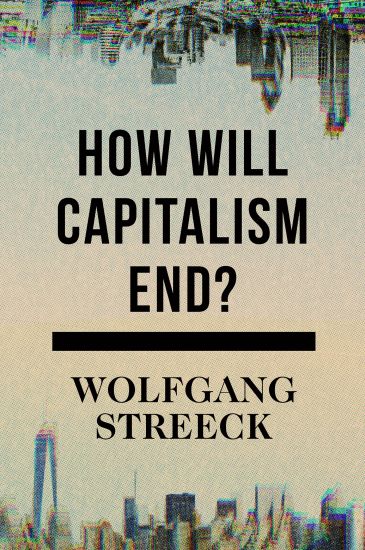
In How Will Capitalism End?, the acclaimed analyst of contemporary politics and economics Wolfgang Streeck argues that the world is on the cusp of enormous change. The marriage between democracy and capitalism, ill-suited partners brought together in the shadow of the Second World War, is unravelling. The regulatory institutions that once restrained the financial sector's excesses have collapsed, and there is no political agency capable of rolling back the liberalization of the markets.
The era of hyperglobalization once hailed as the 'end of history' was characterised by boundless capitalist expansion. The neoliberal revolution gave rise to a politics of scale aimed at the centralization and unification of states and state systems: the replacement of national with global governance or, in Europe, of the nation-state with a supranational superstate, the European Union. The 'New World Order' proclaimed by the United States in the wake of the Soviet collapse proved to be ungovernable by democratic means. Instead, it was ruled through a combination of technocracy and mercatocracy, failing spectacularly to provide for political stability, social legitimacy and international peace. Marked by a series of economic and institutional crises, hyperglobalization gave rise to various kinds of political countermovements that rebelled against and ultimately stopped the upward transfer of state authority in its tracks. This book analyses the ongoing tug-of-war between the forces of globalism and democracy, of centralization and decentralization, and unification and differentiation of states and state systems, and how they are tied to the advance of global capitalism and the prospects for its social and democratic regulation. Exploring the possibility for states and the societies they govern to take back control over their collective fate, the book is an attempt at a renewed theory of the state in political economy. Inspired by the work of Karl Polanyi and John Maynard Keynes, it discusses the potential outlines of a state system allowing for democratic governance within and peaceful cooperation between sovereign nation-states.
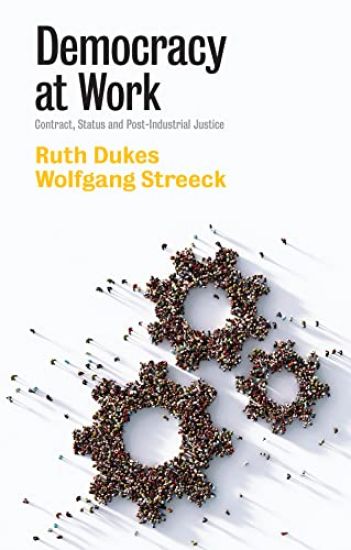
In the countries of the global North, workplace democracy may be thought of as a thing of the past. Increasingly, working relations are regulated primarily by contract; workforces are fissured and fragmented. What are the consequences of this? How should we respond? Ruth Dukes and Wolfgang Streeck argue that the time is ripe to restate the principles of industrial democracy and citizenship for the post-industrial era. Considering developments within political economy, employment relations and labour law since the postwar decades, they trace the rise of globalization and the ‘dualization’ of labour markets – the emergence of a core and periphery of workers – and the progressive insulation of working relations from democratic governance. What these developments amount to, they argue, is an urgent need for political intervention to tame the new world of ‘gigging’ and other forms of highly precarious work. This, according to the authors, will require far-reaching institution-building designed to fill legal concepts such as ‘employment’ with political substance. This eloquent call for a reimagining and renewal of the institutional and material conditions of freedom of association and the reinvention of industrial democracy will be crucial reading for anyone interested in work in the twenty-first century.
Democracy at Work
Ruth Dukes; Wolfgang Streeck
JOHN WILEY AND SONS LTD
2022
nidottu
Halvin toimitettuna 28,10 €
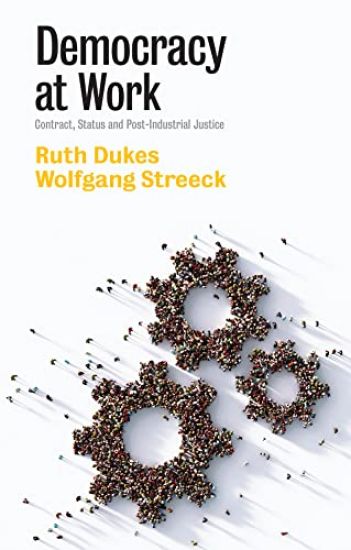
In the countries of the global North, workplace democracy may be thought of as a thing of the past. Increasingly, working relations are regulated primarily by contract; workforces are fissured and fragmented. What are the consequences of this? How should we respond? Ruth Dukes and Wolfgang Streeck argue that the time is ripe to restate the principles of industrial democracy and citizenship for the post-industrial era. Considering developments within political economy, employment relations and labour law since the postwar decades, they trace the rise of globalization and the ‘dualization’ of labour markets – the emergence of a core and periphery of workers – and the progressive insulation of working relations from democratic governance. What these developments amount to, they argue, is an urgent need for political intervention to tame the new world of ‘gigging’ and other forms of highly precarious work. This, according to the authors, will require far-reaching institution-building designed to fill legal concepts such as ‘employment’ with political substance. This eloquent call for a reimagining and renewal of the institutional and material conditions of freedom of association and the reinvention of industrial democracy will be crucial reading for anyone interested in work in the twenty-first century.
From the acclaimed author of How Will Capitalism End? comes an omnibus of long-form critical essays engaging with leading economists and thinkers. Critical Encounters draws on Wolfgang Streeck's inimitable writing for the London Review of Books and New Left Review, among other publications. It opens with treatments of two contrasting historical eras - factory capitalism and financialization - and three of the world's major economies: the United States, France and Germany. Delving into the world of ideas, Streeck discusses the work of Quinn Slobodian, Mark Blyth, Jürgen Habermas and Perry Anderson. Finally, he zooms out to compare his home discipline of sociology to natural history, giving a remarkable and non-deterministic reading of Charles Darwin. In the preface, Streeck reflects on the art (or craft) of book reviewing and the continuing merits of the book form. Critical Encounters also includes a series of 'Letters from Europe', penned as the coronavirus descended upon the Continent.
After years of ill health, capitalism is now in a critical condition. Growth has given way to stagnation; inequality is leading to instability; and confidence in the money economy has all but evaporated. In How Will Capitalism End?, the acclaimed analyst of contemporary politics and economics Wolfgang Streeck argues that the world is about to change. The marriage between democracy and capitalism, ill-suited partners brought together in the shadow of World War Two, is coming to an end. The regulatory institutions that once restrained the financial sector's excesses have collapsed and, after the final victory of capitalism at the end of the Cold War, there is no political agency capable of rolling back the liberalization of the markets. Ours has become a world defined by declining growth, oligarchic rule, a shrinking public sphere, institutional corruption and international anarchy, and no cure to these ills is at hand.
The financial and economic crisis that began in 2008 still has the world on tenterhooks. The gravity of the situation is matched by a general paucity of understanding about what is happening and how it started. In this book, based on his 2012 Adorno Lectures given in Frankfurt, Wolfgang Streeck places the crisis in the context of the long neoliberal transformation of postwar capitalism that began in the 1970s. He analyses the subsequent tensions and conflicts involving states, governments, voters and capitalist interests, as expressed in inflation, public debt, and rising private indebtedness. Streeck traces the transformation of the tax state into a debt state, and from there into the consolidation state of today. At the centre of the analysis is the changing relationship between capitalism and democracy, in Europe and elsewhere, and the advancing immunization of the former against the latter. In this new edition, Streeck has added a substantial postface on the reception of the book and the unfolding of the crisis in the Eurozone since 2014.
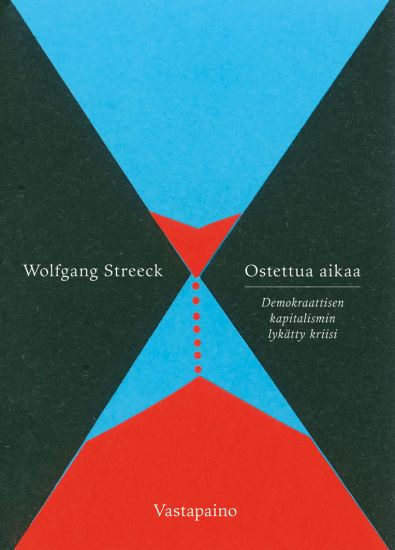
Onko kapitalismin ja demokratian aika erota? Maailmantaloutta ja politiikkaa ravisteleva kriisi ei näytä hellittävän, ja se herättää yhä kasvavaa neuvottomuutta. Reseptejä jaellaan ilman tietoa taudin luonteesta. Wolfgang Streeck jäljittää kriisin syitä tarkastelemalla sodanjälkeisen kapitalismin kehitystä ja muutoksia. Hän asettaa kriisin 1970-luvulta alkaneeseen yhteiskunnan ja talouden uusliberaalistumisen jatkumoon. Runsasta tilastoaineistoa yhteen vetävän kirjan keskiössä on kapitalismin ja demokratian välinen kasvanut jännite. Streeckin mukaan valtiot ja hallitukset ovat 1970-luvulta lähtien ”ostaneet aikaa” inflaation, halvan lainarahan ja julkisen velan avulla. Nyt tuo tie on kuljettu loppuun: demokraattinen kapitalismi on umpikujassa, josta ei ole helppoa ulospääsyä. Professori Wolfgang Streeck johtaa arvostetun saksalaisen Max Planck -instituutin yhteiskuntatutkimusta Kölnissä. Teos perustuu Streeckin Frankfurtissa pitämiin Adorno-luentoihin.
Wolfgang Streeck has written extensively on comparative political economy and institutional theory. In this book he addresses some of the key issues in this field: the role of history in institutional analysis, the dynamics of slow institutional change, the limitations of rational design and economic-functionalist explanations of institutional stability, and the recurrent difficulties of restraining the effects of capitalism on social order. In the classification of the 'Varieties of Capitalism' school, Germany has always been taken as the chief exemplar of a 'European', coordinated market economy. Streeck explores to what extent Germany actually conforms to this description. His argument is supported by original empirical research on wage-setting and wage structure, the organization of business and labor in business associations and trade unions, social policy, public finance, and corporate governance. From this evidence, Bringing Capitalism Back In traces the current liberalization of the postwar economy of democratic capitalism by means of an historically-grounded approach to institutional change. This is an important book in comparative political economy and key reading across the social sciences for academics, researchers, and advanced students of Political Economy, Sociology, comparative business systems.
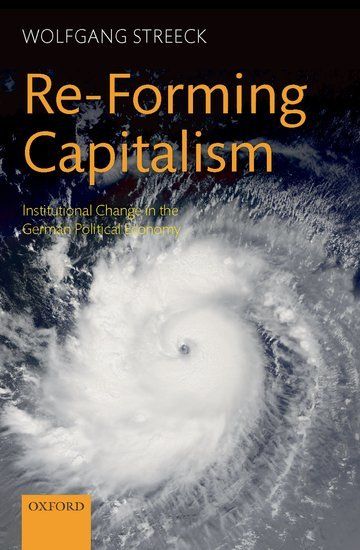
Wolfgang Streeck is a leading figure in comparative political economy and institutional theory. In this book he addresses some of the key issues in this field: the role of history in institutional analysis, the dynamics of slow institutional change, the limitations of rational design and economic-functionalist explanations of institutional stability, and the recurrent difficulties of restraining the effects of capitalism on social order. In the classification of the 'Varieties of Capitalism' school, Germany has always been taken as the chief exemplar of a 'European', coordinated market economy. Streeck explores to what extent Germany actually conforms to this description. His argument is supported by original empirical research on wage-setting and wage structure, the organization of business and labor in business associations and trade unions, social policy, public finance, and corporate governance. From this evidence, Re-Forming Capitalism traces the current liberalization of the postwar economy of democratic capitalism by means of an historically-grounded approach to institutional change. This is an important book from a leading thinker and researcher in comparative political economy and key reading across the social sciences for academics, researchers, and advanced students of Political Economy, Sociology, comparative business systems.
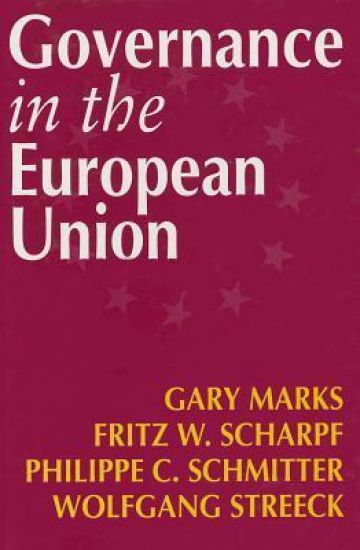
Governance in the European Union
Gary Marks; Fritz W Scharpf; Philippe C Schmitter; Wolfgang Streeck
SAGE Publications Inc
1996
sidottu
A fresh alternative to traditional state-centred analyses of the process of European integration is presented in this book. World-renowned scholars analyze the state in terms of its component parts and clearly show the interaction of subnational, national and supranational actors in the emerging European polity. This `multi-level politics' approach offers a powerful lens through which to view the future course of European integration. The contributors' empirical exploration of areas such as regional governance, social policy and social movements underpins their broad conceptual and theoretical framework providing significant new insight into European politics.
Governance in the European Union
Gary Marks; Fritz W Scharpf; Philippe C Schmitter; Wolfgang Streeck
SAGE Publications Inc
1996
nidottu
A fresh alternative to traditional state-centred analyses of the process of European integration is presented in this book. World-renowned scholars analyze the state in terms of its component parts and clearly show the interaction of subnational, national and supranational actors in the emerging European polity. This `multi-level politics' approach offers a powerful lens through which to view the future course of European integration. The contributors' empirical exploration of areas such as regional governance, social policy and social movements underpins their broad conceptual and theoretical framework providing significant new insight into European politics.
Elementare Soziologie
Wolfgang Conrad; Wolfgang Streeck
VS Verlag fur Sozialwissenschaften
1982
nidottu
Soziologische Begriffe und soziale Wirklichkeit: zur begriGBPGBPIichen Grundlage soziologischer Theoriebildung Wenn Wissenschaft uns irgend etwas tiber die Welt mitteilen, wenn sie uns bei unserem Umgang mit der Welt von Nutzen sein 5011, mug sie irgendwo empirische Elemente enthalten ... Denn nur durch Erfahrung kiinnen wir etwas tiber die Welt lernen ... Es ist diese empirische Komponente, durch die sich die Wissenschaft von Phantasie unterscheidet (Abraham Kaplan, The Conduct of Inquiry, San Francisco 1964, S. 34GBP). Soziologie als empirische Wissenschaft Die moderne Soziologie ist eine Erfahrungswissenschaft. Fur den Soziolo- gen hangt der Wahrheitsgehalt einer Theorie ausschliel5lich davon ab, ob und inwieweit diese mit beobachtbaren und beobachteten Tatsachen uber- einstimmt. Hierdurch unterscheidet sich die Soziologie zum Beispiel von der Mathematik, in der es lediglich auf die logische Widerspruchsfreiheit von Aussagensystemen ankommt, nicht aber auf ihre Vereinbarkeit mit einer objektiven Wirklichkeit. Die wissenschaftsgeschichtliche Bedeutung der Soziologie grundet sich in erster Linie auf ihre erfahrungswissenschaftliche Komponente. Fruheren Formen des Denkens iiber soziale Zusammenhange war der Rekurs auf eine objektive Realitat als Entscheidungsinstanz uber die Gultigkeit von Theori- en versperrt; anders als die Soziologie waren sie angesichts von einander widersprechenden Theorien auf mehr oder weniger scholastische Argu- mentationstechniken angewiesen - insbesondere auf die Auslegung als au- toritativ anerkannter Schriften oder auf logische Ableitung aus fur wahr gehaltenen allgemeinen Pramissen. Dieser Zustand, der in den Naturwis- senschaften seit der Renaissance mehr oder weniger uberwunden war, ist in der Mitte des vergangenen Jahrhunderts durch die Entstehung der moder- nen Soziologie auch fur den Bereich der Gesellschaftswissenschaften been- detworden.