
Kirjojen hintavertailu – 12 859 829 kirjaa ja 27 kauppaa

Kirjailija

Wonhyuk Lim

Kirjat ja teokset yhdessä paikassa: 3 kirjaa, julkaisuja vuosilta 2015–2025, suosituimpiin kuuluu Unfinished Transformation. Vertaile teosten hintoja ja tarkista saatavuus suomalaisista kirjakaupoista.

3 kirjaa

Kirjojen julkaisuvuodet: 2015–2025.

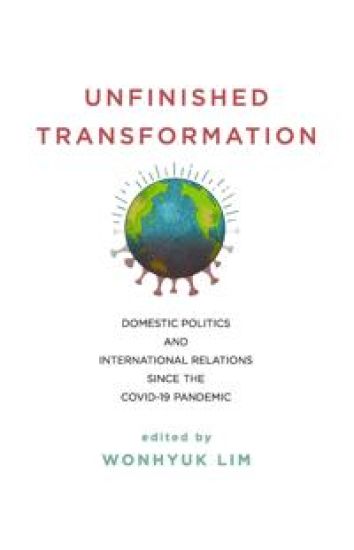
Unfinished Transformation

Unfinished Transformation

Wonhyuk Lim

BLOOMSBURY PUBLISHING PLC
2025
sidottu
The end of the Cold War, the acceleration of globalization, and “the rise of the rest” posed serious challenges to the existing international order based on World War II settlements and Cold War modifications. The Global Financial Crisis of 2008 provided an opportunity to address this problem, as evidenced by the emergence of the G20 at the leadership level, but this adjustment, reflecting a sea change in international economic and political realities, was by no means a smooth process. Domestically, in many advanced industrial countries, there was a populist/nativist backlash as increasing socioeconomic disparities and interaction with the outside world produced economic anxiety and status anxiety. Politicians who promised to take back control appealed to a large number of voters, using “us vs. them” rhetoric to divert attention from socioeconomic inequality. Thus, even before the outbreak of COVID-19, the combination of international power shift and populist/nativist backlash made global cooperation a precarious proposition, even though the proliferation of global value chains, climate change, and infectious diseases made global cooperation more imperative than ever before. The pandemic has accelerated the pre-existing trends of increasing inequality at home and decreasing inequality among countries, especially U. S.-China competition. It is evident that these accelerating trends cannot lead to stable outcomes, as they exacerbate the risks of crisis and conflict if they continue. This book explores how domestic and international transformation can address these problems. Domestically, instead of blaming “the global elite” and “outsiders,” investing in people should receive priority, given the challenges of automation and globalization. Unless workers and the middle class feel secure enough, governments would find it difficult to push for international initiatives. Internationally, a new order should reflect changing economic and political realities, with guardrails to prevent conflict and mechanisms to promote global cooperation.
Unfinished Transformation

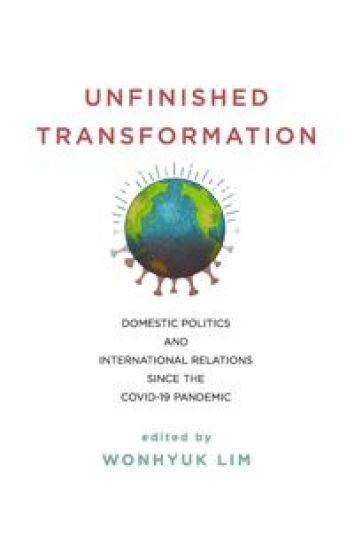
Unfinished Transformation

Wonhyuk Lim

BLOOMSBURY PUBLISHING PLC
2025
nidottu
The end of the Cold War, the acceleration of globalization, and “the rise of the rest” posed serious challenges to the existing international order based on World War II settlements and Cold War modifications. The Global Financial Crisis of 2008 provided an opportunity to address this problem, as evidenced by the emergence of the G20 at the leadership level, but this adjustment, reflecting a sea change in international economic and political realities, was by no means a smooth process. Domestically, in many advanced industrial countries, there was a populist/nativist backlash as increasing socioeconomic disparities and interaction with the outside world produced economic anxiety and status anxiety. Politicians who promised to take back control appealed to a large number of voters, using “us vs. them” rhetoric to divert attention from socioeconomic inequality. Thus, even before the outbreak of COVID-19, the combination of international power shift and populist/nativist backlash made global cooperation a precarious proposition, even though the proliferation of global value chains, climate change, and infectious diseases made global cooperation more imperative than ever before. The pandemic has accelerated the pre-existing trends of increasing inequality at home and decreasing inequality among countries, especially U. S.-China competition. It is evident that these accelerating trends cannot lead to stable outcomes, as they exacerbate the risks of crisis and conflict if they continue. This book explores how domestic and international transformation can address these problems. Domestically, instead of blaming “the global elite” and “outsiders,” investing in people should receive priority, given the challenges of automation and globalization. Unless workers and the middle class feel secure enough, governments would find it difficult to push for international initiatives. Internationally, a new order should reflect changing economic and political realities, with guardrails to prevent conflict and mechanisms to promote global cooperation.
The Korean Economy

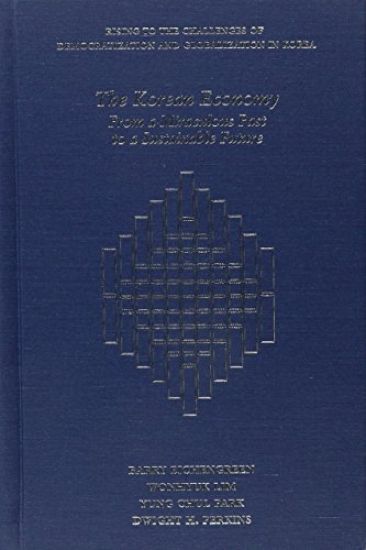
The Korean Economy

Barry Eichengreen; Wonhyuk Lim; Yung Chul Park; Dwight H. Perkins

Harvard University, Asia Center
2015
sidottu
South Korea has been held out as an economic miracle—as a country that successfully completed the transition from underdeveloped to developed country status—and as an example of how a middle-income country can continue to move up the technology ladder into the production and export of more sophisticated goods and services. But with these successes have come challenges, among them poverty, inequality, long work hours, financial instability, and complaints about the economic and political power of the country’s large corporate conglomerates, or chaebol. The Korean Economy provides an overview of Korean economic experience since the 1950s, with a focus on the period since democratization in 1987. Successive chapters analyze the Korean experience from the perspectives of political economy, the growth record, industrial organization and corporate governance, financial development and instability, labor and employment, inequality and social policy, and Korea’s place in the world economy. A concluding chapter describes the country’s economic challenges going forward and how they can best be met. The volume also serves to summarize the findings of companion volumes in the Harvard–Korean Development Institute series on the Korean economy, also published by the Harvard University Asia Center.