Kirjojen hintavertailu – 12 903 725 kirjaa ja 27 kauppaa

Kirjailija

Woodrow Wilson

Kirjat ja teokset yhdessä paikassa: 351 kirjaa, julkaisuja vuosilta 1966–2026, suosituimpiin kuuluu Present Day Conditions in Europe; The United States and the Armenian Mandate; Report of the American Military Mission to Armenia. Vertaile teosten hintoja ja tarkista saatavuus suomalaisista kirjakaupoista.

351 kirjaa

Kirjojen julkaisuvuodet: 1966–2026.

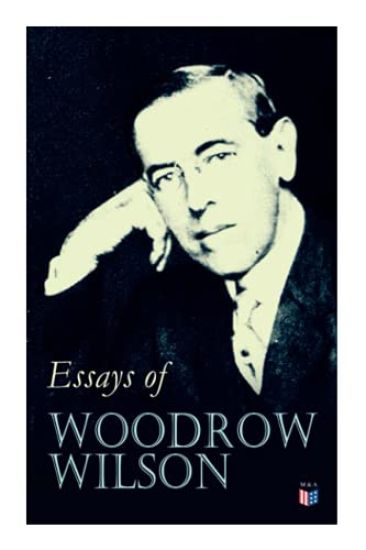
Essays of Woodrow Wilson

Essays of Woodrow Wilson

Woodrow Wilson

E-Artnow
2019
nidottu
Woodrow Wilson, a disciple of Walter Bagehot, considered the United States Constitution to be cumbersome and open to corruption. He favored a parliamentary system for the United States and in the early 1880s wrote, "I ask you to put this question to yourselves, should we not draw the Executive and Legislature closer together? Should we not, on the one hand, give the individual leaders of opinion in Congress a better chance to have an intimate party in determining who should be president, and the president, on the other hand, a better chance to approve himself a statesman, and his advisers capable men of affairs, in the guidance of Congress." Essays presented in this book shed light to Wilsons's political thought and works. Contents: The New Freedom When A Man Comes To Himself The Study of Administration Leaders of Men The New Democracy

The New Freedom

The New Freedom

Woodrow Wilson

Suzeteo Enterprises
2019
sidottu
In 1913, Woodrow Wilson was just beginning his time as president of the United States. America's first 'professor'-president, Wilson intended to turn his philosophies into policies. As such, Wilson's two terms in office would mark a turning point, for better or for worse, in American history. And what were those philosophies? In speeches throughout his election campaign, he boldly spelled out his beliefs. "The New Freedom" is a collection of those speeches, edited at the time only to be more suited for reading in a book rather than heard by the ears. These are the words that persuaded millions of Americans to cast their votes for Wilson and his 'progressive' ideas. In this book, Wilson's attitudes towards monopolies, tariffs, and the State itself, are brought forth almost as they were first presented to ordinary citizens on the campaign trail.
Why we are at War

Why we are at War

Woodrow Wilson

Createspace Independent Publishing Platform
2018
nidottu
This book presents in convenient form the memorable messages to the Congress read by President Wilson in January, February, and April, 1917. They should be read together, for only in this way is it possible to appreciate both the forbearance and the logic of events reflected in these consecutive chapters of history. While the great war message of April 2d is obviously the most momentous, its full significance is not made clear unless it is read as the climax of the preceding messages and also in connection with the President's proclamation of a state of war on April 6th and his message to the American people of April 15th. While the approval of President Wilson was very naturally requested and obtained for the publication of these messages in collected form, the Publishers are responsible for the title and for captions. They have felt that they are rendering a service of permanent value by collecting and presenting these historic documents in the same form in which they have published President Wilson's When a Man Comes to Himself, On Being Human, and The President of the United States.
The New Freedom

The New Freedom

Woodrow Wilson

Createspace Independent Publishing Platform
2018
nidottu
I have not written a book since the campaign. I did not write this book at all. It is the result of the editorial literary skill of Mr. William Bayard Hale, who has put together here in their right sequences the more suggestive portions of my campaign speeches. And yet it is not a book of campaign speeches. It is a discussion of a number of very vital subjects in the free form of extemporaneously spoken words. I have left the sentences in the form in which they were stenographically reported. I have not tried to alter the easy-going and often colloquial phraseology in which they were uttered from the platform, in the hope that they would seem the more fresh and spontaneous because of their very lack of pruning and recasting. They have been suffered to run their unpremeditated course even at the cost of such repetition and redundancy as the extemporaneous speaker apparently inevitably falls into.