

Kirjojen hintavertailu – 12 859 818 kirjaa ja 27 kauppaa

Kirjailija

Wouter Vergote

Kirjat ja teokset yhdessä paikassa: 2 kirjaa, julkaisuja vuosilta 2019–2022, suosituimpiin kuuluu The Platform Economy. Vertaile teosten hintoja ja tarkista saatavuus suomalaisista kirjakaupoista.

2 kirjaa

Kirjojen julkaisuvuodet: 2019–2022.

Strategies and Games, second edition

Strategies and Games, second edition

Prajit K. Dutta; Wouter Vergote

MIT PRESS LTD
2022
sidottu

Halvin toimitettuna 113,00 €

The new edition of a widely used introduction to game theory and its applications, with a focus on economics, business, and politics. This widely used introduction to game theory is rigorous but accessible, unique in its balance between the theoretical and the practical, with examples and applications following almost every theory-driven chapter. In recent years, game theory has become an important methodological tool for all fields of social sciences, biology and computer science. This second edition of Strategies and Games not only takes into account new game theoretical concepts and applications such as bargaining and matching, it also provides an array of chapters on game theory applied to the political arena. New examples, case studies, and applications relevant to a wide range of behavioral disciplines are now included. The authors map out alternate pathways through the book for instructors in economics, business, and political science. The book contains four parts: strategic form games, extensive form games, asymmetric information games, and cooperative games and matching. Theoretical topics include dominance solutions, Nash equilibrium, Condorcet paradox, backward induction, subgame perfection, repeated and dynamic games, Bayes-Nash equilibrium, mechanism design, auction theory, signaling, the Shapley value, and stable matchings. Applications and case studies include OPEC, voting, poison pills, Treasury auctions, trade agreements, pork-barrel spending, climate change, bargaining and audience costs, markets for lemons, and school choice. Each chapter includes concept checks and tallies end-of-chapter problems. An appendix offers a thorough discussion of single-agent decision theory, which underpins game theory.
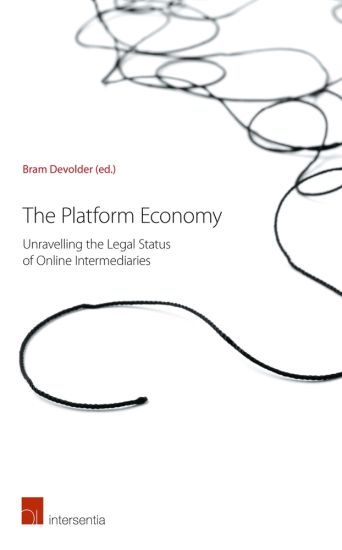
The Platform Economy

The Platform Economy

Alain Strowel; Wouter Vergote; Nicolas Van Damme; Friso Bostoen; Marie Jull Sorensen; Liyang Hou; Valerio De Stefano; Mathias Wouters; Paul Schoukens; Alberto Barrio; Saskia Montebovi; Yves Stevens; Wouter Verheyen; Fiona Unz; Dina Scornos; Niels Bammens; Edoardo Traversa; Marie Lamensch; Kenneth Vyncke

Intersentia Ltd
2019
sidottu
On 20 December 2017 and 10 April 2018 respectively, the Court of Justice of the European Union passed two landmark cases on the legal status of internet platform Uber. The Court established that Uber does not merely provide an app, but rather offers a full transport service. Without Uber there would be no market for non-professional drivers using their own vehicles. Moreover, the platform exercises a decisive influence over the conditions under which drivers provide their service. These rulings address the very core of several highly debated questions on the legal status of online intermediaries such as Uber, Airbnb and TaskRabbit. Is regulatory intervention needed to reap the potential benefits of the platform economy or to mitigate the potentially negative consequences of regulatory disruption? Can platforms be held liable for the proper execution of services provided by others? Does existing national regulation impose disproportionate market restrictions on innovators? Should we rethink labour protection aand social security to address the potential loss of social protection of non-standard workers? How can revenue law be improved to tackle elaborate (international) schemes to avoid direct and indirect taxation? Emerging platforms claim to create new market opportunities and to provide innovative solutions to improve social welfare. Conversely, the platform economy blurs established lines between traditional legal categories, such as business and consumer, personal and professional, and worker and contractor. Traditional regulation, which often focuses on balancing the interests of two contracting parties, is now confronted with the three-sided contractual relationship between a platform, a supplier and a user. In this book, a panel of international legal experts unravel the legal status of online intermediaries a thorny knot that legislators, judges and lawyers across the globe are facing.