Kirjojen hintavertailu – 12 859 818 kirjaa ja 27 kauppaa
Kirjailija
Wynne Harlen
Kirjat ja teokset yhdessä paikassa: 13 kirjaa, julkaisuja vuosilta 1990–2018, suosituimpiin kuuluu Assessment of Learning. Vertaile teosten hintoja ja tarkista saatavuus suomalaisista kirjakaupoista.
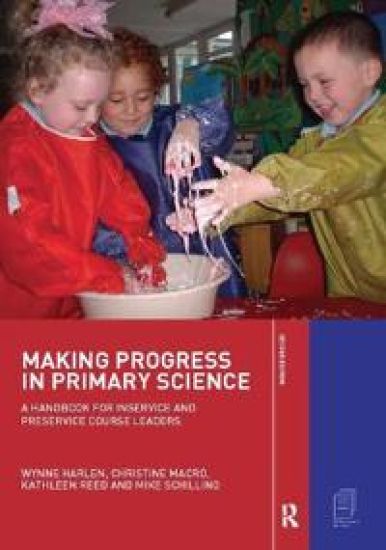
This new and extensively revised edition of Progress in Primary Science is intended for all those involved in training teachers of primary school science, both preservice and on INSET courses. Its flexible modular structure enables course leaders to tailor their course to participants' needs. Each module can be studied individually or as part of an extended programme and contains notes for facilitators, photocopiable workshop materials, activities for practitioners and suggestions for further reading. Throughout the book the focus is on the learning of science as an investigative process through which pupils develop an understanding of ideas. This is supported by modules on different aspects of teaching and learning in science, including: building on children's own ideas how to ask and answer questions managing practical work in the classroom science for very young children effective assessment, self-assessment and feedback cross-curricular links ICT and science science outside the classroom. The companion study book currently available can be used by those participating on these courses. It follows the same modular structure and contains the same information as this book, and makes planning and delivering the course easier and less time consuming for the course leader.
Now in a fully updated seventh edition, The Teaching of Science in Primary Schools provides essential information for students, trainee, and practising teachers about the why, what and how of teaching primary science. Paying particular attention to inquiry-based teaching and learning, the book recognises the challenges of teaching science, and provides suggestions and examples aimed to increase teachers’ confidence and pupils‘ enjoyment of the subject. This new edition explores: Changes in curriculum and assessment requirements in the UK Advances in knowledge of how children learn Expansion in the use of ICT by teachers and children And expands on key aspects of teaching including: The compelling reasons for starting science in the primary school Strategies for helping children to develop understanding, skills and enjoyment Attention to school and teacher self-evaluation as a means of improving provision for children’s learning. Giving the latest information about the rationale for and use of inquiry-based, constructivist methodology, and the use of assessment to help learning, the book combines practice and theory, explaining and advocating for particular classroom interactions and activities. This book is essential reading for all primary school teachers and those engaged in studying primary education.
Now in a fully updated seventh edition, The Teaching of Science in Primary Schools provides essential information for students, trainee, and practising teachers about the why, what and how of teaching primary science. Paying particular attention to inquiry-based teaching and learning, the book recognises the challenges of teaching science, and provides suggestions and examples aimed to increase teachers’ confidence and pupils‘ enjoyment of the subject. This new edition explores: Changes in curriculum and assessment requirements in the UK Advances in knowledge of how children learn Expansion in the use of ICT by teachers and children And expands on key aspects of teaching including: The compelling reasons for starting science in the primary school Strategies for helping children to develop understanding, skills and enjoyment Attention to school and teacher self-evaluation as a means of improving provision for children’s learning. Giving the latest information about the rationale for and use of inquiry-based, constructivist methodology, and the use of assessment to help learning, the book combines practice and theory, explaining and advocating for particular classroom interactions and activities. This book is essential reading for all primary school teachers and those engaged in studying primary education.
"This book comes at just the right time, as teachers are being encouraged to re-examine current approaches to science instruction." --Lynn Rankin, Director, Institute for Inquiry, Exploratorium "Easy to read and comprehend with very explicit examples, it will be foundational for classroom teachers as they journey from novice teacher of science to expert." --Jo Anne Vasquez, Ph. D., Past President of the National Science Teachers Association "Teaching Science for Understanding is a comprehensive, exquisitely written guide and well-illustrated resource for high quality teaching and learning of inquiry-based science." --Hubert M. Dyasi, Ph. D., Professor of Science, City College and City University of New York Even though there is an unending supply of science textbooks, kits, and other resources, the practice of teaching science is more challenging than simply setting up an experiment. In Teaching Science for Understanding in Elementary and Middle Schools, Wynne Harlen focuses on why developing understanding is essential in science education and how best to engage students in activities that deepen their curiosity about the world and promote enjoyment of science. Teaching Science for Understanding in Elementary and Middle Schools centers on how to build on the ideas your students already have to cultivate the thinking and skills necessary for developing an understanding of the scientific aspects of the world, including: helping students develop and use the skills of investigation drawing conclusions from data through analyzing, interpreting, and explaining creating classrooms that encourage students to explain and justify their thinking asking productive questions to support students' understanding. Through classroom vignettes, examples, and practical suggestions at the end of each chapter, Wynne provides a compelling vision of what can be achieved through science education...and strategies that you can implement in your classroom right now.
"The authors are well-known in the Assessment field and this work presents their highly original analysis... [It] promotes a professional learning approach that will undoubtedly help educationalists in schools and across the schools sector in their quest to improve learning." Professor Mary James, University of Cambridge, UK. This book explores the processes involved in developing assessment practice. It argues that the role of teacher assessment needs to be put firmly at the forefront of the educational agenda and that assessment by teachers needs to be developed in a widespread, high quality and sustainable fashion. The authors, all members of the influential Assessment Reform Group, argue that the target-driven approach of external testing leads to problems, including 'teaching to the test' to the detriment of the wider curriculum, and motivational problems. In this book, they tackle the differences between formative and summative assessment and ask the question: "What is quality teacher assessment?" There is coverage of key professional learning dimensions including: The purposes of assessmentThe need for evidence to support innovationThe process and steps to develop new practicePerceptions of what counts as quality assessment in schoolsThe authors draw on these various perspectives to explain how teachers and schools can build on existing practice, and develop new practices, and how the system should react to support them. This book is essential reading for teachers, head teachers, local authority professionals, policy makers and academics.
Robin Alexander; Michael Armstrong; Julia Flutter; Linda Hargreaves; David Harrison; Wynne Harlen; Elizabeth Hartley-Brewer; Ruth Kershner; John MacBeath; Berry Mayall; Stephanie Northen; Gillian Pugh; Colin Richards; David Utting
Children, their World, their Education is the definitive text for students, teachers, researchers, educational leaders and all who are interested in primary education. As the culmination of the Cambridge Primary Review, the most comprehensive enquiry into English primary education for half a century, its publication provoked instant and dramatic headlines. Widespread support from teachers and eminent public figures demonstrated that the book had identified the issues that really mattered. Ministerial unease showed that here were findings that politicians could not ignore. But Children, their World, their Education is much more than a report. It is an unrivalled educational compendium that systematically covers the issues that are central to the daily work of students, teachers and heads. For trainee teachers on undergraduate and postgraduate courses it effectively maps the territory of primary education and provides the context, information and insight which are essential to the development of classroom skill. Its vast range of carefully evaluated evidence makes it a core resource for those undertaking research and advanced study. Its direct engagement with the policy process during a period of unprecedented change makes it an indispensable tool for policy analysis. It places England’s education system in the global context, and combines evidence on recent developments with a vision of how primary education should be. Part 1 sets the scene and tracks primary education policy since the 1960s. Part 2 examines children’s development and learning, their needs and aspirations, and their lives in a diverse society and fragile world. Part 3 explores what goes on in schools, from the vital early years to educational aims and values, the curriculum, pedagogy and classroom practice, assessment, standards and school organisation. Part 4 deals with the system as a whole: educational ages and stages, the work and training of primary teachers, school leadership, local authorities, funding, governance and policy. Part 5 pulls everything together with 78 conclusions and 75 recommendations for policy and practice. Companion volume: The Cambridge Primary Review Research Surveys, edited by Robin Alexander with Christine Doddington, John Gray, Linda Hargreaves and Ruth Kershner. The Cambridge Primary Review is supported by Esmée Fairbairn Foundation: www.primaryreview.org.uk.
This book takes a critical look at how students' achievements are assessed for a range of purposes, from reporting progress to selection and qualification. It considers the relationship between what is taught, and how, and what and how learning outcomes are assessed. The impact of using assessment results for setting targets and evaluation of provision for learning is also discussed. The pros and cons of using tests and examinations and alternatives based on the judgments of teachers are considered in terms of four key criteria: validity, reliability, impact and required resources. Evidence from research and examples of current practice in different countries within and outside the UK support the case for making more and better use of teachers' judgments in assessment of learning. In this way assessment of learning (summative assessment) can be compatible with assessment for learning (formative assessment).
This book takes a critical look at how students' achievements are assessed for a range of purposes, from reporting progress to selection and qualification. It considers the relationship between what is taught, and how, and what and how learning outcomes are assessed. The impact of using assessment results for setting targets and evaluation of provision for learning is also discussed. The pros and cons of using tests and examinations and alternatives based on the judgments of teachers are considered in terms of four key criteria: validity, reliability, impact and required resources. Evidence from research and examples of current practice in different countries within and outside the UK support the case for making more and better use of teachers' judgments in assessment of learning. In this way assessment of learning (summative assessment) can be compatible with assessment for learning (formative assessment).
`Professor Harlen has, once again, provided the leading text on primary science. This eminently readable book sets out a clear account of our understanding of learning, teaching and assessment and, through the skilful use of examples, explores the implications of this for science teachers of pupils aged five to 12. By emphasizing the importance of research evidence and the way in which it should underpin practice, this new edition challenges everyone involved in science education to reflect again on whether we are providing the most appropriate learning opportunities for our pupils. It is certainly a book which will be highly recommended, referred to on many occasions and used extensively' - Dr Derek Bell, Chief Executive, The Association for Science Education This thoroughly revised and completely up-to-date new edition provides an excellent theoretical framework for teaching science that is firmly grounded in classroom practice and covers all stages of education for students aged five to 12 years. The author details a constructivist view of learning, which recognizes that children already have ideas about the world in which they live, and gives advice on how teachers can help children to develop their understanding and change their perception to a more scientific view. A particular feature is the focus on formative assessment as a framework for discussion on how to help students develop their understanding, enquiry skills and positive attitudes to scientific investigation. The wide range of topics covered include: The nature of students' learning in science The goals of science education Gathering and interpreting information about students' 's ideas Helping development of scientific ideas Gathering and interpreting evidence of students' enquiry skills and attitudes Strategies for helping development of students' qnquiry skills and attitudes The learner's role in learning Summarising and reporting learning Motivating learning Teachers and children's questions Resources for learning science Managing science in the school Each chapter features useful summaries, points for reflection and further reading, making this acclaimed book indispensable reading for all primary and practitioners and students who want a book that will authoritatively inform, inspire and instruct their science teaching.
This new and extensively revised edition of Progress in Primary Science is intended for all those involved in training teachers of primary school science, both preservice and on INSET courses. Its flexible modular structure enables course leaders to tailor their course to participants' needs. Each module can be studied individually or as part of an extended programme and contains notes for facilitators, photocopiable workshop materials, activities for practitioners and suggestions for further reading. Throughout the book the focus is on the learning of science as an investigative process through which pupils develop an understanding of ideas. This is supported by modules on different aspects of teaching and learning in science, including:building on children's own ideashow to ask and answer questionsmanaging practical work in the classroom science for very young childreneffective assessment, self-assessment and feedbackcross-curricular linksICT and sciencescience outside the classroom. The companion study book currently available can be used by those participating on these courses. It follows the same modular structure and contains the same information as this book, and makes planning and delivering the course easier and less time consuming for the course leader.
The importance of helping children to understand the environment is now widely recognized and is well represented in The National Curriculum for Science. But what kind of `environmental education' is appropriate at the primary level? The authors address this central question throughout this book. Science activities relating to the children's school environment are described and explained. The interaction or `encounter' of children with the environment is the pervading theme. In these `encounters' children are encouraged to find answers to their questions through scientific investigation of the objects, events or particular part of the environment being studied, either in the field or in the classroom.