Kirjojen hintavertailu – 12 859 819 kirjaa ja 27 kauppaa

Kirjailija

Xavier F Salomon

Kirjat ja teokset yhdessä paikassa: 19 kirjaa, julkaisuja vuosilta 2019–2026, suosituimpiin kuuluu Living Histories. Vertaile teosten hintoja ja tarkista saatavuus suomalaisista kirjakaupoista.

Nimi esiintyy myös muodoissa: Xavier F. Salomon

19 kirjaa

Kirjojen julkaisuvuodet: 2019–2026.

Living Histories

Living Histories

Aimee Ng; Xavier F Salomon; Stephen Truax; Hanya Yanagihara

D GILES LTD
2023
sidottu
Living Histories: Queer Views and Old Masters is an exciting volume featuring the work of four New York based artists, each presenting a single new work in conversation with celebrated paintings in The Frick Collection, with particular emphasis on issues of gender and queer identity typically excluded from narratives of early modern European art. The idea of commissioning four works to display at Frick Madison emerged when four masterpieces by Vermeer, Holbein, and Rembrandt were loaned to exhibitions. Works by Jenna Gribbon, Doron Langberg, Toyin Ojih Odutola and Salman Toor were commissioned to replace them, alongside other works by these artists. This book is the result of the four New York artists' responses to the Frick's collection, and the conversations their work engendered. Written contributions are provided by Jonathan Anderson, Jessica Bell Brown, Christopher Lew, Jason Reynolds, Legacy Russell, and Russell Tovey. SELLING POINTS: . Queer art for the Old Masters . Ties in with a series of ongoing installations of works by contemporary LGBTQ+ artists produced in response to selected works at the Frick . Contributions by artists, writers and curators bring a diverse and rich perspective . Featured artists Jenna Gribbon, Doron Langberg, Toyin Ojih Odutola, and Salman Toor allow us to see long-familiar works in the Frick's collection in new ways . Doron Langberg's Lover is paired with Hans Holbein's Sir Thomas More;; Jenna Gribbon's What Am I Doing Here? I Should Ask You the Same with Holbein's Thomas Cromwell Salman Toor's Museum Boys with Johannes Vermeer's Officer and Laughing Girl and Toyin Ojih Odutola's The Listener with Rembrandt's Self-Portrait 45 colour illustrations
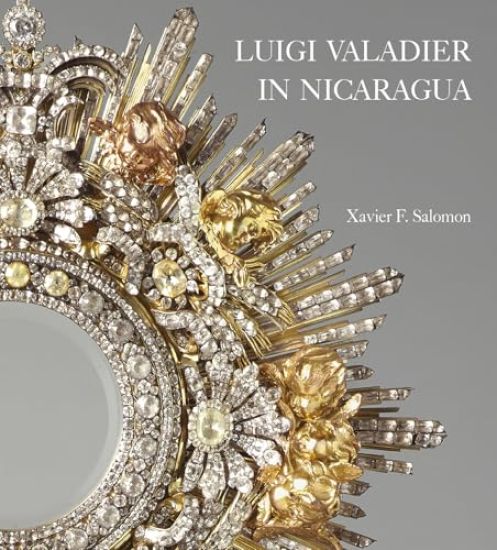
Luigi Valadier in Nicaragua

Luigi Valadier in Nicaragua

Xavier F. Salomon

Giles
2026
sidottu
An intriguing story of the search for, and discovery of, a wonderful and rare work of art thought lost for centuries. In 1767 and 1768, a number of objects made by the renowned eighteenth-century Roman goldsmith Luigi Valadier (1726-1785) were sent from Rome to a "principal church in Mexico," but until recently they had been thought lost or destroyed. Among these was a monumental silver-gilt monstrance (a vessel in which the consecrated Host is shown), "destined for a principal church of Mexico that is in the Indies of Spain." During the course of The Frick Collection's 2018 exhibition Luigi Valadier: Splendor in Eighteenth-Century Rome curated by Xavier F. Salomon and Alvar Gonz lez-Palacios, Salomon kept asking himself where this principal church in Mexico might be and whether the lost silver-gilt monstrance might be found. The odds of recovering it and other items were slim because objects made of gold, silver, and precious stones were so often melted for cash or recycling. In fact, most of Valadier's works of this type do not survive; we know about them only from invoices, descriptions, and inventories. After an extensive search, Salomon located the lost monstrance in the Cathedral of Le n in Nicaragua. Finally able to travel to Le n in 2022, Salomon was able to verify that in addition to the monstrance, approximately twenty-five other "lost" objects--chandeliers, reliquaries, a chalice, and candlesticks, many of them bearing Valadier's seal--are works by Valadier, many of them used in the daily liturgy of the cathedral. Thus, for more than two hundred and fifty years this sacred treasure--the largest surviving Valadier collection in the world--has been known only to worshippers in Le n, their origin a mystery, until now.
Boucher's Four Seasons

Boucher's Four Seasons

Xavier F. Salomon; Flora Yukhnovich

D GILES LTD
2026
sidottu
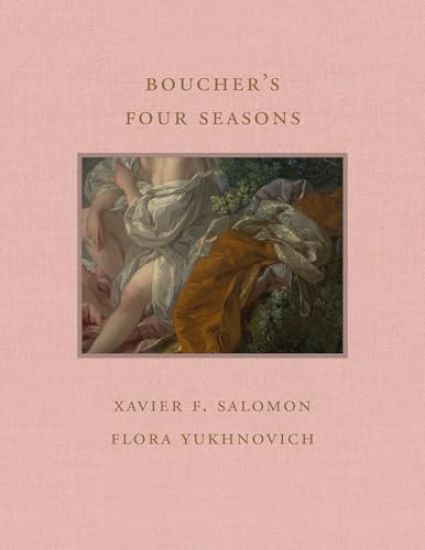
François Boucher (1703?1770) made the four paintings known as the Four Seasons in 1755 for Madame De Pompadour, King Louis XV’s long-term official mistress. Their original location is unknown, but their unusual shape suggests that they were used as overdoors, no doubt in one of Pompadour’s many properties in France. In place of the labours that traditionally illustrate the theme of the four seasons, Boucher depicts delightful amorous encounters in joyous colours. This combination of luxury and seduction—all treated in a fanciful, even humorous manner—is typical of Boucher. Accompanying the Boucher paintings are images of Flora Yuknovich’s contribution, an extraordinary cycle of paintings inspired by Boucher’s Four Seasons, to be displayed at the Frick, in a space on the first floor, occupied between 1935 and 2020 by the Boucher Room.
To the Holy Sepulcher

To the Holy Sepulcher

Xavier F Salomon; Benoit Constensoux; Jacques Charles-Gaffiot

D GILES LTD
2025
sidottu
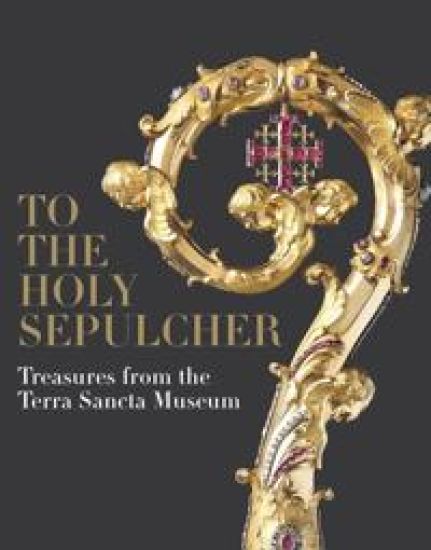
The Custodia di Terra Sancta is a branch of the Franciscan order, established by the pope in 1342 to safeguard the church of the Holy Sepulcher and other holy sites in the Middle East. Over the course of centuries, Christian heads of state from across the Western world sent symbolic gifts to the Holy Sepulcher and other holy sites via the Franciscans of the Custodia. The objects, which range in date from the late Middle Ages to the 20th century, represent the extraordinary survival of different kinds of objects that all too often have been lost to history. Highlights of the Terra Sancta Museum's collection include more than 60 pieces of goldsmith and silversmith work and textiles that date from the 16th to the 18th centuries. Among these are chalices and candlesticks in gold and silver and opulent liturgical vestments that were sumptuous gifts from the French and Spanish kings.
The Frick Collection: The Historic Interiors

The Frick Collection: The Historic Interiors

Xavier F. Salomon; Miguel Flores-Vianna

RIZZOLI INTERNATIONAL PUBLICATIONS
2025
sidottu

Halvin toimitettuna 48,50 €

Richly illustrated with newly commissioned photography, this publication chronicles the history of the iconic 1914 residence of industrialist Henry Clay Frick, while offering a room-by-room tour that showcases each space s evolution from a private residence to part of The Frick Collection. The personal and cultural significance of the mansion s interiors is explored, from the stately drawing rooms and intimate boudoirs to the galleries that house masterpieces by Bellini, Fragonard, Goya, Ingres, Manet, Rembrandt, Titian, and Vermeer. The mansion at One East Seventieth Street stands as a testament to Frick s refined taste, immense wealth, and unparalleled art collection. The reader will experience a captivating exploration of the mansion s creation, from Frick s initial vision of a comfortable, well-arranged house, simple, in good taste, and not ostentatious to the multifaceted collaboration between the strong-willed patron and his team of architects, interior decorators (including Sir Charles Carrick Allom and Elsie de Wolfe), and art dealers. This book is a reintroduction to the marvels of the Frick s collections and an introduction to the gloriously revived interiors of an internationally lauded jewel of a museum.
Porcelain Garden

Porcelain Garden

Xavier F. Salomon

D GILES LTD
2025
sidottu
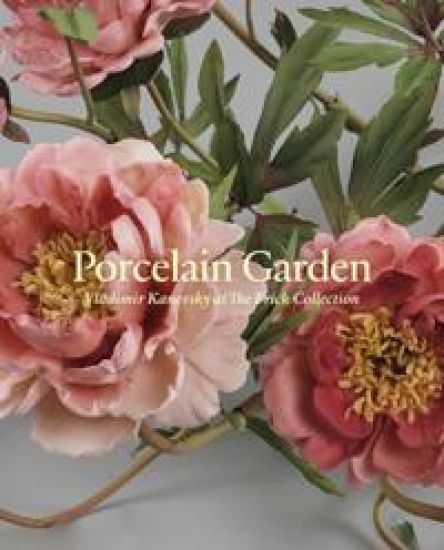
IIn conjunction with its reopening, following its 2020-25 renovation, The Frick Collection commissioned porcelain flowers from Ukrainian sculptor Vladimir Kanevsky. Some 20 arrangements evoke the fresh flowers displayed throughout the museum when it first opened to the public, in 1935. Kanevsky's lifelike porcelain flowers have been exhibited in museums around the world, including the State Hermitage Museum in Saint Petersburg, Russia, and Hillwood Estate, Museum & Gardens in Washington, DC. With an essay by Xavier F. Salomon and exquisite photography, this book documenting Kanevsky's 20 extraordinary creations is a lasting souvenir of a unique installation at the Frick.
Goya's the Forge

Goya's the Forge

Hisham Matar; Xavier F Salomon

D GILES LTD
2025
sidottu
Francisco de Goya y Lucientes (1746-1828) is among the most important Spanish artists of the late 18th and early 19th centuries. A late masterpiece, his Forge derives from the mythological theme of the forge of Vulcan, the metalworker of the Olympian gods. The figures in Goya's monumental, haunting painting are instead muscular laborers at work around a blacksmith's anvil. Salomon's deeply researched text is complemented by a poetic piece by Matar. Designed to foster critical engagement and interest specialist and non-specialist alike, each book in the Frick Diptych series illuminates a single work in the Frick's rich collection with an essay by a Frick curator paired with a contribution from a contemporary artist or writer.
Bellini and Giorgione in the House of Taddeo Contarini
The Three Philosophers by Giorgione (Italian, 1477 1510) in the Kunsthistorisches Museum in Vienna and St. Francis in the Desert by Giovanni Bellini (ca. 1424/35 1516) in The Frick Collection, New York, are two of the most celebrated paintings of the Venetian Renaissance. Between at least 1525 and 1556 the two paintings were displayed together in the same house in Venice, the palazzo of Taddeo Contarini (ca. 1466 1540), a member of one of Venice's wealthiest patrician families. For the first time in more than four hundred years, these two masterpieces will be reunited. Accompanying their display at the Frick, this book explores the origins of the paintings and re-evaluates their shared histories in the collection of Taddeo Contarini. AUTHOR: Xavier F. Salomon is the deputy director and Peter Jay Sharp Chief Curator at the Frick Collection in New York. SELLING POINTS: . Reunites two Italian Renaissance masterpieces after more than four centuries apart, affording a re-examination of their joint history 35 colour illustrations
Rosalba Carriera's Man in Pilgrim's Costume

Rosalba Carriera's Man in Pilgrim's Costume

Nicolas Party; Xavier F Salomon

D GILES LTD
2023
sidottu
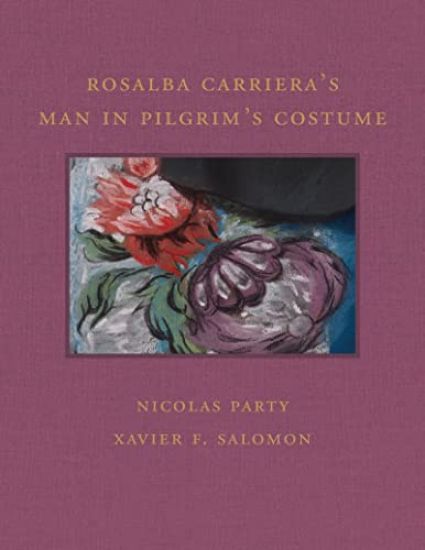
This pastel belongs to a small number of works of art at the Frick by a female artist. Rosalba Carriera (Italian, 1673 1757) spent most of her life in Venice, then a popular destination for young aristocrats from all over Europe undertaking the Grand Tour-a tour of the continent that served as an educational rite of passage into adulthood. Many of these travelers would go to Rosalba's studio to have a portrait painted, and Rosalba, who began her career as a miniaturist painter in Venice, became internationally acclaimed. Rosalba's pastels are technically innovative, remarkable for their soft edges and sumptuous effects. By binding colored chalk into sticks, she obtained a much wider range of prepared colors, which ultimately expanded the visual possibilities of this medium. Little is known about this portrait, painted about 1730. Despite the fragility of the medium-pastel-it is in pristine condition. The portrayal of the man as a pilgrim, with a black cape and holding a staff, may indicate that he was a member of the Pellegrini family-pellegrini being the Italian word for pilgrims-or that he is someone who traveled on a pilgrimage. More likely, however, his attire is simply a costume related to the Venetian Carnival. Designed to foster critical engagement and interest specialist and non-specialist alike, each book in the Frick Diptych series illuminates a single work in the Frick's rich collection with an essay by a Frick curator paired with a contribution from a contemporary artist or writer. AUTHORS: Born in Lausanne in 1980, Nicolas Party is a figurative painter who has achieved critical admiration for his familiar yet unsettling landscapes, portraits, and still lifes that simultaneously celebrate and challenge conventions of representational painting. His works are primarily created in soft pastel, an idiosyncratic choice of medium in the 21st-century, and one that allows for exceptional degrees of intensity and fluidity in his depictions of objects both natural and manmade. Xavier F. Salomon is deputy director and Peter Jay Sharp Chief Curator, The Frick Collection, New York. SELLING POINTS: . New volume in the best selling Frick Diptych series that began with Holbein's Sir Thomas More by Hilary Mantel . Volume 13 focuses on an exquisite eighteenth-century Italian portrait 45 colour illustrations
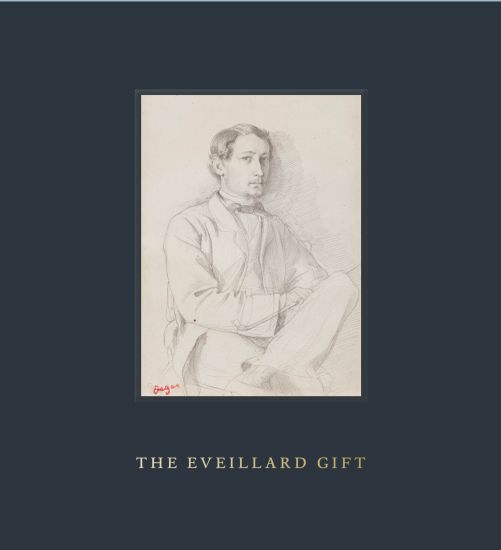
The Eveillard Gift

The Eveillard Gift

Giulio Dalvit; Aimee Ng; Xavier F Salomon

Paul Holberton Publishing Ltd
2022
sidottu
This beautiful publication presents for the first time the Eveillard Gift of drawings to The Frick Collection, the most important gift of drawings and pastels in its history. It accompanies an exhibition at the Frick and includes a catalogue of the works and commentaries by noted scholars. Twenty-six works of art promised to The Frick Collection by Elizabeth and Jean-Marie Eveillard dramatically advance the museum’s commitment to the research and display of European drawings. Included in this transformative gift from two longtime supporters of the Frick are exquisite drawings, pastels, prints, and one oil sketch by François Boucher, Gustave Caillebotte, Edgar Degas, Eugène Delacroix, Jean-Honoré Fragonard, Thomas Lawrence, Francisco de Goya y Lucientes, John Singer Sargent, Elisabeth Vigée Le Brun, and Jean-Antoine Watteau, among others. The works include figurative sketches, independent studies, portraits, and landscape scenes, each either deepening the museum’s celebrated holdings or bringing the work of an artist who is not – but should be – represented in the collection. This lavishly illustrated publication, which accompanies an exhibition at the Frick, includes a catalogue of the works, as well as comprehensive commentaries on each of promised gifts written by noted scholars in their field.
Paolo Veneziano's Coronation of the Virgin

Paolo Veneziano's Coronation of the Virgin

Nico Muhly; Xavier F Salomon

D GILES LTD
2022
sidottu
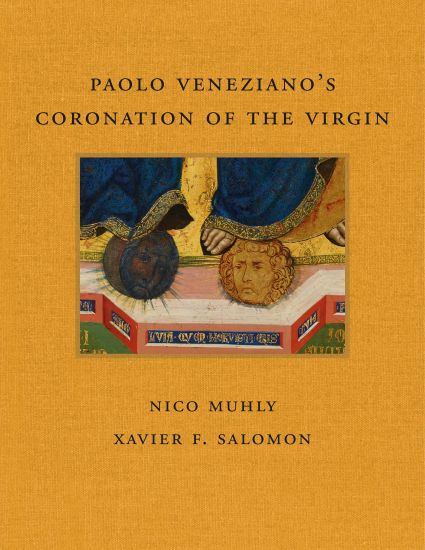
According to Nico Muhly, the Coronation of the Virgin is "a panel of pure theatre and music". Painted in 1358 by the Venetian artist Paolo Veneziano (ca. 1295-1362), the apocryphal story of the Virgin's death is depicted in one of the artist's most thrilling and important works. Paolo Veneziano presents the Virgin and Christ in sumptuous garments and surrounded by a choir of angels playing portable organs, lutes, trumpets, tambourines, and other instruments. The angels symbolize the harmony of the universe; their instruments are the authentic components of a medieval orchestra, accurately depicted and correctly held and played. The decorative sparkle of the surface - with its brilliant, expensive colours, patterned textiles, and lavish gold leaf - reflects the Venetians' love of luxury, a taste that enriches much of 14th- and 15th-century architecture in Venice.
Cocktails with a Curator

Cocktails with a Curator

Xavier F. Salomon; Aimee Ng

RIZZOLI INTERNATIONAL PUBLICATIONS
2022
sidottu
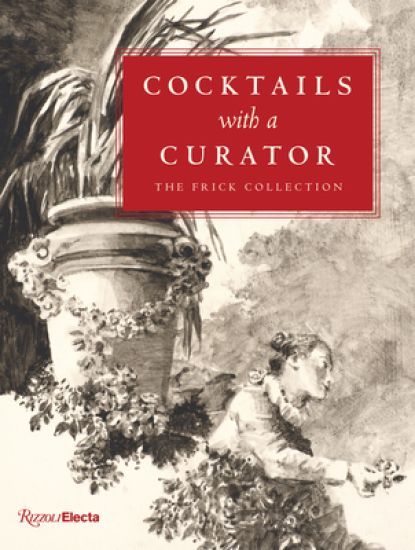
Based on the critically acclaimed video series of the same name, Cocktails with a Curator presents a lively, relaxed, and informative mini-lecture on a single work in the Frick s collection. Most of the works discussed are paintings, but sculpture, drawings, and decorative arts objects are also subjects. Each commentary is accompanied by a recipe for a cocktail that ties in with the work presented. For instance, a Jaded Countess (absinthe, vodka, lemon juice, and simple syrup) is the cocktail paired with Ingres s beautiful portrait Comtesse d Haussonville. The Bloody Mary joins the intriguing story of the painting of Sir Thomas More by Hans Holbein the Younger, and a classic Pimm s Cup accompanies Thomas Gainsborough s lovely depiction of Grace Dalrymple Elliott. The inspiring and knowledgeable personalities of the curators come out with each of the sixty-five tales, all edited with an eye toward maintaining the tone of the videos.
Propagazioni

Propagazioni

Giulio Dalvit; Xavier F Salomon

D GILES LTD
2022
sidottu
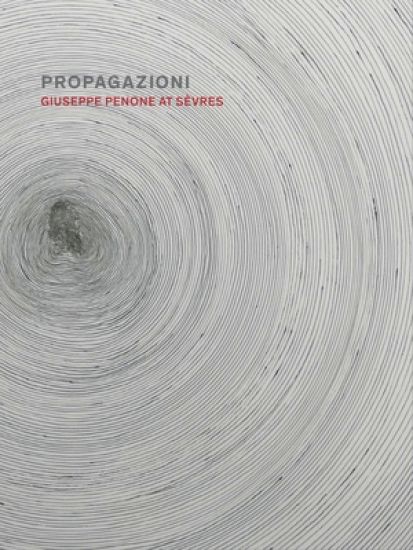
A major figure in the Arte Povera movement of the late 1960s, the renowned Italian artist Giuseppe Penone is known for his exploration of the relationship between art and the natural world in a body of work that includes sculpture, performance, works on paper, and even garden design. His first works in porcelain, the exquisite disks presented here draw attention to the moment of touch—the convergence of surface and skin—that underpins so much of his work. Published to accompany The Frick Collection, New York’s temporary installation of works by Penone, this new volume comprises eleven porcelain disks that the artist made during his 2013 residency at the Manufacture Nationale de Sèvres, the influential porcelain factory founded in the 18th century. A continuation of his Propagazioni (Propagations) series, begun in 1995, which includes various media, each disk bears the imprint of one of the artist’s fingertips. One of them is in gold, its imprint a variation on the artist’s index finger. Never before presented to the public, the installation of the disks in a gallery adjacent to the Frick’s early Italian paintings on gold grounds and the porcelain room kindles a rich artistic dialogue with both porcelain and gold.
Fragonard's Progress of Love

Fragonard's Progress of Love

Alan Hollinghurst; Xavier F. Salomon

D Giles Ltd
2022
sidottu
An essay by Xavier F. Salomon paired with a contribution by award-winning novelist Alan Hollinghurst bring to life Jean-Honore Fragonard's (1732-1806) Progress of Love, a series of fourteen paintings considered by many to be the artist's masterpiece. The first four paintings were commissioned in 1771 for the comtesse du Barry, to be installed in 1772 in Louveciennes, the pavilion outside Paris built for her by her lover, Louis XV. By 1773 the canvases, The Pursuit, The Meeting, The Lover Crowned and Love Letters, had been rejected by Du Barry and returned to the artist. In 1790 Fragonard moved the canvases to his cousin's house, the Villa Maubert, in Grasse, and over the course of the year painted ten additional panels: two large-scale works, Love Triumphant and Reverie; four narrow "strips" depicting hollyhocks, and four overdoors of putti. Sold by the Maubert estate to the dealer Agnew's in 1898, the works were purchased in February 1915 by the industrialist Henry Clay Frick. By May 1916 the panels were installed at Frick's new mansion in New York in the present-day Fragonard Room in The Frick Collection.
Frick Madison

Frick Madison

Xavier F Salomon; Ian Wardropper; Roxane Gay

D Giles Ltd
2021
sidottu
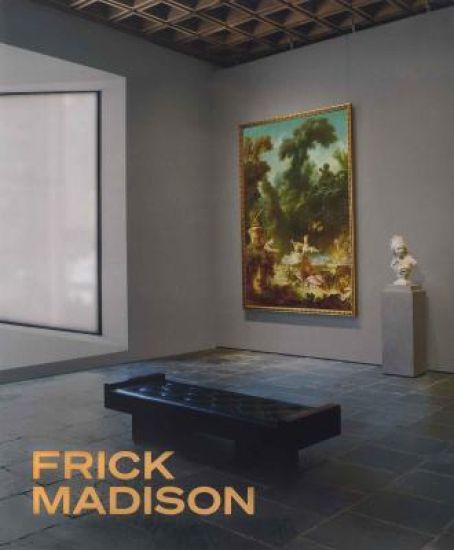
The Old Master paintings and European sculpture and decorative arts at the renowned Frick Collection might be thought to be all but inextricable from the domestic setting of the Gilded Age mansion in which they reside. For a couple of years, however, while the Frick is undergoing renovation, highlights from the collection have been relocated to a radically different, unlikely home: Marcel Breuer's Brutalist building five blocks away, which the architect designed for the Whitney Museum of American Art. The result is a stunning reconstruction and re-presentation of a beloved collection, with the museum's treasures comfortably and elegantly adapting to their temporary modernist abode. This handsome volume documents this altogether singular moment in the Frick's history with stunning photographs by Joseph Coscia Jr. and a reflective foreword by Roxane Gay.
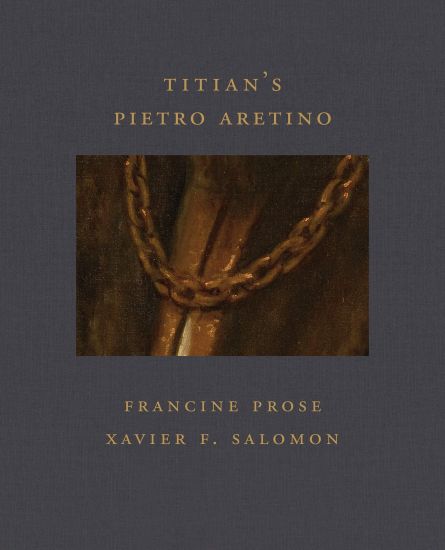
Titian's Pietro Aretino (Frick Diptych, 6)

Titian's Pietro Aretino (Frick Diptych, 6)

Francine Prose; Xavier F Salomon

D Giles Ltd
2021
sidottu
Designed to foster critical engagement and interest the specialist and non-specialist alike, each book in the Frick Diptych series illuminates a single work in the Frick's rich collection with an essay by a Frick curator paired with a contribution from a contemporary artist or writer. An essay by Xavier F. Salomon, Frick Curator, paired with a contribution by author Francine Prose bring to life one of Titian's most personal and revealing portraits. Author of lives of saints, scurrilous verses, comedies, tragedies, and innumerable letters, Pietro Aretino (1492?1556) attained considerable wealth and influence, in part through literary flattery and blackmail. Little is known of his early years, but by 1527 he had settled permanently in Venice. Among Aretino's friends and patrons were some of the most prominent figures of his time, several of whom gave him gold chains such as the one he wears in this portrait. He was on intimate terms with Titian, who painted at least three portraits of him. Here the artist conveys his friend's intellectual power through the keen, forceful head and his worldliness through the solid, weighty mass of the richly robed figure. AUTHORS: Francine Prose is an award-winning author and a member of the American Academy of Arts and Letters and the American Academy of Arts and Sciences. Xavier F. Salomon is Peter Jay Sharp Chief Curator at The Frick Collection, NY. 25 colour illustrations
David Bowie's Tintoretto

David Bowie's Tintoretto

Christina Currie; Xavier F. Salomon; Ben Beneden

Meta4Books vzw
2019
sidottu
This beautifully illustrated book, with numerous essays by an international roster of leading art historians, examines Jacopo Tintoretto's masterpiece Angel Foretelling the Martyrdom of Saint Catherine of Alexandria, painted between 1560 and 1570 for the Church of San Geminiano in Venice. It was displayed in this location for some 250 years until the church was demolished in 1807, and in 1818 the painting was sold into private hands. It was, famously, the centrepiece of the late rock star David Bowie's collection, being one of the first artworks he acquired. He had it for nearly 30 years, and named his record label after the artist (the Jones/Tintoretto Entertainment Company LLC). In 2016 it was purchased at auction by a private collector and donated to the Rubens House in Antwerp, where it is on long-term loan. This book accompanies the display of the painting, back in Venice for the first time in 200 years as part of an exhibition at Palazzo Ducale.
Bertoldo di Giovanni: The Renaissance of Sculpture in Medici Florence

Bertoldo di Giovanni: The Renaissance of Sculpture in Medici Florence

Aimee Ng; Alexander J Noelle; Xavier F Salomon

D Giles Ltd
2019
sidottu
A landmark publication on the influential Renaissance sculptor Bertoldo di Giovanni, who was the pupil of Donatello and the teacher of Michelangelo Renaissance sculptor Bertoldo di Giovanni (ca. 1440?1491) was a student of Donatello, a teacher of Michelangelo, and a favourite of Lorenzo de' Medici "il Magnifico," his principal patron. Bertoldo was one of the first sculptors to create statuettes in bronze. With an overview of the artist's entire oeuvre - including The Frick Collection's Shield Bearer, the only Bertoldo sculpture outside of Europe - this major scholarly catalogue is the most substantial text on Bertoldo ever produced. Featured are contributions from renowned international scholars who bring into focus the sculptor's unique position at the heart of the artistic and political landscape in fifteenth-century Italy.
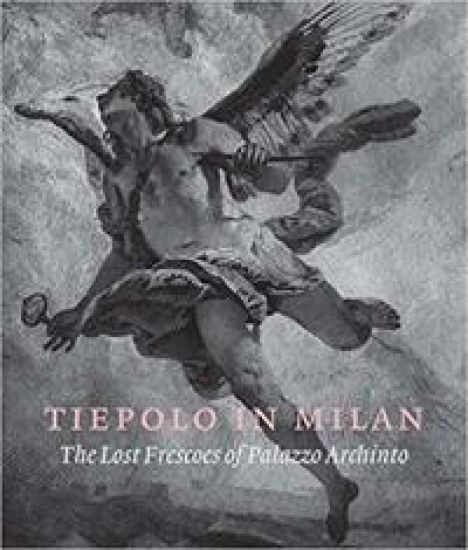
Tiepolo in Milan

Tiepolo in Milan

Xavier F. Salomon; Andrea Tomezzoli; Denis Ton; Alessandra Kluzer

Paul Holberton Publishing
2019
sidottu
Tiepolo in Milan: The Lost Frescoes of Palazzo Archinto brings together preparatory drawings and paintings, as well as documentary photographs, to commemorate an extraordinary fresco cycle by the Venetian painter Giambattista Tiepolo (1696–1770). Painted for Palazzo Archinto in Milan, the frescoes were destroyed in a bombing during World War II. The catalog accompanies an exhibition at The Frick Collection. In 1730–31, Tiepolo undertook his first significant project outside the Veneto, frescoes for five ceilings in Palazzo Archinto in Milan. The paintings were commissioned by Count Carlo Archinto (1670–1732), likely in honor of the marriage of his son, Filippo, to Giulia Borromeo. Tiepolo’s mythological and allegorical scenes—Triumph of Arts and Sciences; Apollo and Phaëton; Perseus and Andromeda; Juno, Fortune, and Venus; and Nobility—were painted in some of the largest rooms of the palazzo. Unfortunately, the palazzo was bombed during World War II and its interior completely destroyed. Only a series of black-and-white photographs, taken between 1897 and the late 1930s, preserves the frescoes’ appearance, but a number of preparatory drawings and paintings provide precious information, including three painted sketches (Triumph of Arts and Sciences, the Museu Nacional de Arte Antiga, Lisbon; Apollo and Phaëton, Los Angeles County Museum; and Perseus and Andromeda, The Frick Collection). Three drawings from the British Museum in London, the Museo Civico in Trieste, and the Sinebrychoff Art Museum in Helsinki are the only related graphic works. These—along with other drawings and prints by Tiepolo and some books— have been reunited for the first time in order to bring to life these extraordinary works of art. On view at The Frick Collection from April 16 to July 14, 2019, the exhibition is curated by Xavier F. Salomon, Peter Jay Sharp Chief Curator at the Frick, with Andrea Tomezzoli, Professor at the University of Padua, and Denis Ton, Curator of the Musei Civici in Belluno. Included in the publication are essays on Tiepolo’s work in Palazzo Archinto (Salomon), on the role of the frescoes in Tiepolo’s career (Tomezzoli), on the intellectual world of the Archinto family (Ton), and on the architectural history of the palace (Kluzer).