
Kirjojen hintavertailu – 12 859 827 kirjaa ja 27 kauppaa

Kirjailija

Xi Jin

Kirjat ja teokset yhdessä paikassa: 3 kirjaa, julkaisuja vuosilta 2023–2024, suosituimpiin kuuluu Performance Controllable Industrial Wireless Networks. Vertaile teosten hintoja ja tarkista saatavuus suomalaisista kirjakaupoista.

3 kirjaa

Kirjojen julkaisuvuodet: 2023–2024.

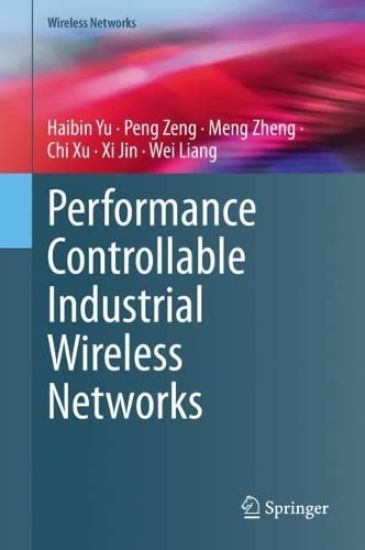
Performance Controllable Industrial Wireless Networks

Performance Controllable Industrial Wireless Networks

Haibin Yu; Peng Zeng; Meng Zheng; Chi Xu; Xi Jin; Wei Liang

SPRINGER VERLAG, SINGAPORE
2023
sidottu
With the rapid proliferation of information and communications technology, industrial automation has undergone a sweeping transformation toward intelligent manufacturing. Wireless communication is widely considered to be one of the key technologies enabling intelligent manufacturing. On one hand, deterministic communication with high reliability and low latency is typically required in industrial automation applications. On the other hand, wireless communication in industrial settings is hindered by strictly limited communication resources and many other factors which mainly derive from the shared and error-prone nature of the wireless channels used. The limited communication resources and harsh channel conditions pose considerable challenges for reliable, real-time data transmission in industrial wireless networks. Resource optimization methods are vital to ensuring the deterministic performance of industrial wireless networks. Traditional resource optimization methods adopt the isolated resource optimization methods for each protocol layer, which is inherently local-optimal and leads performance uncontrollable. To focus on “Performance Controllable Industrial Wireless Networks”, this book presents thejoint resource optimization methods across multiple protocol layers for industrial wireless networks; reviews recent, major advances; and discusses the practical implementations of the proposed methods. The joint resource optimization methods discussed here will greatly benefit scientists and researchers in the areas of industrial automation and Industrial Internet of Things. To gain the most from this book, readers should have a fundamental grasp of wireless communication, scheduling theory, and convex optimization.
Performance Controllable Industrial Wireless Networks

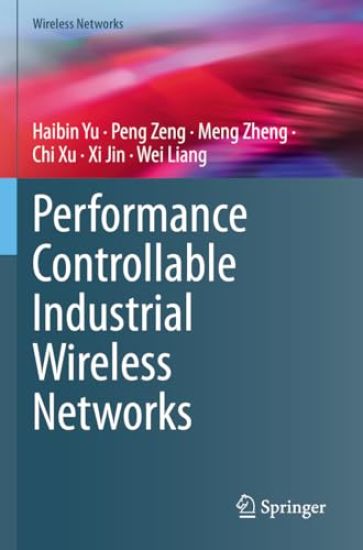
Performance Controllable Industrial Wireless Networks

Haibin Yu; Peng Zeng; Meng Zheng; Chi Xu; Xi Jin; Wei Liang

SPRINGER VERLAG, SINGAPORE
2024
nidottu
With the rapid proliferation of information and communications technology, industrial automation has undergone a sweeping transformation toward intelligent manufacturing. Wireless communication is widely considered to be one of the key technologies enabling intelligent manufacturing. On one hand, deterministic communication with high reliability and low latency is typically required in industrial automation applications. On the other hand, wireless communication in industrial settings is hindered by strictly limited communication resources and many other factors which mainly derive from the shared and error-prone nature of the wireless channels used. The limited communication resources and harsh channel conditions pose considerable challenges for reliable, real-time data transmission in industrial wireless networks. Resource optimization methods are vital to ensuring the deterministic performance of industrial wireless networks. Traditional resource optimization methods adopt the isolated resource optimization methods for each protocol layer, which is inherently local-optimal and leads performance uncontrollable. To focus on “Performance Controllable Industrial Wireless Networks”, this book presents thejoint resource optimization methods across multiple protocol layers for industrial wireless networks; reviews recent, major advances; and discusses the practical implementations of the proposed methods. The joint resource optimization methods discussed here will greatly benefit scientists and researchers in the areas of industrial automation and Industrial Internet of Things. To gain the most from this book, readers should have a fundamental grasp of wireless communication, scheduling theory, and convex optimization.
Mixed-Criticality Industrial Wireless Networks

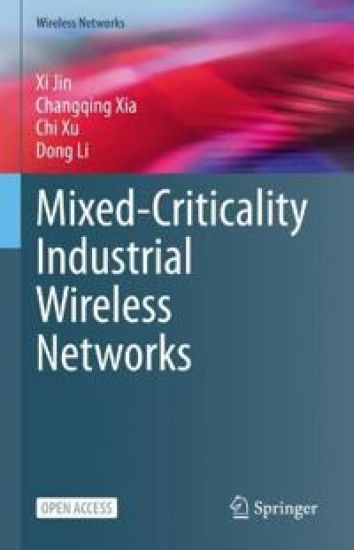
Mixed-Criticality Industrial Wireless Networks

Xi Jin; Changqing Xia; Chi Xu; Dong Li

SPRINGER VERLAG, SINGAPORE
2023
sidottu
This open access book introduces how to manage important tasks in industrial wireless networks. Important tasks must be completed on time and with guaranteed quality; that is the consensus reached by system designers and users. However, for too long, important tasks have often been given unnecessary urgency, and people intuitively believe that important tasks should be executedfirst so that their performance can be guaranteed. Actually, in most cases, their performance can be guaranteed even if they are executed later, and the “early” resources can be utilized for other, more urgent tasks. Therefore, confusing importance with urgency hinders the proper use of system resources. In 2007, mixed criticality was proposed to indicate that a system may contain tasks of various importance levels. Since then, system designers and users have distinguished between importance and urgency. In the industrial field, due to the harsh environment they operate in, industrial wireless networks’ quality of service (QoS) has always been a bottleneck restricting their applications. Therefore, this book introduces criticality to label important data, which is then allocated more transmission resources, ensuring that important data’s QoS requirements can be met to the extent possible. To help readers understand how to apply mixed-criticality data to industrial wireless networks, the content is divided into three parts. First, we introduce how to integrate the model of mixed-criticality data into industrial wireless networks. Second, we explain how to analyze the schedulability of mixed-criticality data under existing scheduling algorithms. Third, we present a range of novel scheduling algorithms for mixed-criticality data. If you want to improve the QoS of industrial wireless networks, this book is for you.