Kirjojen hintavertailu – 12 859 827 kirjaa ja 27 kauppaa
Kirjailija
Xiao Dong Chen
Kirjat ja teokset yhdessä paikassa: 5 kirjaa, julkaisuja vuosilta 2006–2022, suosituimpiin kuuluu Modelling and Optimization of Biotechnological Processes. Vertaile teosten hintoja ja tarkista saatavuus suomalaisista kirjakaupoista.
This book covers the latest developments and advances in spray drying and describes how they impact the basic aspect of designing and operating spray dryers. This generic approach allows users to understand how different basic aspects of spray drying have advanced. Users will learn how to apply these advances in their own specific spray drying applications. This book also discusses the handling and control of spray dried products. Includes the latest techniques for use in the design and operation of spray drying operations Covers the basic operations of spray drying that can be applied to different applications of spray drying Discusses the handling and control of spray dried product qualities from a general approach, allowing readers to tailor these approaches to their own specific productsThis book is aimed at professionals, researchers, and academics working in the fields of food, chemical, pharmaceutical, and industrial engineering.
This book covers the latest developments and advances in spray drying and describes how they impact the basic aspect of designing and operating spray dryers. This generic approach allows users to understand how different basic aspects of spray drying have advanced. Users will learn how to apply these advances in their own specific spray drying applications. This book also discusses the handling and control of spray dried products. Includes the latest techniques for use in the design and operation of spray drying operations Covers the basic operations of spray drying that can be applied to different applications of spray drying Discusses the handling and control of spray dried product qualities from a general approach, allowing readers to tailor these approaches to their own specific productsThis book is aimed at professionals, researchers, and academics working in the fields of food, chemical, pharmaceutical, and industrial engineering.
This comprehensive summary of the state of the art and the ideas behind the reaction engineering approach (REA) to drying processes is an ideal resource for researchers, academics and industry practitioners. Starting with the formulation, modelling and applications of the lumped-REA, it goes on to detail the use of the REA to describe local evaporation and condensation, and its coupling with equations of conservation of heat and mass transfer, called the spatial-REA, to model non-equilibrium multiphase drying. Finally, it summarises other established drying models, discussing their features, limitations and comparisons with the REA. Application examples featured throughout help fine-tune the models and implement them for process design and the evaluation of existing drying processes and product quality during drying. Further uses of the principles of REA are demonstrated, including computational fluid dynamics-based modelling, and further expanded to model other simultaneous heat and mass transfer processes.
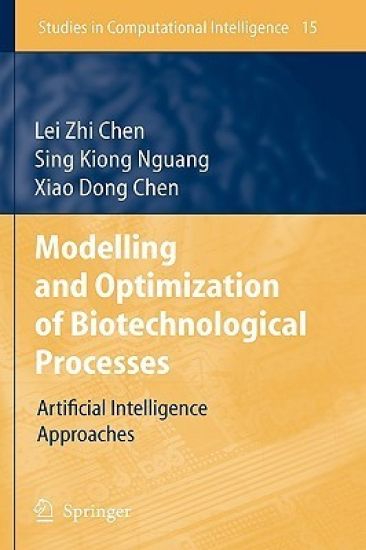
Mostindustrialbiotechnologicalprocessesareoperatedempirically. Oneofthe major di?culties of applying advanced control theories is the highly nonlinear nature of the processes. This book examines approaches based on arti?cial intelligencemethods,inparticular,geneticalgorithmsandneuralnetworks,for monitoring, modelling and optimization of fed-batch fermentation processes. The main aim of a process control is to maximize the ?nal product with minimum development and production costs. This book is interdisciplinary in nature, combining topics from biotechn- ogy, arti?cial intelligence, system identi?cation, process monitoring, process modelling and optimal control. Both simulation and experimental validation are performed in this study to demonstrate the suitability and feasibility of proposed methodologies. An online biomass sensor is constructed using a - current neural network for predicting the biomass concentration online with only three measurements (dissolved oxygen, volume and feed rate). Results show that the proposed sensor is comparable or even superior to other sensors proposed in the literature that use more than three measurements. Biote- nological processes are modelled by cascading two recurrent neural networks. It is found that neural models are able to describe the processes with high accuracy. Optimization of the ?nal product is achieved using modi?ed genetic algorithms to determine optimal feed rate pro?les. Experimental results of the corresponding production yields demonstrate that genetic algorithms are powerful tools for optimization of highly nonlinear systems. Moreover, a c- bination of recurrentneural networks and genetic algorithms provides a useful and cost-e?ective methodology for optimizing biotechnological processes.
Mostindustrialbiotechnologicalprocessesareoperatedempirically. Oneofthe major di?culties of applying advanced control theories is the highly nonlinear nature of the processes. This book examines approaches based on arti?cial intelligencemethods,inparticular,geneticalgorithmsandneuralnetworks,for monitoring, modelling and optimization of fed-batch fermentation processes. The main aim of a process control is to maximize the ?nal product with minimum development and production costs. This book is interdisciplinary in nature, combining topics from biotechn- ogy, arti?cial intelligence, system identi?cation, process monitoring, process modelling and optimal control. Both simulation and experimental validation are performed in this study to demonstrate the suitability and feasibility of proposed methodologies. An online biomass sensor is constructed using a - current neural network for predicting the biomass concentration online with only three measurements (dissolved oxygen, volume and feed rate). Results show that the proposed sensor is comparable or even superior to other sensors proposed in the literature that use more than three measurements. Biote- nological processes are modelled by cascading two recurrent neural networks. It is found that neural models are able to describe the processes with high accuracy. Optimization of the ?nal product is achieved using modi?ed genetic algorithms to determine optimal feed rate pro?les. Experimental results of the corresponding production yields demonstrate that genetic algorithms are powerful tools for optimization of highly nonlinear systems. Moreover, a c- bination of recurrentneural networks and genetic algorithms provides a useful and cost-e?ective methodology for optimizing biotechnological processes.