Kirjojen hintavertailu – 12 859 829 kirjaa ja 27 kauppaa

Kirjailija

Xiaobo Lü

Kirjat ja teokset yhdessä paikassa: 9 kirjaa, julkaisuja vuosilta 1997–2025, suosituimpiin kuuluu Taxation and Governance in Contemporary China. Vertaile teosten hintoja ja tarkista saatavuus suomalaisista kirjakaupoista.

9 kirjaa

Kirjojen julkaisuvuodet: 1997–2025.

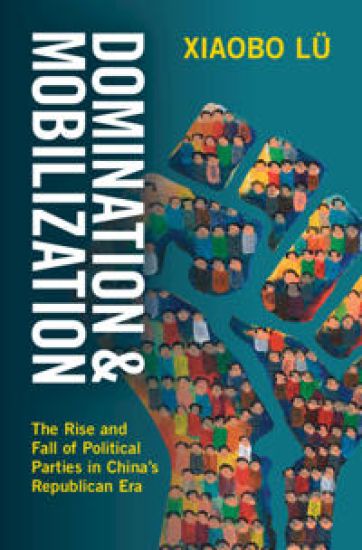
Domination and Mobilization

Domination and Mobilization

Xiaobo Lü

Cambridge University Press
2025
pokkari
Examining the miraculous rise of the Chinese Communist Party (CCP) and the surprising downfall of the Kuomintang (KMT) in the early twentieth century, Xiaobo Lü reveals that domination and mobilization are key for authoritarian parties to seize state power, challenging the prevailing wisdom on power-sharing and emphasizing the importance of dominant party leaders for organizational strength and resource mobilization. Lü convincingly argues that the CCP's mass mobilization infrastructure, initially seen as a disadvantage before the Sino-Japanese War, became a powerful asset during the war and led to its victory. The KMT's elite mobilization infrastructure, conversely, was decimated by the war, and its lack of a strong leader prevented a successful shift in party-building strategy. Party building subsequently played a pivotal role in shaping the successes and failures of resource mobilization for both parties. The book sheds new light on the origins of the CCP and the inner workings of revolutionary parties, making in a landmark study in Chinese politics.
Domination and Mobilization

Domination and Mobilization

Xiaobo Lü

Cambridge University Press
2025
sidottu
Examining the miraculous rise of the Chinese Communist Party (CCP) and the surprising downfall of the Kuomintang (KMT) in the early twentieth century, Xiaobo Lü reveals that domination and mobilization are key for authoritarian parties to seize state power, challenging the prevailing wisdom on power-sharing and emphasizing the importance of dominant party leaders for organizational strength and resource mobilization. Lü convincingly argues that the CCP's mass mobilization infrastructure, initially seen as a disadvantage before the Sino-Japanese War, became a powerful asset during the war and led to its victory. The KMT's elite mobilization infrastructure, conversely, was decimated by the war, and its lack of a strong leader prevented a successful shift in party-building strategy. Party building subsequently played a pivotal role in shaping the successes and failures of resource mobilization for both parties. The book sheds new light on the origins of the CCP and the inner workings of revolutionary parties, making in a landmark study in Chinese politics.
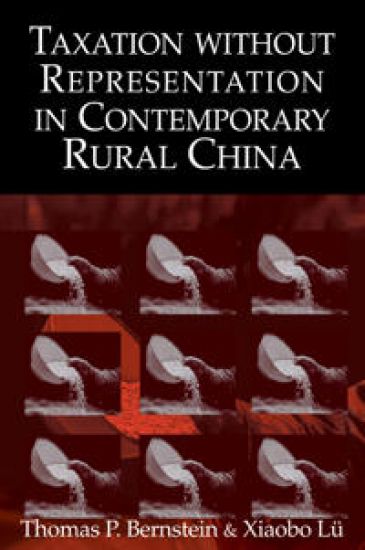
Taxation without Representation in Contemporary Rural China

Taxation without Representation in Contemporary Rural China

Thomas P. Bernstein; Xiaobo Lü

Cambridge University Press
2008
pokkari
The financial burden imposed upon the Chinese farmer by local taxes has become a major source of discontent in the Chinese countryside and a worrisome source of political and social instability for the Chinese government. Bernstein and Lü examine the forms and sources of heavy, informal taxation, and shed light on how peasants defend their interests by adopting strategies of collective resistance (both peaceful and violent). Bernstein and Lü also explain why the central government, while often siding with the peasants, has not been able to solve the burden problem by instituting a sound, reliable financial system in the countryside. While the regime has, to some extent, sought to empower farmers to defend their interests - by informing them about tax rules, expanding the legal system, and instituting village elections, for example, these attempts have not yet generated enough power from 'below' to counter powerful, local official agencies.
Taxation without Representation in Contemporary Rural China

Taxation without Representation in Contemporary Rural China

Bernstein Thomas P.; Xiaobo Lü

Cambridge University Press
2003
sidottu
The financial burden imposed upon the Chinese farmer by local taxes has become a major source of discontent in the Chinese countryside and a worrisome source of political and social instability for the Chinese government. Bernstein and Lü examine the forms and sources of heavy, informal taxation, and shed light on how peasants defend their interests by adopting strategies of collective resistance (both peaceful and violent). Bernstein and Lü also explain why the central government, while often siding with the peasants, has not been able to solve the burden problem by instituting a sound, reliable financial system in the countryside. While the regime has, to some extent, sought to empower farmers to defend their interests - by informing them about tax rules, expanding the legal system, and instituting village elections, for example, these attempts have not yet generated enough power from 'below' to counter powerful, local official agencies.
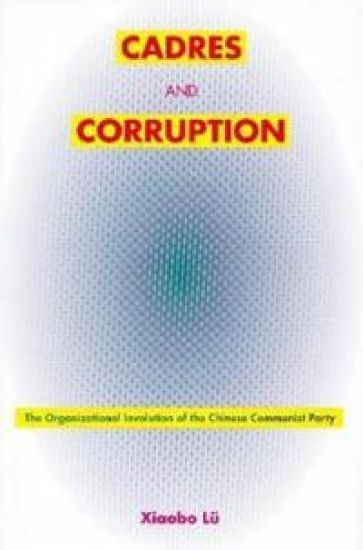
Cadres and Corruption

Cadres and Corruption

Xiaobo Lü

Stanford University Press
2000
sidottu
The most up-to-date and comprehensive analysis of corruption and change in the Chinese Communist Party, Cadres and Corruption reveals the long history of the party's inability to maintain a corps of committed and disciplined cadres. Contrary to popular understanding of China's pervasive corruption as an administrative or ethical problem, the author argues that corruption is a reflection of political developments and the manner in which the regime has evolved. Based on a wide range of previously unpublished documentary material and extensive interviews conducted by the author, the book adopts a new approach to studying political corruption by focusing on organizational change within the ruling party. In so doing, it offers a fresh perspective on the causes and changing patterns of official corruption in China and on the nature of the Chinese Communist regime. By inquiring into the developmental trajectory of the party's organization and its cadres since it came to power in 1949, the author argues that corruption among Communist cadres is not a phenomenon of the post-Mao reform period, nor is it caused by purely economic incentives in the emerging marketplace. Rather, it is the result of a long process of what he calls organizational involution that began as the Communist party-state embarked on the path of Maoist "continuous revolution." In this process, the Chinese Communist Party gradually lost its ability to sustain officialdom with either the Leninist-cadre or the Weberian-bureaucratic mode of integration. Instead, the party unintentionally created a neotraditional ethos, mode of operation, and set of authority relations among its cadres that have fostered official corruption.

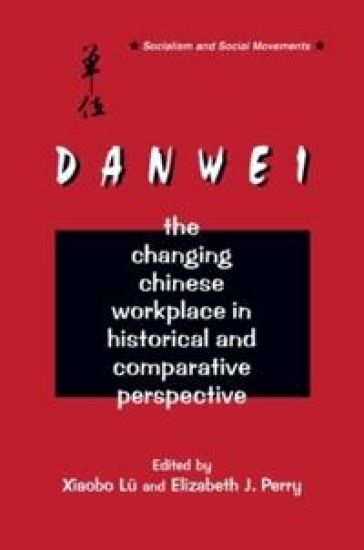
The Danwei

The Danwei

Xiaobo Lü; Elizabeth J. Perry

Routledge
1997
nidottu
The danwei, or work unit, occupies a central place in Chinese society. To understand Chinese politics demands a better understanding of this system. This volume provides a systematic study of the danwei system and addresses a variety of questions from historical and comparative perspectives.
The Danwei

The Danwei

Xiaobo Lü; Elizabeth J. Perry

Routledge
1997
sidottu
The danwei, or work unit, occupies a central place in Chinese society. To understand Chinese politics demands a better understanding of this system. This volume provides a systematic study of the danwei system and addresses a variety of questions from historical and comparative perspectives.