Kirjojen hintavertailu – 12 859 828 kirjaa ja 27 kauppaa

Kirjailija

Xiaoyuan Luo

Kirjat ja teokset yhdessä paikassa: 4 kirjaa, julkaisuja vuosilta 2021–2025, suosituimpiin kuuluu Secure Coordination Control of Networked Robotic Systems. Vertaile teosten hintoja ja tarkista saatavuus suomalaisista kirjakaupoista.

4 kirjaa

Kirjojen julkaisuvuodet: 2021–2025.

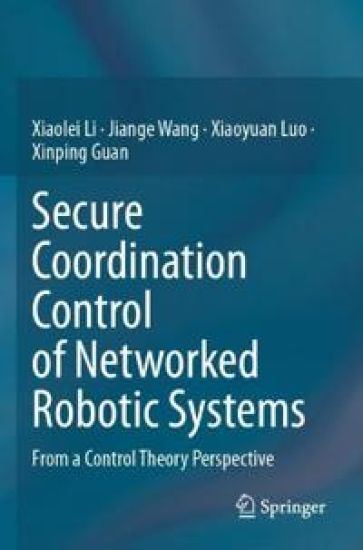
Secure Coordination Control of Networked Robotic Systems

Secure Coordination Control of Networked Robotic Systems

Xiaolei Li; Jiange Wang; Xiaoyuan Luo; Xinping Guan

SPRINGER VERLAG, SINGAPORE
2025
nidottu
As one of the core equipments and actuators, robotic technology has attracted much attention and has made great progress. However, a single robotic system is often unable to handle complex tasks due to limitations in sensors, microprocessors, actuators, and the ability to handle complex situations. With the development of distributed control and microprocessing technology, networked robotic systems have greatly expanded their perceptual, computational, and execution capabilities, with high efficiency, low cost, and strong functionality advantages. As a typical distributed cyber-physical system (DCPS), which is an intelligent system that integrates computing, communication, and control, networked robotic systems can perform higher-level tasks by sharing information and working together. It can provide intelligent control and monitoring of a physical process, such as environment observation, information collection, and search and rescue, etc. Thus, coordination control of networked robotic systems has become the focus of scholars worldwide. However, the sensing, communication, and control integration of networked robotic systems make them face unprecedented network security threats, in which cyber attacks have become a major hidden danger to the reliable operation of autonomous unmanned systems. Although existing control methods can achieve swarm collaborative control of networked robotic systems, the protection of which, especially the security of control systems, is rarely addressed. In this book, we conduct research on the secure coordination problem of networked robotic systems from a control theory perspective, given the limited communication bandwidth and the increasingly prominent network security threats. This book showcases several continuous-time and event-triggered secure control design and analysis methods for networked robotic systems under different types of cyberattacks. Additionally, several future research directions are provided for networked robotic systems. This book will be an important reference for scientists, engineers, and graduate students from the field of underwater robotic technologies, maritime science, and control engineering.
Secure Coordination Control of Networked Robotic Systems

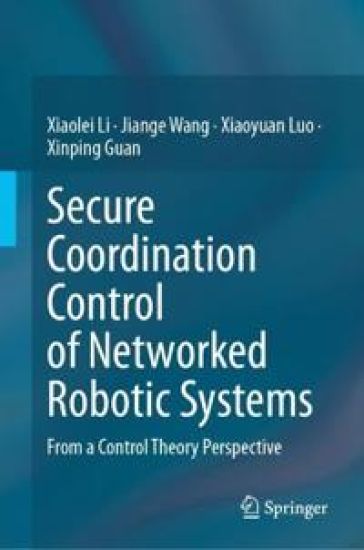
Secure Coordination Control of Networked Robotic Systems

Xiaolei Li; Jiange Wang; Xiaoyuan Luo; Xinping Guan

SPRINGER VERLAG, SINGAPORE
2024
sidottu
As one of the core equipments and actuators, robotic technology has attracted much attention and has made great progress. However, a single robotic system is often unable to handle complex tasks due to limitations in sensors, microprocessors, actuators, and the ability to handle complex situations. With the development of distributed control and microprocessing technology, networked robotic systems have greatly expanded their perceptual, computational, and execution capabilities, with high efficiency, low cost, and strong functionality advantages. As a typical distributed cyber-physical system (DCPS), which is an intelligent system that integrates computing, communication, and control, networked robotic systems can perform higher-level tasks by sharing information and working together. It can provide intelligent control and monitoring of a physical process, such as environment observation, information collection, and search and rescue, etc. Thus, coordination control of networked robotic systems has become the focus of scholars worldwide. However, the sensing, communication, and control integration of networked robotic systems make them face unprecedented network security threats, in which cyber attacks have become a major hidden danger to the reliable operation of autonomous unmanned systems. Although existing control methods can achieve swarm collaborative control of networked robotic systems, the protection of which, especially the security of control systems, is rarely addressed. In this book, we conduct research on the secure coordination problem of networked robotic systems from a control theory perspective, given the limited communication bandwidth and the increasingly prominent network security threats. This book showcases several continuous-time and event-triggered secure control design and analysis methods for networked robotic systems under different types of cyberattacks. Additionally, several future research directions are provided for networked robotic systems. This book will be an important reference for scientists, engineers, and graduate students from the field of underwater robotic technologies, maritime science, and control engineering.
Autonomous Underwater Vehicles

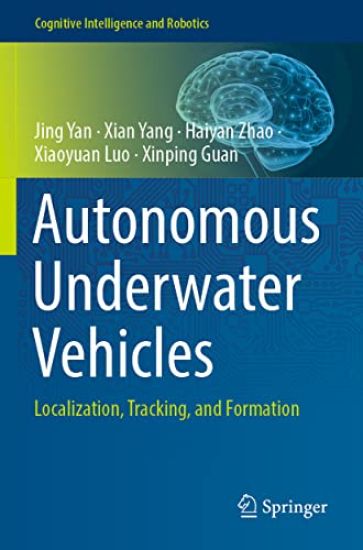
Autonomous Underwater Vehicles

Jing Yan; Xian Yang; Haiyan Zhao; Xiaoyuan Luo; Xinping Guan

SPRINGER VERLAG, SINGAPORE
2022
nidottu
Autonomous underwater vehicles (AUVs) are emerging as a promising solution to help us explore and understand the ocean. The global market for AUVs is predicted to grow from 638 million dollars in 2020 to 1,638 million dollars by 2025 – a compound annual growth rate of 20.8 percent. To make AUVs suitable for a wider range of application-specific missions, it is necessary to deploy multiple AUVs to cooperatively perform the localization, tracking and formation tasks. However, weak underwater acoustic communication and the model uncertainty of AUVs make achieving this challenging. This book presents cutting-edge results regarding localization, tracking and formation for AUVs, highlighting the latest research on commonly encountered AUV systems. It also showcases several joint localization and tracking solutions for AUVs. Lastly, it discusses future research directions and provides guidance on the design of future localization, tracking and formation schemes for AUVs. Representing a substantial contribution to nonlinear system theory, robotic control theory, and underwater acoustic communication system, this book will appeal to university researchers, scientists, engineers, and graduate students in control theory and control engineering who wish to learn about the core principles, methods, algorithms, and applications of AUVs. Moreover, the practical localization, tracking and formation schemes presented provide guidance on exploring the ocean. The book is intended for those with an understanding of nonlinear system theory, robotic control theory, and underwater acoustic communication systems.
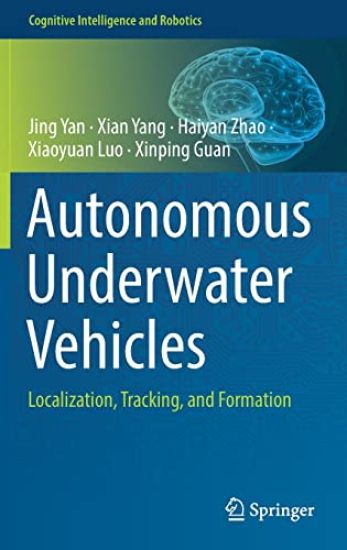
Autonomous Underwater Vehicles

Autonomous Underwater Vehicles

Jing Yan; Xian Yang; Haiyan Zhao; Xiaoyuan Luo; Xinping Guan

SPRINGER VERLAG, SINGAPORE
2021
sidottu
Autonomous underwater vehicles (AUVs) are emerging as a promising solution to help us explore and understand the ocean. The global market for AUVs is predicted to grow from 638 million dollars in 2020 to 1,638 million dollars by 2025 – a compound annual growth rate of 20.8 percent. To make AUVs suitable for a wider range of application-specific missions, it is necessary to deploy multiple AUVs to cooperatively perform the localization, tracking and formation tasks. However, weak underwater acoustic communication and the model uncertainty of AUVs make achieving this challenging. This book presents cutting-edge results regarding localization, tracking and formation for AUVs, highlighting the latest research on commonly encountered AUV systems. It also showcases several joint localization and tracking solutions for AUVs. Lastly, it discusses future research directions and provides guidance on the design of future localization, tracking and formation schemes for AUVs. Representing a substantial contribution to nonlinear system theory, robotic control theory, and underwater acoustic communication system, this book will appeal to university researchers, scientists, engineers, and graduate students in control theory and control engineering who wish to learn about the core principles, methods, algorithms, and applications of AUVs. Moreover, the practical localization, tracking and formation schemes presented provide guidance on exploring the ocean. The book is intended for those with an understanding of nonlinear system theory, robotic control theory, and underwater acoustic communication systems.