Kirjojen hintavertailu – 12 903 725 kirjaa ja 27 kauppaa

Kirjailija

Xielin Liu

Kirjat ja teokset yhdessä paikassa: 4 kirjaa, julkaisuja vuosilta 2018–2021, suosituimpiin kuuluu Basic Research And Industrial Innovation In China. Vertaile teosten hintoja ja tarkista saatavuus suomalaisista kirjakaupoista.

4 kirjaa

Kirjojen julkaisuvuodet: 2018–2021.

Basic Research And Industrial Innovation In China

Basic Research And Industrial Innovation In China

Xielin Liu; Yubing He; Peng Cheng

World Scientific Publishing Co Pte Ltd
2018
sidottu
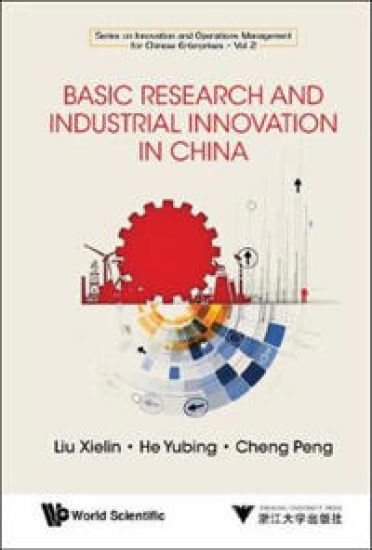
Chinese enterprises have relied on importing technology and imitation as their main technology strategies in the past. Based on analysis of cross-countries' case studies and the history of industrial innovation, the authors proposed the concept of industry-driven basic research and expounds the important role of scientific discovery in industrial technological innovation. They are convinced that both the government and enterprises should focus on industry-driven basic research in order to bridge the gap between the government's target and what enterprises actually do in China. The challenge remains to be seen if China can transform Science and technology investment into real industrial innovation capability.
Catch-up and Radical Innovation in Chinese State-Owned Enterprises

Catch-up and Radical Innovation in Chinese State-Owned Enterprises

Xielin Liu; Xiao Wang; Yimei Hu

Edward Elgar Publishing Ltd
2021
sidottu
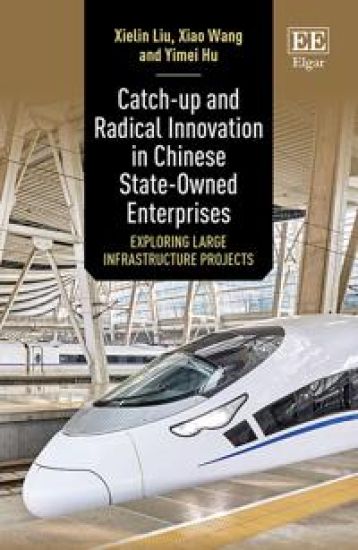
This original book is a unique and original in-depth study on how, in the past decade, Chinese State-Owned Enterprises (SOEs) have achieved technological innovation in the large infrastructure sectors. It reveals a “new world” of Chinese innovation, showing that SOEs are willing to innovate and are also more than capable of doing so. Based on findings from first-hand data and years of observations, this book shows how the innovation ecosystem perspective incentivises and facilitates Chinese SOEs’ innovation and highlights the entrepreneurial role of the government. Using the examples of UHV Power Transmission, mobile telecommunication standards, high-speed trains, and nuclear electric power, the book exhibits the complex determinants of SOEs’ success in radical technological innovations within the large infrastructure sector. Chapters also demonstrate the innovation process of SOEs, the unique innovation model of China, as well as its advantages and disadvantages. Catch-Up and Radical Innovation in Chinese State-Owned Enterprises will be a useful resource for academics in research disciplines such as development studies, innovation and entrepreneurship, and Chinese studies. It will also aid entrepreneurs, businesses and managers who intend to collaborate with Chinese SOEs, to better understand the trends of SOEs’ engagement in radical innovation and the potential opportunities for broadening their international collaborations.
Regional Innovation Index of China: 2017

Regional Innovation Index of China: 2017

Xielin Liu; Taishan Gao; Xi Wang

Springer Verlag, Singapore
2018
nidottu
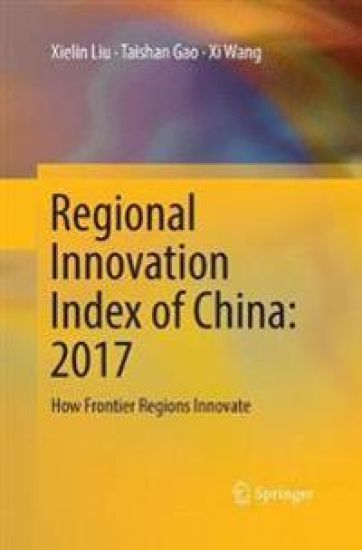
The book aims to explore the regional innovation capability of China, especially how the frontier regions of China (Guangdong, Jiangsu, Beijing, Shanghai, Zhejiang and Tianjin) transform themselves from an investment-driven economy into an innovation-driven one. With detailed case, data and policy, we analyse the modes of each province and municipality from different perspectives such as comparative advantage in innovation, existing industrial base and culture, the government’s innovation strategy, and industrial upgrading pattern.
Regional Innovation Index of China: 2017

Regional Innovation Index of China: 2017

Xielin Liu; Taishan Gao; Xi Wang

Springer Verlag, Singapore
2018
sidottu
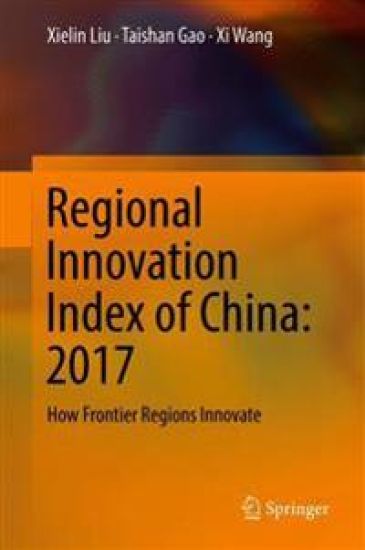
The book aims to explore the regional innovation capability of China, especially how the frontier regions of China (Guangdong, Jiangsu, Beijing, Shanghai, Zhejiang and Tianjin) transform themselves from an investment-driven economy into an innovation-driven one. With detailed case, data and policy, we analyse the modes of each province and municipality from different perspectives such as comparative advantage in innovation, existing industrial base and culture, the government’s innovation strategy, and industrial upgrading pattern.