Kirjojen hintavertailu – 12 859 819 kirjaa ja 27 kauppaa

Kirjailija

Xinwu Li

Kirjat ja teokset yhdessä paikassa: 3 kirjaa, julkaisuja vuosilta 2024–2026, suosituimpiin kuuluu The Three Poles of the Earth: Challenges to Sustainable Development in Fragile Environments. Vertaile teosten hintoja ja tarkista saatavuus suomalaisista kirjakaupoista.

3 kirjaa

Kirjojen julkaisuvuodet: 2024–2026.

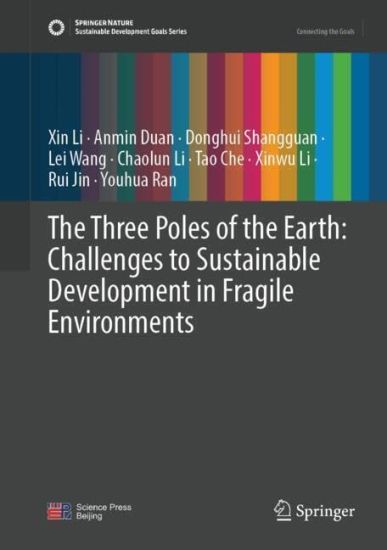
The Three Poles of the Earth: Challenges to Sustainable Development in Fragile Environments

The Three Poles of the Earth: Challenges to Sustainable Development in Fragile Environments

Xin Li; Anmin Duan; Donghui Shangguan; Lei Wang; Chaolun Li; Tao Che; Xinwu Li; Rui Jin; Youhua Ran

SPRINGER VERLAG, SINGAPORE
2025
sidottu
The book summarizes the latest research achievements of the "CAS Earth Poles: Big Data for the Three Poles" project in actively responding to the United Nations' sustainable development goals (SDGs). The book covers six aspects: projections of future climate change in polar regions, assessment and response to climate-related cryospheric disasters, land water resource and terrestrial ecological environments in polar regions, marine environmental changes, the SDG big data platform, and big data products that support sustainable development. The book emphasizes the critical role of Earth's three poles in achieving global sustainable development, and identifies current shortcomings, and outlines major challenges. However, the book provides a comprehensive review of scientific actions and the latest research progress toward achieving SDGs at Earth’s three poles. Furthermore, the book introduces the three-pole big data platform and data products that support calculations and assessments for polar SDGs. Finally, the book offers recommendations for revising SDGs and indicators specific to the three-pole regions, and discusses pathways to achieve sustainable development in these regions. Ultimately, the book aims to address the gaps between polar sustainable development and the United Nations' SDGs, ensuring that the sustainable development of the Earth’s three poles keeps pace with global efforts.
New-generation SAR for Earth Environment Observation

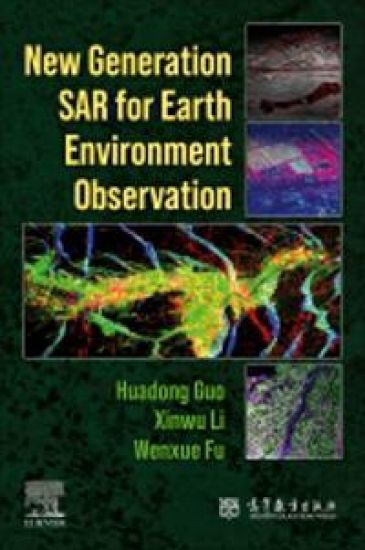
New-generation SAR for Earth Environment Observation

Huadong Guo; Xinwu Li; Wenxue Fu

Elsevier - Health Sciences Division
2024
nidottu
New Generation SAR for Earth Environment Observation discusses three aspects of new generation SAR remote sensing, including (1) The latest research status and development trends, the basic theories, and methods of new generation SAR, (2) The new or original concepts, methods and typical applications of new generation SAR information processing and parameter inversion, and (3) A new idea of SAR information integration processing and environmental parameter inversion technique which represents a new SAR science application mode that has the capability to improve the SAR remote-sensing quantitative application level and promote the development of new theories and methodologies.
The Three Poles of the Earth: Challenges to Sustainable Development in Fragile Environments

The Three Poles of the Earth: Challenges to Sustainable Development in Fragile Environments

Li Xin; Anmin Duan; Donghui Shangguan; Wang Lei; Chaolun Li; Tao Che; Xinwu Li; Rui Jin; Youhua Ran

Springer Verlag Singapore
2026
Nidottu
The book summarizes the latest research achievements of the "CAS Earth Poles: Big Data for the Three Poles" project in actively responding to the United Nations' sustainable development goals (SDGs). The book covers six aspects: projections of future climate change in polar regions, assessment and response to climate-related cryospheric disasters, land water resource and terrestrial ecological environments in polar regions, marine environmental changes, the SDG big data platform, and big data products that support sustainable development. The book emphasizes the critical role of Earth's three poles in achieving global sustainable development, and identifies current shortcomings, and outlines major challenges. However, the book provides a comprehensive review of scientific actions and the latest research progress toward achieving SDGs at Earth’s three poles. Furthermore, the book introduces the three-pole big data platform and data products that support calculations and assessments for polar SDGs. Finally, the book offers recommendations for revising SDGs and indicators specific to the three-pole regions, and discusses pathways to achieve sustainable development in these regions. Ultimately, the book aims to address the gaps between polar sustainable development and the United Nations' SDGs, ensuring that the sustainable development of the Earth’s three poles keeps pace with global efforts.