Kirjojen hintavertailu – 12 903 742 kirjaa ja 27 kauppaa

Kirjailija

Xu Yi-chong

Kirjat ja teokset yhdessä paikassa: 10 kirjaa, julkaisuja vuosilta 2004–2023, suosituimpiin kuuluu International Organizations and Small States. Vertaile teosten hintoja ja tarkista saatavuus suomalaisista kirjakaupoista.

10 kirjaa

Kirjojen julkaisuvuodet: 2004–2023.

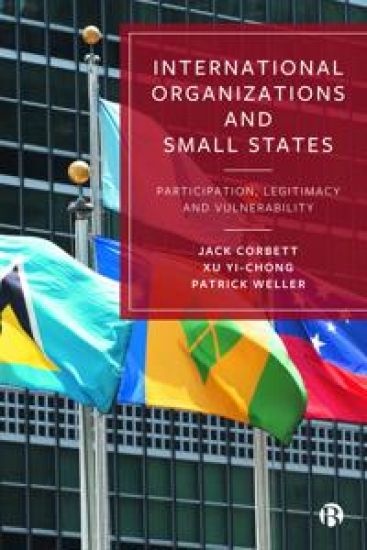
International Organizations and Small States

International Organizations and Small States

Jack Corbett; Xu Yi-chong; Patrick Weller

Bristol University Press
2023
nidottu
International Organizations (IOs) are vital institutions in world politics in which cross-border issues can be discussed and global problems managed. This path-breaking book shows the efforts that small states have made to participate more fully in IO activities. It draws attention to the challenges created by widened participation in IOs and develops an original model of the dilemmas that both IOs and small states face as the norms of sovereign equality and the right to develop coincide. Drawing on extensive qualitative data, including more than 80 interviews conducted for this book, the authors find that the strategies which both IOs and small states adopt to balance their respective dilemmas can explain both continuity and change in their interactions with institutions ranging from UN agencies to the World Trade Organization.
International Organizations and Small States

International Organizations and Small States

Jack Corbett; Xu Yi-chong; Patrick Weller

Bristol University Press
2021
sidottu
International Organizations (IOs) are vital institutions in world politics in which cross-border issues can be discussed and global problems managed. This path-breaking book shows the efforts that small states have made to participate more fully in IO activities. It draws attention to the challenges created by widened participation in IOs and develops an original model of the dilemmas that both IOs and small states face as the norms of sovereign equality and the right to develop coincide. Drawing on extensive qualitative data, including more than 80 interviews conducted for this book, the authors find that the strategies which both IOs and small states adopt to balance their respective dilemmas can explain both continuity and change in their interactions with institutions ranging from UN agencies to the World Trade Organization.
Powering China

Powering China

Xu Yi-chong

Routledge
2019
nidottu
This title was first published in 2002: This study of the Chinese electric power industry examines the ownership and the restructuring of the industry. The reform of the electric power industry is also seen as part of the wider economic development that has been taking place in China, thus providing fresh perspectives on the changes taking place in both the economy and society more generally. Presenting a wealth of extensive research on the subject, the book elucidates the power struggle between political and bureaucratic elite and explains the sensitive and volatile relationship between the central and provincial government against an increasingly complex global background.
The Working World of International Organizations

The Working World of International Organizations

Xu Yi-chong; Patrick Weller

Oxford University Press
2018
sidottu
International organizations (IOs) matter. This book uncovers the regular working world of IOs, examining whether, to what extent, and how these 'global governing bodies' can act independently of the will of states. This book explores this issue by asking who or what shapes their decisions; how and when decisions are made; how players interact within an IO; and how the interactions vary across IOs. The Working World of International Organizations examines three working groups in the higher echelons of IOs - state representatives, as proxy of states, serving in the Executive Boards or General Councils, chief officers of IOs, and the staff of the permanent secretariat. The book demonstrates that none of them are unified; in each there are contested ideas about strategy and appropriate projects, and analyses their interactions to explain who is able to shape or influence decisions. Six representative IOs are studied to identify the relevant critical determinants that shape the behaviour of players. The volume explores how these players have an impact over three dilemmas that are common to all IOs: priority and agenda setting, financing, and the centralization or decentralization of operations.
Powering China

Powering China

Xu Yi-chong

Routledge
2017
sidottu
This title was first published in 2002: This study of the Chinese electric power industry examines the ownership and the restructuring of the industry. The reform of the electric power industry is also seen as part of the wider economic development that has been taking place in China, thus providing fresh perspectives on the changes taking place in both the economy and society more generally. Presenting a wealth of extensive research on the subject, the book elucidates the power struggle between political and bureaucratic elite and explains the sensitive and volatile relationship between the central and provincial government against an increasingly complex global background.
Sinews of Power

Sinews of Power

Xu Yi-chong

Oxford University Press Inc
2017
sidottu
Electricity is a basic requirement for a modern economy, and transmission grids at the center of transition to a low-carbon power system. They are the principal means to integrate large shares of wind and solar power and they are essential to ensuring a secure and reliable electricity supply. Grid companies around the world are struggling to find their niche in this transition. The State Grid Corporation of China (SGCC) is one of the principal players in this round of global competition. Central state-owned enterprise (SOEs), such as SGCC, continue to hold the 'commanding heights' of the Chinese economy. Their relationship with the Party-state is crucial to understanding the questions of whether SOEs take orders from, and do the bidding of, the Chinese Communist Party, and how they operate under the state ownership and with a wide range of operational autonomy and expectation that they are profit-maximazing corporations. This book examines the origin, development and expansion of SGCC, the world's largest utility company and the 7th largest corporation. By telling both the electricity story and the SOE story, it provides insights into the challenges facing the grids and their possible futures. It challenges the orthodox account of Chinese politics that portrays SOEs as little more than puppets, jumping to every demand of the Party-state. It shows that SGCC has been built into a modern corporation by entrepreneurial managers. By extending its operation to four continents, SGCC is now a global player, competing with its peers and also having its input in the future low-carbon electricity system. This book challenges the popular interpretation of Chinese government. Piling detail on detail, it provides a comprehensive picture of Chinese political economy that is both new and utterly convincing.
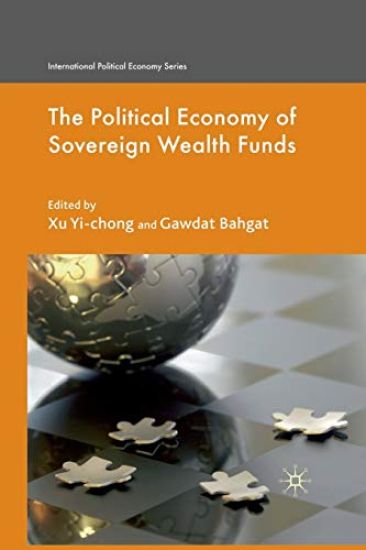
The Political Economy of Sovereign Wealth Funds

The Political Economy of Sovereign Wealth Funds

Xu Yi-chong; Gawdat Bahgat

Palgrave Macmillan
2010
sidottu
This book examines the origin, nature, the portfolio, organizational structure and operation of the seven largest SWFs from the perspective of the holding countries. Uniquely it tackles the issues from the perspectives of those non-OECD countries whose access to funds creates the most concern.
The Political Economy of Sovereign Wealth Funds

The Political Economy of Sovereign Wealth Funds

Xu Yi-chong; Gawdat Bahgat

Palgrave Macmillan
2010
nidottu
This book examines the origin, nature, the portfolio, organizational structure and operation of the seven largest SWFs from the perspective of the holding countries. Uniquely it tackles the issues from the perspectives of those non-OECD countries whose access to funds creates the most concern.
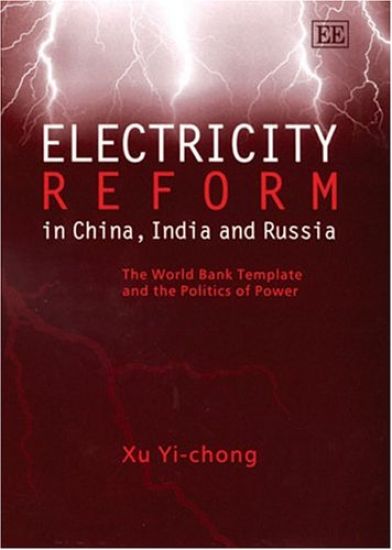
Electricity Reform in China, India and Russia

Electricity Reform in China, India and Russia

Xu Yi-Chong

Edward Elgar Publishing Ltd
2004
sidottu
Examining the reform and restructuring of the electricity industry in China, India and Russia, this book explores the way that local conditions and institutions shape the commitment, direction and speed of public utility reform in the three countries. It questions the validity of the argument that one model for electricity reforms will work in all countries, on the grounds that the industry is the same everywhere, by examining the World Bank's involvement in economic reforms in developing and transition economies. The author asks how the template developed by the World Bank has affected the three countries and seeks to explain why changes took place, how effectively they have been proceeding, and what the consequences are for these countries. In so doing, Electricity Reform in China, India and Russia challenges both the assumption behind the new reform paradigm - that market competition is the panacea for all the ills of the electricity industry - and the oft-cited belief that a single template can work in different environments. China, India and Russia have different political and economic systems and at different development stages. Xu Yi-chong uses the experience of the three countries to illustrate the complications created by the use of a single template, a policy encouraged by the World Bank, to direct reform and the need to appreciate the different problems that each had to overcome. Academics and students who are interested in comparative politics, comparative economics, public policy and particularly the reform of public utilities will find this work of great interest, as will practitioners and those who are involved in restructuring the electricity industry worldwide.
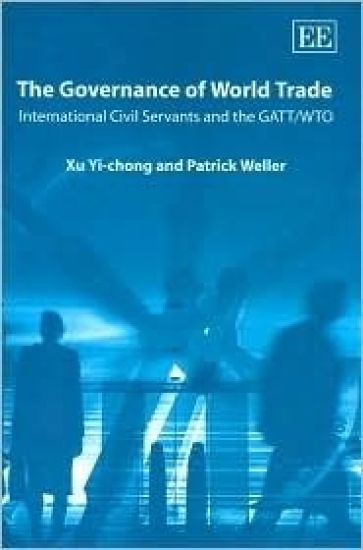
The Governance of World Trade

The Governance of World Trade

Xu Yi-Chong; Patrick Weller

Edward Elgar Publishing Ltd
2004
sidottu
The Governance of World Trade focuses on the roles, influence and impacts of the so-called 'GATT operatives' or WTO practitioners. It is widely assumed that they have little influence on decisions and policies made, but, according to the authors, the GATT/WTO Secretariat has played an active role in promoting multilateral cooperation. This unique study of the internal operation of the GATT/WTO argues that the invisible yet indispensable international civil servants are the permanent machinery within the institution. They have, the authors ascertain, an important coordinating function and act according to a specific scale of values that transcend those of individual states, providing the continuity and the cement, the credibility and the connection among self-interest-driven states. The book concludes that as one of the most 'democratic' international organizations, operating on the principle of consensus, the WTO needs a creative Secretariat as a necessary condition for multilateral cooperation to work. Using case studies to analyse the workings of Secretariat officials in trade negotiations, and the influence and role of international civil servants, this book will be a fascinating read for a wide ranging audience including: political scientists and economists, international civil servants, think tanks, NGOs, and government agencies.