Kirjojen hintavertailu – 12 903 725 kirjaa ja 27 kauppaa

Kirjailija

Xueji Zhang

Kirjat ja teokset yhdessä paikassa: 3 kirjaa, julkaisuja vuosilta 2011–2016, suosituimpiin kuuluu MicroRNA Detection and Pathological Functions. Vertaile teosten hintoja ja tarkista saatavuus suomalaisista kirjakaupoista.

3 kirjaa

Kirjojen julkaisuvuodet: 2011–2016.

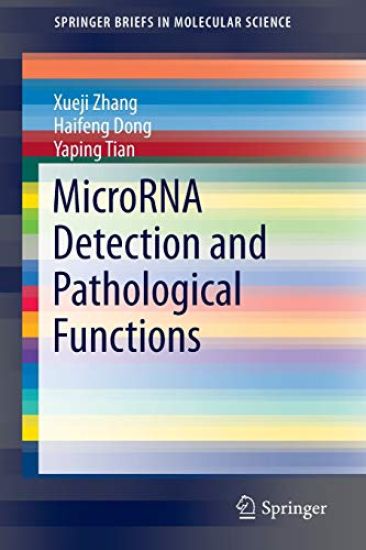
MicroRNA Detection and Pathological Functions

MicroRNA Detection and Pathological Functions

Xueji Zhang; Haifeng Dong; Yaping Tian

Springer-Verlag Berlin and Heidelberg GmbH Co. K
2015
nidottu
This book summarizes microRNA (miRNA) biology in a variety of pathological processes, emphasizing the significant potential applications of miRNA in diagnostics and prognostics, as well as novel drug targets. The conventional techniques used for miRNA detection including standard PCR, Northern blotting, microarray and clone methods are addressed. Recent emerging strategies in miRNA detection and quantification with superior flexibility and adaptability, such as novel molecular biological techniques and locked nucleic acid (LNA) modified probes, as well as nanotechnology-based approaches, are also included. The book also highlights the latest advances in clinical-related miRNA detection methods in living cells, circulating blood and tissue, such as in situ hybridization (ISH) and molecular imaging techniques, which are useful to elucidate the biogenesis and biological function of miRNAs in vivo. Finally, the respective advantages and drawbacks of various detection techniques in this fast-moving field are discussed, along with the challenges and promising new directions. This book offers a valuable resource for analytical chemists, biologists and physicians involved in miRNA research. Dr. Xueji Zhang and Dr. Haifeng Dong are Professors at the School of Chemistry & Biological Engineering, University of Science & Technology Beijing (USTB), China. Dr. Yaping Tian is a Professor at the Department of Clinical Biochemistry, Chinese PLA General Hospital and Military Medical School, China.

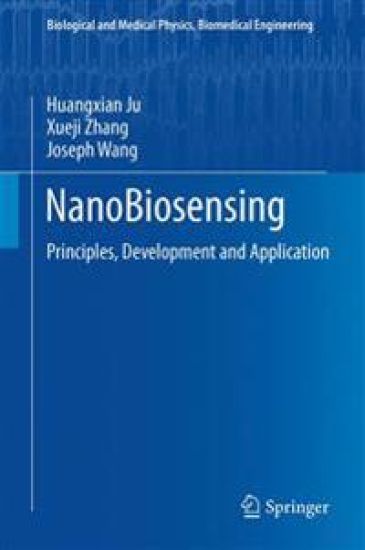
NanoBiosensing

NanoBiosensing

Huangxian Ju; Xueji Zhang; Joseph Wang

Springer-Verlag New York Inc.
2016
nidottu
This book will cover the full scope of nanobiosensing, which combines the newest research results in the cross-disciplines of chemistry, biology, and materials science with biosensing and bioanalysis to develop novel detection principles, sensing mechanisms, and device engineering methods. It not only covers the important types of nanomaterials for biosensing applications, including carbon nanotubes, carbon nanofiber, quantum dots, fullerenes, fluorescent and biological molecules, etc., but also illustrates a wide range of sensing principles, including electrochemical detection, fluorescence, chemiluminesence, antibody-antigen interactions, and magnetic detection. The book details novel developments in the methodology and devices of biosensing and bioanalysis combined with nanoscience and nanotechnology, as well as their applications in biomedicine and environmental monitoring. Furthermore, the reported works on the application and biofunction of nanoparticles have attracted extensive attention and interest, thus they are of particular interest to readers. The reader will obtain a rich survey of nanobiosensing technology, including the principles and application of biosensing, the design and biofunctionalization of bionanomaterials, as well as the methodology to develop biosensing devices and bioanalytical systems.
NanoBiosensing

NanoBiosensing

Huangxian Ju; Xueji Zhang; Joseph Wang

Springer-Verlag New York Inc.
2011
sidottu
This book will cover the full scope of nanobiosensing, which combines the newest research results in the cross-disciplines of chemistry, biology, and materials science with biosensing and bioanalysis to develop novel detection principles, sensing mechanisms, and device engineering methods. It not only covers the important types of nanomaterials for biosensing applications, including carbon nanotubes, carbon nanofiber, quantum dots, fullerenes, fluorescent and biological molecules, etc., but also illustrates a wide range of sensing principles, including electrochemical detection, fluorescence, chemiluminesence, antibody-antigen interactions, and magnetic detection. The book details novel developments in the methodology and devices of biosensing and bioanalysis combined with nanoscience and nanotechnology, as well as their applications in biomedicine and environmental monitoring. Furthermore, the reported works on the application and biofunction of nanoparticles have attracted extensive attention and interest, thus they are of particular interest to readers. The reader will obtain a rich survey of nanobiosensing technology, including the principles and application of biosensing, the design and biofunctionalization of bionanomaterials, as well as the methodology to develop biosensing devices and bioanalytical systems.