Kirjojen hintavertailu – 12 859 828 kirjaa ja 27 kauppaa
Kirjailija
Xuemin (Sherman) Shen
Kirjat ja teokset yhdessä paikassa: 50 kirjaa, julkaisuja vuosilta 2013–2026, suosituimpiin kuuluu Data Security in Cloud Storage. Vertaile teosten hintoja ja tarkista saatavuus suomalaisista kirjakaupoista.
By reconstructing human postures, facial expressions, and hand gestures in the cyberworld, a virtual human avatar can map the state of human into the physical world and deeply integrate reality and virtuality.
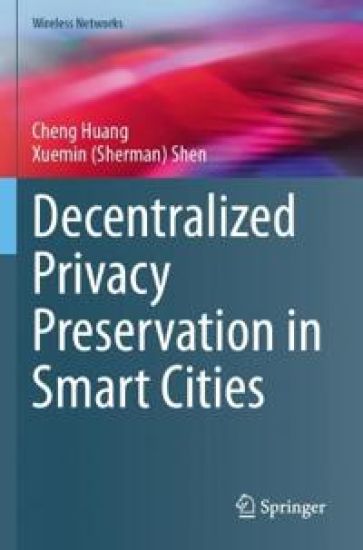
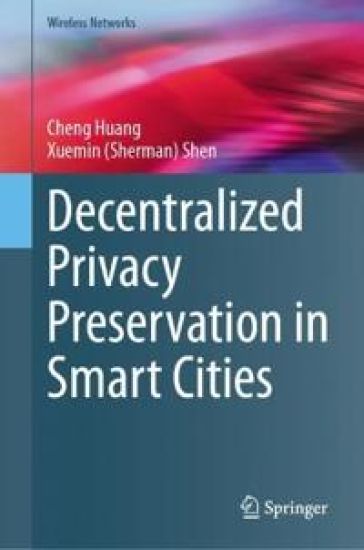
This book investigates decentralized trust-based privacy-preserving solutions in smart cities. The authors first present an overview of smart cities and privacy challenges and discuss the benefits of adopting decentralized trust models in achieving privacy preservation. The authors then give a comprehensive review of fundamental decentralized techniques and privacy-preserving cryptographic techniques. The next four chapters each detail a decentralized trust-based scheme, focusing respectively on privacy-preserving identity management, cross-domain authentication, data analytics, and data search, in specific use cases. Finally, the book explores open issues and outlines future research directions in the field of decentralized privacy preservation.
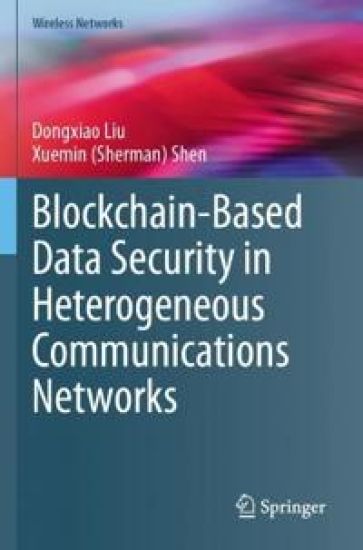
This book investigates data security approaches in Heterogeneous Communications Networks (HCN). First, the book discusses the urgent need for a decentralized data management architecture in HCN. The book investigates preliminaries and related research to help readers obtain a comprehensive picture of the research topic. Second, the book presents three blockchain-based approaches for data management in HCN: data provenance, data query, and data marketing. Finally, based on the insights and experiences from the presented approaches, the book discusses future research directions.
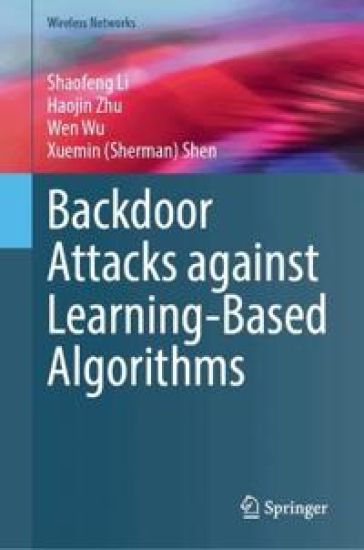
This book introduces a new type of data poisoning attack, dubbed, backdoor attack. In backdoor attacks, an attacker can train the model with poisoned data to obtain a model that performs well on a normal input but behaves wrongly with crafted triggers. Backdoor attacks can occur in many scenarios where the training process is not entirely controlled, such as using third-party datasets, third-party platforms for training, or directly calling models provided by third parties. Due to the enormous threat that backdoor attacks pose to model supply chain security, they have received widespread attention from academia and industry. This book focuses on exploiting backdoor attacks in the three types of DNN applications, which are image classification, natural language processing, and federated learning. Based on the observation that DNN models are vulnerable to small perturbations, this book demonstrates that steganography and regularization can be adopted to enhance the invisibility of backdoor triggers. Based on image similarity measurement, this book presents two metrics to quantitatively measure the invisibility of backdoor triggers. The invisible trigger design scheme introduced in this book achieves a balance between the invisibility and the effectiveness of backdoor attacks. In the natural language processing domain, it is difficult to design and insert a general backdoor in a manner imperceptible to humans. Any corruption to the textual data (e.g., misspelled words or randomly inserted trigger words/sentences) must retain context-awareness and readability to human inspectors. This book introduces two novel hidden backdoor attacks, targeting three major natural language processing tasks, including toxic comment detection, neural machine translation, and question answering, depending on whether the targeted NLP platform accepts raw Unicode characters. The emerged distributed training framework, i.e., federated learning, has advantages in preserving users' privacy. It has been widely used in electronic medical applications, however, it also faced threats derived from backdoor attacks. This book presents a novel backdoor detection framework in FL-based e-Health systems. We hope this book can provide insightful lights on understanding the backdoor attacks in different types of learning-based algorithms, including computer vision, natural language processing, and federated learning. The systematic principle in this book also offers valuable guidance on the defense of backdoor attacks against future learning-based algorithms.
This book investigates decentralized trust-based privacy-preserving solutions in smart cities. The authors first present an overview of smart cities and privacy challenges and discuss the benefits of adopting decentralized trust models in achieving privacy preservation. The authors then give a comprehensive review of fundamental decentralized techniques and privacy-preserving cryptographic techniques. The next four chapters each detail a decentralized trust-based scheme, focusing respectively on privacy-preserving identity management, cross-domain authentication, data analytics, and data search, in specific use cases. Finally, the book explores open issues and outlines future research directions in the field of decentralized privacy preservation.
This book investigates data security approaches in Heterogeneous Communications Networks (HCN). First, the book discusses the urgent need for a decentralized data management architecture in HCN. The book investigates preliminaries and related research to help readers obtain a comprehensive picture of the research topic. Second, the book presents three blockchain-based approaches for data management in HCN: data provenance, data query, and data marketing. Finally, based on the insights and experiences from the presented approaches, the book discusses future research directions.
This book presents the security and privacy challenges of the smart home following the logic of “terminal device – voice interface – application platform”. For each component, the authors provide answers to the three questions: 1) In the terminal device layer, how to conduct cross-layer privacy breach analysis and provide effective countermeasures; 2) In the voice interface layer, how to design effective and lightweight schemes to defend against voice spoofing; 3) In the application layer, how to design an effective anomaly detection system without breaching the application platform. The authors conduct a thorough analysis of the security threats and challenges in each component of the smart home, review the existing state-of-the-art solutions proposed by other researchers, and elaborate on proposed countermeasures. This book aims to provide both security threats analysis and state-of-the-art countermeasures for the smart home network.
This book presents the security and privacy challenges of the smart home following the logic of “terminal device – voice interface – application platform”. For each component, the authors provide answers to the three questions: 1) In the terminal device layer, how to conduct cross-layer privacy breach analysis and provide effective countermeasures; 2) In the voice interface layer, how to design effective and lightweight schemes to defend against voice spoofing; 3) In the application layer, how to design an effective anomaly detection system without breaching the application platform. The authors conduct a thorough analysis of the security threats and challenges in each component of the smart home, review the existing state-of-the-art solutions proposed by other researchers, and elaborate on proposed countermeasures. This book aims to provide both security threats analysis and state-of-the-art countermeasures for the smart home network.
This book shares valuable insights into high-efficiency data transmission scheduling and into a group intelligent search and rescue approach for artificial intelligence (AI)-powered maritime networks. Its goal is to highlight major research directions and topics that are critical for those who are interested in maritime communication networks, equipping them to carry out further research in this field. The authors begin with a historical overview and address the marine business, emerging technologies, and the shortcomings of current network architectures (coverage, connectivity, reliability, etc.). In turn, they introduce a heterogeneous space/air/sea/ground maritime communication network architecture and investigate the transmission scheduling problem in maritime communication networks, together with solutions based on deep reinforcement learning. To accommodate the computation demands of maritime communication services, the authors propose a multi-vessel offloadingalgorithm for maritime mobile edge computing networks. In closing, they discuss the applications of swarm intelligence in maritime search and rescue.
This book examines recent research on designing online charging and discharging strategies for mobile electric vehicles (EVs) in smart grid. First, the architecture and applications are provided. Then, the authors review the existing works on charging and discharging strategy design for EVs. Critical challenges and research problems are identified. Promising solutions are proposed to accommodate the issues of high EV mobility, vehicle range anxiety, and power systems overload. The authors investigate innovating charging and discharging potentials for mobile EVS based on real-time information collections (via VANETS and/or cellular networks) and offer the power system adjustable load management methods. Several innovative charging/discharging strategy designs to address the challenging issues in smart grid, i.e., overload avoidance and range anxiety for individual EVs, are presented. This book presents an alternative and promising way to release the pressure of the power grid caused by peak-time EV charging demand. Mobile Electric Vehicles: Online Charging and Discharging provides valuable insights on charging/ discharging strategy design for mobile EVs and the power system management in a smart grid. The authors’ findings indicate that the proposed strategies considerably outperform the traditional EV charging strategies without real-time collections on the metrics of the overall energy utilization, the average EV travel cost and the number of successfully charged EVs. Research and graduate students who are working on smart grid and vehicular communication will find this book a valuable resource. Customs and systems operators will also find this book useful.
This SpringerBrief covers the security and privacy challenges in fog computing, and proposes a new secure and privacy-preserving mechanisms to resolve these challenges for securing fog-assisted IoT applications. Chapter 1 introduces the architecture of fog-assisted IoT applications and the security and privacy challenges in fog computing. Chapter 2 reviews several promising privacy-enhancing techniques and illustrates examples on how to leverage these techniques to enhance the privacy of users in fog computing. Specifically, the authors divide the existing privacy-enhancing techniques into three categories: identity-hidden techniques, location privacy protection and data privacy enhancing techniques. The research is of great importance since security and privacy problems faced by fog computing impede the healthy development of its enabled IoT applications. With the advanced privacy-enhancing techniques, the authors propose three secure andprivacy-preserving protocols for fog computing applications, including smart parking navigation, mobile crowdsensing and smart grid. Chapter 3 introduces identity privacy leakage in smart parking navigation systems, and proposes a privacy-preserving smart parking navigation system to prevent identity privacy exposure and support efficient parking guidance retrieval through road-side units (fogs) with high retrieving probability and security guarantees. Chapter 4 presents the location privacy leakage, during task allocation in mobile crowdsensing, and propose a strong privacy-preserving task allocation scheme that enables location-based task allocation and reputation-based report selection without exposing knowledge about the location and reputation for participators in mobile crowdsensing. Chapter 5 introduces the data privacy leakage in smart grid, and proposes an efficient and privacy-preserving smart metering protocol to allow collectors (fogs) to achieve real-time measurement collection with privacy-enhanced data aggregation. Finally, conclusions and future research directions are given in Chapter 6. This brief validates the significant feature extension and efficiency improvement of IoT devices without sacrificing the security and privacy of users against dishonest fog nodes. It also provides valuable insights on the security and privacy protection for fog-enabled IoT applications. Researchers and professionals who carry out research on security and privacy in wireless communication will want to purchase this SpringerBrief. Also, advanced level students, whose main research area is mobile network security will also be interested in this SpringerBrief.
This monograph addresses the spectrum-scarcity problem by providing a comprehensive overview of spectrum resource management in Cognitive Radio Sensor Networks (CRSNs). The authors explore the benefits of an integrated energy efficient spectrum management solution for CRSNs including spectrum sensing, decision and allocation.
This book investigates the modeling and optimization issues in mobile social networks (MSNs). Firstly, the architecture and applications of MSNs are examined. The existing works on MSNs are reviewed by specifying the critical challenges and research issues. Then, with the introduction of MSN-based social graph and information dissemination mechanisms, the analytical model for epidemic information dissemination with opportunistic Links in MSNs is discussed. In addition, optimal resource allocation is studied based on a heterogeneous architecture, which provides mobile social services with high capacity and low latency. Finally, this book summarize some open problems and future research directions in MSNs. Written for researchers and academics, this book is useful for anyone working on mobile networks, network architecture, or content delivery. It is also valuable for advanced-level students of computer science.
This book introduces wireless traffic steering as a paradigm to realize green communication in multi-tier heterogeneous cellular networks. By matching network resources and dynamic mobile traffic demand, traffic steering helps to reduce on-grid power consumption with on-demand services provided. This book reviews existing solutions from the perspectives of energy consumption reduction and renewable energy harvesting. Specifically, it explains how traffic steering can improve energy efficiency through intelligent traffic-resource matching. Several promising traffic steering approaches for dynamic network planning and renewable energy demand-supply balancing are discussed. This book presents an energy-aware traffic steering method for networks with energy harvesting, which optimizes the traffic allocated to each cell based on the renewable energy status. Renewable energy demand-supply balancing is a key factor in energy dynamics, aimed at enhancing renewable energy sustainability to reduce on-grid energy consumption. Dynamic network planning adjusts cell density with traffic variations to provide on-demand service, which reduces network power consumption with quality of service provisioning during off-peak hours. With intra- or inter-tier traffic steering, cell density is dynamically optimized with regards to the instant traffic load for conventional homogeneous and multi-tier heterogeneous cellular networks, respectively. This book is beneficial for researchers and graduate students interested in traffic management and future wireless networking.
This book provides an in-depth discussion on how to efficiently manage resources of heterogeneous wireless networks and how to design resource allocation algorithms to suit real world conditions. Efficiently managing resources of the networks is more crucial now, than ever before, to meet users’ rapidly increasing demand for higher data rates, better quality-of-service (QoS) and seamless coverage. Some of the techniques that can be incorporated within heterogeneous wireless networks to achieve this objective are interworking of the networks, user multi-homing and device-to-device (D2D) communication. Designing resource allocation algorithms to suit real world conditions is also important, as the algorithms should be deployable and perform well in real networks. For example, two of the conditions considered in this book are resource allocation intervals of different networks are different and small cell base stations have limited computational capacity. To address the firstcondition, resource allocation algorithms for interworking systems are designed to allocate resources of different networks at different time-scales. To address the second condition, resource allocation algorithms are designed to be able to run at cloud computing servers. More of such conditions, algorithms designed to suit these conditions, modeling techniques for various networks and performance analysis of the algorithms are discussed in the book. This book concludes with a discussion on the future research directions on the related fields of study. Advanced-level students focused on communication and networking will use this book as a study guide. Researchers and experts in the fields of networking, converged networks, small-cell networks, resource management, and interference management, as well as consultants working in network planning and optimization and managers, executives and network architects working in the networking industry will also find thisbook useful as a reference.
This monograph addresses the spectrum-scarcity problem by providing a comprehensive overview of spectrum resource management in Cognitive Radio Sensor Networks (CRSNs). It shows a variety of CRSN applications covering Machine-to-Machine communications, cyber physical systems and Internet-of-Things. The authors explore the benefits of an integrated energy efficient spectrum management solution for CRSNs including spectrum sensing, decision and allocation. Both theoretical and experimental aspects of CRSNs are covered in detail. Academics, researchers and developers will find this monograph an exceptional resource with valuable knowledge and insights. It also has extensive references from top journals, conference proceedings, books and standards.