Kirjojen hintavertailu – 12 903 725 kirjaa ja 27 kauppaa

Kirjailija

Xun Zhou

Kirjat ja teokset yhdessä paikassa: 6 kirjaa, julkaisuja vuosilta 2000–2020, suosituimpiin kuuluu Reverse Auction Bidding - Multiple Group Study. Vertaile teosten hintoja ja tarkista saatavuus suomalaisista kirjakaupoista.

6 kirjaa

Kirjojen julkaisuvuodet: 2000–2020.

The People's Health

The People's Health

Xun Zhou

McGill-Queen's University Press
2020
sidottu
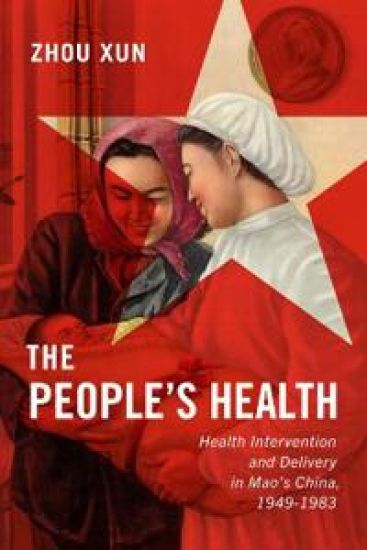
In 1949, the Communist Party of China pledged that its approach to health care would differ markedly from that of the former Nationalist government and the 'imperialist' West. For the next thirty years under Mao's leadership, the People's Republic of China made improving the health of the entire population a central pillar of its policy. International health stakeholders came to view it as a statistical outlier in its ability to achieve better health outcomes with limited resources. The People's Health is the first systematic study of health care and medicine in Maoist China. Drawing on hundreds of files from rarely seen party archives and oral testimonies from experts, local cadres, and villagers across China, Zhou Xun shifts her historian's gaze away from official statistics towards the records of local institutions and personal memories that reflect and give voice to lived experiences. Through the everyday interactions of policy makers, national and local administration, and communities, Zhou illustrates the dynamic relationship between politics and health, and between individual lives and the political system. Presenting case studies of the two internationally acclaimed public health initiatives in the PRC – the anti-schistosomiasis campaign and the Barefoot Doctor program – this book offers the first thorough, politically neutral analysis of their background, execution, and national and international repercussions. Opening a unique window into the lives – and health care – of individuals living under communism, The People's Health examines the links between local interest, cultural sensibilities, resources, and abilities, exploring the often unforeseeable consequences of political planning and social engineering.
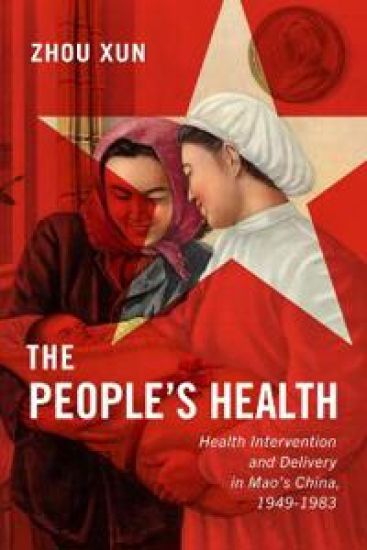
The People's Health

The People's Health

Xun Zhou

McGill-Queen's University Press
2020
nidottu
In 1949, the Communist Party of China pledged that its approach to health care would differ markedly from that of the former Nationalist government and the 'imperialist' West. For the next thirty years under Mao's leadership, the People's Republic of China made improving the health of the entire population a central pillar of its policy. International health stakeholders came to view it as a statistical outlier in its ability to achieve better health outcomes with limited resources. The People's Health is the first systematic study of health care and medicine in Maoist China. Drawing on hundreds of files from rarely seen party archives and oral testimonies from experts, local cadres, and villagers across China, Zhou Xun shifts her historian's gaze away from official statistics towards the records of local institutions and personal memories that reflect and give voice to lived experiences. Through the everyday interactions of policy makers, national and local administration, and communities, Zhou illustrates the dynamic relationship between politics and health, and between individual lives and the political system. Presenting case studies of the two internationally acclaimed public health initiatives in the PRC – the anti-schistosomiasis campaign and the Barefoot Doctor program – this book offers the first thorough, politically neutral analysis of their background, execution, and national and international repercussions. Opening a unique window into the lives – and health care – of individuals living under communism, The People's Health examines the links between local interest, cultural sensibilities, resources, and abilities, exploring the often unforeseeable consequences of political planning and social engineering.

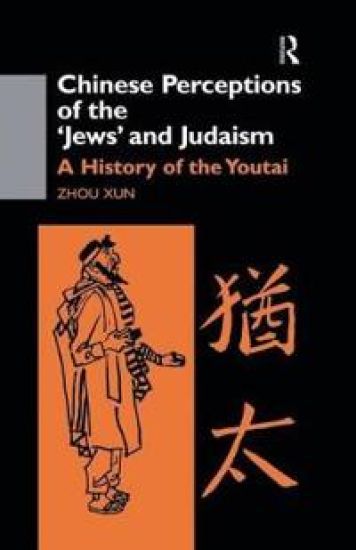
Chinese Perceptions of the Jews' and Judaism
While prejudice against Jews is a real and ongoing category in Western culture, little attention has been paid to the myths of the Jews' and their impact in countries outside the West. This work draws on a wide variety of source materials from the past two centuries to examine the images of the Jews' as constructed in China. However, the interest here does not lie in the determination of the boundary between the real and fictional aspects of these images. Rather, it lies in the implications associated with the Jew' as an other', which remains a distant mirror in the construction of the self' amongst various social groups in modern China. Although it has been noted by a few scholars that the use of the Jews' as a category was important to many thinkers of modern China in the construction of their nationalistic and socio- political ideologies, this is the first systematic study in the field to be published. This book is also more than a historical book on China in that it opens a new arena for modern Jewish studies from a unique angle.
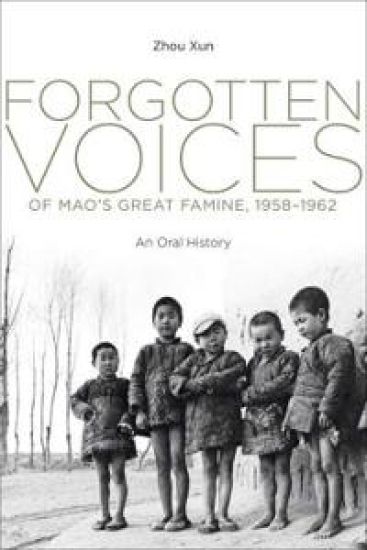
Forgotten Voices of Mao's Great Famine, 1958-1962
A powerful account of China’s Great Famine as told through the voices of those who survived it In 1958, China’s revered leader Mao Zedong instituted a program designed to transform his giant nation into a Communist utopia. Called the Great Leap Forward, Mao’s grand scheme—like so many other utopian dreams of the 20th century—proved a monumental disaster, resulting in the mass destruction of China’s agriculture, industry, and trade while leaving large portions of the countryside forever scarred by man-made environmental disasters. The resulting three-year famine claimed the lives of more than 45 million people in China. In this remarkable oral history of modern China’s greatest tragedy, survivors of the cataclysm share their memories of the devastation and loss. The range of voices is wide: city dwellers and peasants, scholars and factory workers, parents who lost children and children who were orphaned in the catastrophe all speak out. Powerful and deeply moving, this unique remembrance of an unnecessary and unhindered catastrophe illuminates a dark recent history that remains officially unacknowledged to this day by the Chinese government and opens a window on a society still feeling the impact of the terrible Great Famine.
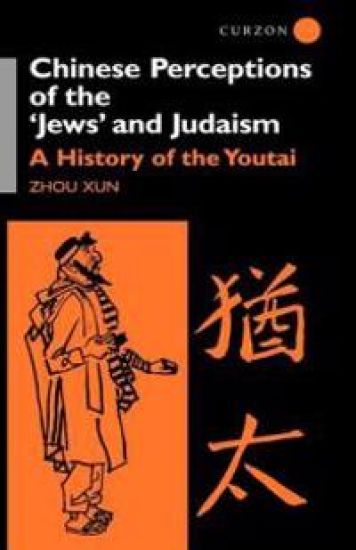
Chinese Perceptions of the Jews' and Judaism

Chinese Perceptions of the Jews' and Judaism

Zhou Xun; Xun Zhou

RoutledgeCurzon
2000
sidottu
While prejudice against Jews is a real and ongoing category in Western culture, little attention has been paid to the myths of the Jews' and their impact in countries outside the West. This work draws on a wide variety of source materials from the past two centuries to examine the images of the Jews' as constructed in China. However, the interest here does not lie in the determination of the boundary between the real and fictional aspects of these images. Rather, it lies in the implications associated with the Jew' as an other', which remains a distant mirror in the construction of the self' amongst various social groups in modern China. Although it has been noted by a few scholars that the use of the Jews' as a category was important to many thinkers of modern China in the construction of their nationalistic and socio- political ideologies, this is the first systematic study in the field to be published. This book is also more than a historical book on China in that it opens a new arena for modern Jewish studies from a unique angle.