Kirjojen hintavertailu – 12 903 725 kirjaa ja 27 kauppaa

Kirjailija

Y.T. Shah

Kirjat ja teokset yhdessä paikassa: 2 kirjaa, julkaisuja vuosilta 1999–2013, suosituimpiin kuuluu Cavitation Reaction Engineering. Vertaile teosten hintoja ja tarkista saatavuus suomalaisista kirjakaupoista.

2 kirjaa

Kirjojen julkaisuvuodet: 1999–2013.

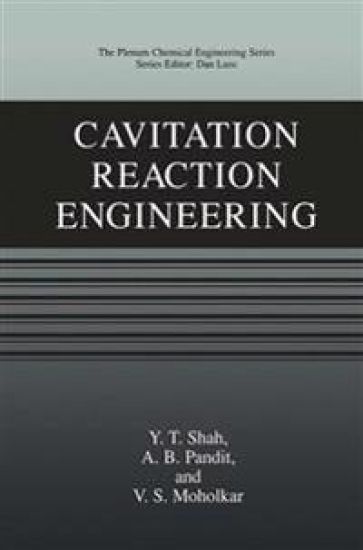
Cavitation Reaction Engineering

Cavitation Reaction Engineering

Y.T. Shah; A.B. Pandit; V.S. Moholkar

Springer-Verlag New York Inc.
2013
nidottu
The literature on cavitation chemistry is ripe with conjectures, possibilities, heuris­ tic arguments, and intelligent guesses. The chemical effects of cavitation have been explained by means of many theories, consisting of empirical constants, adjustable parameters, and the like. The chemists working with cavitation chemistry agree that the phenomenon is very complex and system specific. Mathematicians and physi­ cists have offered partial solutions to the observed phenomena on the basis of cavitation parameters, whereas chemists have attempted explanations based on the modes of reaction and the detection of intermediate chemical species. Nevertheless, no one has been able to formulate a unified theme, however crude, for its effects on the basis of the known parameters, such as cavitation and transient chemistry involving extremely high temperatures of nanosecond durations. When one surveys the literature on cavitation-assisted reactions, it is clear that the approach so far has been "Edisonian" in nature. While a large number of reactions have showed either enhanced yields or reduced reaction times, many reactions have remained unaffected in the presence of cavitation. The success or failure of cavitation reactions ultimately depends on the collapse of the cavity. Cavitation chemistry is based on the principles of the formation of small transient cavities, their growth and implosion, which produce chemical reactions caused by the generation of extreme pressures and temperatures and a high degree of micro­ turbulence.
Cavitation Reaction Engineering

Cavitation Reaction Engineering

Y.T. Shah; A.B. Pandit; V.S. Moholkar

Kluwer Academic/Plenum Publishers
1999
sidottu
The literature on cavitation chemistry is ripe with conjectures, possibilities, heuris­ tic arguments, and intelligent guesses. The chemical effects of cavitation have been explained by means of many theories, consisting of empirical constants, adjustable parameters, and the like. The chemists working with cavitation chemistry agree that the phenomenon is very complex and system specific. Mathematicians and physi­ cists have offered partial solutions to the observed phenomena on the basis of cavitation parameters, whereas chemists have attempted explanations based on the modes of reaction and the detection of intermediate chemical species. Nevertheless, no one has been able to formulate a unified theme, however crude, for its effects on the basis of the known parameters, such as cavitation and transient chemistry involving extremely high temperatures of nanosecond durations. When one surveys the literature on cavitation-assisted reactions, it is clear that the approach so far has been "Edisonian" in nature. While a large number of reactions have showed either enhanced yields or reduced reaction times, many reactions have remained unaffected in the presence of cavitation. The success or failure of cavitation reactions ultimately depends on the collapse of the cavity. Cavitation chemistry is based on the principles of the formation of small transient cavities, their growth and implosion, which produce chemical reactions caused by the generation of extreme pressures and temperatures and a high degree of micro­ turbulence.