Kirjojen hintavertailu – 12 903 725 kirjaa ja 27 kauppaa
Kirjailija
Yaacov Shavit
Kirjat ja teokset yhdessä paikassa: 13 kirjaa, julkaisuja vuosilta 1988–2023, suosituimpiin kuuluu Athens in Jerusalem. Vertaile teosten hintoja ja tarkista saatavuus suomalaisista kirjakaupoista.
This book focuses on places and instances where Solomon's legendary biography intersects with those of Jesus Christ and of Aristotle. Solomon is the axis around which this trio revolves, the thread that binds it together. It is based on the premise that there exists a correspondence, both overt and implied, between these three biographies, that has taken shape within a vast, multifaceted field of texts for more than two thousand years.
This book focuses on places and instances where Solomon's legendary biography intersects with those of Jesus Christ and of Aristotle. Solomon is the axis around which this trio revolves, the thread that binds it together. It is based on the premise that there exists a correspondence, both overt and implied, between these three biographies, that has taken shape within a vast, multifaceted field of texts for more than two thousand years.
This book focuses on places and instances where Solomon's legendary biography intersects with those of Jesus Christ and of Aristotle. Solomon is the axis around which this trio revolves, the thread that binds it together. It is based on the premise that there exists a correspondence, both overt and implied, between these three biographies, that has taken shape within a vast, multifaceted field of texts for more than two thousand years.
This book focuses on places and instances where Solomon's legendary biography intersects with those of Jesus Christ and of Aristotle. Solomon is the axis around which this trio revolves, the thread that binds it together. It is based on the premise that there exists a correspondence, both overt and implied, between these three biographies, that has taken shape within a vast, multifaceted field of texts for more than two thousand years.
This book focuses on places and instances where Solomon’s legendary biography intersects with those of Jesus Christ and of Aristotle. Solomon is the axis around which this trio revolves, the thread that binds it together. It is based on the premise that there exists a correspondence, both overt and implied, between these three biographies, that has taken shape within a vast, multifaceted field of texts for more than two thousand years.
In European and Holocaust historiography, it is generally believed that neither the Zionist movement nor the Yishuv were mindful of the plight of European Jews in the face of the Nazi threat during the 1930s. Drawing on a wide variety of memoirs, letters, and institutional reports by people from all walks of life, this volume sheds new light on a troubled period in Jewish history. Jehuda Reinharz and Yaacov Shavit trace Jewish responses to developments in Eastern and Central Europe, as well as reactions to British policy on the question of a Jewish homeland, to show that Zionists in the Yishuv worked tirelessly on the international stage on behalf of their coreligionists in Europe. Nevertheless, their efforts were all too often shattered by the realities of their powerlessness and lack of resources. Piercing to the heart of conversations about how or whether to save Jews in an increasingly hostile Europe, this volume provides a nuanced assessment of what could and could not be achieved in the years just prior to World War II and Holocaust.
In European and Holocaust historiography, it is generally believed that neither the Zionist movement nor the Yishuv, acting primarily out of self-interest, energetically attempted to help European Jews escape the Nazi threat. Drawing on the memoirs, letters, and institutional reports of Chaim Weizmann, Ze’ev Jabotinsky, David Ben-Gurion, and many others, this volume sheds new light on a troubled period in Jewish history. Reinharz and Shavit trace Jewish responses to developments in Eastern and Central Europe to show that—contrary to recent scholarship and popular belief—Zionists in the Yishuv worked tirelessly on the international stage on behalf of their co-religionists in Europe. Focusing particularly on Poland, while explicating conditions in Germany and Czechoslovakia as well, the authors examine the complicated political issues that arose not just among Jews themselves, but within national governments in Britain, Europe, and America. Piercing to the heart of conversations about how or whether to save Jews in an increasingly hostile Europe, this volume provides a nuanced and thoughtful assessment of what could and could not be achieved in the years just prior to World War II and the Holocaust.
This work, the first of its kind, describes all the aspects of the Bible revolution in Jewish history in the last two hundred years, as well as the emergence of the new biblical culture. It describes the circumstances and processes that turned Holy Scripture into the Book of Books and into the history of the biblical period and of the people – the Jewish people. It deals with the encounter of the Jews with modern biblical criticism and the archaeological research of the Ancient Near East and with contemporary archaeology. The middle section discusses the extensive involvement of educated Jews in the Bible-Babel polemic at the start of the twentieth century, which it treats as a typological event. The last section describes at length various aspects of the key status assigned to the Bible in the new Jewish culture in Europe, and particularly in modern Jewish Palestine, as a “guide to life” in education, culture and politics, as well as part of the attempt to create a new Jewish man, and as a source of inspiration for various creative arts.
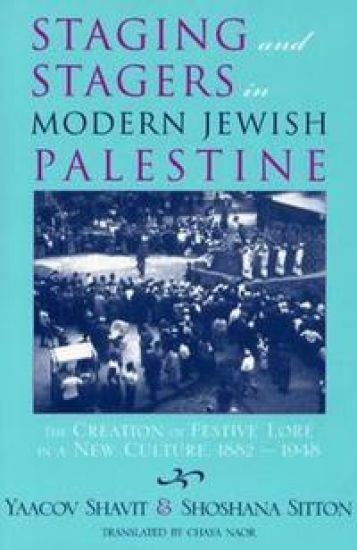
This case study describes the work of the people responsible for creating festive lore and its system of ceremonies and festivities - an inseparable part of every culture. In the case of the new modern Hebrew culture of Eretz Israel (modern Jewish Palestine) - a society of immigrants that left behind most of their traditional folkways - the creation of festival lore was an organized process guided by a national ideology and aesthetic values. This effort in a secular national society served as an alternative to the traditional religious system, adapted the ceremonies and festivals to a new historical reality, and created a new festival cycle that would give expression to the values and symbols of the new Jewish society. Stoging and Stagers in Modern Jewish Palestine claims that the system of ceremonies and festivals, in general, and each separate ceremony and festival were staged according to the staging instructions written by a defined group of cultural activists. The book examines three main stages - the educational network, rural society (particularly the cooperative sector), and urban society (most notably Tel Aviv) - and looks at the stagers themselves, who were school-teachers, writers, artists, and cultural activists. Though cultural systems of festivals and ceremonies are often researched and described, scholarly literature rarely identifies their creators or studies in detail the manner in which these systems are created. This book sheds important light on the stagers of modern Jewish Palestine and also on the processes and mechanisms that created the performative lore in other cultures, in ancient as well as modern times.
The development of Afrocentric historical writing is explored in this study which traces this recording of history from the Hellenistic-Roman period to the 19th century. Afrocentric writers are depicted as searching for the unique primary source of "culture" from one period to the next. Such passing on of cultural traits from the "ancient model" from the classical period to the origin of culture in Egypt and Africa is shown as being a product purely of creative history.
The development of Afrocentric historical writing is explored in this study which traces this recording of history from the Hellenistic-Roman period to the 19th century. Afrocentric writers are depicted as searching for the unique primary source of "culture" from one period to the next. Such passing on of cultural traits from the "ancient model" from the classical period to the origin of culture in Egypt and Africa is shown as being a product purely of creative history.
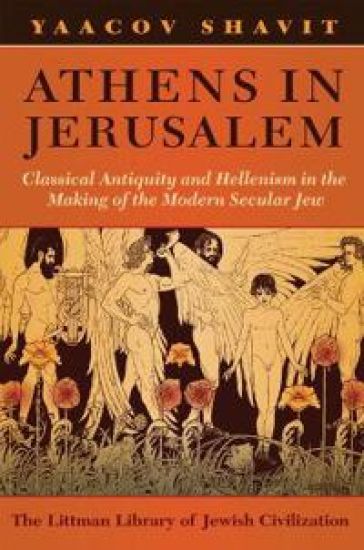
According to the author the Hellenistic tradition played a role as a model for Jewish modernisers to draw upon as they perceived a lack in Jewish culture. The author believes that Greek and Hellenistic concepts are now internalised by the Jewish people.
First published in 1988. The focus of this title, the nature and character of the Israeli political Right, gained intensive interest immediately after the Israeli elections of 1977. The author discusses this shift of political power from the Left to the Right as a profound political upheaval and discusses this alongside the prior Labour hegemony of the Yishuv. This book is separated into four parts: The territory and organisation of the right; The intellectual foundation of the right; Ideology, programme and political methods and Contradictory images.