Kirjojen hintavertailu – 12 859 829 kirjaa ja 27 kauppaa

Kirjailija

Yang Cao

Kirjat ja teokset yhdessä paikassa: 4 kirjaa, julkaisuja vuosilta 2015–2020, suosituimpiin kuuluu Cognitive Radio Networks. Vertaile teosten hintoja ja tarkista saatavuus suomalaisista kirjakaupoista.

4 kirjaa

Kirjojen julkaisuvuodet: 2015–2020.

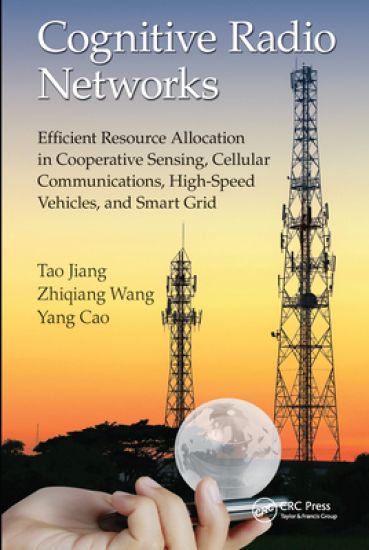
Cognitive Radio Networks

Cognitive Radio Networks

Tao Jiang; Zhiqiang Wang; Yang Cao

CRC Press
2020
nidottu
Resource allocation is an important issue in wireless communication networks. In recent decades, cognitive radio-based networks have garnered increased attention and have been well studied to overcome the problem of spectrum scarcity in future wireless communications systems. Many new challenges in resource allocation appear in cognitive radio-based networks. This book focuses on effective resource allocation solutions in several important cognitive radio-based networks, including opportunistic spectrum access networks, cooperative sensing networks, cellular networks, high-speed vehicle networks, and smart grids. Cognitive radio networks are composed of cognitive, spectrum-agile devices capable of changing their configuration on the fly based on the spectral environment. This capability makes it possible to design flexible and dynamic spectrum access strategies with the purpose of opportunistically reusing portions of the spectrum temporarily vacated by licensed primary users. Different cognitive radio-based networks focus on different network resources, such as transmission slots, sensing nodes, transmission power, white space, and sensing channels. This book introduces several innovative resource allocation schemes for different cognitive radio-based networks according to their network characteristics: Opportunistic spectrum access networks – Introduces a probabilistic slot allocation scheme to effectively allocate the transmission slots to secondary users to maximize throughput Cooperative sensing networks – Introduces a new adaptive collaboration sensing scheme in which the resources of secondary users are effectively utilized to sense the channels for efficient acquisition of spectrum opportunitiesCellular networks – Introduces a framework of cognitive radio-assisted cooperation for downlink transmissions to allocate transmission modes, relay stations, and transmission power/sub-channels to secondary users to maximize throughputHigh-speed vehicle networks – Introduces schemes to maximize the utilized TV white space through effective allocation of white space resources to secondary usersSmart grids – Introduces effective sensing channel allocation strategies for acquiring enough available spectrum channels for communications between utility and electricity consumers
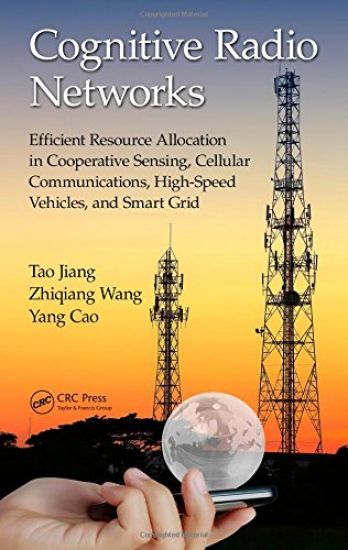
Cognitive Radio Networks

Cognitive Radio Networks

Tao Jiang; Zhiqiang Wang; Yang Cao

Productivity Press
2015
sidottu
Resource allocation is an important issue in wireless communication networks. In recent decades, cognitive radio-based networks have garnered increased attention and have been well studied to overcome the problem of spectrum scarcity in future wireless communications systems. Many new challenges in resource allocation appear in cognitive radio-based networks. This book focuses on effective resource allocation solutions in several important cognitive radio-based networks, including opportunistic spectrum access networks, cooperative sensing networks, cellular networks, high-speed vehicle networks, and smart grids. Cognitive radio networks are composed of cognitive, spectrum-agile devices capable of changing their configuration on the fly based on the spectral environment. This capability makes it possible to design flexible and dynamic spectrum access strategies with the purpose of opportunistically reusing portions of the spectrum temporarily vacated by licensed primary users. Different cognitive radio-based networks focus on different network resources, such as transmission slots, sensing nodes, transmission power, white space, and sensing channels. This book introduces several innovative resource allocation schemes for different cognitive radio-based networks according to their network characteristics: Opportunistic spectrum access networks – Introduces a probabilistic slot allocation scheme to effectively allocate the transmission slots to secondary users to maximize throughput Cooperative sensing networks – Introduces a new adaptive collaboration sensing scheme in which the resources of secondary users are effectively utilized to sense the channels for efficient acquisition of spectrum opportunities Cellular networks – Introduces a framework of cognitive radio-assisted cooperation for downlink transmissions to allocate transmission modes, relay stations, and transmission power/sub-channels to secondary users to maximize throughput High-speed vehicle networks – Introduces schemes to maximize the utilized TV white space through effective allocation of white space resources to secondary users Smart grids – Introduces effective sensing channel allocation strategies for acquiring enough available spectrum channels for communications between utility and electricity consumers
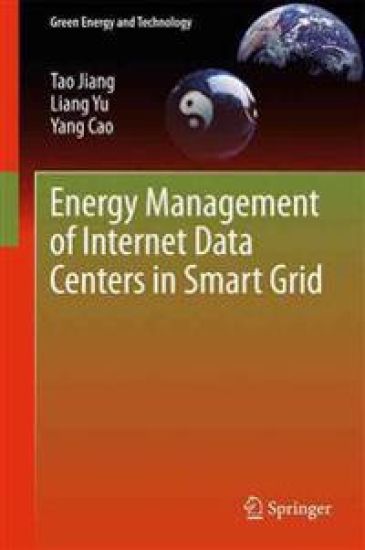
Energy Management of Internet Data Centers in Smart Grid

Energy Management of Internet Data Centers in Smart Grid

Tao Jiang; Liang Yu; Yang Cao

Springer-Verlag Berlin and Heidelberg GmbH Co. K
2016
nidottu
This book reports the latest findings on intelligent energy management of Internet data centers in smart-grid environments. The book gathers novel research ideas in Internet data center energy management, especially scenarios with cyber-related vulnerabilities, power outages and carbon emission constraints. The book will be of interest to university researchers, R&D engineers and graduate students in communication and networking areas who wish to learn the core principles, methods, algorithms, and applications of energy management of Internet data centers in smart grids.
Energy Management of Internet Data Centers in Smart Grid

Energy Management of Internet Data Centers in Smart Grid

Tao Jiang; Liang Yu; Yang Cao

Springer-Verlag Berlin and Heidelberg GmbH Co. K
2015
sidottu
This book reports the latest findings on intelligent energy management of Internet data centers in smart-grid environments. The book gathers novel research ideas in Internet data center energy management, especially scenarios with cyber-related vulnerabilities, power outages and carbon emission constraints. The book will be of interest to university researchers, R&D engineers and graduate students in communication and networking areas who wish to learn the core principles, methods, algorithms, and applications of energy management of Internet data centers in smart grids.