
Kirjojen hintavertailu – 12 903 725 kirjaa ja 27 kauppaa

Kirjailija

Yao Xu

Kirjat ja teokset yhdessä paikassa: 2 kirjaa, julkaisuja vuosilta 2015–2016, suosituimpiin kuuluu Dam Failure Mechanisms and Risk Assessment. Vertaile teosten hintoja ja tarkista saatavuus suomalaisista kirjakaupoista.

2 kirjaa

Kirjojen julkaisuvuodet: 2015–2016.

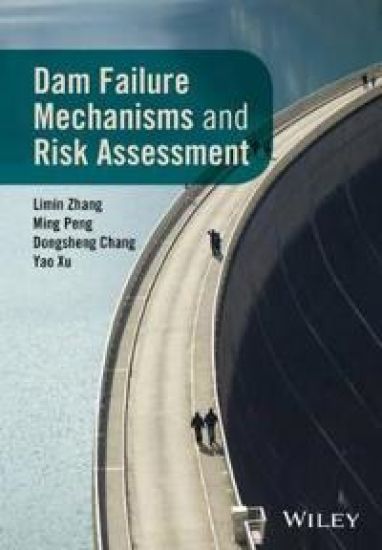
Dam Failure Mechanisms and Risk Assessment

Dam Failure Mechanisms and Risk Assessment

Limin Zhang; Ming Peng; Dongsheng Chang; Yao Xu

John Wiley Sons Inc
2016
sidottu
This book integrates the physical processes of dam breaching and the mathematical aspects of risk assessment in a concise manner • The first book that introduces the causes, processes and consequences of dam failures• Integrates the physical processes of dam breaching and the mathematical aspects of risk assessment in a concise manner• Emphasizes integrating theory and practice to better demonstrate the application of risk assessment and decision methodologies to real cases• Intends to formulate dam-breaching emergency management steps in a scientific structure
Carbon-Based Electronics

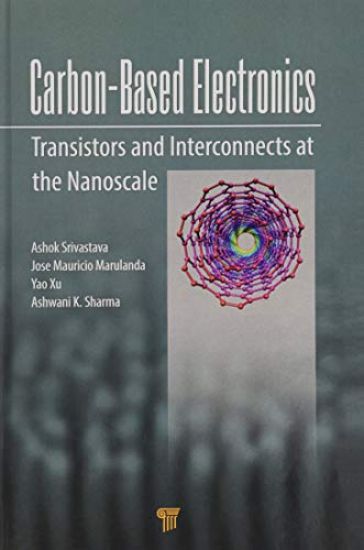
Carbon-Based Electronics

Ashok Srivastava; Jose Mauricio Marulanda; Yao Xu; Ashwani Sharma

Pan Stanford Publishing Pte Ltd
2015
sidottu
Discovery of one-dimensional material carbon nanotubes in 1991 by the Japanese physicist Dr. Sumio Iijima has resulted in voluminous research in the field of carbon nanotubes for numerous applications, including possible replacement of silicon used in the fabrication of CMOS chips. One interesting feature of carbon nanotubes is that these can be metallic or semiconducting with a bandgap depending on their diameter. In search of non-classical devices and related technologies, both carbon nanotube-based field-effect transistors and metallic carbon nanotube interconnects are being explored extensively for emerging logic devices and very large-scale integration. Although various models for carbon nanotube-based transistors and interconnects have been proposed in the literature, an integrated approach to make them compatible with the present simulators is yet to be achieved. This book makes an attempt in this direction for the carbon-based electronics through fundamentals of solid-state physics and devices.