Kirjojen hintavertailu – 12 859 819 kirjaa ja 27 kauppaa

Kirjailija

Yaochu Jin

Kirjat ja teokset yhdessä paikassa: 11 kirjaa, julkaisuja vuosilta 2002–2024, suosituimpiin kuuluu Computational Evolution of Neural and Morphological Development. Vertaile teosten hintoja ja tarkista saatavuus suomalaisista kirjakaupoista.

11 kirjaa

Kirjojen julkaisuvuodet: 2002–2024.

Evolutionary Large-Scale Multi-Objective Optimization and Applications

Evolutionary Large-Scale Multi-Objective Optimization and Applications

Xingyi Zhang; Ran Cheng; Ye Tian; Yaochu Jin

JOHN WILEY SONS INC
2024
sidottu
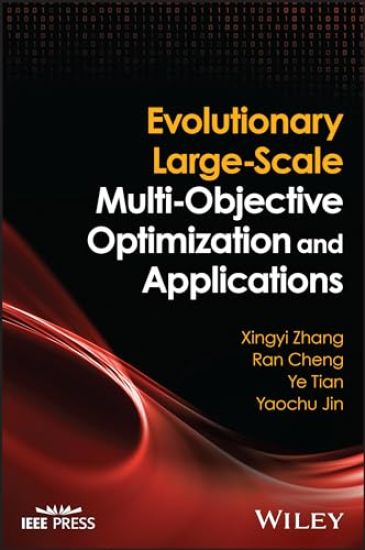
Tackle the most challenging problems in science and engineering with these cutting-edge algorithms Multi-objective optimization problems (MOPs) are those in which more than one objective needs to be optimized simultaneously. As a ubiquitous component of research and engineering projects, these problems are notoriously challenging. In recent years, evolutionary algorithms (EAs) have shown significant promise in their ability to solve MOPs, but challenges remain at the level of large-scale multi-objective optimization problems (LSMOPs), where the number of variables increases and the optimized solution is correspondingly harder to reach. Evolutionary Large-Scale Multi-Objective Optimization and Applications constitutes a systematic overview of EAs and their capacity to tackle LSMOPs. It offers an introduction to both the problem class and the algorithms before delving into some of the cutting-edge algorithms which have been specifically adapted to solving LSMOPs. Deeply engaged with specific applications and alert to the latest developments in the field, it’s a must-read for students and researchers facing these famously complex but crucial optimization problems. The book’s readers will also find: Analysis of multi-optimization problems in fields such as machine learning, network science, vehicle routing, and more Discussion of benchmark problems and performance indicators for LSMOPs Presentation of a new taxonomy of algorithms in the field Evolutionary Large-Scale Multi-Objective Optimization and Applications is ideal for advanced students, researchers, and scientists and engineers facing complex optimization problems.
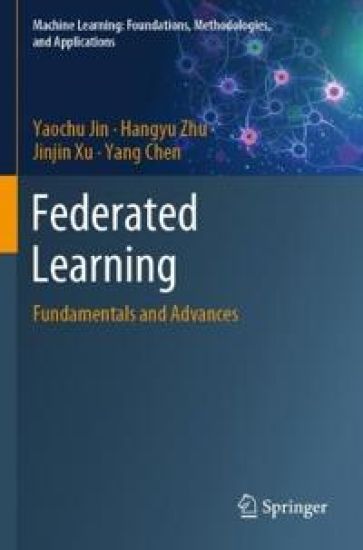
Federated Learning

Federated Learning

Yaochu Jin; Hangyu Zhu; Jinjin Xu; Yang Chen

SPRINGER VERLAG, SINGAPORE
2023
nidottu
This book introduces readers to the fundamentals of and recent advances in federated learning, focusing on reducing communication costs, improving computational efficiency, and enhancing the security level. Federated learning is a distributed machine learning paradigm which enables model training on a large body of decentralized data. Its goal is to make full use of data across organizations or devices while meeting regulatory, privacy, and security requirements. The book starts with a self-contained introduction to artificial neural networks, deep learning models, supervised learning algorithms, evolutionary algorithms, and evolutionary learning. Concise information is then presented on multi-party secure computation, differential privacy, and homomorphic encryption, followed by a detailed description of federated learning. In turn, the book addresses the latest advances in federate learning research, especially from the perspectives of communication efficiency, evolutionarylearning, and privacy preservation. The book is particularly well suited for graduate students, academic researchers, and industrial practitioners in the field of machine learning and artificial intelligence. It can also be used as a self-learning resource for readers with a science or engineering background, or as a reference text for graduate courses.
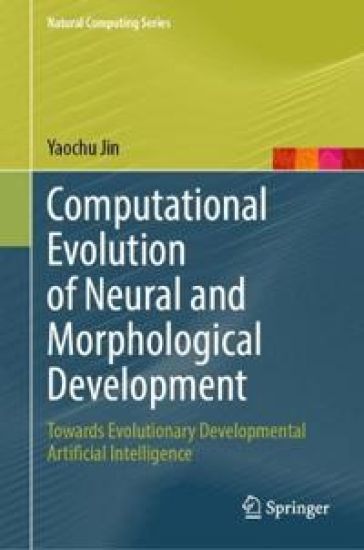
Computational Evolution of Neural and Morphological Development
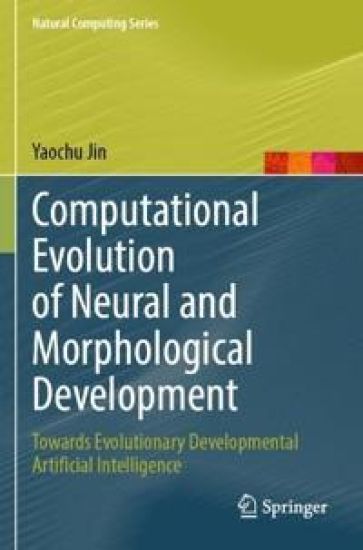
This book provides a basic yet unified overview of theory and methodologies for evolutionary developmental systems. Based on the author’s extensive research into the synergies between various approaches to artificial intelligence including evolutionary computation, artificial neural networks, and systems biology, it also examines the inherent links between biological intelligence and artificial intelligence. The book begins with an introduction to computational algorithms used to understand and simulate biological evolution and development, including evolutionary algorithms, gene regulatory network models, multi-cellular models for neural and morphological development, and computational models of neural plasticity. Chap. 2 discusses important properties of biological gene regulatory systems, including network motifs, network connectivity, robustness and evolvability. Going a step further, Chap. 3 presents methods for synthesizing regulatory motifs from scratch and creating more complex regulatory dynamics by combining basic regulatory motifs using evolutionary algorithms. Multi-cellular growth models, which can be used to simulate either neural or morphological development, are presented in Chapters 4 and 5. Chap. 6 examines the synergies and coupling between neural and morphological evolution and development. In turn, Chap. 7 provides preliminary yet promising examples of how evolutionary developmental systems can help in self-organized pattern generation, referred to as morphogenetic self-organization, highlighting the great potentials of evolutionary developmental systems. Finally, Chap. 8 rounds out the book, stressing the importance and promise of the evolutionary developmental approach to artificial intelligence. Featuring a wealth of diagrams, graphs and charts to aid in comprehension, this book offers a valuable asset for graduate students, researchers and practitioners who are interested in pursuing a different approach to artificial intelligence.
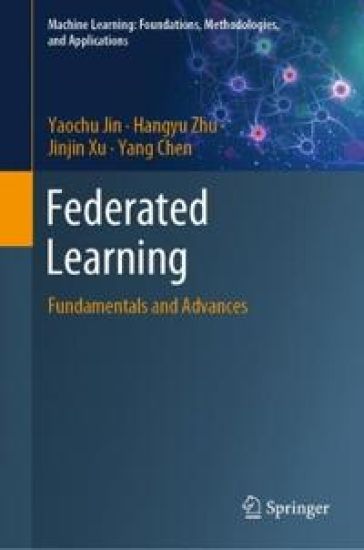
Federated Learning

Federated Learning

Yaochu Jin; Hangyu Zhu; Jinjin Xu; Yang Chen

SPRINGER VERLAG, SINGAPORE
2022
sidottu
This book introduces readers to the fundamentals of and recent advances in federated learning, focusing on reducing communication costs, improving computational efficiency, and enhancing the security level. Federated learning is a distributed machine learning paradigm which enables model training on a large body of decentralized data. Its goal is to make full use of data across organizations or devices while meeting regulatory, privacy, and security requirements. The book starts with a self-contained introduction to artificial neural networks, deep learning models, supervised learning algorithms, evolutionary algorithms, and evolutionary learning. Concise information is then presented on multi-party secure computation, differential privacy, and homomorphic encryption, followed by a detailed description of federated learning. In turn, the book addresses the latest advances in federate learning research, especially from the perspectives of communication efficiency, evolutionarylearning, and privacy preservation. The book is particularly well suited for graduate students, academic researchers, and industrial practitioners in the field of machine learning and artificial intelligence. It can also be used as a self-learning resource for readers with a science or engineering background, or as a reference text for graduate courses.
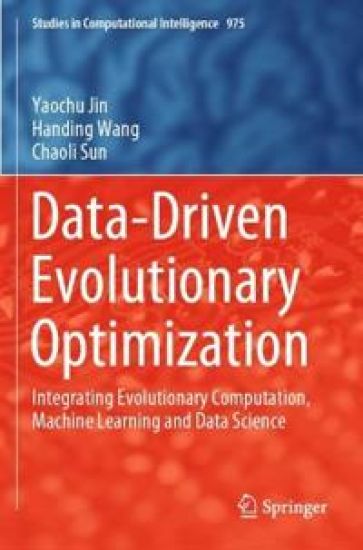
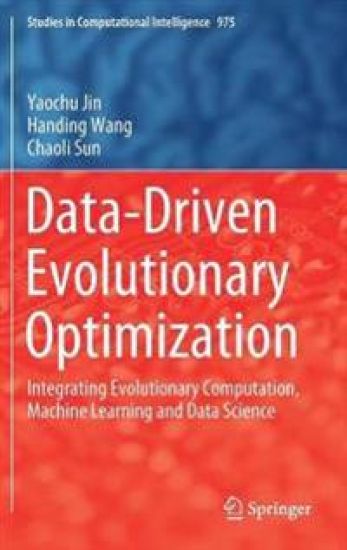
Data-Driven Evolutionary Optimization

Data-Driven Evolutionary Optimization

Yaochu Jin; Handing Wang; Chaoli Sun

Springer Nature Switzerland AG
2022
nidottu
Intended for researchers and practitioners alike, this book covers carefully selected yet broad topics in optimization, machine learning, and metaheuristics. Written by world-leading academic researchers who are extremely experienced in industrial applications, this self-contained book is the first of its kind that provides comprehensive background knowledge, particularly practical guidelines, and state-of-the-art techniques. New algorithms are carefully explained, further elaborated with pseudocode or flowcharts, and full working source code is made freely available. This is followed by a presentation of a variety of data-driven single- and multi-objective optimization algorithms that seamlessly integrate modern machine learning such as deep learning and transfer learning with evolutionary and swarm optimization algorithms. Applications of data-driven optimization ranging from aerodynamic design, optimization of industrial processes, to deep neural architecture search are included.
Data-Driven Evolutionary Optimization

Data-Driven Evolutionary Optimization

Yaochu Jin; Handing Wang; Chaoli Sun

Springer Nature Switzerland AG
2021
sidottu
Intended for researchers and practitioners alike, this book covers carefully selected yet broad topics in optimization, machine learning, and metaheuristics. Written by world-leading academic researchers who are extremely experienced in industrial applications, this self-contained book is the first of its kind that provides comprehensive background knowledge, particularly practical guidelines, and state-of-the-art techniques. New algorithms are carefully explained, further elaborated with pseudocode or flowcharts, and full working source code is made freely available. This is followed by a presentation of a variety of data-driven single- and multi-objective optimization algorithms that seamlessly integrate modern machine learning such as deep learning and transfer learning with evolutionary and swarm optimization algorithms. Applications of data-driven optimization ranging from aerodynamic design, optimization of industrial processes, to deep neural architecture search are included.
Rescheduling Under Disruptions in Manufacturing Systems

Rescheduling Under Disruptions in Manufacturing Systems

Dujuan Wang; Yunqiang Yin; Yaochu Jin

Springer Verlag, Singapore
2021
nidottu
This book provides an introduction to the models, methods, and results of some rescheduling problems in the presence of unexpected disruption events, including job unavailability, arrival of new jobs, and machine breakdown. The occurrence of these unexpected disruptions may cause a change in the planned schedule, which may render the originally feasible schedule infeasible. Rescheduling, which involves adjusting the original schedule to account for a disruption, is necessary in order to minimize the effects of the disruption on the performance of the system. This involves a trade-off between finding a cost-effective new schedule and avoiding excessive changes to the original schedule. This book views scheduling theory as practical theory, and it has made sure to emphasize the practical aspects of its topic coverage. Thus, this book considers some scenarios existing in most real-world environments, such as preventive machine maintenance, and deteriorating effect where the actual processing time of a job gets longer along with machine’s usage and age. To alleviate the effect of disruption events, some flexible strategies are adopted, including allocation extra resources to reduce job processing times or rejection the production of some jobs. For each considered scenario, depending on the model settings and on the disruption events, this book addresses the complexity, and the design of efficient exact or approximated algorithms. Especially when optimization methods and analytic tools fall short, this book stresses metaheuristics including improved elitist non-dominated sorting genetic algorithm and differential evolution algorithm. This book also provides extensive numerical studies to evaluate the performance of the proposed algorithms. The problem of rescheduling in the presence of unexpected disruption events is of great importance for the successful implementation of real-world scheduling systems. There is now an astounding body of knowledge in this field. This book is the first monograph on rescheduling. It aims at introducing the author's research achievements in rescheduling. It is written for researchers and Ph. D. students working in scheduling theory and other members of scientific community who are interested in recent scheduling models. Our goal is to enable the reader to know about some new achievements on this topic.
Rescheduling Under Disruptions in Manufacturing Systems

Rescheduling Under Disruptions in Manufacturing Systems

Dujuan Wang; Yunqiang Yin; Yaochu Jin

Springer Verlag, Singapore
2020
sidottu
This book provides an introduction to the models, methods, and results of some rescheduling problems in the presence of unexpected disruption events, including job unavailability, arrival of new jobs, and machine breakdown. The occurrence of these unexpected disruptions may cause a change in the planned schedule, which may render the originally feasible schedule infeasible. Rescheduling, which involves adjusting the original schedule to account for a disruption, is necessary in order to minimize the effects of the disruption on the performance of the system. This involves a trade-off between finding a cost-effective new schedule and avoiding excessive changes to the original schedule. This book views scheduling theory as practical theory, and it has made sure to emphasize the practical aspects of its topic coverage. Thus, this book considers some scenarios existing in most real-world environments, such as preventive machine maintenance, and deteriorating effect where the actual processing time of a job gets longer along with machine’s usage and age. To alleviate the effect of disruption events, some flexible strategies are adopted, including allocation extra resources to reduce job processing times or rejection the production of some jobs. For each considered scenario, depending on the model settings and on the disruption events, this book addresses the complexity, and the design of efficient exact or approximated algorithms. Especially when optimization methods and analytic tools fall short, this book stresses metaheuristics including improved elitist non-dominated sorting genetic algorithm and differential evolution algorithm. This book also provides extensive numerical studies to evaluate the performance of the proposed algorithms. The problem of rescheduling in the presence of unexpected disruption events is of great importance for the successful implementation of real-world scheduling systems. There is now an astounding body of knowledge in this field. This book is the first monograph on rescheduling. It aims at introducing the author's research achievements in rescheduling. It is written for researchers and Ph. D. students working in scheduling theory and other members of scientific community who are interested in recent scheduling models. Our goal is to enable the reader to know about some new achievements on this topic.
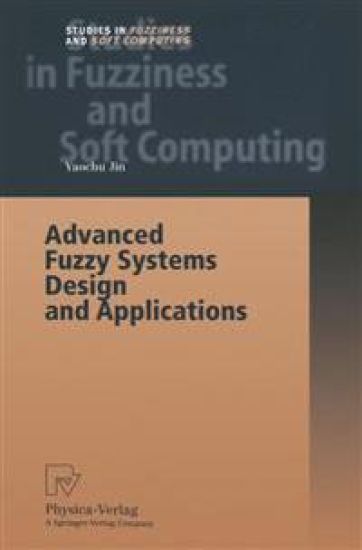
Advanced Fuzzy Systems Design and Applications

Advanced Fuzzy Systems Design and Applications

Yaochu Jin

Physica-Verlag GmbH Co
2011
nidottu
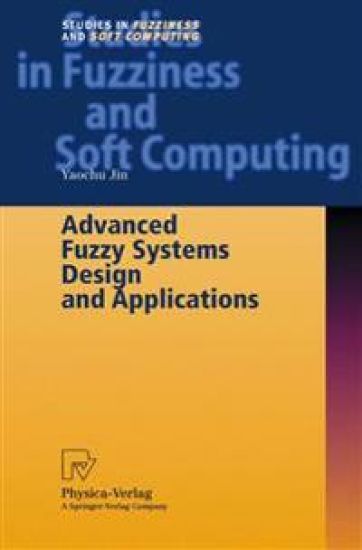
Fuzzy rule systems have found a wide range of applications in many fields of science and technology. Traditionally, fuzzy rules are generated from human expert knowledge or human heuristics for relatively simple systems. In the last few years, data-driven fuzzy rule generation has been very active. Compared to heuristic fuzzy rules, fuzzy rules generated from data are able to extract more profound knowledge for more complex systems. This book presents a number of approaches to the generation of fuzzy rules from data, ranging from the direct fuzzy inference based to neural net­ works and evolutionary algorithms based fuzzy rule generation. Besides the approximation accuracy, special attention has been paid to the interpretabil­ ity of the extracted fuzzy rules. In other words, the fuzzy rules generated from data are supposed to be as comprehensible to human beings as those generated from human heuristics. To this end, many aspects of interpretabil­ ity of fuzzy systems have been discussed, which must be taken into account in the data-driven fuzzy rule generation. In this way, fuzzy rules generated from data are intelligible to human users and therefore, knowledge about unknown systems can be extracted.
Advanced Fuzzy Systems Design and Applications

Advanced Fuzzy Systems Design and Applications

Yaochu Jin

Physica-Verlag GmbH Co
2002
sidottu
Fuzzy rule systems have found a wide range of applications in many fields of science and technology. Traditionally, fuzzy rules are generated from human expert knowledge or human heuristics for relatively simple systems. In the last few years, data-driven fuzzy rule generation has been very active. Compared to heuristic fuzzy rules, fuzzy rules generated from data are able to extract more profound knowledge for more complex systems. This book presents a number of approaches to the generation of fuzzy rules from data, ranging from the direct fuzzy inference based to neural net­ works and evolutionary algorithms based fuzzy rule generation. Besides the approximation accuracy, special attention has been paid to the interpretabil­ ity of the extracted fuzzy rules. In other words, the fuzzy rules generated from data are supposed to be as comprehensible to human beings as those generated from human heuristics. To this end, many aspects of interpretabil­ ity of fuzzy systems have been discussed, which must be taken into account in the data-driven fuzzy rule generation. In this way, fuzzy rules generated from data are intelligible to human users and therefore, knowledge about unknown systems can be extracted.