Kirjojen hintavertailu – 12 903 725 kirjaa ja 27 kauppaa

Kirjailija

Yasushi Suzuki

Kirjat ja teokset yhdessä paikassa: 8 kirjaa, julkaisuja vuosilta 2011–2022, suosituimpiin kuuluu Implementation of Basel Accords in Bangladesh. Vertaile teosten hintoja ja tarkista saatavuus suomalaisista kirjakaupoista.

8 kirjaa

Kirjojen julkaisuvuodet: 2011–2022.

Implementation of Basel Accords in Bangladesh

Implementation of Basel Accords in Bangladesh

A K M Kamrul Hasan; Yasushi Suzuki

SPRINGER VERLAG, SINGAPORE
2022
nidottu
This book analyzes the impact of Basel Accord in Bangladesh. More specifically, it focuses on the credit risk homogenization under standardized approach of Basel Accord where External Credit Rating Agencies (ECAIs) are allowed to rate the exposures, the potential risk of allowing sub-ordinated debt (Sub-debt) as Tier 2 capital, and multiple bank distress cases as a real-world scenarios. In doing so, the book explores why the ECAIs rating fail to capture the real credit risk of exposure and to what extent sub-debt is reliable as regulatory capital. With that, the book's scope is categorized into three tracts (i) analyzes the ECAIs incentive and sanction issues from institutional economics perspective (ii) discusses the ill-impact of Naïve adoption of sub-ordinated debt as regulatory capital and its associated risk on financial system, and (iii) providing readers an empirical illustrations of bank distress when an economy tapped into institutional failures in theabove-mentioned tracts (i) and (ii).

Implementation of Basel Accords in Bangladesh

Implementation of Basel Accords in Bangladesh

A K M Kamrul Hasan; Yasushi Suzuki

Palgrave Macmillan
2021
sidottu
This book analyzes the impact of Basel Accord in Bangladesh. More specifically, it focuses on the credit risk homogenization under standardized approach of Basel Accord where External Credit Rating Agencies (ECAIs) are allowed to rate the exposures, the potential risk of allowing sub-ordinated debt (Sub-debt) as Tier 2 capital, and multiple bank distress cases as a real-world scenarios. In doing so, the book explores why the ECAIs rating fail to capture the real credit risk of exposure and to what extent sub-debt is reliable as regulatory capital. With that, the book's scope is categorized into three tracts (i) analyzes the ECAIs incentive and sanction issues from institutional economics perspective (ii) discusses the ill-impact of Naïve adoption of sub-ordinated debt as regulatory capital and its associated risk on financial system, and (iii) providing readers an empirical illustrations of bank distress when an economy tapped into institutional failures in theabove-mentioned tracts (i) and (ii).

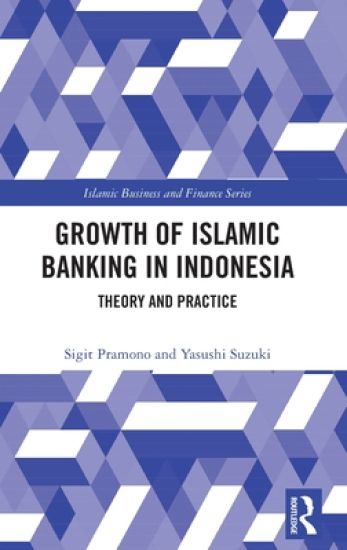
The Growth of Islamic Banking in Indonesia

The Growth of Islamic Banking in Indonesia

Yasushi Suzuki; Sigit Pramono

TAYLOR FRANCIS LTD
2022
nidottu
Indonesia is the most populous Muslim country in the world. Taking into account also its endowment and potential economic resources, the Islamic banking industry in Indonesia was expected to take on an important role in facilitating more financial resources and to contribute to the internationalization of the Islamic mode of financing particularly in the Asia-Pacific region. However, the reality is far from the expectation. This book aims to clarify the causes and fundamental constraints leading to the extraordinarily low level of Indonesia’s Islamic financial deepening. The authors draw on the traditions of Institutional Economics which are concerned with the rules or mechanisms of creating the 'incentive' and 'threat' for economic players because the rules (institutions) would matter as the determinant for economic development and economic efficiency. This book offers a fairly new analytical lens by hypothesizing that Islamic banks must earn additional profit– the authors coined as ‘Islamic bank rent’ - to maintain their franchise value as prudent Shari’ah-compliant lenders when compared to conventional banks. The authors argued that insufficient provision of the Islamic bank rent opportunity may have caused the Indonesia’s Islamic banks the opportunity to learn and improve their skill and capacity for the credit risk management. The book also offers evidence in support of implementing economic and affirmative policy necessary for incubating and developing the Islamic banking industry in Indonesia and making Indonesia an international Islamic financial hub in the Asia-Pacific region. This book will be a useful resource for policy makers and researchers interested in Islamic banking in Indonesia.
The Growth of Islamic Banking in Indonesia

The Growth of Islamic Banking in Indonesia

Yasushi Suzuki; Sigit Pramono

Routledge
2020
sidottu
Indonesia is the most populous Muslim country in the world. Taking into account also its endowment and potential economic resources, the Islamic banking industry in Indonesia was expected to take on an important role in facilitating more financial resources and to contribute to the internationalization of the Islamic mode of financing particularly in the Asia-Pacific region. However, the reality is far from the expectation. This book aims to clarify the causes and fundamental constraints leading to the extraordinarily low level of Indonesia’s Islamic financial deepening. The authors draw on the traditions of Institutional Economics which are concerned with the rules or mechanisms of creating the 'incentive' and 'threat' for economic players because the rules (institutions) would matter as the determinant for economic development and economic efficiency. This book offers a fairly new analytical lens by hypothesizing that Islamic banks must earn additional profit– the authors coined as ‘Islamic bank rent’ - to maintain their franchise value as prudent Shari’ah-compliant lenders when compared to conventional banks. The authors argued that insufficient provision of the Islamic bank rent opportunity may have caused the Indonesia’s Islamic banks the opportunity to learn and improve their skill and capacity for the credit risk management. The book also offers evidence in support of implementing economic and affirmative policy necessary for incubating and developing the Islamic banking industry in Indonesia and making Indonesia an international Islamic financial hub in the Asia-Pacific region. This book will be a useful resource for policy makers and researchers interested in Islamic banking in Indonesia.
Power, Property Rights, and Economic Development

Power, Property Rights, and Economic Development

Mohammad Dulal Miah; Yasushi Suzuki

Springer Verlag, Singapore
2020
nidottu
This book presents a critical reassessment of theories of property rights, in response to conflicts and competition between different groups, and the state. It does so by taking an institutional political perspective to analyse the structures of property rights, with a focus on a series of case studies from Bangladesh. In doing so, the book highlights the importance of property rights for economic growth, why developing countries often fail to design property rights conducive for economic development, and the strategies required for designing an efficient structure of rights. Since property rights falls within the domain of Law and Economics, the book ventures to explain legal issues from an economic perspective, resulting in empirical analysis that comprises both legal and non-legal cases.
Power, Property Rights, and Economic Development

Power, Property Rights, and Economic Development

Mohammad Dulal Miah; Yasushi Suzuki

Springer Verlag, Singapore
2018
sidottu
This book presents a critical reassessment of theories of property rights, in response to conflicts and competition between different groups, and the state. It does so by taking an institutional political perspective to analyse the structures of property rights, with a focus on a series of case studies from Bangladesh. In doing so, the book highlights the importance of property rights for economic growth, why developing countries often fail to design property rights conducive for economic development, and the strategies required for designing an efficient structure of rights. Since property rights falls within the domain of Law and Economics, the book ventures to explain legal issues from an economic perspective, resulting in empirical analysis that comprises both legal and non-legal cases.
Japan's Financial Slump

Japan's Financial Slump

Yasushi Suzuki

Palgrave Macmillan
2011
sidottu
This book evaluates the salient features of Japanese relation-based banking, particularly in the post war period, and Anglo-American mode of banking to explain the nature and extent of transition failure that caused prolonged financial and economic slump in Japan.
Japan's Financial Slump

Japan's Financial Slump

Yasushi Suzuki

Palgrave Macmillan
2011
nidottu
This book evaluates the salient features of Japanese relation-based banking, particularly in the post war period, and Anglo-American mode of banking to explain the nature and extent of transition failure that caused prolonged financial and economic slump in Japan.