
Kirjojen hintavertailu – 12 859 828 kirjaa ja 27 kauppaa

Kirjailija

Ye Jin Park

Kirjat ja teokset yhdessä paikassa: 2 kirjaa, julkaisuja vuosilta 2021–2022, suosituimpiin kuuluu Corporate Social Responsibility and Entrepreneurship for Sustainability. Vertaile teosten hintoja ja tarkista saatavuus suomalaisista kirjakaupoista.

2 kirjaa

Kirjojen julkaisuvuodet: 2021–2022.

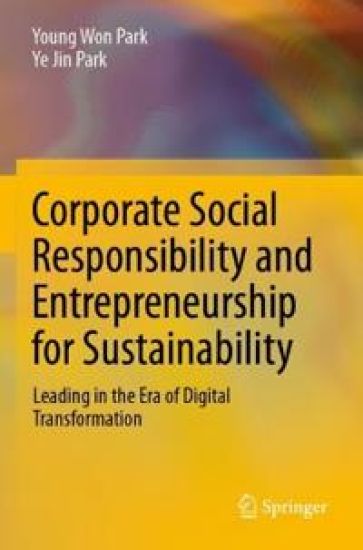
Corporate Social Responsibility and Entrepreneurship for Sustainability

Corporate Social Responsibility and Entrepreneurship for Sustainability

Young Won Park; Ye Jin Park

SPRINGER VERLAG, SINGAPORE
2022
nidottu
This book addresses the dilemma that firms face in engaging in corporate social responsibility (CSR) while maintaining a financially sustainable business model in the era of digital transformation. Several strategies that firms have taken to integrate CSR within the business model are also highlighted. To explicate the problems involved, the book primarily focuses on entrepreneurial ventures, given their nascent business model that best illustrates how business leaders can embed the social mission in the firm at the beginning of organizational founding. In this age, sustainability is an innovation’s new frontier. For sustainable competitive advantage, the book argues for how companies can build more sustainable products, processes, and practices that benefit the firm and society through maintaining an entrepreneurial philosophy. The target readership consists of academics, students, and practitioners in the areas of entrepreneurship, organizational behavior, organizational theory, and strategic management. This book clarifies the critical practices of sustainability-oriented innovative firms and creative small and medium-sized enterprises (SMEs). Through a review of recent trends in CSR, the authors emphasize that CSR is no longer a “bolt-on” or some kind of window-dressing to satisfy public relations (PR) needs. Credible CSR is critical to business legitimacy and sustainability. Aware of the public’s increasing scrutiny, companies are increasingly ramping up their focus on social responsibility, whether by championing women's rights, protecting the environment, or attempting to obliterate poverty, on local, national, or global levels. Simultaneously, more firms face accusations of “greenwashing” – backlash due to consumer mistrust in the intentions behind their CSR practices. While numerous works have highlighted this dilemma and how companies fall short in their prosocial goals or financial objectives (or both), there is a lack of understanding of the ingredients and crucial processes required for the successful implementation of CSR in entrepreneurial enterprises. This book serves to fill that gap.
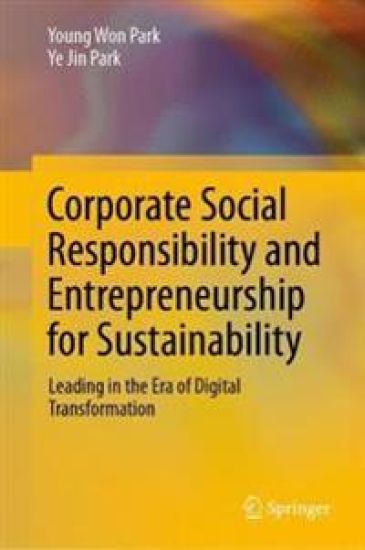
Corporate Social Responsibility and Entrepreneurship for Sustainability

Corporate Social Responsibility and Entrepreneurship for Sustainability

Young Won Park; Ye Jin Park

Springer Verlag, Singapore
2021
sidottu
This book addresses the dilemma that firms face in engaging in corporate social responsibility (CSR) while maintaining a financially sustainable business model in the era of digital transformation. Several strategies that firms have taken to integrate CSR within the business model are also highlighted. To explicate the problems involved, the book primarily focuses on entrepreneurial ventures, given their nascent business model that best illustrates how business leaders can embed the social mission in the firm at the beginning of organizational founding. In this age, sustainability is an innovation’s new frontier. For sustainable competitive advantage, the book argues for how companies can build more sustainable products, processes, and practices that benefit the firm and society through maintaining an entrepreneurial philosophy. The target readership consists of academics, students, and practitioners in the areas of entrepreneurship, organizational behavior, organizational theory, and strategic management. This book clarifies the critical practices of sustainability-oriented innovative firms and creative small and medium-sized enterprises (SMEs). Through a review of recent trends in CSR, the authors emphasize that CSR is no longer a “bolt-on” or some kind of window-dressing to satisfy public relations (PR) needs. Credible CSR is critical to business legitimacy and sustainability. Aware of the public’s increasing scrutiny, companies are increasingly ramping up their focus on social responsibility, whether by championing women's rights, protecting the environment, or attempting to obliterate poverty, on local, national, or global levels. Simultaneously, more firms face accusations of “greenwashing” – backlash due to consumer mistrust in the intentions behind their CSR practices. While numerous works have highlighted this dilemma and how companies fall short in their prosocial goals or financial objectives (or both), there is a lack of understanding of the ingredients and crucial processes required for the successful implementation of CSR in entrepreneurial enterprises. This book serves to fill that gap.