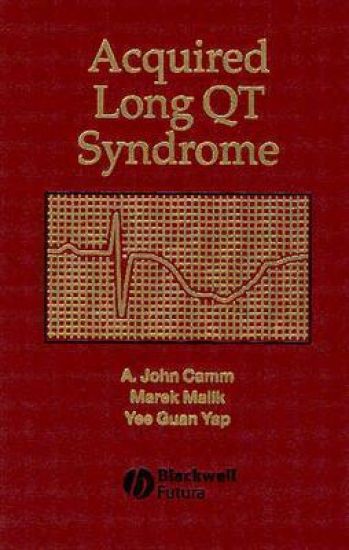
Acquired Long QT Syndrome
A. John Camm; Marek Malik; Yee Guan Yap
Wiley-Blackwell (an imprint of John Wiley Sons Ltd)
2004
sidottu
In recent years there has been considerable interest in the diagnosis and understanding of ventricular repolarisation, particularly the QT interval prolongation and abnormal T and T/U wave morphology associated with torsades de pointes. Advances in ion channel cloning have greatly improved our understanding of the role of ionic channels in mediating cardiac repolarisation. Unfortunately, it is increasingly recognised that a number of drugs, both those associated with altering repolarisation, and others for non-cardiac conditions can increase the propensity for polymorphic ventricular tachycardia, syncope and even ventricular fibrillation and sudden death. In this volume, arrhythmia specialists from St. George’s Hospital Medical School, London discuss the mechanisms behind QT prolongation and torsades de pointes. They focus particularly on the risk of individual cardiac and non-cardiac drugs in provoking long QT syndrome, providing a comprehensive review which will be useful for all electrophysiologists treating polymorphic ventricular tachycardias, and will expose important regulatory issues for pharmaceutical authorities and for the wider medical community.