Kirjojen hintavertailu – 12 859 818 kirjaa ja 27 kauppaa

Kirjailija

Yiannis Gabriel

Kirjat ja teokset yhdessä paikassa: 15 kirjaa, julkaisuja vuosilta 1996–2024, suosituimpiin kuuluu Storytelling in Organizations. Vertaile teosten hintoja ja tarkista saatavuus suomalaisista kirjakaupoista.

15 kirjaa

Kirjojen julkaisuvuodet: 1996–2024.

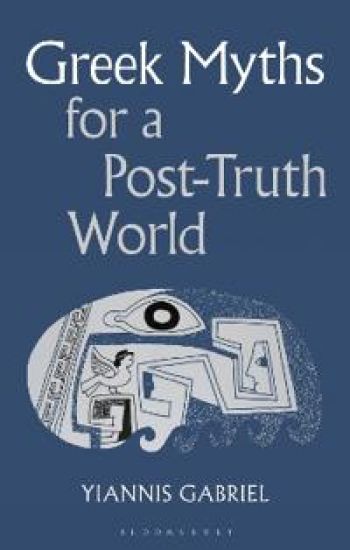
Greek Myths for a Post-Truth World

Greek Myths for a Post-Truth World

Yiannis Gabriel

BLOOMSBURY PUBLISHING PLC
2024
nidottu
Yiannis Gabriel examines what ancient Greek myths can teach us about the troubles and challenges of our 'post-truth' times: environmental degradation, mass migration, war, inequality, exclusion, authoritarianism and perplexing technological possibilities. It shows how Greek myths continue to stir our emotions and shape our experiences, while also assuming new meanings in contemporary culture that suggest a diversity of possible answers to questions that preoccupy us today. In addition to acting as fountains of meaning when meaning is precarious and fragmented, Greek myths have a therapeutic power connecting us to the predicaments that humans have faced across the ages. Across centuries and millennia, Cassandra makes her unheeded prophecies and Pandora unleashes fresh troubles from her box. Yet, each age discovers new meaning and value in old stories, and different myths come into prominence as they address the aspirations and anxieties of each. Using ten ancient myths as his points of departure, Yiannis Gabriel invites readers to think and experience the world we inhabit mythologically – to engage with emotions and symbolism that lurk deeply inside old texts and to consider different courses of action, both individual and collective. In addition to providing intellectual stimulation, the book shows that Greek myths can be a source of practical wisdom and re-assurance that we so badly need in our times.
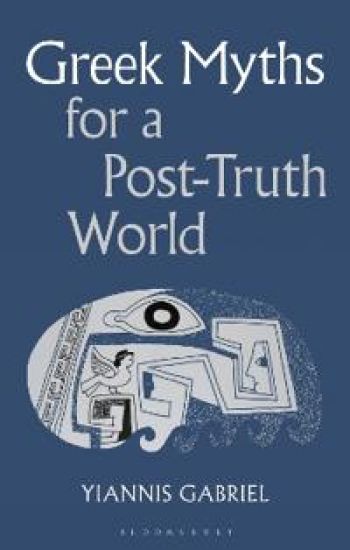
Greek Myths for a Post-Truth World

Greek Myths for a Post-Truth World

Yiannis Gabriel

BLOOMSBURY PUBLISHING PLC
2024
sidottu
Yiannis Gabriel examines what ancient Greek myths can teach us about the troubles and challenges of our 'post-truth' times: environmental degradation, mass migration, war, inequality, exclusion, authoritarianism and perplexing technological possibilities. It shows how Greek myths continue to stir our emotions and shape our experiences, while also assuming new meanings in contemporary culture that suggest a diversity of possible answers to questions that preoccupy us today. In addition to acting as fountains of meaning when meaning is precarious and fragmented, Greek myths have a therapeutic power connecting us to the predicaments that humans have faced across the ages. Across centuries and millennia, Cassandra makes her unheeded prophecies and Pandora unleashes fresh troubles from her box. Yet, each age discovers new meaning and value in old stories, and different myths come into prominence as they address the aspirations and anxieties of each. Using ten ancient myths as his points of departure, Yiannis Gabriel invites readers to think and experience the world we inhabit mythologically – to engage with emotions and symbolism that lurk deeply inside old texts and to consider different courses of action, both individual and collective. In addition to providing intellectual stimulation, the book shows that Greek myths can be a source of practical wisdom and re-assurance that we so badly need in our times.
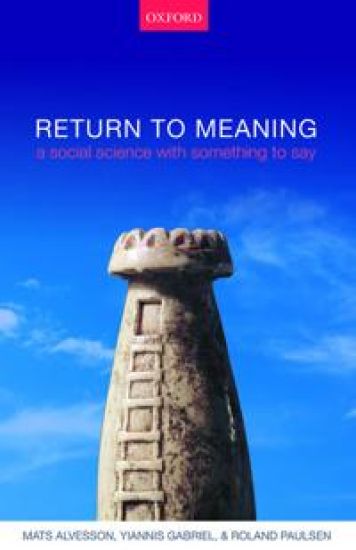
Return to Meaning

Return to Meaning

Mats Alvesson; Yiannis Gabriel; Roland Paulsen

Oxford University Press
2017
sidottu

Halvin toimitettuna 66,50 €

This book argues that we are currently witnessing not merely a decline in the quality of social science research, but the proliferation of meaningless research, of no value to society, and modest value to its authors - apart from securing employment and promotion. The explosion of published outputs, at least in social science, creates a noisy, cluttered environment which makes meaningful research difficult, as different voices compete to capture the limelight even briefly. Older, more significant contributions are easily neglected, as the premium is to write and publish, not read and learn. The result is a widespread cynicism among academics on the value of academic research, sometimes including their own. Publishing comes to be seen as a game of hits and misses, devoid of intrinsic meaning and value, and of no wider social uses whatsoever. Academics do research in order to get published, not to say something socially meaningful. This is what we view as the rise of nonsense in academic research, which represents a serious social problem. It undermines the very point of social science. This problem is far from 'academic'. It affects many areas of social and political life entailing extensive waste of resources and inflated student fees as well as costs to tax-payers. Part two of the book offers a range of proposals aimed at restoring meaning at the heart of social research and drawing social science back address the major problems and issues that face our societies.
The Unmanageable Consumer

The Unmanageable Consumer

Yiannis Gabriel; Tim Lang

SAGE Publications Ltd
2015
sidottu
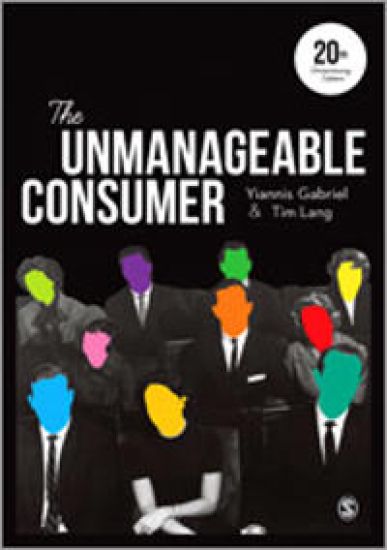
‘The Unmanageable Consumer has long been one of my favorite books in the sociology of consumption. This long overdue third edition has updated and revised the basic argument in many ways. Most importantly, it now offers a new chapter on the consumer as worker or, more generally, the prosumer. Assign it to your classes (I have…and will again) and read it for your edification.’ - George Ritzer, Distinguished University Professor, University of Maryland, USA Western-style consumerism is often presented as unstoppable, yet its costs mount and its grip on consumer reality weakens. In this 20th Anniversary edition, Gabriel and Lang restate their thesis that consumerism is more fragile and unmanageable than is assumed by its proponents. Consumerism has been both stretched and undermined by globalization, the internet, social media and other cultural changes. Major environmental threats, debt, squeezed incomes and social inequalities now temper Western consumers' appetite for spending. The 20th century Deal, first championed by Henry Ford, of more consumption from higher waged work looks tattered. This edition of The Unmanageable Consumer continues to explore 10 different consumer models, and encourages analysis of contemporary consumerism. It looks at the spread of consumerism to developing countries like India and China and considers the effects of demographic changes and migration, and points to new features such as consumers taking on unwaged work. New to this edition: Coverage of new phenomenon such as social media and emerging markets Explores contemporary topics including the occupy movement and horsemeat scandal A new chapter on the consumer as worker. 'This is a remarkable and important book. The new edition updates consumer cultural studies to take into account austerity politics and the economic crisis, and the impact these have had on how we think about and experience everyday practices of shopping and consuming. The authors also build on and maintain the lively and challenging argument from the previous volumes which sees the consumer as an unstable space for a multiplicity of often contradictory responses which can unsettle the various strategies on the part of contemporary capitalism to have us buy more.' - Angela McRobbie, Goldsmiths, University of London ‘The book exemplifies how social science should be: engaged, insightful, imaginative, scholarly and highly socially and politically relevant. Strongly recommended to students, academics as well as all people interested in understanding our time and themselves in an age of consumerism and false promises.’ - Mats Alvesson, Professor of Business Administration, Lund University, Sweden
The Unmanageable Consumer

The Unmanageable Consumer

Yiannis Gabriel; Tim Lang

SAGE Publications Ltd
2015
nidottu

Halvin toimitettuna 108,60 €

‘The Unmanageable Consumer has long been one of my favorite books in the sociology of consumption. This long overdue third edition has updated and revised the basic argument in many ways. Most importantly, it now offers a new chapter on the consumer as worker or, more generally, the prosumer. Assign it to your classes (I have…and will again) and read it for your edification.’ - George Ritzer, Distinguished University Professor, University of Maryland, USA Western-style consumerism is often presented as unstoppable, yet its costs mount and its grip on consumer reality weakens. In this 20th Anniversary edition, Gabriel and Lang restate their thesis that consumerism is more fragile and unmanageable than is assumed by its proponents. Consumerism has been both stretched and undermined by globalization, the internet, social media and other cultural changes. Major environmental threats, debt, squeezed incomes and social inequalities now temper Western consumers' appetite for spending. The 20th century Deal, first championed by Henry Ford, of more consumption from higher waged work looks tattered. This edition of The Unmanageable Consumer continues to explore 10 different consumer models, and encourages analysis of contemporary consumerism. It looks at the spread of consumerism to developing countries like India and China and considers the effects of demographic changes and migration, and points to new features such as consumers taking on unwaged work. New to this edition: Coverage of new phenomenon such as social media and emerging markets Explores contemporary topics including the occupy movement and horsemeat scandal A new chapter on the consumer as worker. 'This is a remarkable and important book. The new edition updates consumer cultural studies to take into account austerity politics and the economic crisis, and the impact these have had on how we think about and experience everyday practices of shopping and consuming. The authors also build on and maintain the lively and challenging argument from the previous volumes which sees the consumer as an unstable space for a multiplicity of often contradictory responses which can unsettle the various strategies on the part of contemporary capitalism to have us buy more.' - Angela McRobbie, Goldsmiths, University of London ‘The book exemplifies how social science should be: engaged, insightful, imaginative, scholarly and highly socially and politically relevant. Strongly recommended to students, academics as well as all people interested in understanding our time and themselves in an age of consumerism and false promises.’ - Mats Alvesson, Professor of Business Administration, Lund University, Sweden
Organizing & Organizations

Organizing & Organizations

Stephen Fineman; Yiannis Gabriel; David B P Sims

SAGE Publications Ltd
2009
nidottu
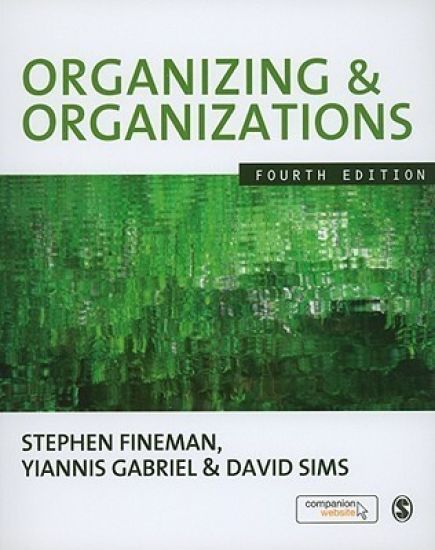
Organizing and Organizations is well loved by students and lecturers for its accessible, conversational tone and insightful real-life examples introducing the study of organizations and organizational behaviour. Fineman, Gabriel and Sims, eminent academics in the field, cover a wealth of key concepts, research and literature leaving students informed and engaged. The Fourth Edition builds on the strengths of previous editions, to provide you with a textbook that continues to stand out from the rest. This new edition has been fully developed to include: - New chapters on Influence and Power, and Innovation and Change. - A new section within each chapter that highlights the theoretical links informing the chapters. - New review questions to test and apply your understanding of the ideas in each chapter. - New 'reading on' sections that direct you to free links to highly recommended journal articles relating to each chapter's coverage, and found on the companion website. - New critical review questions at the end of each chapter to encourage debate. - Each chapter is now enlivened with pictorial illustrations. - A fully updated glossary of key concepts in the study of organizations Organizing and Organizations integrates a strong critical approach throughout.
Organizing & Organizations

Organizing & Organizations

Stephen Fineman; Yiannis Gabriel; David B P Sims

SAGE Publications Ltd
2009
sidottu
Organizing and Organizations is well loved by students and lecturers for its accessible, conversational tone and insightful real-life examples introducing the study of organizations and organizational behaviour. Fineman, Gabriel and Sims, eminent academics in the field, cover a wealth of key concepts, research and literature leaving students informed and engaged. The Fourth Edition builds on the strengths of previous editions, to provide you with a textbook that continues to stand out from the rest. This new edition has been fully developed to include: - New chapters on Influence and Power, and Innovation and Change. - A new section within each chapter that highlights the theoretical links informing the chapters. - New review questions to test and apply your understanding of the ideas in each chapter. - New 'reading on' sections that direct you to free links to highly recommended journal articles relating to each chapter's coverage, and found on the companion website. - New critical review questions at the end of each chapter to encourage debate. - Each chapter is now enlivened with pictorial illustrations. - A fully updated glossary of key concepts in the study of organizations Organizing and Organizations integrates a strong critical approach throughout.
Organizing Words

Organizing Words

Yiannis Gabriel

Oxford University Press
2008
sidottu
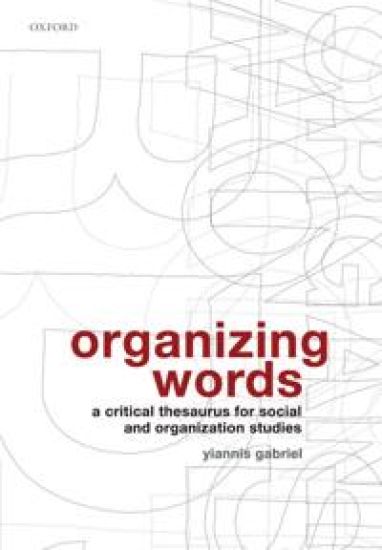
Organizing Words presents a series of essays on some 220 widely used - and much debated - terms in the social sciences, and organization studies. Each essay explores the meanings and uses of the word; and also the controversies they have sparked. The book aims to be a first port of call for students, researchers and scholars who wish to familiarize themselves with these key ideas and use them in their own work. The book is neither an encyclopaedia nor a dictionary, but a thesaurus. As such it combines both the original meaning of a thesaurus as a treasure trove, with its more contemporary characteristics of an accessible and practical resource. Primarily aimed at those interested in social and organizational studies, it will appeal to all those interested in the human sciences. It does not claim to be canonical or all-inclusive, but each entry seeks to enlighten and help, without patronizing or obscuring disagreements and difficulties. The book seeks to be re-assuring without being complacent or 'comfortable', to be authoritative without being doctrinaire, and to be critical without being destructive. Words help us express ourselves, and make sense of our experiences and our actions; and they help us to organize ourselves, our thoughts and our universe. Organizing Words will be an invaluable resource for essay-writing and a useful tool in planning and carrying out projects and dissertations. Most of the entries have been written by Yiannis Gabriel, with 40 essays coming from other experts in particular areas.
Organizing Words

Organizing Words

Yiannis Gabriel

Oxford University Press
2008
nidottu
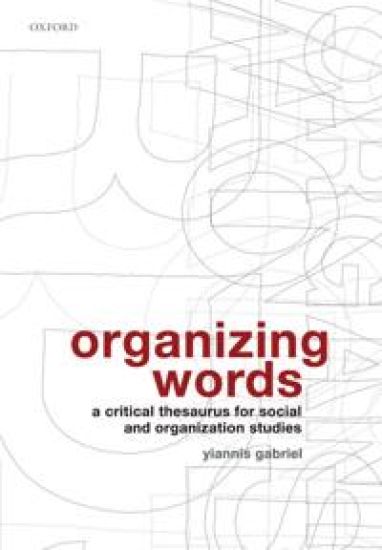
Organizing Words presents a series of essays on some 220 widely used - and much debated - terms in the social sciences, and organization studies. Each essay explores the meanings and uses of the word; and also the controversies they have sparked. The book aims to be a first port of call for students, researchers and scholars who wish to familiarize themselves with these key ideas and use them in their own work. The book is neither an encyclopaedia nor a dictionary, but a thesaurus. As such it combines both the original meaning of a thesaurus as a treasure trove, with its more contemporary characteristics of an accessible and practical resource. Primarily aimed at those interested in social and organizational studies, it will appeal to all those interested in the human sciences. It does not claim to be canonical or all-inclusive, but each entry seeks to enlighten and help, without patronizing or obscuring disagreements and difficulties. The book seeks to be re-assuring without being complacent or 'comfortable', to be authoritative without being doctrinaire, and to be critical without being destructive. Words help us express ourselves, and make sense of our experiences and our actions; and they help us to organize ourselves, our thoughts and our universe. Organizing Words will be an invaluable resource for essay-writing and a useful tool in planning and carrying out projects and dissertations. Most of the entries have been written by Yiannis Gabriel, with 40 essays coming from other experts in particular areas.
Storytelling in Organizations

Storytelling in Organizations

Yiannis Gabriel

Oxford University Press
2000
sidottu
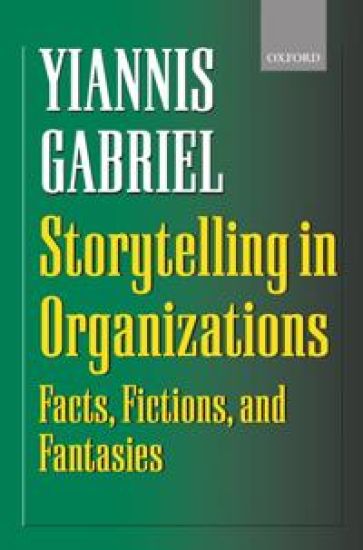
Myths, stories, and folklore are part of the fabric and life of all organizations, enabling us to understand, identify, and communicate the character of the organization - its ambitions, conflicts, and peculiarities. Drawing on extensive fieldwork of storytelling in five organizations, this book argues that stories open valuable windows into the emotional and symbolic lives of organizations. By collecting stoires in different organizations, by listening and comparing different accounts, by investigating how narratives are constructed around specific events, by examining which events in an organization's history generate stories and which ones fail to do so, researchers can gain access to deeper organizational realities, closely linked to their members' experiences. In this way, stories enable researchers to study organizational politics, culture, and change in uniquely illuminating ways, revealing how wider organizational issues are viewed, commented upon, and worked upon by their members. The book's first part develops the theory of storytelling by building on various approaches, including narrative, folkloric, ethnographic, symbolic, social constructionist, and psychoanalytic, while the second offers a set of four studies which make use of stories in exploring particular aspects of organizational life.
Storytelling in Organizations

Storytelling in Organizations

Yiannis Gabriel

Oxford University Press
2000
nidottu

Halvin toimitettuna 83,90 €

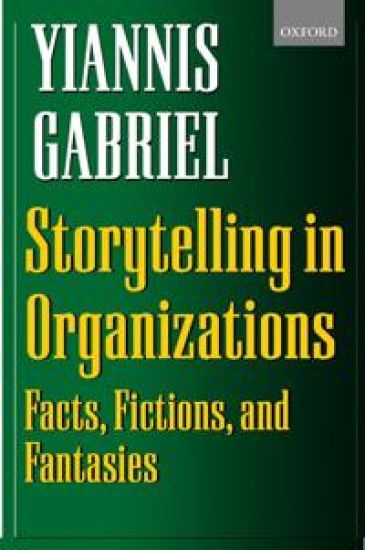
Myths, stories, and folklore are part of the fabric and life of all organizations, enabling us to understand, identify, and communicate the character of the organization - its ambitions, conflicts, and peculiarities. Drawing on extensive fieldwork of storytelling in five organizations, this book argues that stories open valuable windows into the emotional and symbolic lives of organizations. By collecting stoires in different organizations, by listening and comparing different accounts, by investigating how narratives are constructed around specific events, by examining which events in an organization's history generate stories and which ones fail to do so, researchers can gain access to deeper organizational realities, closely linked to their members' experiences. In this way, stories enable researchers to study organizational politics, culture, and change in uniquely illuminating ways, revealing how wider organizational issues are viewed, commented upon, and worked upon by their members. The book's first part develops the theory of storytelling by building on various approaches, including narrative, folkloric, ethnographic, symbolic, social constructionist, and psychoanalytic, while the second offers a set of four studies which make use of stories in exploring particular aspects of organizational life.
Organizations in Depth

Organizations in Depth

Yiannis Gabriel

SAGE Publications Inc
1999
sidottu
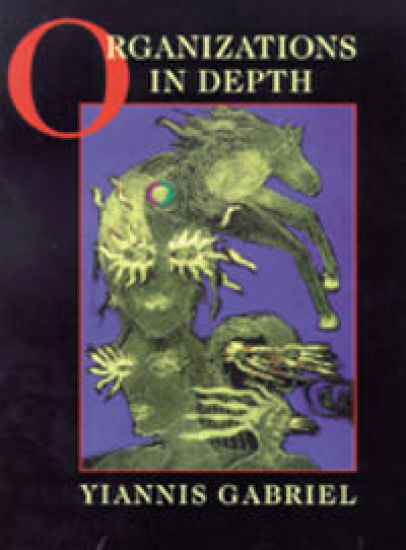
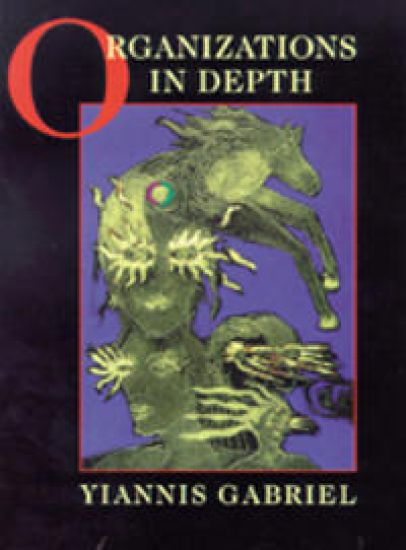
`The book is a good read. Gabriel has an engaging writing style, liberally interspersed with vignettes, cases, and quotes…. While the reader may not agree with some of what Gabriel is espousing, the author presents his material in a non-judgemental manner…. And who knows ? Maybe Gabriel is foreshadowing some new directions in organizational theory and even new research methodology' - Journal of Occupational and Organizational Psychology This book is a comprehensive and systematic examination of the insights psychoanalysis can offer to the study of organizations and organizational behaviour. Richly illustrated with examples, Yiannis Gabriel's exhaustive study provides fresh understandings of the role of creativity, control mechanisms, leadership, culture, and emotions in organizations. Core theories are explained at length and there is a chapter on research strategies. Extensive reference is made to practical cases, and there is a review of the key debates.
Organizations in Depth

Organizations in Depth

Yiannis Gabriel

SAGE Publications Inc
1999
nidottu
`The book is a good read. Gabriel has an engaging writing style, liberally interspersed with vignettes, cases, and quotes…. While the reader may not agree with some of what Gabriel is espousing, the author presents his material in a non-judgemental manner…. And who knows ? Maybe Gabriel is foreshadowing some new directions in organizational theory and even new research methodology' - Journal of Occupational and Organizational Psychology This book is a comprehensive and systematic examination of the insights psychoanalysis can offer to the study of organizations and organizational behaviour. Richly illustrated with examples, Yiannis Gabriel's exhaustive study provides fresh understandings of the role of creativity, control mechanisms, leadership, culture, and emotions in organizations. Core theories are explained at length and there is a chapter on research strategies. Extensive reference is made to practical cases, and there is a review of the key debates.
Experiencing Organizations

Experiencing Organizations

Stephen Fineman; Yiannis Gabriel

SAGE Publications Ltd
1996
nidottu
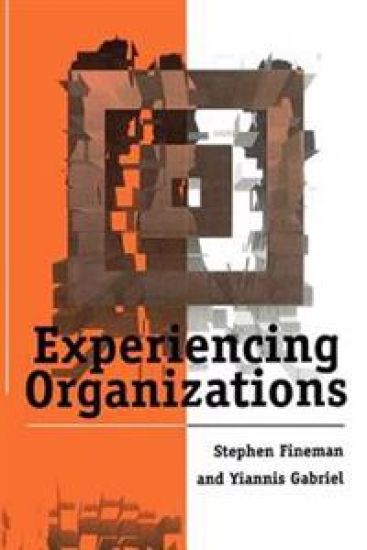
Told through the fresh, sharp eyes of new organizational recruits, these sometimes comic, often traumatic, but always vivid and revealing accounts of organizations have much to say to learners and old hands alike. Grouped in sections on `images', `winning and losing' and `survival and injuries', the narratives encompass a wide gamut of themes and issue. These include: power and politics in organizations; organizational cultures and change; gender and discrimination; appearances and realities; leaders and followers; and emotion, motivation and stress. The authors also focus on the coldly competitive features of businesses where processes such as restructuring, rationalization and downsizing are increasingly commonplace. Throughout, commentaries by Stephen Fineman and Yiannis Gabriel highlight particular points of analysis and learning, while each chapter concludes with questions for discussion and a selected bibliography enabling further reading.
Experiencing Organizations

Experiencing Organizations

Stephen Fineman; Yiannis Gabriel

SAGE Publications Ltd
1996
sidottu
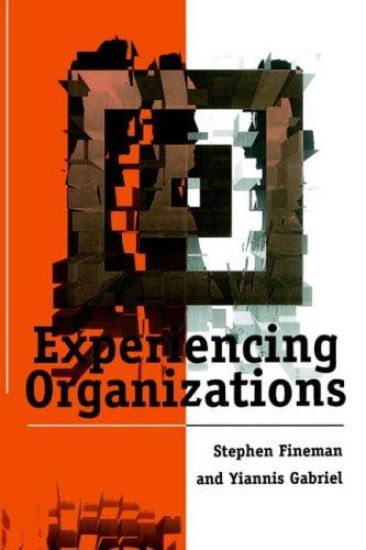
Told through the fresh, sharp eyes of new organizational recruits, these sometimes comic, often traumatic, but always vivid and revealing accounts of organizations have much to say to learners and old hands alike. Grouped in sections on `images', `winning and losing' and `survival and injuries', the narratives encompass a wide gamut of themes and issue. These include: power and politics in organizations; organizational cultures and change; gender and discrimination; appearances and realities; leaders and followers; and emotion, motivation and stress. The authors also focus on the coldly competitive features of businesses where processes such as restructuring, rationalization and downsizing are increasingly commonplace. Throughout, commentaries by Stephen Fineman and Yiannis Gabriel highlight particular points of analysis and learning, while each chapter concludes with questions for discussion and a selected bibliography enabling further reading.