
Kirjojen hintavertailu – 12 859 824 kirjaa ja 27 kauppaa

Kirjailija

Yilmaz Ihsan

Kirjat ja teokset yhdessä paikassa: 2 kirjaa, julkaisuja vuodelta 2026, suosituimpiin kuuluu Weaponizing Civilizationalism for Authoritarianism. Vertaile teosten hintoja ja tarkista saatavuus suomalaisista kirjakaupoista.

2 kirjaa

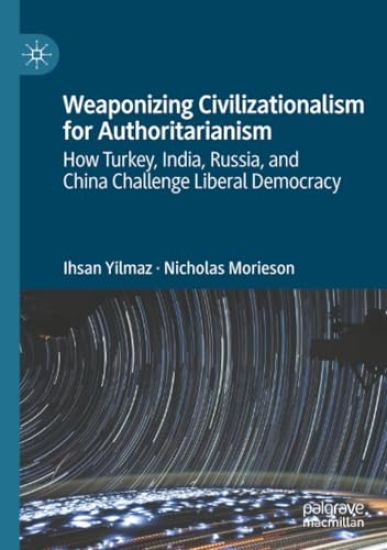
Weaponizing Civilizationalism for Authoritarianism

Weaponizing Civilizationalism for Authoritarianism

Yilmaz Ihsan; Nicholas Morieson

Springer Verlag Singapore
2026
Nidottu
This book, based on a systematic analysis of leaders' speeches, examines how regimes in Turkey, India, Russia, and China strategically weaponize the concept of 'civilization' along with emotional appeals, such as pride, fear, and nostalgia, to challenge global liberal democratic norms. As the influence of liberal democracy wanes, these nations increasingly declare themselves ‘civilization-states’. By redefining national identity to include peoples living in foreign countries, justifying belligerence abroad, and reinforcing anti-democratic practices domestically, these regimes position themselves as guardians of transnational peoples with distinctive civilizational values. This is the first book to systematically explore how and why these states leverage civilization and emotional manipulation to reshape both domestic politics and international relations.

Populist Identification in Public Discourse

Populist Identification in Public Discourse

Yilmaz Ihsan; Fizza Batool

Springer Verlag Singapore
2026
Nidottu
Based on semi-structured interviews with ordinary citizens in Pakistan, this book analyses the complex relationship between populism, political identity, and historical experiences in Pakistan, highlighting how populist discourse influences and is influenced by varied interpretations of Pakistaniat - the identification with Pakistan. It introduces a novel theoretical framework for analysing populism in the public sphere, using Laclau's view of populism as a discursive logic and Panizza's definition as a mode of identification. This connection allows for a deeper understanding of how populist constructs form a collective identity amidst diverse demands, particularly through the concept of "the people" as an empty signifier. The book also examines the multiple meanings associated with Pakistani identity and their ties to the rise of populism, addressing gaps in existing literature regarding the demand side of populism and its impact on both politicians and the public.