Kirjojen hintavertailu – 12 903 724 kirjaa ja 27 kauppaa

Kirjailija

Yingjin Zhang

Kirjat ja teokset yhdessä paikassa: 10 kirjaa, julkaisuja vuosilta 2001–2020, suosituimpiin kuuluu Cinema, Space, and Polylocality in a Globalizing China. Vertaile teosten hintoja ja tarkista saatavuus suomalaisista kirjakaupoista.

10 kirjaa

Kirjojen julkaisuvuodet: 2001–2020.

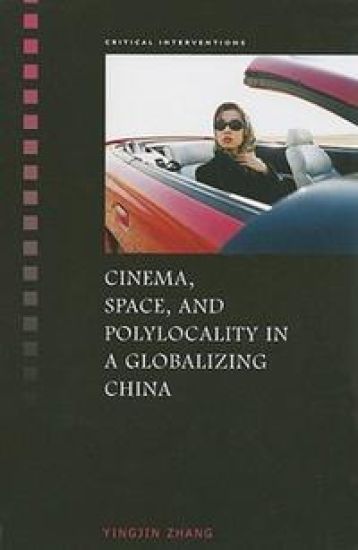
Cinema, Space, and Polylocality in a Globalizing China

Cinema, Space, and Polylocality in a Globalizing China

Yingjin Zhang

University of Hawai'i Press
2009
nidottu
In this milestone work, prominent China film scholar Yingjin Zhang proposes polylocality as a new conceptual framework for investigating the shifting spaces of contemporary Chinese cinema in the age of globalization. Questioning the national cinema paradigm, Zhang calls for comparative studies of underdeveloped areas beyond the imperative of transnationalism. The book begins by addressing theories and practices related to space, place, and polylocality in contemporary China before focusing on the space of scholarship and urging scholars to move beyond the current paradigm and explore transnational and comparative film studies. This is followed by a chapter that concentrates on the space of production and surveys the changing landscape of postsocialist filmmaking and the transformation of China's urban generation of directors. Next is an examination of the space of polylocality and the cinematic mappings of Beijing and a persistent reel contact with polylocality in hinterland China. In the fifth chapter Zhang explores the space of subjectivity in independent film and video and contextualizes experiments by young directors with various documentary styles. Chapter 6 calls attention to the space of performance and addresses issues of media and mediation by way of two kinds of playing: the first with documentary as troubling information, the second with piracy as creative intervention. The concluding chapter offers an overview of Chinese cinema in the new century and provides production and reception statistics. Combining inspired critical insights, original observations, and new information, Cinema, Space, and Polylocality in a Globalizing China is a significant work on current Chinese film and a must-read for film scholars and anyone seriously interested in cinema more generally or contemporary Chinese culture.
Cinema, Space, and Polylocality in a Globalizing China

Cinema, Space, and Polylocality in a Globalizing China

Yingjin Zhang

University of Hawai'i Press
2009
sidottu
In this milestone work, prominent China film scholar Yingjin Zhang proposes 'polylocality' as a new conceptual framework for investigating the shifting spaces of contemporary Chinese cinema in the age of globalization. Questioning the national cinema paradigm, Zhang calls for comparative studies of underdeveloped areas beyond the imperative of transnationalism. The book begins by addressing theories and practices related to space, place, and polylocality in contemporary China before focusing on the space of scholarship and urging scholars to move beyond the current paradigm and explore transnational and comparative film studies. This is followed by a chapter that concentrates on the space of production and surveys the changing landscape of postsocialist filmmaking and the transformation of China's urban generation of directors. Next is an examination of the space of polylocality and the cinematic mappings of Beijing and a persistent 'reel' contact with polylocality in hinterland China. In the fifth chapter Zhang explores the space of subjectivity in independent film and video and contextualizes experiments by young directors with various documentary styles. Chapter 6 calls attention to the space of performance and addresses issues of media and mediation by way of two kinds of playing: the first with documentary as troubling information, the second with piracy as creative intervention. The concluding chapter offers an overview of Chinese cinema in the new century and provides production and reception statistics.
Chinese National Cinema

Chinese National Cinema

Yingjin Zhang

Routledge
2004
nidottu
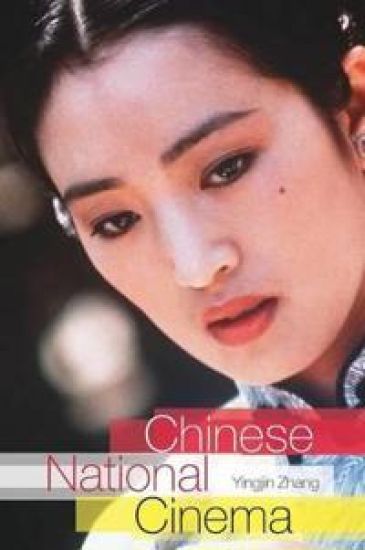
This introduction to Chinese national cinema covers three 'Chinas': mainland China, Hong Kong and Taiwan. Historical and comparative perspectives bring out the parallel developments in these three Chinas, while critical analysis explores thematic and stylistic changes over time. As well as exploring artistic achievements and ideological debates, Yingjin Zhang examines how - despite the pressures placed on the industry from state control and rigid censorship - Chinese national cinema remains incapable of projecting a single unified picture, but rather portrays many different Chinas.
Chinese National Cinema

Chinese National Cinema

Yingjin Zhang

Routledge
2004
sidottu
This introduction to Chinese national cinema covers three 'Chinas': mainland China, Hong Kong and Taiwan. Historical and comparative perspectives bring out the parallel developments in these three Chinas, while critical analysis explores thematic and stylistic changes over time. As well as exploring artistic achievements and ideological debates, Yingjin Zhang examines how - despite the pressures placed on the industry from state control and rigid censorship - Chinese national cinema remains incapable of projecting a single unified picture, but rather portrays many different Chinas.
Locating Taiwan Cinema in the Twenty-First Century

Locating Taiwan Cinema in the Twenty-First Century

Paul G Pickowicz; Yingjin Zhang

Cambria Press
2020
sidottu
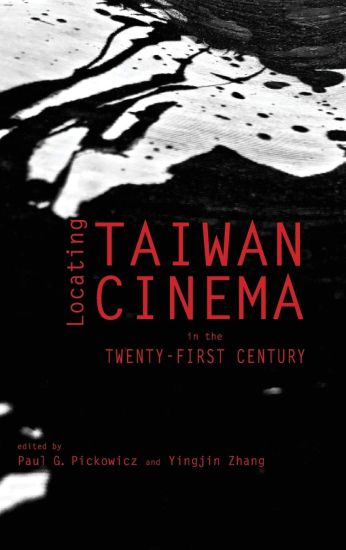
This book is in the Cambria Sinophone World Series headed by Victor H. Mair (University of Pennsylvania).*Includes images. Twenty-first-century Taiwan has been evolving in fascinating and complicated ways, in terms of culture, economy, politics, and society. This has led to renewed tensions in relations between the government of mainland China and various camps in Taiwan. In Taiwan, these tensions often focus on issues of identity. Who are the Taiwanese? How are the Taiwanese different from regional and global communities? How are the Taiwanese connected to these communities? Business leaders, factory workers, farmers, and migrants have their opinions. Cultural producers, including filmmakers and pop musicians, offer unique perspectives. Political parties, functioning in a democratic environment, fiercely debate these issues. Remarkably diverse ethnic groups contribute to this ongoing dialogue. This complex twenty-first-century debate in Taiwan is a politically healthy one that takes place both on and off screen. There has been much discussion of New Wave Taiwan cinema of the 1980s and 1990s, including research that studies the pathbreaking contributions of acclaimed directors like Hou Hsiao-hsien. This book updates the scholarship on Taiwan cinema by taking it into the twenty-first century. It is the first book to take a multidisciplinary approach to evaluating recent Taiwan films. The authors are specialists in cultural studies, history, and the social sciences, and they use different film materials and methodologies to analyze the ways in which filmmakers deal with the evolution of Taiwan's society, economy, and culture in the new century. The emphasis is placed on the diversity of approaches that characterize recent Taiwan cinema. Taiwanese filmmakers use many forms and genres to tackle pressing issues. In sharp contrast to the late-twentieth-century New Wave filmmakers who were widely regarded as producing "art films" that had little impact on the domestic market, many recent Taiwan films have enjoyed huge commercial success in Taiwan. This book probes many crucial controversies: What are Taiwan's meaningful cultural and historical connections to Japan? How do Taiwanese filmmakers and audiences feel about mainland China? How does Taiwan cinema deal with environmental issues, animal rights, human trafficking, sexuality, and the challenges facing ethnic minorities? Locating Twenty-First-Century Taiwan Cinema is an important book for collections in Asian studies, film studies, and the social sciences.
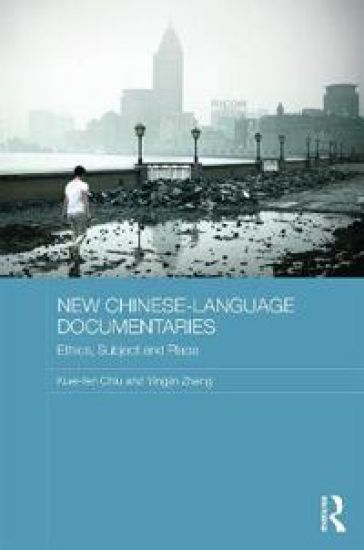
New Chinese-Language Documentaries

New Chinese-Language Documentaries

Kuei-fen Chiu; Yingjin Zhang

Routledge
2017
nidottu
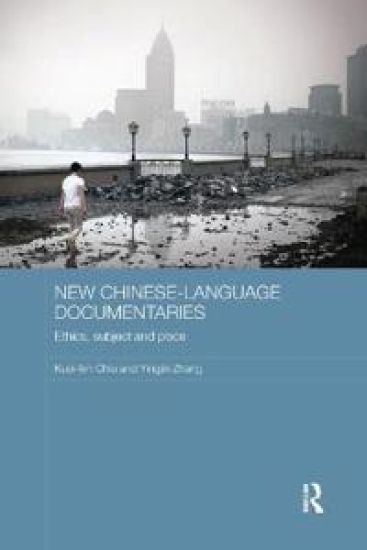
Documentary filmmaking is one of the most vibrant areas of media activity in the Chinese world, with many independent filmmakers producing documentaries that deal with a range of sensitive socio-political problems, bringing to their work a strongly ethical approach. This book identifies notable similarities and crucial differences between new Chinese-language documentaries in mainland China and Taiwan. It outlines how documentary filmmaking has developed, contrasts independent documentaries with dominant official state productions, considers how independent documentary filmmakers go about their work, including the work of exhibiting their films and connecting with audiences, and discusses the content of their documentaries, showing how the filmmakers portray a wide range of subject matter regarding places and people, and how they deal with particular issues including the underprivileged, migrants and women in an ethical way. Throughout the book demonstrates how successful Chinese-language independent documentary filmmaking is, with many appearances at international film festivals and a growing number of award-winning titles.
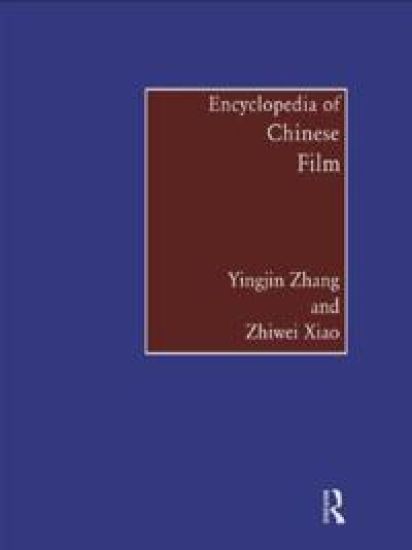
Encyclopedia of Chinese Film

Encyclopedia of Chinese Film

Zhiwei Xiao; Yingjin Zhang

Routledge
2015
nidottu
The Encyclopedia of Chinese Film, one of the first ever encyclopedias in this area, provides alphabetically organized entries on directors, genres, themes, and actors and actresses from mainland China, Hong Kong and Taiwan as well as 300 film synopses. Great care has been taken to provide solid cultural and historical context to the facts. The alphabetical entries are preceded by a substantial historical section, incorporating material on the the main studios and analysing the impact of Chinese film abroad as well as at home in recent years. This Encyclopedia meets the needs, equally, of * the film studies scholar * the student of Chinese culture* the specialist in Chinese film* the curious viewer wanting to know more. Additional features include:* comprehensive cross-references and suggestions for further reading * a list of relevant websites* a chronology of films and a classified contents list* three indexes- (one of film and tv titles with directors names and year of release, one of names including actors, writers, directors and producers and one of studios, all with pinyin romanizations)* a glossary of pinyin romanizations, Chinese characters and English equivalents to aid the specialist in moving between Chinese titles and English translations.
New Chinese-Language Documentaries

New Chinese-Language Documentaries

Kuei-fen Chiu; Yingjin Zhang

Routledge
2014
sidottu
Documentary filmmaking is one of the most vibrant areas of media activity in the Chinese world, with many independent filmmakers producing documentaries that deal with a range of sensitive socio-political problems, bringing to their work a strongly ethical approach. This book identifies notable similarities and crucial differences between new Chinese-language documentaries in mainland China and Taiwan. It outlines how documentary filmmaking has developed, contrasts independent documentaries with dominant official state productions, considers how independent documentary filmmakers go about their work, including the work of exhibiting their films and connecting with audiences, and discusses the content of their documentaries, showing how the filmmakers portray a wide range of subject matter regarding places and people, and how they deal with particular issues including the underprivileged, migrants and women in an ethical way. Throughout the book demonstrates how successful Chinese-language independent documentary filmmaking is, with many appearances at international film festivals and a growing number of award-winning titles.
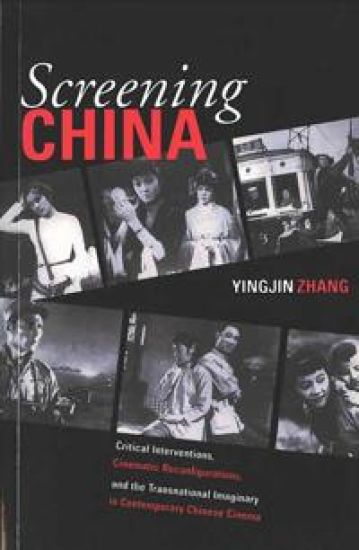
Screening China

Screening China

Yingjin Zhang

Centre for Chinese Studies Publications
2001
sidottu
When Chinese films are screened in the West, viewers often prize, debate, and critique the “Chineseness” presented therein. Critics, scholars, and cultural theorists, too, latch onto the ethnic and cultural markers in Chinese film, often applying their theories as if they were universally applicable and even independent of history. They study only a small number of films from a large body of available works, often with a unidirectional Eurocentric bias. As a result, Chinese filmmakers are caught between the Western consumer and critical demand for ethnic and cultural images and the local restrictions of economics and politics. Screening China follows filmmakers’ efforts to reconfigure China and position their work between the global and the local. In Part I, Yingjin Zhang catalogs the lenses Western film critics have used to break down, neatly package, and closely scrutinize China. One of the chief examples is the narrative of Communist Party censorship in which the regime notoriously represses artists and repeatedly violates human rights. In Part II of Screening China, Zhang narrates how New Chinese Cinema struggled to break free of the ethnic and cultural representation sought by Western audiences, introducing readers to the numerous Chinese filmmakers who have used the space opened up by New Chinese Cinema to present China in all its social, historical, political, ethnic, cultural, and economic facets.
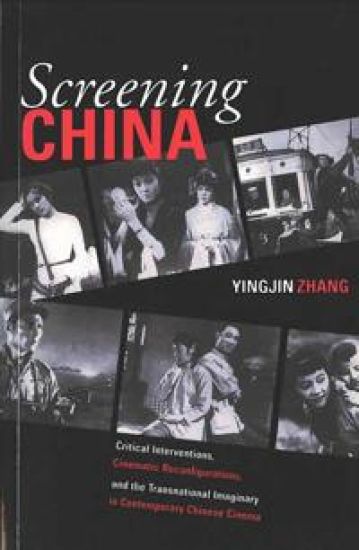
Screening China

Screening China

Yingjin Zhang

Centre for Chinese Studies Publications
2001
nidottu
When Chinese films are screened in the West, viewers often prize, debate, and critique the “Chineseness” presented therein. Critics, scholars, and cultural theorists, too, latch onto the ethnic and cultural markers in Chinese film, often applying their theories as if they were universally applicable and even independent of history. They study only a small number of films from a large body of available works, often with a unidirectional Eurocentric bias. As a result, Chinese filmmakers are caught between the Western consumer and critical demand for ethnic and cultural images and the local restrictions of economics and politics. Screening China follows filmmakers’ efforts to reconfigure China and position their work between the global and the local. In Part I, Yingjin Zhang catalogs the lenses Western film critics have used to break down, neatly package, and closely scrutinize China. One of the chief examples is the narrative of Communist Party censorship in which the regime notoriously represses artists and repeatedly violates human rights. In Part II of Screening China, Zhang narrates how New Chinese Cinema struggled to break free of the ethnic and cultural representation sought by Western audiences, introducing readers to the numerous Chinese filmmakers who have used the space opened up by New Chinese Cinema to present China in all its social, historical, political, ethnic, cultural, and economic facets.