Kirjojen hintavertailu – 12 859 829 kirjaa ja 27 kauppaa
Kirjailija
Yogi Ramacharaka
Kirjat ja teokset yhdessä paikassa: 301 kirjaa, julkaisuja vuosilta 1904–2026, suosituimpiin kuuluu Raja Yoga: A Series Of Lessons In Raja Yoga. Vertaile teosten hintoja ja tarkista saatavuus suomalaisista kirjakaupoista.
Chapters I 5 The Other Side II 14 There is NO Death III 23 The Planes Of Life IV 31 The Astral Plane V 39 After Death VI 47 The Soul-Slumber VII 56 The Soul's Awakening VIII 64 Astral Plane Geography IX 72 Primitive Soul State X 80 Astral Religious Experience XI 89 Astral Heavens and Hells XII 99 Astral Self Expression XIII 106 Astral Plane Occupation XIV 116 Astral Companionship XV 125 Spirit Communication XVI 134 Earth-Bound Souls XVII 143 Astral Shells XVIII 151 The Second Soul-Sleep XIX 160 Re-Birth XX 168 Beyond Reincarnation Excerpt: To those who have acquired that sense of consciousness of the illusion of death, these frightful emotions have faded away. To them, while they naturally feel the sorrow of temporary separation and the loss of companionship, the loved one is seen to have simply passed on to another phase of life, and nothing has been lost --- nothing has perished. There is a centuries'-old Hindu fable, in which is told the tale of a caterpillar, who feeling the approach of the langour which betokened the end of the crawling stage of existence and the beginning of the long sleep of the chrysalis stage, called his friends around him. "It is sad," he said, "to think that I must abandon my life, filled with so many bright promises of future achievement. Cut off by the grim reaper, in my very prime, I am an example of the heartlessness of Nature. Farewell, good friends, farewell forever. Tomorrow I shall be no more." And, accompanied by the tears and lamentations of the friends surrounded his death-bed, he passed away. An old caterpillar remarked sadly: "Our brother has left us. His fate is also ours. One by one we shall be cut down by the scythe of the destroyer, like unto the grass of the field. By faith we hope to rise again, but perhaps this is but the voice inspired by a vain hope. None of us knows anything positively of another life. Let us mourn the common fate of our race." Whereupon, sadly, they departed.
Thousands of years before the development of Western social sciences of psychology, philosophy, religious studies, etc., the yogis of India, especially the branch of Raja Yoga, which dealt with human mental faculty, pondered with the same questions that today modern scientists are involved in. The results of many of these recent scientific developments clearly seem to be validating the premises of the Eastern philosophy, especially the Yoga Philosophy. This volume represents one of the best writings on the essence of Raja Yoga. As such, this book will be of interest to those looking for understanding human psyche, philosophy, spirituality, and an effective self-help source in improving and developing the quality of all aspects of their lives. Last but not least, this volume of Raja Yoga will assist those who are ready in experiencing a glimpse of spiritual transcendence.
Gnani YogaWhat is known as Gnani Yoga or Yoga of Wisdom deals with the scientific and intellectual knowing of the great questions regarding Life and what lies back of Life--the Riddle of the Universe. This book gives the highest Yogi teachings regarding the absolute and its manifestations. Yogi RamacharakaYogi Ramacharaka, born in India ventured out early in life to hunt for the truth. He spent many years trudging back and forth across the East, fasting, meditating, and digging through the libraries of countless lamaseries and monasteries. His complete manual of Pranayama breathing philosophy, Gnani Yoga and Raja Yoga books are among his best known works.
Each branch of Yoga is but a path leading towards unfoldment, development, and growth. What is known as Raja Yoga deals with the Mind, its control, its development. He who wants to develop his will-power and mental faculties, unfolding the inner senses, and latent powers, follows the path of Raja Yoga. Raja Yoga is known by many names and is often referred to as royal yoga, royal union, sahaj marg, classical yoga, and ashtanga yoga.
PranayamaPranayama is a Sanskrit word meaning breath or life force. The Indian tradition of Hatha Yoga makes use of various pranayama techniques. Many of these practices are known for their overall health benefits especially for those practicing various forms of Yoga. Pranayama is often described as expansion of individual energy into cosmic energy. This book offers a complete manual of these breathing techniques with many practical exercises and understanding of philosophical, psychic, and spiritual aspects of pranayama practice. Yogi RamacharakaYogi Ramacharaka, born in India ventured out early in life to hunt for the truth. He spent many years trudging back and forth across the East, fasting, meditating, and digging through the libraries of countless lamaseries and monasteries. His complete manual of Pranayama breathing philosophy, Gnani Yoga and Raja Yoga books are among his best known works.
Introduction 5 The Scene, Theme, and Character 10 Part I 16 The Gloom of Arjuna Part II 24 The Inner Doctrine Part III 42 The Secret of Work Part IV 52 Spiritual Knowledge Part V 62 Renunciation Part VI 70 Self Mastery Part VII 81 Spiritual Discernment Part VIII 89 The Mystery of Omnipresence Part IX 95 The Kingly Knowledge Part X 103 Universal Perfection Part XI 111 The Universal Manifestation Part XII 124 The Yoga of Devotion Part XIII 129 The Knower and the Known Part XIV 138 The Three Gunas or Qualities Part XV 144 Consciousness of the Supreme Part XVI 149 The Good and Evil Natures Part XVII 157 The Threefold Faith Part XVIII 164 Renunciation and Freedom
This work has been selected by scholars as being culturally important and is part of the knowledge base of civilization as we know it. This work is in the public domain in the United States of America, and possibly other nations. Within the United States, you may freely copy and distribute this work, as no entity (individual or corporate) has a copyright on the body of the work. Scholars believe, and we concur, that this work is important enough to be preserved, reproduced, and made generally available to the public. To ensure a quality reading experience, this work has been proofread and republished using a format that seamlessly blends the original graphical elements with text in an easy-to-read typeface. We appreciate your support of the preservation process, and thank you for being an important part of keeping this knowledge alive and relevant.
Excerpt: "Breath is Life" Life is absolutely dependent upon the act of breathing. "Breath is Life." Differ as they may upon details of theory and terminology, the Oriental and the Occidental agree upon these fundamental principles. To breathe is to live, and without breath there is no life. Not only are the higher animals dependent upon breath for life and health, but even the lower forms of animal life must breathe to live, and plant life is likewise dependent upon the air for continued existence. The infant draws in a long, deep breath, retains it for a moment to extract from it its life-giving properties, and then exhales it in a long wail, and lo Its life upon earth has begun. The old man gives a faint gasp, ceases to breathe, and life is over. From the first faint breath of the infant to the last gasp of the dying man, it is one long story of continued breathing. Life is but a series of breaths. Breathing may be considered the most important of all of the functions of the body, for, indeed, all the other functions depend upon it. Man may exist some time without eating; a shorter time without drinking; but without breathing his existence may be measured by a few minutes. And not only is Man dependent upon Breath for life, but he is largely dependent upon correct habits of breathing for continued vitality and freedom from disease. An intelligent control of our breathing power will lengthen our days upon earth by giving us increased vitality and powers of resistance, and, on the other hand, unintelligent and careless breathing will tend to shorten our days, by decreasing our vitality and laying us open to disease. Man in his normal state had no need of instruction in breathing. Like the lower animal and the child, he breathed naturally and properly, as nature intended him to do, but civilization has changed him in this and other respects. He has contracted improper methods and attitudes of walking, standing and sitting, which have robbed him of his birthright of natural and correct breathing. He has paid a high price for civilization. The savage, to-day, breathes naturally, unless he has been contaminated by the habits of civilized man. The percentage of civilized men who breathe correctly is quite small, and the result is shown in contracted chests and stooping shoulders, and the terrible increase in diseases of the respiratory organs, including that dread monster, Consumption, "the white scourge." Eminent authorities have stated that one generation of correct breathers would regenerate the race, and disease would be so rare as to be looked upon as a curiosity. Whether looked at from the standpoint of the Oriental or Occidental, the connection between correct breathing and health is readily seen and explained. The Occidental teachings show that the physical health depends very materially upon correct breathing. The Oriental teachers not only admit that their Occidental brothers are right, but say that in addition to the physical benefit derived from correct habits of breathing, Man's mental power, happiness, self-control, clear-sightedness, morals, and even his spiritual growth may be increased by an understanding of the "Science of Breath."
William Walker Atkinson was one of the most prominent contributors to the literature of the New Thought movement, a non-denomination spiritual philosophy which developed in the late Nineteenth Century. Although he achieved eminence in a number of professions, Atkinson never sought personal publicity, and many of his numerous works were published under a variety of pseudonyms.
Formally titled The Hindu-Yogi Science of Breath. In this classic text, Yogi Ramacharaka teaches us the art of moving our vital energy or life force to enhance our state of well being. Sounds innocent enough, but these techniques have been taught around the world for over 5,000 years. This art provides the foundation for all the mystical arts such as various healing modalities, out of body experiences, using sexual energy to increase vitality and creativity. Special techniques to increase "personal magnetism". Also discussed is Spiritual Breathing. As the Maharishi Ramacharaka states, "man has many faculties which are at present in a dormant state, but which will become unfolded as the aspirant practices these yogic breathing techniques." These would include "spiritual powers of consciousness, which will not become the common property of humanity until after long ages of gradual development under the law of evolution." In the final chapters, Ramacharaka offers techniques for the attainment of Universal Consciousness by meditation and rhythmic breathing. He states that "many have thus attained the highest degree of spiritual attainment possible to man in this stage of his existence." In modern terms, he verifies the teachings of the Bhagavad Gita. Universal Consciousness is what the modern yogi's call Cosmic Consciousness. A state in which pure awareness is maintained while experiencing waking state. So, the uninitiated may ask, why haven't I heard about these magical techniques that bring about a high sense of wellbeing, mindfulness, and freedom from the fear of death. In the west, our world view is dominated by science and before that organized religion that taught that divinity could only be reached through the Church. That is, the Church acted as an intermediary between Divinity and Man. The same dogma also taught that Man was born with Original Sin - a tainted soul that could only be untainted by offerings to the Church. Slowly but surely these doctrines and dogma are being replaced by a more loving spiritual perspective. Science is now on the verge of rediscovering these forces of nature - Prana, the Life Force also called Subtle Energy in the United States. Scientists like Dr. Tiller and Dr. Swanson are currently working with Subtle Energy in the laboratory. They are developing Prana detectors, Prana generators, and dare I say Prana transmitters even though this energy is not accepted by mainstream scientists. I remember when young entrepreneurs experimented with radio energy before radios were invented. Unfortunately, Maharishi Ramacharaka's techniques will not be accepted by the West until verified by science. Today, the kids at the European Organization for Nuclear Research C. E. R. N have rebuilt their accelerator making it more powerful, now that the standard model has been completed. They are searching for even smaller energy particles. Call me a madman, but I believe that they will find the Subtle Energies that the Maharishi Ramacharaka calls Prana, which he uses to manifest the mystical arts. If so, not only will our world view be changed forever, but a new era of peace and prosperity will issue forth. The West will say they discovered a new energy. You and I will know that they really only rediscovered an energy that the East has known and used for thousands of years. Yogi Ramacharaka would be proud that humanity is finally waking up to realize its true nature.
Strange rumors reached the ears of the people of Jerusalem and the surrounding country. It was reported that a new prophet had appeared in the valley of the lower Jordan, and in the wilderness of Northern Judea, preaching startling doctrines. His teachings resembled those of the prophets of old, and his cry of "Repent Repent ye for the Kingdom of Heaven is at hand," awakened strange memories of the ancient teachers of the race, and caused the common people to gaze wonderingly at each other, and the ruling classes to frown and look serious, when the name of the new prophet was mentioned. The man whom the common people called a prophet, and whom the exalted ones styled an impostor, was known as John the Baptist, and dwelt in the wilderness away from the accustomed haunts of men. He was clad in the rude garments of the roaming ascetics, his rough robe of camel's skin being held around his form by a coarse girdle of leather. His diet was frugal and elemental, consisting of the edible locust of the region, together with the wild honey stored by the bees of the wilderness. In appearance John, whom men called "the Baptist," was tall, wiry, and rugged. His skin was tanned a dark brown by the winds and sun which beat upon it unheeded. His long black hair hung loosely around his shoulders, and was tossed like the mane of a lion when he spoke. His beard was rough and untrimmed. His eyes gleamed like glowing coals, and seemed to burn into the very soul of his hearers. His was the face of the religious enthusiastic with a Message for the world.
Es la muerte el final de nuestra vida o es el comienzo de una nueva vida m s amplia que todav a no puede admitir nuestra l gica racional? Por qu tememos tanto a la muerte y no aceptamos la idea de otros planos de existencia? Existe realmente una relaci n entre el mundo astral y nuestra misi n en esta vida? El alma se desprende cuando morimos o nos acompa a desde que nacemos? Reencarnaremos en otro cuerpo despu s de muertos? Qu muere o que vive? "La Vida Despu s de la Muerte" es una obra cl sica, de la que se vendieron millones de ejemplares en m s de treinta idiomas, que responde cada una de estas preguntas desde la conciencia de una existencia infinita.
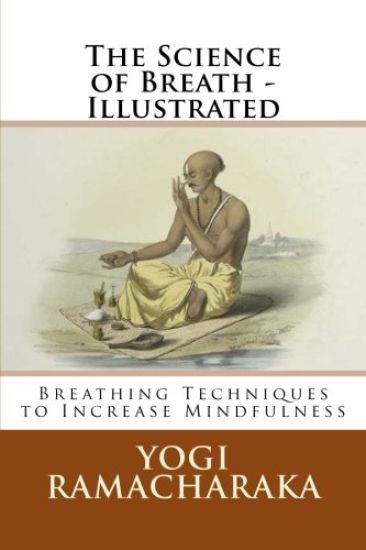
Life depends on breath. "The Science of Breath" outlines simple but powerful techniques to improve breathing and enhance living. One who has mastered their breath also masters their Prana, or life force. Intelligent control of breathing leads to increased vitality and freedom from disease. Correct habits are essential and this book offers the keys to a new awareness of breathing along with the tools necessary to make each breath truly count. "The Science of Breath" Table of Contents: Chapter I SalaamChapter II "Breath Is Life"Chapter III The Exoteric Theory of BreathChapter IV The Esoteric Theory of BreathChapter V The Nervous SystemChapter VI Nostril Breathing vs. Mouth BreathingChapter VII The Four Methods of RespirationChapter VIII How to Acquire the Yogi Complete BreathChapter IX Physiological Effect of Complete BreathChapter X A Few Bits of Yogi LoreChapter XI The Seven Yogi Developing ExercisesChapter XII Seven Minor Yogi ExercisesChapter XIII Vibration and Yogi Rhythmic BreathingChapter XIV Phenomena of Yogi Psychic BreathingChapter XV More Phenomena of Yogi Psychic BreathingChapter XVI Yogi Spiritual Breathing